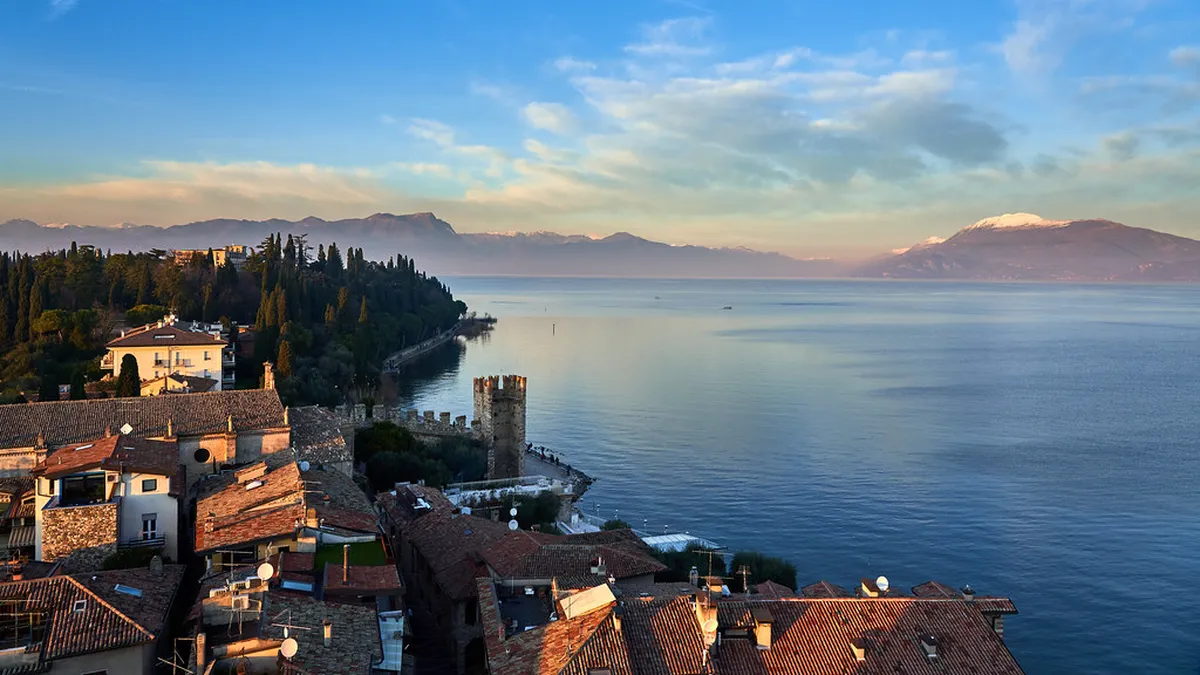
Sirmione sits on a narrow peninsula jutting into Lake Garda, and its medieval towers and steaming thermal waters suggest a destination only for high-season spenders. That impression is wrong. The historic center is free to walk, the only sight that genuinely merits an entrance fee costs €8, and a public bus runs from the train station for a couple of euros. This guide covers every practical decision a budget traveler needs to make — transport, beds, food, and the one thermal trick most visitors miss entirely.
For a broader trip plan, see our Sirmione itinerary for first-timers, and for day-to-day logistics read the practical Sirmione travel tips guide.
Getting to Sirmione Without Paying for a Taxi
Turn this guide into a personal route with our free Sirmione itinerary planner.
The cheapest route into Sirmione starts with a regional train to Desenzano del Garda-Sirmione station. From Milan Centrale the journey takes around 70 minutes; from Verona Porta Nuova it is about 25 minutes. Regional trains on this corridor cost €4–€9 depending on origin and booking window — dramatically cheaper than the high-speed Frecciarossa. Always compare fares on Trenitalia and book a few days ahead to lock in the lower tier.
From Desenzano station, ATV line 026 runs directly to Sirmione's Piazza Montebaldo stop, just outside the castle drawbridge. The single fare is around €2.20 in 2026 and the ride takes 20–25 minutes. Buses run roughly every 30–40 minutes during the day; check the timetable on the ATV Verona website before you travel because the last service back to Desenzano typically departs Sirmione before 20:00 outside summer months. A taxi covering the same route costs €25–€35 — there is no budget case for it unless you are travelling as a group of four splitting the fare.
If you are flying into the region, Verona Catullo (VRN) and Bergamo Orio al Serio (BGY) are both served by budget carriers. From Verona, a bus to Verona Porta Nuova station and then a regional train to Desenzano keeps the total transfer cost under €15. Avoid renting a car: parking inside the historic center is restricted to residents, and the external car parks charge €2–€3 per hour with no practical upper cap. For the full transport breakdown, read our guide on how to reach Sirmione.
Where to Stay Under €80 a Night
Accommodation within the walled old town commands a premium — expect €120–€200 per night for even a modest double in July and August. The budget play is to stay in Colombare di Sirmione, the residential quarter directly south of the castle bridge on the peninsula's neck. B&Bs and small hotels here regularly price at €55–€80 per night in 2026, and the walk into the centro storico takes under ten minutes. Families running these properties often include breakfast, which removes one meal from your daily spend.
Hostels do not exist inside Sirmione itself. The nearest options are in Desenzano del Garda and Peschiera del Garda, both connected to Sirmione by ATV bus or Navigarda ferry. A dorm bed in either town runs €22–€35 per night. This option suits travelers happy to spend 30–40 minutes commuting each way — the ferry ride is scenic and the ticket costs under €5 one-way.
Apartment rentals work well for stays of three or more nights. A self-catering studio in Colombare or on the approach road from Desenzano often undercuts a comparable hotel room by 20–30%, and having a kitchen eliminates the need to eat out every evening. Split a two-bedroom apartment with another couple and per-person costs drop further. Check where to stay in Sirmione for first-timers for neighborhood comparisons and what to look for in each area.
Off-Season Pricing: Visit November to March and Pay 40% Less
Sirmione's prices follow a steep seasonal curve. Hotels and B&Bs in the low season — roughly November through March — run 35–45% below their peak-August rates. A room that costs €150 in July often drops to €85 or less in January. The trade-off is that some restaurants close for part of the winter and the ferry network runs a reduced timetable, but the core sights remain open and the town is almost entirely free of crowds.
April and May, and again September and October, are the sweet spot for most visitors: shoulder-season prices (typically 20–25% below peak), reasonable weather, and full services operating. If your priority is maximum savings with minimum compromise on what is accessible, target late September or the first two weeks of October. Hotel occupancy drops sharply after the Italian school holidays end in mid-September, and you often find last-minute deals that are not available in advance booking windows.
One practical note for winter visits: the Grotte di Catullo closes on Mondays year-round, and winter hours typically run 08:30–16:30 with last entry at 16:00. Confirm on the official MiC (Ministry of Culture) page before you go, since hours can change year to year.
Free Sirmione: What Costs Nothing
The centro storico — the compact medieval town inside the castle walls — is free to enter and walk at any hour. Spend a morning wandering the narrow lanes: Via Vittorio Emanuele, the small harbor on the east side, the olive grove paths. The exterior of Rocca Scaligera is itself one of the best-preserved 13th-century castles in northern Italy and makes for great photographs from every angle without going inside. If you do want to climb the tower for lake views, the interior ticket costs €6 in 2026; verify on the Visit Garda portal for the current season's price.
The lakeside promenade on both sides of the peninsula is free and runs nearly the full length of the headland. The western shore path, lined with olive and cypress trees, leads out to the Grotte di Catullo at the tip. Even if you skip the paid ruins site, the walk itself passes through landscapes that most visitors never see because they stay close to the main street. Jamaica Beach, about a 15-minute walk from the castle, is a free public beach of flat limestone shelves dropping into clear green water — bring a towel and snacks and you have a full afternoon at zero cost.
The Grotte di Catullo is the one paid sight that is genuinely worth the money. Entry is €8 for adults in 2026 (EU citizens aged 18–25 pay €2; under-18 free). The Roman villa ruins date to the 1st century BCE and the views from the terraces over the full sweep of the lake are unlike anything else on the peninsula. Buy tickets online via the official portal — there is no surcharge and you skip any queue. For timing and booking details see our guide on Grotte Catullo Sirmione tickets.
Jamaica Beach's Free Thermal Pools: The Budget Alternative to Aquaria
Sirmione sits above a geothermal field, which is why the famous Aquaria Thermal SPA exists here. A day pass to Aquaria costs €35–€55 depending on season and entry time — a significant hit to any tight budget. What the spa brochures do not advertise is that the same thermal water that feeds Aquaria also seeps up naturally along the shoreline at Jamaica Beach.
At the northern end of Jamaica Beach, where the rocky shelf meets the water, small thermal pools form in the crevices between the rocks. The water temperature here sits noticeably warmer than the main lake — typically 28–32°C in summer — because of the subterranean vents below. Locals use these pools freely. There is no infrastructure, no changing room, and no fee. You need water shoes (the rock shelf is uneven) and you need to arrive early because space in the warmest pockets is limited.
This is not a replacement for a full spa day, but for a budget traveler it delivers the core experience — soaking in naturally warm mineral-rich water on Lake Garda — for exactly nothing. It is also worth knowing that the thermal effect is most pronounced in the morning before the lake heats up in summer, and in early autumn when the air temperature drops but the geothermal water temperature stays consistent. For context on what the paid Aquaria experience covers, see our Sirmione thermal baths guide.
Eating in Sirmione Without Overpaying
The restaurants on Piazza Castello and along the main strip are tourist-priced. A pasta dish there easily runs €18–€22. Walk two streets back and the same food costs €10–€14. The rule in Sirmione is simple: if the menu is laminated and faces the street, keep walking.
Piadinerie are the most budget-friendly sit-down option in town. A piadina — a flatbread filled with prosciutto, squacquerone cheese, and rocket — costs €5–€8 and is a full lunch. You eat standing or at a counter stool, which is part of the experience. There are two or three piadinerie operating in the centro storico; locals queue at them at midday. Pizzerias offer another reliable option: a margherita or marinara pizza runs €8–€12, and a larger pizza shared between two people with a carafe of house wine keeps the per-head cost around €12–€15.
The "menù del giorno" — a set lunch menu — is offered by most trattorias on weekdays. It typically includes a primo (pasta or soup), a secondo (meat or fish), water, and sometimes a small dessert for €14–€20 per person. This is the best value sit-down meal in Italy, Sirmione included. Look for handwritten boards rather than printed signs; handwritten usually means the kitchen wrote it that morning based on what they have fresh.
For self-catering, the weekly market in Desenzano del Garda (Wednesday and Saturday mornings) sells local cheese, cured meats, olives, and bread at prices well below supermarket levels. Stock up before taking the bus across. In Sirmione itself, the small alimentari shops stock everything you need for a picnic at Jamaica Beach or the Grotte di Catullo. Gelato costs €2.50–€4 per scoop at the gelaterie off the main drag; avoid the cones displayed in tall mounds near the castle — those shops charge tourist premium and often use lower-quality bases. See our roundup of the best Sirmione gelato spots for where locals actually go.
Day-Trip Budget Breakdown for 2026
For a single day in Sirmione from Milan or Verona, here is a realistic spend at the budget end. Regional train return to Desenzano: €8–€18 depending on origin. ATV bus return Desenzano–Sirmione: €4.40. Grotte di Catullo entry: €8. Lunch at a piadineria plus a gelato: €10–€12. Total: €30–€43, excluding any souvenir purchases.
If you skip the Grotte di Catullo and bring a packed lunch from the Desenzano market, a full day in Sirmione costs under €25. The castle exterior, the promenade, Jamaica Beach, and the thermal pools are all free. That is the case for why Sirmione works as a budget destination: the town is the attraction, and the town itself charges nothing for admission.
For a multi-day stay, the math improves further with off-season accommodation and self-catering. Two nights in a Colombare B&B at €65/night plus three days of self-catered meals comes to roughly €200 all-in for two days of sightseeing — comparable to a single night in a mid-range lakefront hotel in peak season. For more itinerary options see our Sirmione day trip ideas guide.
Frequently Asked Questions
Is Sirmione expensive for tourists?
Sirmione can be perceived as expensive, especially in high season. Luxury hotels and lakeside restaurants drive up prices. However, budget-friendly options definitely exist. This guide outlines how to save money. You can find affordable food and free activities. Planning ahead makes a big difference.
What are free things to do in Sirmione?
Many fantastic activities in Sirmione are free. You can enjoy walking the historic streets and lakeside promenades. Relax at Jamaica Beach, a unique rocky spot. Explore the Scaligero Castle exterior for great photos. Enjoy the panoramic views from the peninsula's tip. Read our Sirmione walking tour route for more ideas.
How much budget do I need for a Sirmione day trip?
A Sirmione day trip budget varies. Transport can be €10-€20 round trip by bus/train. Lunch can be €10-€20 at a pizzeria. Entrance to Grotte di Catullo is €8-€10. Expect to spend around €30-€50 for a full day. This excludes souvenirs and extra treats. Check our Sirmione day trip ideas for detailed costs. For ticket information, refer to Grotte Catullo Sirmione tickets guide.
Can you visit Sirmione in 2026 without a car?
Absolutely, visiting Sirmione without a car in 2026 is easy. Public transport is efficient and budget-friendly. Take a train to Desenzano del Garda-Sirmione. Then, a local bus takes you directly to Sirmione. The town itself is completely walkable. For detailed guidance, see how to reach Sirmione by public transport.
Sirmione rewards travelers who know what to pay for and what to skip. The castle exterior, the promenade, the hot spring pools at Jamaica Beach, and the medieval streets are all free. One €8 ticket gets you into the best Roman ruins on Lake Garda. A piadina and a gelato cover lunch for €10. Arrive by ATV 026 from Desenzano, stay in Colombare, and come in November or late September and you have one of the best-value destinations in northern Italy. For the full planning picture, start with our Sirmione itinerary and keep Sirmione practical travel tips open on your phone when you arrive.
Key Takeaways
- Take ATV line 026 from Desenzano del Garda station — €2.20 each way, no taxi needed.
- Stay in Colombare di Sirmione for B&Bs at €55–€80/night, a ten-minute walk from the old town.
- Visit November–March for prices 35–45% below peak; late September is the best shoulder-season window.
- The only ticket worth buying is Grotte di Catullo (€8 adults, under-18 free).
- Soak in free natural thermal pools at the northern end of Jamaica Beach — same geothermal source as Aquaria, no entry fee.
- Eat at piadinerie and weekday menù del giorno restaurants; avoid laminated-menu spots on the main drag.