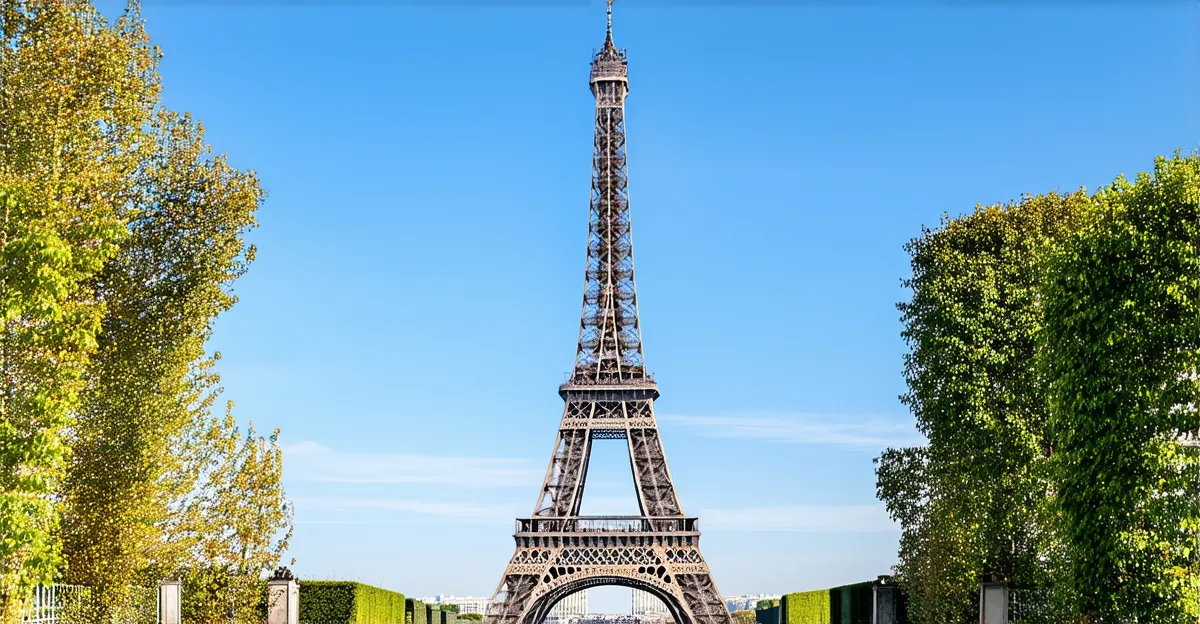
Paris rewards geographic planning. A strong itinerary groups the historic center, western monuments, Montmartre and museum districts instead of crossing the city repeatedly. Trip length matters, but timed tickets, museum closure days, walking tolerance and the arrival station often matter more.
Use this page as the cluster decision hub. Choose one, two, three or five days, reserve only the attractions that define the trip, and open the specialist guides for transport, museums, food, accommodation and safety. The schedules are frameworks, not promises that every visitor should complete every stop.
Choose Your Paris Trip Length
Turn this guide into a personal route with our free Paris itinerary planner.
| Time | What fits | Main sacrifice |
|---|---|---|
| 1 day | Historic center, one major interior and Eiffel area | Montmartre or a second museum |
| 2 days | Two area-based city days with two main tickets | No full day trip |
| 3 days | Historic center, western icons, Montmartre and two museums | Versailles replaces a city theme |
| 5 days | Four city themes plus one excursion or slow day | Still requires selective museums |
Three days is the most useful first-visit baseline, but the correct choice depends on arrival and departure times. Count full usable days, not hotel nights. An evening arrival and early departure do not create two sightseeing days.
One Day: One Interior, One Continuous Route
The one-day Paris itinerary begins around Notre-Dame and the islands, continues to the Louvre area and finishes near the Eiffel Tower. Choose the Louvre or a Tower ascent as the main paid interior. Trying to complete both, add Montmartre and take a cruise creates a schedule that collapses as soon as security or transport takes longer than expected.
An exterior-first traveler can use the one-day walking route instead. It keeps public spaces connected and uses Metro only when distance, weather or mobility calls for a shortcut.
Two Days: Historic Center and Western Paris
The new two-day Paris itinerary separates the historic center and Louvre from the Eiffel, Arc and Montmartre decision. The Louvre normally closes Tuesday, so place the museum day where its calendar permits and swap entire themes when ticket inventory dictates.
Two days should remain inside Paris for most first visits. Versailles consumes most of one day once transport, security and the large estate are included. Make that trade only when royal history matters more than a second Paris neighborhood.
Three Days: The First-Visit Baseline
The three-day plan uses Île de la Cité and the Left Bank, Louvre and western monuments, then Montmartre plus a flexible cultural choice. This is enough breadth to understand that Paris is more than a chain of ticketed icons.
Keep museums on different days unless art is the main purpose. Large interiors create decision fatigue and take longer than map pins imply. A smaller City of Paris collection can pair more easily with a neighborhood.
Five Days: Add Depth or One Excursion
With five days in Paris, retain four city themes and use day five for Versailles, seasonal Giverny, Disneyland or slow Paris. One unbooked half-day creates room for heat, rain, strikes, a closure or a favorite area.
Mont-Saint-Michel and multi-château Loire days are possible but travel-heavy. The day-trip guide compares door-to-door effort and makes clear when an overnight is the better route.
2026 Ticket Facts That Change the Plan
Eiffel Tower: official adult prices are €23.50 for second-floor elevator, €36.70 for summit elevator, €14.80 for second-floor stairs and €28 for stairs plus summit elevator. The summit and stairs are not accessible to visitors with reduced mobility under the Tower's current guidance.
Louvre: standard admission is €22 for eligible EEA residents/citizens and €32 for visitors who are neither EEA residents nor citizens. The museum is closed Tuesday, opens late Wednesday and Friday, and requires reservations for most visitors in July and August 2026.
Notre-Dame: cathedral entry is free. An optional free official reservation can reduce waiting; no third party is authorized to sell cathedral entry.
Book in the Right Order
- List the two or three experiences that would define the trip.
- Check regular closure days and any special closure for the exact date.
- Book the hardest timed anchor, usually Eiffel or Louvre.
- Group the surrounding neighborhood around that confirmed slot.
- Add secondary tickets only when transfer and rest margin remain.
- Keep at least one half-day flexible on trips of three days or longer.
A pass should be priced only after this sequence. It cannot create extra hours, remove security or guarantee every time slot.
Match Ticket Times to a Real Day
A reservation time is not the same as the moment sightseeing begins. Add the walk from the station, the venue's requested arrival margin, security, cloakroom rules and orientation. The Louvre's last admission and room-clearing time also mean a late slot provides less gallery time than the closing hour suggests. At the Eiffel Tower, movement between levels and the descent can make a visit substantially longer than the booked entry window.
Avoid connecting two non-refundable reservations with only a map's fastest journey between them. A workable plan includes at least thirty minutes of recoverable margin, more when crossing the city or traveling with children, luggage or reduced mobility. Put a flexible park, street, café or exterior view between fixed entries. If the first attraction runs late, remove the flexible stop rather than turning the rest of the day into a race.
Build Around Closure-Day Scenarios
Do not assign weekdays from a generic template before checking calendars. The Louvre normally closes Tuesday, many municipal museums close Monday, and religious buildings can restrict tourist access during services. Temporary exhibition installation, strikes, ceremonies and exceptional closures can alter a normally reliable week. The Eiffel Tower also publishes date-specific operational information.
Create one substitution for each paid anchor. If the Louvre is unavailable, retain the Seine, Tuileries and historic-center route while replacing the interior with Musée d'Orsay, the Orangerie, a municipal collection or neighborhood time after checking its own calendar. If the Eiffel summit closes, decide whether the available second-floor experience still justifies the ticket. A substitution should remain in the same geographic zone whenever possible; replacing a central museum with distant Montmartre can add travel at the worst moment.
Arrival and Departure Days Are Partial Days
Airport landing time is not city arrival time. Immigration, baggage, the airport transfer, station navigation and hotel luggage rules can consume several hours. A rail arrival is more predictable but still needs platform-to-hotel time. Treat an evening flight or train as a meal-and-walk opportunity, not one of the itinerary's full days.
Use arrival day for the neighborhood around the hotel, a riverbank walk or an exterior landmark that does not require a non-refundable slot. On departure day, stay near a direct route to the station or airport and leave a disruption buffer. Never schedule the trip's only Louvre or Eiffel opportunity immediately before long-distance travel. If storing luggage, verify the desk's opening hours, collection deadline, identification rules and whether the route back requires changing stations.
Adjust the Plan for Different Travelers
Families: use one major interior per day, identify toilets and parks, and let a playground or boat ride replace a second gallery. Art-focused visitors: reserve opening or evening museum slots and shorten the monument checklist. Food-focused visitors: anchor days around markets and reserved dinners within the same area. Photographers: protect dawn or evening light but keep tripods and commercial-use rules separate for each site.
Repeat visitors: can skip the headline sequence entirely and build around Belleville, the Canal, smaller museums or temporary exhibitions. Travelers with reduced mobility: should verify the whole chain from hotel to platform to entrance; an accessible venue does not make an old Metro station accessible. Solo visitors: should use the same ticket and safety checks, while taking advantage of easier last-seat inventory and the freedom to shorten a stop without group negotiation.
Use a Daily Rhythm Instead of a Checklist
A sustainable Paris day has an early anchor, a defined lunch area, an afternoon choice and an evening that can expand or disappear. Start with the attraction most sensitive to crowds, heat or a timed slot. Put lunch near the next stop rather than crossing the city for a famous address. After lunch, choose either another interior or a substantial walking district; doing both at full scale often creates museum fatigue.
Evenings work best when geographically attached to the afternoon. A Seine cruise fits the Eiffel and central river axis; Montmartre dinner fits a northern day; the Marais supports a historic-center finish. Check the last return route before assuming late Metro service. Schedule sitting time deliberately, particularly after stone floors, stairs and long gallery corridors. The goal is not the maximum number of pins but a sequence that remains enjoyable if every transfer takes ten minutes longer.
Plan for Weather Without Rebuilding the Trip
For heat, place exposed viewpoints and river walks early, reserve a long indoor midday block and carry water while respecting venue container rules. Do not assume every historic interior has strong air conditioning. For rain, retain booked museums but slow routes over polished stone, bridges and stairs; a compact covered passage or café break is more useful than adding another distant museum.
Cold wind is most noticeable on bridges, open platforms, tower levels and cruises. Bring a layer even when street-level temperatures look mild. In storms, follow official warnings and operator instructions rather than trying to preserve a rooftop or boat booking. Build one weather-neutral alternative into each geographic zone, then check live availability. A weather alternative is strongest when it does not require an additional cross-city transfer or a last-minute premium ticket.
Know What a Map Does Not Show
Two attractions that look close can sit on opposite riverbanks, behind large estates or at different vertical levels. Station exits matter: emerging on the wrong side of a complex interchange adds walking and orientation. Montmartre includes steep streets and stairs, while major museums contain far more internal distance than their footprint suggests. Routing apps also tend to optimize speed rather than step-free access, shade, scenery or low-stress crossings.
Before each day, save the exact entrance—not just the attraction name—and the correct station exit when the official site provides it. Download ticket barcodes and the hotel address for offline use. Use live navigation for disruptions, but keep the day's geographic logic simple enough to survive a dead battery. If a route requires three transfers to save a few minutes, a direct bus, taxi or purposeful walk may be the more reliable itinerary choice.
Decide Whether a Pass Fits Your Exact Plan
Do not start with a pass and then add attractions merely to justify it. Write down the paid sites already present in the realistic itinerary, use the official price for the visitor's age and residency category, and compare that sum with the pass price and validity window. Free admission for eligible visitors can change the calculation completely. So can a museum closure day or an arrival afternoon that uses part of a calendar-based validity period.
Check reservation rules separately. A pass may cover admission while still requiring a dated slot, and it never removes security checks. Transport products should be compared with the rides actually expected, including the airport exception, rather than bundled into a vague convenience claim. The non-financial case can still be reasonable when one purchase simplifies a confirmed plan, but call that convenience—not savings. Recalculate after the Eiffel and Louvre times are fixed because those anchors determine how many additional admissions truly fit.
Transport: 2026 Fare Structure
Île-de-France Mobilités lists €2.55 for a Metro–Train–RER single journey excluding airports, €2.05 for Bus–Tram and €14 for the Paris Region airport product. Outdated paper-ticket advice should not guide a 2026 budget. Compare the trips you will actually make with live pass products.
Most historic Metro stations are not step-free. Travelers who need a continuous accessible route should check lifts and every transfer, then use buses or taxis where the rail network fails. The Paris Metro guide covers purchase, validation, airport exceptions and the Montmartre funicular.
Plan Paris by Geographic Zones
Historic core: Notre-Dame, islands, Latin Quarter, Marais and Sainte-Chapelle. Central-west axis: Louvre, Tuileries, Concorde, Champs-Élysées and Arc de Triomphe. Eiffel/Left Bank: Tower, Champ de Mars, Invalides, Rodin and Musée d'Orsay. North and east: Montmartre, Canal Saint-Martin, Belleville and Père Lachaise.
Not every pair is adjacent just because a tourist map puts them on one page. Use walking for dense zones and Metro for deliberate transfers between zones.
Where to Stay
Choose accommodation by the exact station and daily route. The historic center maximizes walking but can cost more; the Marais and eastern center support evening food; major-station areas simplify some arrivals; outer arrondissements can provide space but add transport dependency.
The Paris accommodation guide covers 2026 tourist tax, legal short-term rental checks, luggage, noise and accessibility. Compare the complete stay cost rather than a headline nightly price.
Food, Budget and Free Culture
Place meals inside the day's neighborhood. A bakery lunch or market meal protects a tight museum schedule; a reserved restaurant deserves an evening without a risky transfer. Use the restaurant guide to choose by location and current menu.
The budget guide builds from official transport and attraction prices. Notre-Dame, riverbanks, parks, public exterior views and many municipal permanent collections are free, though reservations, temporary exhibitions and transport can still cost money.
Weather, Safety and Packing
Check Météo-France for heat, storms and warnings rather than planning from averages alone. In high heat, not every gallery is air-conditioned and sites may alter operations. In rain, stone, stairs and riverbanks need slower walking.
Official tourism warns about pickpockets, fake petitions and street games in busy areas. Keep belongings in a closed bag and retain document copies. The safety guide gives response steps, while the packing list focuses on weather, walking and venue rules.
Accessibility and Lower-Intensity Planning
Accessibility must be checked door to door. A venue may be accessible while its nearest Metro route is not. A timed itinerary should include toilets, seating, medication, sensory load and the cost of an accessible transfer—not merely an elevator icon.
Lower-intensity Paris works well: one interior, one neighborhood, a long lunch and a cruise or park. Removing stops is itinerary design, not failure. Recheck the exact adapted route on every official venue site.
Paris Planning Library
Use the guide that resolves the next decision rather than opening overlapping itineraries:
- One Day in Paris: A Realistic First-Time Itinerary
- 2 Days in Paris: A Realistic First-Time Itinerary
- 3 Days in Paris: Area-Based First-Time Itinerary
- 5 Days in Paris: City Neighborhoods and Day-Trip Plan
- Where to Eat in Paris: Neighborhood Restaurant Guide
- Best Seine River Cruise for Your Paris Trip
- Best Time to Visit Paris: Weather, Crowds and Events
- Best Day Trips from Paris: Train and Timing Guide
- Eiffel Tower Tickets: Official 2026 Prices and Choices
- Best Free Things to Do in Paris: Honest 2026 Guide
- Paris Museum Tickets: Official Booking and Pass Guide
- Louvre in 2 Hours: A Flexible Highlights Route
- Louvre Tickets and Booking: Official 2026 Guide
- How to Use the Paris Metro: Tickets and Routes (2026)
- Best Things to Do in Paris: First-Time Priorities
- Where to Stay in Paris: Areas and Booking Checks
- Paris Budget Guide: Current Transport and Free Sights
- Paris One-Day Walking Route: Historic Center to Eiffel
- Paris Packing List: Weather, Walking and Museum Rules
- Paris Scams and Pickpocketing: Practical Safety Guide
- Best Paris Photo Spots: One-Day Route and Timing
- Montmartre in One Hour: A Focused Walking Route
A Final Pre-Trip Checklist
- Confirm every booked attraction on its official domain.
- Check Louvre and other museum closure days.
- Verify the exact Eiffel ticket level and access method.
- Remember that Notre-Dame cathedral entry is free.
- Load the correct transport product, including airport exceptions.
- Save tickets, accommodation address and return travel offline.
- Check weather, strikes, lift outages and special events.
- Leave enough unscheduled time to enjoy one neighborhood.
Plan with Live Information
This guide was checked against first-party information on August 4, 2026. Paris transport, attraction access, prices, weather, strikes, exhibitions and event controls can change after publication. Reopen the official source that controls your date before paying, departing or relying on an accessible route. A timed ticket manages admission; it does not remove security, guarantee every gallery or protect a connection scheduled without buffer.
Frequently Asked Questions
How many days do you need in Paris?
Three days is a useful first-visit baseline. One day requires strict choices, two days covers two coherent city zones, and five days allows slower neighborhoods plus one day trip.
What should you book first?
Book the Eiffel Tower, Louvre and any other trip-defining timed attraction first, then shape the surrounding route around confirmed slots.
Is the Paris Metro easy for visitors?
The system is extensive and signs are consistent, but airport tickets, accessibility and service disruptions require separate checks in the official transport app.
Can you visit Notre-Dame for free?
Yes. Cathedral entry is free. An optional free time slot may reduce waiting, and it must be reserved through the cathedral's official channel.
Should a first trip include Versailles?
Only when the palace is a priority and the city itinerary has enough time. A one- or two-day Paris stay is usually better kept within Paris.
Is a city pass automatically cheaper?
No. Price the exact included attractions you will realistically visit and remember that a pass does not remove security checks or guarantee every time slot.
What is the best area to stay?
The best area depends on arrival station, late-evening plans, budget and mobility. Central is not one neighborhood, and a direct Metro route can outperform a shorter-looking walk.
How current are the prices in this guide?
Core 2026 Eiffel, Louvre and transport figures were checked on official sites on August 4, 2026. Recheck them for the visit date.