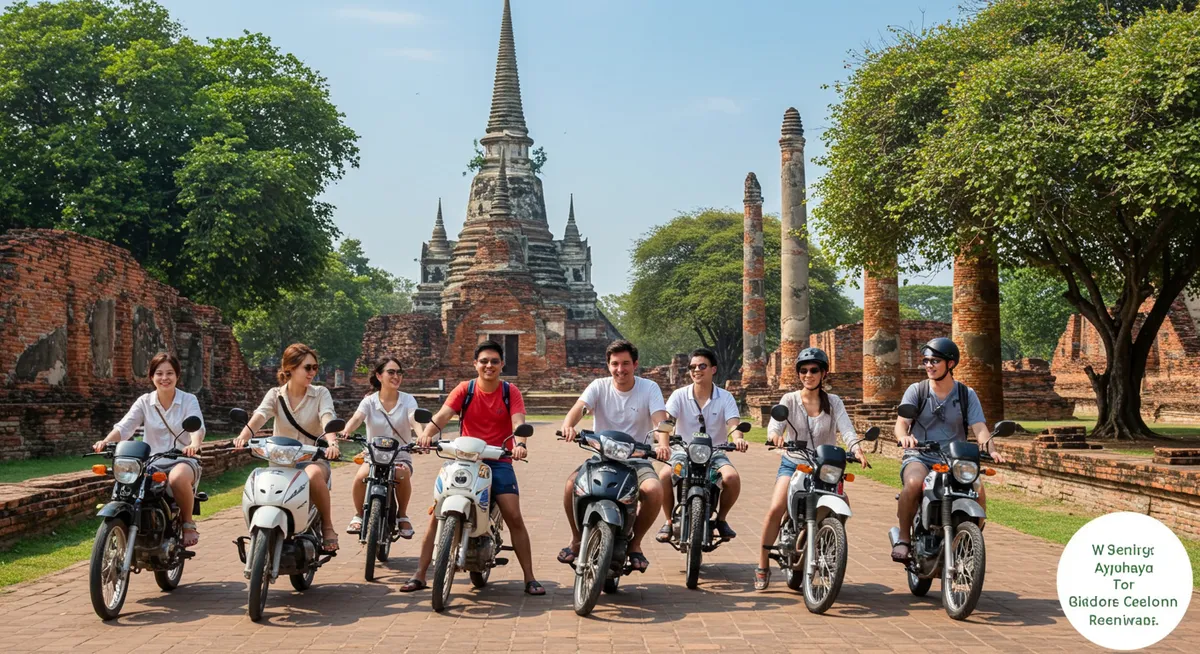
Ayutthaya's UNESCO-listed historical park sits on a flat river island roughly 3 km across, and nearly every major ruin stands within a short pedal of the next. That geography makes an Ayutthaya bike rental the single best transport decision you can make here. Tuk-tuks charge 200-300 THB per hour and lock you into a fixed route. A bicycle costs a fraction of that for the entire day and lets you stop whenever a crumbling prang catches your eye. This guide covers every detail you need to rent a bike, plan a route, stay safe, and squeeze every moment of wonder out of Thailand's ancient capital in 2026.
Where to Rent a Bike in Ayutthaya (and How Much It Costs)
Turn this guide into a personal route with our free Ayutthaya itinerary planner.
Bike rental shops in Ayutthaya are concentrated in three areas: directly opposite the train station, along Naresuan Road near the backpacker guesthouses, and inside many hotels and hostels on the island. The most well-known spot is Nong Nine Bike & Restaurant, located right in front of Ayutthaya Station, where you can pick up a city bike for 50 THB or a geared mountain bike for 100 THB per day. Most guesthouses also rent basic single-speed bicycles for 50-80 THB, often included free if you book a room.
Electric bikes (e-bikes) have become increasingly available in 2026, typically renting for 150-300 THB per day from larger shops and specialized tour operators near the station. E-bikes are a strong choice if you want to reach temples outside the island, such as Wat Chai Watthanaram on the western bank, without breaking a sweat in the midday heat. Scooter rentals are also available at around 200-250 THB per day, though they require a valid international driving permit and are not allowed inside the pedestrian zones of the historical park.
Whichever option you choose, always ask for a test ride before committing. Spin around the block, squeeze both brake levers, and check that the seat height works for you. If the tires feel soft, ask the shop to pump them — most keep a floor pump on hand. Rental periods typically run for 24 hours, so picking up a bike in the late afternoon still gives you a full next-day ride. For a deeper look at keeping costs low during your trip, see our Ayutthaya budget travel guide.
Bike Rental Deposit and ID Requirements in Ayutthaya
Before you ride off, every rental shop in Ayutthaya asks for some form of security, and the requirement varies by bike type and shop.
Standard bicycle rentals from shops like Nong Nine Bike & Restaurant and guesthouses along Naresuan Road usually ask for either a cash deposit of 200-500 THB or your passport held at the counter until you return the bike. If you'd rather not hand over your passport, ask upfront — most shops will accept the cash deposit instead once you request it.
E-bike and scooter rentals carry higher stakes and higher deposits, typically 1,000-2,000 THB in cash, your passport, or both, plus a photocopy of your ID for their records. Scooter shops will also check your international driving permit at this stage, consistent with the permit requirement noted above.
Before pedaling away, walk around the bike with the shop staff and point out any existing scratches, worn brake pads, or loose parts, and take a quick photo on your phone. If a bike is damaged or goes missing during your rental, shops deduct repair or replacement costs from the deposit — for a standard city bike this is rarely more than a few hundred baht, but e-bikes and scooters can run into the thousands if the battery or bodywork is damaged.
Ask for a simple receipt noting the rental price, deposit amount, and return time. It's rarely formal, but having it avoids disputes over what was agreed if you return the bike to a different staff member later in the day.
Top Bike Rental Shops in Ayutthaya: Named Locations and Prices
Knowing exactly where each shop sits saves time when you arrive, especially if you step off a morning train and want to start riding immediately. Here are the most consistently recommended rental points in Ayutthaya in 2026:
- Nong Nine Bike & Restaurant — directly opposite Ayutthaya train station exit. Standard city bike: 50 THB/day. Geared mountain bike: 100 THB/day. Opens around 7 AM.
- Tony's Place Guesthouse — on Naresuan Soi 1, near the main backpacker strip. Rents city bikes at 60 THB/day; free to overnight guests. The on-site café means you can grab breakfast before setting off.
- Baan Lotus Guest House — on Pamaphrao Road, central island location. Standard bikes at 50 THB/day. Conveniently placed mid-island so you can start the temple loop without a long warm-up ride.
- Krungsri River Hotel Bike Desk — for guests only, but several shops on the nearby riverside promenade rent to walk-ins at 80-100 THB/day and offer e-bikes at 200 THB/day.
- U-Thong Road Shops — a cluster of small independent rental stalls lines U-Thong Road on the northern edge of the island. Prices here are the most negotiable: 40-80 THB depending on bike condition. Good fallback if the station-area shops are out of stock on busy weekends.
Availability tightens on Thai public holidays and weekends during peak season (November–February). If you arrive during these periods, book through your guesthouse the night before or reach a shop before 8 AM.
The Best Ayutthaya Cycling Route: 7 Temples in One Day
The classic cycling loop covers roughly 10 km and connects seven of Ayutthaya's most impressive temple ruins. Starting from the train station area, head east to Wat Mahathat, home to the famous Buddha head cradled in banyan tree roots. Cross the road to Wat Ratchaburana with its towering Khmer-style prang, then ride south to Wat Phra Ram, set beside a scenic reflecting pond. Continue west to Wat Phra Si Sanphet, the grandest of all Ayutthaya temples, distinguished by three bell-shaped chedis that once held royal relics.
From Wat Phra Si Sanphet, cycle northwest to the reclining Buddha at Wat Lokayasutharam, then loop south along the river to Wat Chai Watthanaram, widely considered the most photogenic ruin in the entire park. The final stop, Wat Yai Chai Mongkhon, sits southeast of the island and rewards riders with a climbable chedi offering panoramic views. At a leisurely pace with temple stops, this route takes 4-6 hours. Riders who start early in the morning (before 8 AM) avoid the worst of the heat and enjoy softer light for photography.
Individual temple entry fees are 50 THB each, but a combined ticket covering six paid temples costs 220 THB and saves you money if you plan to visit three or more. Tickets are sold at each temple entrance. For a complete breakdown of every ruin and its history, check our Ayutthaya temple guide and map.
Canal-Side Cycling Routes: The Quieter Side of Ayutthaya by Bike
The main temple loop is crowded with tour buses by mid-morning, but Ayutthaya's canal-side and riverside paths offer a completely different pace. The island is surrounded by the Chao Phraya River to the west, the Pa Sak River to the east, and the Lopburi River to the north, with a network of smaller khlong (canals) branching inward. Cycling along these waterfronts takes you past fishing villages, floating market remnants, and rice paddies — a sharp contrast to the stone prangs a kilometre away.
The U-Thong Road canal loop is the easiest introduction: follow the road that traces the northern perimeter of the island and you'll ride alongside a wide canal the entire way, with unobstructed views across to the outer bank. The road is wide, flat, and has minimal traffic on weekday mornings. Distance: approximately 5 km one way.
For a longer canal-side ride, cross the bridge at the northern tip of the island and follow the outer bank southwest toward Bang Lan Market. The riverside track here is unpaved for stretches but perfectly rideable on a mountain bike. The market itself is busiest on weekends and sells local produce, boat noodles, and fresh-caught river fish. Round trip from the station: about 12 km.
The Wat Chai Watthanaram approach from the western bank rewards riders with a canal flanking nearly the entire route. Cross via the Pridi Damrong Bridge, turn left immediately, and follow the narrow track south along the outer canal edge. The temple appears dramatically at the end of the path, reflected in the water — one of the best cycling photo spots in Ayutthaya. The path is compact and best ridden on a city bike or mountain bike rather than an e-bike.
Canal-side riding is best in the early morning (6:30–9 AM) when the light sits low over the water and boat traffic is quiet. By 10 AM, longtail boats and tour craft pick up speed and the wake can make the narrow outer-bank tracks muddy. Always yield to motorbikes on shared canal-side lanes.
Essential Safety Tips for Cycling in Ayutthaya
Ayutthaya is one of the safest cities in Thailand for cycling. The historical park interior has minimal vehicle traffic, and dedicated bike paths connect several of the major temples. Thai drivers on the surrounding roads are generally considerate of cyclists, but defensive riding is still essential on busier streets like U-Thong Road and Chikun Road.
Before you set off, run through a quick safety checklist. Test both front and rear brakes. Check that the tires are firm — soft tires on gravel paths around temple grounds lead to punctures. Cycle through the gears if the bike has them. Most rental shops do not provide helmets, so bring your own if head protection matters to you. A small cable lock is useful for securing your bike at temple entrances while you explore inside.
Ride on the left side of the road (Thailand drives on the left). Use hand signals when turning, and avoid cycling after dark unless your bike has working lights — most rental bikes do not. If you get a flat tire, don't worry: repair shops and mobile mechanics are scattered around the island, and a puncture fix typically costs 20-30 THB. Keep the rental shop's phone number saved so you can call for help if needed.
Organized Cycling Tours vs Self-Guided: Which to Choose
Self-guided cycling is the default for most independent travellers, but Ayutthaya also has a well-developed guided cycling tour scene worth considering if you want historical context alongside the physical experience.
Guided bicycle tours typically run 3-4 hours, cost 400-900 THB per person (bike included), and cover 6-8 sites. Most operators depart from near the train station or from central guesthouses at 8 AM and again at 2 PM. The main advantage is a local guide who explains the history of each prang and chedi in depth — something a self-guided rider with only a map will miss. Common operators in 2026 include Ayutthaya Elephant Palace bike tours, Remote Thailand Cycling, and several independent guides who advertise from sign boards near the station exit.
E-bike tour packages have become popular for visitors who want to cover more ground than a standard 10 km loop without the physical effort. These typically extend to off-island temples and can reach Wat Phutthaisawan and Bang Pa-In Royal Palace in a half-day circuit (approximately 25 km round trip). Packages cost 800-1,500 THB including guide, e-bike, and some temple entry fees.
Self-guided is better when:
- You want to linger at specific temples without a group schedule.
- You prefer canal-side and residential backroads over the standard tourist circuit.
- You're travelling with children and want full flexibility over pace and stops.
- Budget is a priority — a self-rented bike at 50-100 THB costs a fraction of any guided tour.
Guided tours are better when:
- This is your first visit and you want context behind the ruins, not just photos.
- You're short on time and want to see the maximum number of sites efficiently.
- You're not confident cycling in light traffic and want a guide managing road crossings.
Bike vs. Tuk-Tuk vs. Boat: Choosing the Right Transport
Each transport option in Ayutthaya serves a different purpose. A bicycle gives you full freedom and costs 50-100 THB for an entire day. You stop when you want, linger as long as you like at each ruin, and discover quiet side lanes that no tour bus reaches. The trade-off is physical effort, especially between noon and 3 PM when temperatures can climb above 35 degrees Celsius.
Tuk-tuks cost 200-300 THB per hour (or 800-1,500 THB for a half-day charter) and make sense if you have limited time or mobility concerns. Drivers know the standard circuit and can wait while you explore, but you lose the spontaneous discovery that makes cycling special. River boats offer a scenic perspective on waterside temples like Wat Chai Watthanaram and Wat Phanan Choeng, with long-tail boat tours running 500-1,000 THB per hour. The best strategy is to combine methods: cycle the core island temples during the morning, then catch a river boat tour in the late afternoon for sunset views. Our Ayutthaya river boat trip guide covers the waterside experience in detail.
Practical Tips to Maximize Your Cycling Day
Hydration is the single most important factor for an enjoyable ride. Carry at least one liter of water from the start, and refill at the convenience stores (7-Eleven and Family Mart) scattered around the island. Wear sunscreen rated SPF 50 or higher, a wide-brimmed hat, and lightweight, breathable clothing. Avoid cotton shirts that trap sweat; quick-dry fabrics make a noticeable difference over a full day of riding.
Timing matters as much as gear. The ideal cycling window runs from 7 AM to 11 AM and again from 3 PM to 6 PM, avoiding the harshest midday sun. Use the midday break for lunch — Ayutthaya's street food scene is exceptional and affordable, with boat noodles (kuay teow ruea) being the city's signature dish. Our guide to the best local food in Ayutthaya points you to the top spots.
If you choose a bike with a front basket, keep valuables like phones and wallets in a zipped bag rather than loose in the basket. Petty theft from open baskets has been reported at busy temple parking areas. Finally, visiting during the best time to visit Ayutthaya (November through February) gives you cooler temperatures and dry skies — ideal cycling weather.
What to Eat During Your Ayutthaya Cycling Day
Cycling burns energy quickly in Ayutthaya's heat, and knowing where to refuel means you won't have to backtrack into town mid-route.
Chao Phrom Market, on the eastern edge of the island near the night market grounds, is the most reliable stop for a quick lunch: noodle stalls, grilled skewers, and fresh fruit vendors run from around 8 AM into the evening, with a full meal costing 40-60 THB.
Small carts selling roti sai mai — Ayutthaya's signature snack, a paper-thin roti wrapped around strands of candy floss — line U-Thong Road and the approach to Wat Mahathat. A bag costs 20-30 THB and packs easily into a bike basket for a mid-ride energy boost.
For a sit-down meal, riverfront restaurants near the Krungsri River Hotel and along the Pa Sak riverside serve Ayutthaya's famous goong maenam (giant river prawns), grilled or in a spicy tom yum broth. A prawn large enough to share typically costs 300-500 THB, and most of these restaurants have space to park bikes right outside.
If your route takes you toward the canal-side paths, the stalls at Bang Lan Market sell inexpensive grilled fish and rice dishes alongside the boat noodles, doubling as a natural lunch stop on the longer riverside ride. Carry small bills, since most stalls and market vendors don't accept cards, and refill your water bottle at any 7-Eleven — you'll pass one every kilometre or so around the island.
Night Cycling and Illuminated Temples
Several of Ayutthaya's major temples are dramatically lit after dark, and cycling between them at night offers a completely different atmosphere from the daytime experience. Wat Chai Watthanaram and Wat Ratchaburana are particularly striking when floodlit against the night sky. If you plan to ride after sunset, rent a bike that has a working front light and rear reflector, or bring clip-on LED lights from home. The roads are quieter at night, but visibility is lower, so stick to well-lit routes and wear something reflective. Night cycling tours are also offered by several operators near the train station, typically running from 5 PM to 8 PM and costing 400-800 THB including bike, guide, and temple entry.
Frequently Asked Questions
How much does it cost to rent a bike in Ayutthaya in 2026?
Is Ayutthaya safe for cycling?
Can I rent an electric bike or scooter in Ayutthaya?
How long does it take to cycle around Ayutthaya's temples?
What should I bring on a cycling day in Ayutthaya?
What happens if I get a flat tire?
Is the combined temple ticket worth buying?
Are there canal-side cycling routes in Ayutthaya?
How much does a guided cycling tour in Ayutthaya cost?
Can I cycle from Ayutthaya train station to the temples?
An Ayutthaya bike rental transforms a standard temple tour into a genuine adventure through one of Southeast Asia's most atmospheric historical parks. The flat terrain, short distances between ruins, and rock-bottom rental prices make cycling the obvious choice for travelers of all fitness levels. Start early, stay hydrated, and let the ancient capital reveal itself one pedal stroke at a time. If you are still planning your broader trip, our guide on getting to Ayutthaya from Bangkok and our full Ayutthaya itinerary will help you piece everything together.