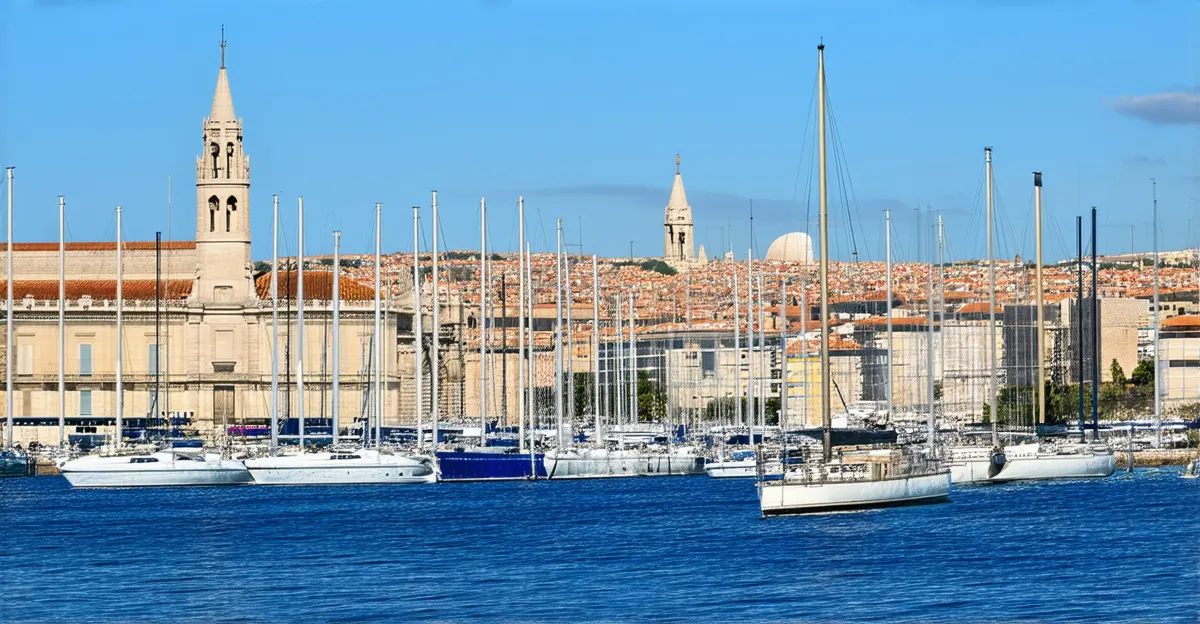
Marseille rewards geographic planning. Its historic harbor, Le Panier, hilltop basilica, southern shoreline, islands and Calanques cannot be treated as one compact old town.
Use this hub to choose a duration, protect weather-sensitive anchors and understand current 2026 transport and access rules. Each schedule is a decision framework with substitutions, not a checklist every traveler must complete.
Choose the Right Marseille Trip Length
Turn this guide into a personal route with our free Marseille itinerary planner.
| Usable time | Strong plan | Main sacrifice |
|---|---|---|
| 1 day | Vieux-Port, Le Panier and one hill or museum | No complete Calanques day |
| 2 days | Historic waterfront plus a coast or island choice | Only one major nature excursion |
| 3 days | City core, southern shoreline and Calanques/Frioul | Little room for Provence day trips |
| 5 days | City depth plus nature and one regional day | Still requires weather-dependent choices |
Count full usable days rather than hotel nights. Marseille is hilly and geographically spread out. Airport transfer, luggage, boat queues, summer access controls and the climb to Notre-Dame de la Garde can consume more time than a compact-center map suggests.
One Day: Protect One Geographic Spine
The one-day Marseille itinerary begins at the Vieux-Port, crosses Le Panier and the cathedral/Mucem waterfront, then chooses either Notre-Dame de la Garde or a longer museum block. It does not promise the Calanques, Frioul, several museums and a hilltop sunset in the same day.
Use the Ferry Boat only when it supports the south-shore route. Its crossing is short, but waiting and weather still matter. A cruise or island departure is a fixed anchor, not an extra that can be inserted without removing something else.
Two Days: Historic Harbor and One Coastal Choice
The new two-day Marseille itinerary gives day one to the Vieux-Port, Le Panier, La Major, Fort Saint-Jean and one Mucem exhibition block. Day two chooses Notre-Dame and the Corniche, Frioul/Château d'If, or a properly prepared Calanques visit.
Competitor routes often fit both an island and the Calanques into a weekend. That is possible only with favorable schedules and a rushed city day. ItiMaker makes the tradeoff explicit and keeps a weather-safe alternative.
Three Days: Add Nature Without Erasing the City
The three-day plan uses one historic day, one southern-coast day and one nature or island day. Current official access rules make the third day conditional: Sugiton may require a free reservation and all land access can close for fire danger.
Do not treat Cassis and the Calanques as interchangeable labels. A Cassis day adds transport and a separate town; a Marseille trail or boat plan can remain city-based. Choose the experience first, then the correct departure and access rule.
Five Days: Build in Weather and Regional Flexibility
With five days in Marseille, retain three city/coast themes, one weather-dependent nature day and one flexible regional or recovery day. Aix-en-Provence, Cassis, La Ciotat and Côte Bleue answer different interests and should not be stacked into one excursion.
Move the Calanques day when fire danger, wind or heat changes. A long stay is valuable because it creates substitution capacity, not because every day needs more attractions.
Plan Marseille by Zones
Historic north shore: Vieux-Port, Le Panier, La Major, Fort Saint-Jean and Mucem. South shore: Saint-Victor, Pharo, Catalans, Vallon des Auffes and the Corniche. Hill: Notre-Dame de la Garde. Southern coast: Prado, Pointe Rouge, Les Goudes and Calanques access points. Islands: Frioul and Château d'If.
Finish one zone before crossing to another. Routes that jump repeatedly between hill, harbor, museum and coast hide substantial waiting and climbing.
Use Current RTM Fares
RTM's July 1, 2026 fare table lists €1.70 for a reusable-card single journey, €2 when bought aboard a bus, €3.40 for two journeys and €15 for ten. Unlimited visitor products are €6.70 for 24 hours and €14 for 72 hours.
A single journey permits connections for one hour but has product-specific limits, including one metro access. Validate the correct ticket and check current terms rather than copying pre-July fare advice. The public transport guide explains modes and ticket decisions.
Treat the Ferry Boat as Transport, Not a Cruise
The RTM Ferry Boat crosses 283 meters between the Mairie and Place aux Huiles in under five minutes. The current fare is €0.50, departures are normally every 20 minutes from 07:30 to 20:20, and weather can interrupt service.
The standalone crossing does not include an onward RTM connection. Qualifying 24- and 72-hour products cover it. The Ferry Boat guide separates this harbor shortcut from island boats and narrated coastal cruises.
Price the CityPass Against a Real Route
Current adult CityPass prices are €36 for 24 hours, €47 for 48 hours and €55 for 72 hours. It combines RTM travel with selected museum, tour, little-train, hop-on-hop-off or island-boat products, subject to the exact active offer.
An online purchase must be collected from the Tourist Office. The pass does not guarantee direct access or advance activity reservations, and peak-season boat waits can last hours. Use the CityPass decision guide to compare confirmed inclusions rather than assuming everything is available.
Plan Mucem as Museum Plus Waterfront
Mucem's current standard exhibition ticket is €11, reduced €7.50, and covers the day's exhibitions. The museum normally closes Tuesday and uses seasonal hours. Fort Saint-Jean gardens and connecting architecture can remain valuable even when a paid exhibition is not the priority.
Allow roughly two to three hours for a meaningful exhibition visit and longer when the waterfront route matters. The Mucem guide separates free exterior access from paid galleries.
Separate the Free Basilica from the Paid Ride
Notre-Dame de la Garde is free and currently lists daily 07:00–18:00 opening, with services and worship taking priority. Bus 60, walking, taxi and the little tourist train solve different access needs.
The tourist train currently costs €11 adult and €6 child and includes a stop of at least 20 minutes at the basilica on its Notre-Dame circuit. It is a sightseeing product, not ordinary RTM. The basilica guide and little-train guide keep those decisions separate.
Respect Calanques Access as a Daily Decision
Between June 1 and September 30, officials publish the next day's forest access status around 18:00. A red classification closes land access. Boat tours may operate but cannot land in closed areas. Roads to individual calanques have additional seasonal controls.
For 2026, Sugiton and Pierres Tombées require a free reservation on June 20–21, daily June 27–August 30, September 5–6 and September 12–13. Booking opens three days before at 09:00 and closes the prior day at 18:00, for groups up to five. These rules belong in every nature-day plan.
Use the Airport Shuttle as One Leg
The direct A1 links Marseille Provence Airport with Gare Saint-Charles. The airport currently advertises about 25 minutes under favorable conditions, departures every 10 minutes from 07:00 to 20:00 and less frequent early/late service. Traffic can extend the ride.
CityPass and ordinary city tickets do not automatically cover the airport shuttle. Check the live fare changed July 1, 2026, then add terminal walking, baggage, the Saint-Charles descent and onward RTM travel. The airport transfer guide compares this with rail and taxi.
Keep Cathedral and Abbey Visits Distinct
La Major Cathedral is free and uses seasonal hours, currently 10:00–19:00 from April through October and shorter winter windows. Saint-Victor Abbey is also free and currently lists 09:00–18:00 daily; its crypt uses a small donation and worship can override visiting.
La Major fits Le Panier and Mucem. Saint-Victor fits the south shore, Ferry Boat and Vallon des Auffes. The cathedral guide and abbey guide prevent needless harbor crossings.
Book Capacity and Weather Before Flexible Streets
Secure a must-do island boat, guided Calanques product, special exhibition or Sugiton reservation before filling the day with public streets. Then group the surrounding district and keep one same-zone substitute.
Do not prepay every element. Wind, fire risk, worship, strikes, heat and maintenance affect different attractions in different ways. Save cancellation terms and the controlling official page with each booking.
Choose a Vieux-Port Route, Not a Checklist
The canonical Vieux-Port walking route absorbs the older activities list and connects the fish market, mirrored canopy, Town Hall, Ferry Boat, Saint-Victor/Pharo option and the Mucem side without pretending every stop is adjacent.
The harbor is a transport interchange and working waterfront. Keep cycle lanes, boarding queues and market space clear. Use the route direction that supports the next fixed booking.
Give Le Panier a Linear Walk
The Le Panier walking guide starts near the Vieux-Port or La Major, uses Vieille Charité as an interior option, and ends toward Fort Saint-Jean/Mucem. A linear route avoids repeated stairs and steep backtracking.
Le Panier is a residential district, not a themed set. Keep voices low, do not block doors for photographs and treat street art, shops and cafés as current local activity rather than guaranteed attractions.
Use Food Guides by Decision Type
The local food guide explains bouillabaisse, panisse, navettes, pieds-paquets and multicultural market food. The budget food guide focuses on price-checking and service format. The Vallon lunch guide solves one district-specific meal.
Restaurant names, menus and opening days change. Reserve a priority meal directly, confirm the complete bouillabaisse format and ask about allergens or alcohol in sauces rather than relying on an old list.
Choose Accommodation for the Route
Vieux-Port maximizes central connections but can be noisy. Le Panier supports atmosphere and waterfront access but brings slopes and stairs. Saint-Charles helps rail and airport logistics; Prado/Castellane can support southern routes.
Compare the exact entrance, nighttime street, lift, cooling, luggage and final transit rather than a neighborhood name alone. The where-to-stay guide uses route fit instead of a static hotel ranking.
Make a Same-Area Closure Plan
If Mucem is closed Tuesday, retain Fort Saint-Jean, La Major and Le Panier, then choose a municipal museum after checking its calendar. If Notre-Dame access changes, use Saint-Victor, Pharo or the Corniche. If an island boat cancels, keep the Vieux-Port and waterfront rather than crossing the city.
If land access to the Calanques closes, do not find an unofficial path. Choose Frioul when open, a compliant boat without landing, a beach, museum or city day. The alternative should respect the same safety decision.
Use Day Trips Only After City Priorities
The day-trip guide compares Aix-en-Provence, Cassis, La Ciotat, Côte Bleue, Arles and Avignon by door-to-door effort. A headline train time does not include the station, local bus, trail or return margin.
With only two days, stay in Marseille unless the regional destination defines the trip. Three days supports one nature or island choice; five days creates room for one regional day without deleting the city.
Budget with Fixed and Conditional Costs
Start with accommodation and arrival, then RTM, one anchor attraction, meals and a weather reserve. Free basilica, cathedral, abbey, public waterfront and many municipal museum collections reduce cost without shrinking the experience.
The Marseille budget guide uses current €1.70/€6.70/€14 transport and €36/€47/€55 CityPass baselines. Boats and tours belong in separate lines because availability controls value.
Adapt for Heat, Mobility and Families
Marseille combines steep slopes, bright exposed waterfront, stairs, cobbles and rugged trails. Put hills and unsheltered coast early during heat, carry water and verify lifts and accessible entrances individually. A transport stop near a venue does not prove a step-free route.
Families often do better with one major interior and one flexible exterior. Travelers with reduced mobility should contact priority venues and operators directly. Calanques trails are not interchangeable with a scenic boat view.
Keep Marseille Distinct from the Côte d'Azur
Marseille is a Mediterranean port and Provence gateway, not a synonym for the French Riviera. Nice, Cannes and Monaco require a different base and long transfers. Use Marseille's own harbor, migration, religious, industrial and coastal history rather than importing a generic glamorous-coast itinerary.
This distinction improves route decisions: Cassis and Aix are practical regional comparisons, while a same-day Nice detour is usually poor use of a short stay.
Choose an Island Product Precisely
Frioul and Château d'If share a marine departure system but answer different interests. Château d'If adds monument access and its own availability; Frioul supports island walking, coves and a longer flexible stay. A ticket to one does not prove the other's access.
Confirm the exact quay, boarding time, last return, landing status and whether the CityPass option is available. Carry sun protection and enough water without relying on every island service.
Use Municipal Museums as Flexible Alternatives
Marseille's municipal museum permanent collections can provide free cultural depth, while temporary exhibitions and individual sites use their own calendars. Palais Longchamp, Vieille Charité and other collections solve different interests and zones.
Do not replace one closed museum with the first open result across the city. Choose a same-area interior that preserves later transport and verify current accessibility, exhibition content and Tuesday or holiday closure.
Protect the Return Before a Marine Day
Save the last confirmed island, coastal shuttle or regional return before boarding. Marine weather, queues and capacity can change the departure actually available. Keep accommodation details and a charged phone offline.
After a full island or trail day, place dinner near the arrival quay or hotel. A distant reservation with no recovery margin converts a small delay into a missed meal and unsafe rush.
Treat Neighborhoods as Lived Places
Le Panier, Noailles, Malmousque and Vallon des Auffes are not open-air sets. Keep doorways, market aisles, stairs, fishing access and residential lanes clear. Ask before photographing people and follow signed restrictions.
A credible itinerary can describe atmosphere without claiming insider status or guaranteed authenticity. Current businesses and street art change; the district's geography and resident etiquette are the durable planning facts.
Use the Planner After Fixed Constraints
Enter the arrival, accommodation, Sugiton permit, boat, museum closure and mobility limits before asking a planning tool to optimize the day. A generated sequence cannot override a closed forest, full departure or worship service.
Then adjust pace, food and optional stops. The strongest plan remains useful when a transfer takes fifteen minutes longer because the flexible stop is clearly identified in advance.
Schedule Meals Around Hard Departures
A boat, guided tour or museum entry should control the meal zone. Use a quick lunch before an early-afternoon departure and a longer meal only when the next block is flexible. Ask restaurants when the kitchen stops taking orders, not only when the room closes.
Bouillabaisse can require advance ordering and extended service. Do not place it between fixed attractions. Markets and bakeries provide flexible alternatives, but their current hours, seating and ingredients still need a direct check.
Check Event and Security Changes
Major matches, festivals, demonstrations, cruise calls and national celebrations can change Vieux-Port access, transport and museum approaches. An attraction may remain open while the practical route is controlled.
Check city and operator alerts on the visit date. Use walking or RTM when official advice restricts driving, and never cross a security barrier to preserve a planned photograph or boarding point. Move the entire harbor block when controls make the original sequence unreliable.
Marseille Planning Library
Use the specialist page that answers the next decision rather than opening overlapping itinerary articles:
- One Day in Marseille: A Realistic Harbor-to-Hill Route
- 2 Days in Marseille: A Realistic Weekend Itinerary
- 3 Days in Marseille: City, Coast and Calanques Plan
- 5 Days in Marseille: City Depth, Coast and Day Trip
- Best Things to Do in Marseille: A Prioritized Guide
- Best Time to Visit Marseille: City, Coast and Calanques
- Marseille Tours and Tickets: What to Book First
- Marseille CityPass: 2026 Prices, Rules and Value
- Marseille Public Transport: 2026 RTM Fares and Routes
- Marseille Airport to City: A1 Shuttle, Rail and Taxi
- Marseille Ferry Boat: €0.50 Vieux-Port Crossing Guide
- Marseille Little Train: 2026 Routes, Prices and Stops
- Marseille Travel Budget: Current Costs and Saving Method
- Where to Stay in Marseille: Areas by Route and Arrival
- Best Day Trips from Marseille: Rail, Coast and Tradeoffs
- Marseille Hidden Gems: Quieter Places with Route Logic
- Best Marseille Sunset Viewpoints by Route and Season
- Saint-Victor Abbey: 2026 Hours, Crypt and Visit Plan
- La Major Cathedral: Free Entry, 2026 Hours and Route
- Cheap Eats in Marseille: Markets, Snacks and Price Checks
- Le Panier Walking Tour: A Respectful Marseille Route
- Marseille Food Guide: Dishes, Markets and Ordering Tips
- Mucem Marseille: 2026 Tickets, Hours and Visit Plan
- Lunch at Vallon des Auffes: Booking and Route Guide
- Vieux-Port Marseille Walking Route: Harbor to Mucem
- Notre-Dame de la Garde: Free Entry, Hours and Access
Final Marseille Checklist
- Count full usable days, not hotel nights.
- Group each half-day by zone.
- Use current July 2026 RTM fares.
- Check Sugiton reservations and next-day fire status.
- Separate Ferry Boat, island boats and coastal cruises.
- Reserve only the hardest weather/capacity anchor first.
- Check Tuesday museum closures and worship calendars.
- Calculate CityPass value from available products.
- Save exact boarding points and return routes offline.
- Keep one same-area substitute for every fixed anchor.
Plan with Live Information
This guide was checked against first-party information on August 5, 2026. Reopen the official source that controls your date before paying, departing or relying on a route. A reservation manages one part of the visit; it does not remove weather, fire, security, worship, capacity or connection risk.
Frequently Asked Questions
How many days do you need in Marseille?
Two full days cover the historic waterfront and one coast or island choice. Three days is the strongest first-visit baseline when the Calanques matter.
Is one day enough for Marseille?
One day supports the Vieux-Port, Le Panier and one major hill or museum anchor, but not a complete Calanques or island day.
What should you book first?
Book the defining island boat, guided Calanques product, Sugiton reservation or special exhibition first, then group the surrounding zone.
Is the Marseille CityPass always worth it?
No. Compare the available included products and transport you will actually use with the current €36, €47 or €55 price.
Official Sources to Check Before You Go
- MarseilleTourisme.fr: independent two-day visit framework
- RTM: official fares effective July 1, 2026
- Marseille Tourism: official CityPass rules and collection
- Mucem: official hours and admission
- Calanques National Park: official land-access regulations
- Marseille Tourism: official Notre-Dame de la Garde guide