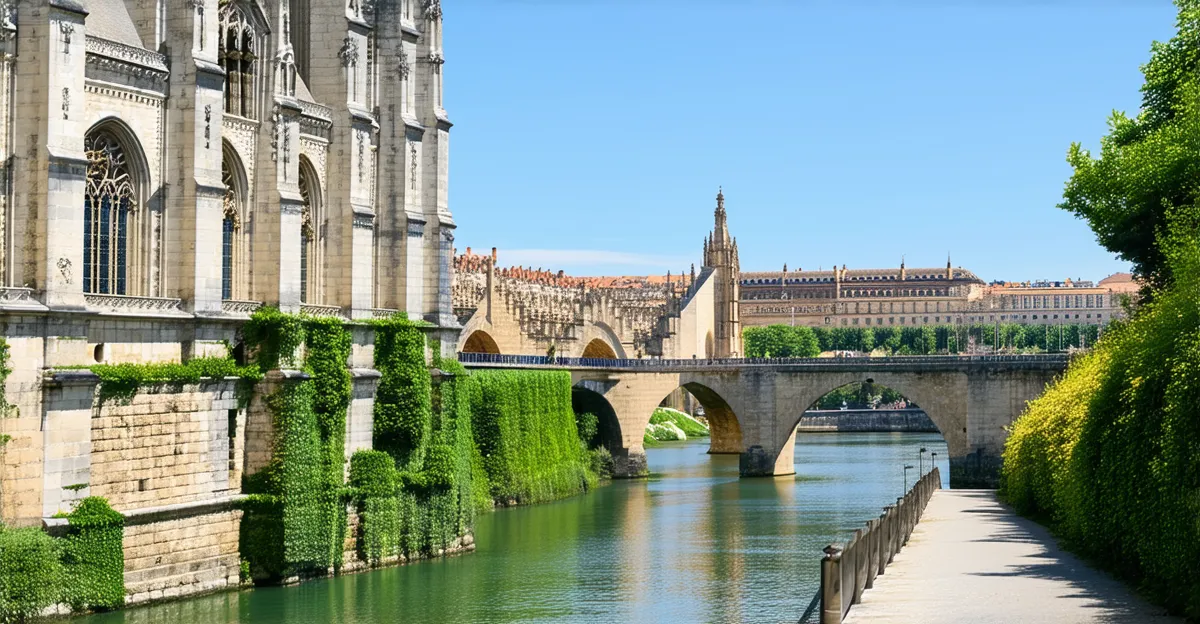
Lyon is easiest to understand as connected geographic layers: Roman Fourvière above Renaissance Vieux Lyon, the Presqu'île between two rivers, the working history of Croix-Rousse, and the modern southern Confluence. A strong itinerary groups those layers instead of collecting distant attractions in one day.
Use this hub to choose a trip length, secure only the experiences that need a reservation, and open the specialist guides for transport, food, neighborhoods, day trips and accessibility. The schedules are decision frameworks, not promises that every traveler should complete every stop.
Choose the Right Lyon Trip Length
Turn this guide into a personal route with our free Lyon itinerary planner.
| Usable time | Strong plan | Main tradeoff |
|---|---|---|
| 1 day | Fourvière, Vieux Lyon and Presqu'île | Only one main interior |
| 2 days | Historic west plus Croix-Rousse and central Lyon | Confluence or the park becomes optional |
| 3 days | Core history plus two district or museum themes | No rushed regional excursion |
| 5 days | Four city days plus one day trip or slow day | Still requires selective museums |
Count full days rather than hotel nights. An evening arrival is useful for a nearby meal and river walk, but it does not support a museum-heavy schedule. Two days is a practical minimum; three days gives most first-time visitors the best balance.
One Day: Follow the City's Historic Layers
The one-day Lyon itinerary starts on Fourvière, uses the Roman site and descends into Vieux Lyon before crossing to the Presqu'île. Choose one substantial interior: Lugdunum, Gadagne or the Fine Arts Museum. The basilica and Roman theatres are free, so an exterior-led day still has strong historical depth.
Starting uphill lets gravity help the route. Use funicular F2 when operating, then descend only by a path that suits the weather and the group's mobility. Do not cross to Croix-Rousse or the park merely to add a district name.
Two Days: Add Croix-Rousse Without Crisscrossing
The new two-day Lyon itinerary gives day one to Fourvière and Vieux Lyon, then uses day two for Croix-Rousse and the Presqu'île. This geographic split creates space for a guided silk or traboule visit, a museum or a long meal without turning both days into transport chains.
If Parc de la Tête d'Or matters more than Croix-Rousse, substitute it as a complete half-day. Families often benefit from that choice; industrial-history travelers may prefer the hill.
Three Days: The First-Visit Sweet Spot
The three-day Lyon plan retains the historic core, adds Croix-Rousse and the Presqu'île, then gives the final day to Confluence, the park or deeper food and museum time. It is broad enough to show different phases of the city without using a regional excursion to fill the calendar.
Assign weekdays only after checking each museum. Lugdunum normally closes Monday; Musée des Confluences normally opens Tuesday through Sunday. Religious services, exhibitions and temporary work can change access even on a usual opening day.
Five Days: Depth Plus One Regional Choice
The five-day itinerary can protect four distinct city themes and one regional day. Vienne is the simplest Roman-history extension by rail; Pérouges needs a plan beyond Meximieux-Pérouges station; Beaujolais often requires a car, driver or tour to connect villages and vineyards safely.
Keep the fifth day flexible until weather and energy are clear. A slow Lyon day can be more valuable than an excursion added only because the calendar has space.
Plan by Geographic Zones
Fourvière and Vieux Lyon: Roman remains, basilica, Renaissance streets and marked traboules. Presqu'île: Bellecour, Jacobins, Cordeliers, Terreaux and major civic buildings. Croix-Rousse: slopes, plateau and canut history. Rhône east bank: Part-Dieu, Brotteaux and Parc de la Tête d'Or. Southern peninsula: Perrache and Confluence.
Link stops inside one zone before using TCL between zones. River crossings and hills affect actual effort more than a flat overview map suggests. Save the exact entrance for large sites and stations.
Current 2026 TCL Facts
TCL's unified network uses six fare zones. Most central visitor travel uses the zones 1–2 product. Contactless payment currently charges €2.10 for a central journey with transfers for one hour and a qualifying €6.90 daily cap after more than three journeys. Present the same card or device at every connection; one card represents one passenger.
A normal ticket covering zone 1 includes the funicular, while TCL also offers a €3.60 same-day funicular return. Navigône is a separate €3 one-way river-shuttle fare unless a qualifying season ticket covers it. Rhônexpress is not an ordinary TCL transfer.
Fourvière and Lugdunum: Separate the Calendars
Individual entry to Fourvière Basilica and the crypt is free. Current general basilica hours are 07:00–20:00 Monday through Saturday and to 21:00 Sunday, but services and construction can change visitor movement. The basilica and funicular are accessible under current guidance; the Rosary Gardens and rooftop route are not wheelchair accessible.
Lugdunum museum normally opens Tuesday–Friday 11:00–18:00 and weekends 10:00–18:00. Full-price admission is €4 outside temporary exhibitions or €7 during them, with free first Sundays. The outdoor Roman theatres have separate free seasonal hours.
Use Traboules as Shared Residential Space
The public-access agreement generally makes marked courtyards and traboules available 07:00–19:00 throughout the year, but temporary signs and resident needs override that window. Move quietly, avoid photographing residents, do not block doors and never force an entrance. The traboule guide explains identification and etiquette.
A guided visit is useful for canut and merchant history and can clarify which passages are currently accessible. The route still works when every interior passage is skipped because the public streets carry the district's broader history.
Book in the Right Order
- Choose the trip length and one geographic theme per half-day.
- Check normal and exceptional closure dates.
- Reserve the must-do guided traboule visit, food tour, cruise or special exhibition.
- Place the surrounding district around that fixed time.
- Reserve a priority bouchon meal if the restaurant matters.
- Keep at least one same-area alternative for weather or closure.
Free entry does not mean unlimited access. Services, capacity, security and resident agreements still control the visit.
Prepare Closure-Day Substitutions
If Lugdunum museum is closed, retain Fourvière, the outdoor theatres and Vieux Lyon rather than moving across the city. If Parc de la Tête d'Or closes for wind, substitute a museum or covered central route after checking current opening. If a traboule is shut, continue along public streets instead of searching for an unverified private door.
A good alternative stays in the same zone. This protects booked meals and later plans. Keep one exterior and one interior possibility for each half-day, but do not pre-book both unless refunds make that reasonable.
Decide Whether the Lyon City Card Fits
Current official web adult prices are €29.90 for 24 hours, €41.90 for 48 hours, €52.90 for 72 hours and €63.90 for 96 hours. The standard card advertises 26 museums, TCL zones 1–2, one guided visit and a seasonal sightseeing cruise. It excludes ordinary Rhônexpress and Navigône; combined airport variants are separate products.
List only admissions and activities already present in a realistic plan, then compare their current eligible prices. Free Fourvière, Roman theatres, parks and streets do not improve the calculation. A card may still offer convenience, but call convenience and monetary savings separate benefits.
Plan the Airport Transfer Separately
Rhônexpress currently lists €16 online one way and €28 online return for an adult, with higher machine prices and an onboard transaction supplement. The scheduled journey to Part-Dieu is 29 minutes. Under-12s travel free under the operator's current rule. A standard ticket does not include onward TCL travel.
Compare the complete airport-to-hotel journey, especially for groups, late arrivals and addresses far from Part-Dieu. Check live works and replacement service before departure. The airport guide sets out the tradeoffs without treating one mode as universal.
Build Food into the Route
Lyon's food reputation should shape the schedule, not create extra cross-city travel. Put a market, bakery or casual lunch inside the current district and reserve one priority meal. The official Bouchons Lyonnais label is a useful current reference, but it does not make every traditional dish suitable for every diet or budget.
Use the bouchon dish guide to understand menu language. A guided food tour suits travelers buying interpretation and logistics; the budget food route is a self-guided alternative.
Choose Where to Stay by the Daily Route
Presqu'île is the most balanced walking base for many first visits. Vieux Lyon prioritizes atmosphere but can involve cobbles, noise and old-building stairs. Part-Dieu simplifies train and airport transfers; Croix-Rousse adds character and hills; Confluence offers modern surroundings with longer trips to the historic west.
The Lyon accommodation guide compares the practical tradeoffs. Always map the exact property entrance, station exit and late-evening route, then include transport, taxes, breakfast, cancellation and luggage in the complete price.
Use a Sustainable Daily Rhythm
Start with the attraction most sensitive to opening, heat or a timed booking. Put lunch in the next district rather than traveling to a famous address. In the afternoon, choose one substantial museum or one large neighborhood walk. A late-day riverbank, park or café can expand when energy remains and disappear when the fixed plan runs long.
Allow seating and toilet time deliberately. Stone streets, slopes, museum floors and station corridors accumulate effort. A schedule that remains useful when each transfer takes ten minutes longer is stronger than one optimized to the fastest map estimate.
Adapt for Families, Food Travelers and Repeat Visitors
Families: use one main interior and pair it with the free park or riverfront. Food-focused travelers: protect meal reservations and reduce the attraction count. History travelers: give Lugdunum, Vieux Lyon and Croix-Rousse separate blocks. Photographers: choose morning and evening viewpoints while checking rules for equipment.
Repeat visitors: can build around Confluence, the Croix-Rousse plateau, exhibitions or a regional day. Lower-intensity travelers: can use the funicular, buses and one-district days. Removing a distant stop is sound planning, not a failed itinerary.
Plan for Weather and Accessibility
Use Météo-France for live heat, rain, storms and wind warnings. Lyon's hills, cobbles and garden descents need slower movement when wet. Parc de la Tête d'Or can close when winds exceed 70 km/h. Museum hours and indoor conditions should be checked rather than assumed to solve every weather problem.
Accessibility must be verified door to door. A basilica, station or museum may provide access while the connecting historic street does not. Check lifts, platform transfers, thresholds, toilets and the exact entrance. Keep a direct bus, taxi or same-area alternative available when a route depends on stairs.
Treat Arrival and Departure as Partial Days
An airport landing time is not a central-Lyon arrival time. Add immigration where relevant, baggage, the walk to ground transport, the 29-minute scheduled Rhônexpress journey, transfer from Part-Dieu and hotel luggage arrangements. Rail arrival is usually simpler but Part-Dieu and Perrache are large enough that the correct exit still affects the first walk. Do not count an evening arrival as one of the itinerary's full sightseeing days.
Use arrival day for the accommodation district, a flexible meal or a nearby riverbank. Avoid placing the trip's only guided visit, cruise or museum slot after transport that can be delayed. On departure day, choose a final stop on the direct route to the station and leave enough time to retrieve luggage. Verify storage opening hours, identification rules and the latest practical collection time rather than assuming a reception desk operates all day.
Visitors changing trains at Part-Dieu should distinguish connection time inside the station from a city visit. A long gap may support lunch nearby or a short park visit, but Vieux Lyon and Fourvière introduce transfers, elevation and a riskier return. Save the train number, platform information when released and the station entrance offline. The last hours of the trip should protect onward travel, not carry the attraction that mattered most.
Choose Walking, TCL, Bike, Taxi or Car Deliberately
Walking is usually best inside Vieux Lyon, Presqu'île and a single neighborhood, but it does not erase elevation. Use the Fourvière funicular or an appropriate bus to avoid repeating steep climbs. Metro and tram are strongest for deliberate transfers between districts; buses can provide a more direct or lower-stair route when live traffic and stop access cooperate. The Lyon transport comparison separates those choices from the TCL map and ticket guide.
Bike share can suit confident riders on river corridors, but a route must account for traffic, docking availability, weather, helmets and the ability of every traveler. Do not attach a bike segment to a timed reservation without a fallback. Taxis and ride services can protect a late connection, accessible journey or group transfer, although road restrictions and events can change pickup points. Confirm the exact meeting place before requesting the ride.
A private car is usually a liability in the historic center because parking, restricted streets and navigation add work. It becomes more useful for dispersed Beaujolais routes or accommodation beyond strong public transport. If driving, verify current low-emission and access rules, hotel parking dimensions and the full cost before arrival. Never plan a wine day around a driver who intends to taste. The correct mode can change by day; consistency is less important than a safe, direct route.
Balance Museums, River Time and Public Space
Lyon's major interiors answer different questions. Lugdunum explains Roman life beside the archaeological site. Musée Gadagne adds city and puppet history inside Vieux Lyon. The Fine Arts Museum supports a collection-led central day, while Musée des Confluences is a large science-and-society experience at the southern meeting of the rivers. Choose according to the day's theme and current exhibition, not a generic ranking.
Allow two or more hours for a priority museum, plus entry, orientation, cloakroom and rest. Pair it with its surrounding area rather than another distant interior. When temporary exhibition pricing changes—as at Lugdunum—the official ticket page controls. First-Sunday or free-entry opportunities can increase queues and do not remove closure-day checks. Families and visitors sensitive to long gallery days should choose the rooms that answer their main interest before arrival.
River time can mean a sightseeing cruise, an ordinary riverside walk or the Navigône shuttle. These are not interchangeable. A narrated cruise is a scheduled activity; Navigône is transport with its own current fare; the banks are flexible public space. Check boarding point, route, duration, weather policy and accessibility before paying. The Lyon river guide keeps those products distinct so the schedule does not rely on a boat that serves a different purpose.
Choose a Day Trip by Door-to-Door Effort
Vienne combines a direct regional rail option with Roman heritage. Pérouges uses Meximieux-Pérouges station but still needs a safe onward route to the medieval village. Beaujolais is dispersed; a driver, rental car or tour often makes more sense than stitching villages together by limited public service.
Use live SNCF schedules and destination sites for the exact date. The day-trip guide compares logistics. On a two-day first visit, remain in Lyon unless the regional destination is the trip's main purpose.
Lyon Planning Library
Use one specialist guide for the next decision instead of opening several overlapping itineraries:
- One Day in Lyon: A Realistic First-Time Itinerary
- 2 Days in Lyon: A Realistic First-Time Itinerary
- 3 Days in Lyon: Area-Based First-Time Itinerary
- 5 Days in Lyon: City, Food and One Day Trip (2026)
- Best Photo Spots in Vieux Lyon: A Respectful Route
- Best Restaurants in Lyon: How to Choose and Book
- Lyon River Cruise Guide: Seasons, Routes and Tickets
- Best Time to Visit Lyon: Weather, Crowds and Events
- Best Day Trips from Lyon: Train, Car and Tour Choices
- Getting Around Lyon: Walk, TCL, Bike, Taxi or Car
- Hidden Gems in Lyon: Quiet Alternatives by District
- Croix-Rousse Hidden Gems: Silk, Murals and Views
- How to Find Lyon Traboules Without Disturbing Residents
- Lyon Airport to City: Rhônexpress, Taxi and Transfers
- Lyon City Card Guide: 2026 Prices, Value and Use
- Fourvière Hill Guide: Basilica, Lugdunum and Routes
- Self-Guided Lyon Food Tour on a Budget
- Lyon Food Walking Tours: How to Choose and Book
- Lyon Public Transport Map, Zones and Tickets (2026)
- Lyon Travel Budget: Current Costs and Saving Choices
- Must-See Lyon Attractions: A Priority Guide
- What to Eat in a Lyon Bouchon: Essential Dishes
- Old Lyon Walking Guide: Vieux Lyon Route
- Presqu'île Walking Tour from Place Bellecour
- Parc de la Tête d'Or: What to See and Plan
- Where to Stay in Lyon: Areas for Every Trip
Final Lyon Checklist
- Count full usable days, not hotel nights.
- Group each half-day by district and elevation.
- Check museum closure days and temporary exhibitions.
- Use only marked open traboules and respect residents.
- Verify TCL zones, airport exceptions and every validation.
- Compare City Card inclusions with the confirmed plan.
- Reserve only priority tours, cruises and meals.
- Save tickets, exact entrances and the hotel address offline.
- Check weather, wind, works and accessibility before leaving.
- Keep one flexible same-area alternative.
Plan with Live Information
This guide was checked against first-party information on August 4, 2026. Lyon transport, attraction access, prices, weather, works, exhibitions and event controls can change after publication. Reopen the official source that controls your date before paying, departing or relying on an accessible route. A reservation manages one part of the visit; it does not remove security, guarantee every space or protect a connection scheduled without buffer.
Frequently Asked Questions
How many days do you need in Lyon?
Two full days cover the historic core and a second neighborhood-and-museum day. Three days provides the best first-visit balance; five days supports slower exploration plus one day trip.
Is one day enough for Lyon?
One day is enough for Fourvière, Vieux Lyon and the Presqu'île when you choose at most one substantial interior and keep the route geographically connected.
What should you book first?
Reserve any must-do guided traboule visit, food tour, cruise or special museum exhibition first. Most public streets, the basilica and Roman theatres do not require a standard admission booking.
Is the Lyon City Card always worth buying?
No. Compare the exact museums, guided activity, cruise and transport you will use with the current card price and closure calendar.
Can you visit Lyon without a car?
Yes. The historic center is walkable and TCL connects the main districts. A car is usually more useful for selected countryside day trips than for central Lyon.
Is Fourvière Basilica free?
Yes. Individual entry to the basilica and crypt is free; guided and rooftop experiences can have separate prices and access requirements.
What is the best base for a first visit?
Presqu'île is the most balanced walking base, Vieux Lyon prioritizes atmosphere, Part-Dieu simplifies rail arrivals, and Croix-Rousse suits travelers comfortable with hills.
How current are the prices here?
Core transport, City Card, airport, Fourvière and Lugdunum facts were checked on official sites on August 4, 2026. Recheck for the visit date.