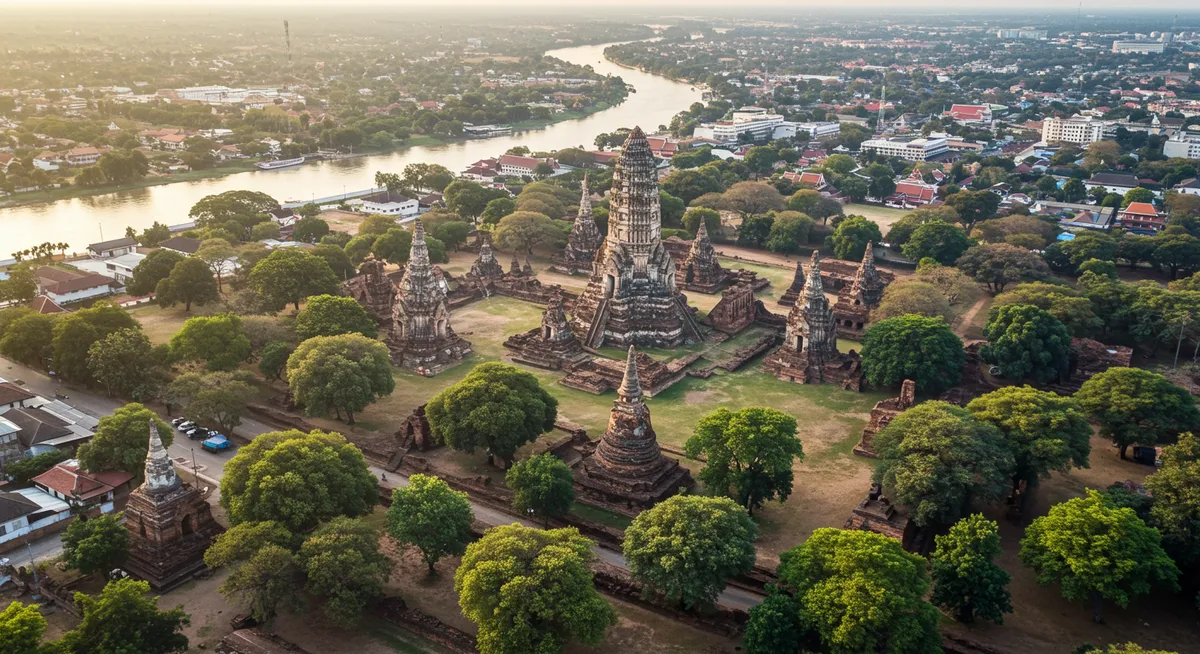
TL;DR: The best time to visit Ayutthaya is during the cool and dry season from November to February, when temperatures hover between 20-30°C with minimal rain. For budget travelers willing to brave the heat, March to May offers thinner crowds and lower prices. The rainy season (June-October) rewards visitors with lush scenery and the lowest accommodation rates, but carries a flooding risk from August to October.
Why Timing Your Ayutthaya Visit Matters
Turn this guide into a personal route with our free Ayutthaya itinerary planner.
Ayutthaya, Thailand's former royal capital and a UNESCO World Heritage Site, is an open-air archaeological park where most exploration happens outdoors. Unlike climate-controlled museums, your experience here depends heavily on the weather. Scorching midday heat, sudden monsoon downpours, or even seasonal flooding along the Chao Phraya, Lopburi, and Pa Sak rivers can significantly impact your visit. Choosing the right month means the difference between a comfortable day cycling through temple ruins and an exhausting slog through mud and 40°C heat. This guide breaks down every season so you can pick the perfect window for your 2026 trip.
Cool and Dry Season: November to February (Peak Season)
Without question, November through February is the best time to visit Ayutthaya for most travelers. Daytime temperatures range from 25°C to 32°C (77-90°F), while evenings can dip to a pleasant 20°C (68°F) in December and January. Humidity stays low, rainfall is negligible (under 20 mm per month), and clear skies make this the ideal window for photography at sites like Wat Mahathat, Wat Phra Si Sanphet, and Wat Chaiwatthanaram.
The downside is popularity. This is peak tourist season across Thailand, which means larger crowds at major temples, higher hotel rates, and busier transport from Bangkok. To make the most of these months, arrive at the historical park by 8:00 AM before tour groups descend, and book accommodation at least two weeks in advance. If you need help structuring your days, our Ayutthaya itinerary covers the must-see temples in an efficient route.
Month-by-Month Breakdown (Nov-Feb)
- November: 24-32°C, 30 mm rain. Transition month; occasional late-monsoon showers early in the month. Loy Krathong festival lights up the ruins.
- December: 21-31°C, 9 mm rain. Driest month of the year. Ayutthaya World Heritage Fair brings cultural performances and night markets. Expect peak-season pricing.
- January: 20-32°C, 10 mm rain. Coolest month, most comfortable for cycling the historical park. Busiest tourist month with highest hotel rates.
- February: 22-33°C, 15 mm rain. Still dry with slightly warming temperatures. Makha Bucha Day (Buddhist holiday) sees temple ceremonies worth attending.
Hot Season: March to May (Budget-Friendly)
From March onward, Ayutthaya's temperatures climb sharply. By April, the hottest month, mercury routinely hits 38-40°C (100-104°F) with suffocating humidity. Outdoor exploration becomes physically demanding, and heat exhaustion is a real concern for visitors spending full days at the ruins.
However, this season has genuine advantages. Tourist numbers drop significantly, meaning you can photograph the famous Buddha head in the tree roots at Wat Mahathat without jostling for position. Hotel prices fall 30-50% compared to peak season. If you plan around the heat by exploring from 7:00-10:00 AM and again from 4:00-6:00 PM, the hot season can be surprisingly rewarding. Our guide on how to get to Ayutthaya from Bangkok covers air-conditioned transport options that make the journey comfortable even in the heat.
Mid-April also brings Songkran (April 13-15), Thailand's famous water festival. Ayutthaya's Songkran celebrations are particularly memorable, with elephants joining the water-splashing festivities near the historical park. It is one of the most unique cultural experiences in Thailand, though temples close earlier during these days.
Rainy Season: June to October (Off-Season)
The monsoon arrives in June, bringing daily afternoon downpours that typically last one to three hours. September is the wettest month, averaging 285 mm of rainfall across 19 rainy days. Morning conditions are often clear and pleasant, with overcast skies keeping temperatures a more manageable 28-33°C.
The rainy season transforms Ayutthaya into a photographer's paradise. Ancient brick temples stand against dramatic cloud formations, surrounded by brilliant green vegetation. Tourist numbers hit their annual low, creating an intimate atmosphere at even the most popular sites. Accommodation prices drop to their cheapest, and you can often negotiate further discounts for multi-night stays.
The major risk factor is flooding. Ayutthaya sits at the confluence of three rivers and is historically prone to seasonal floods, particularly from August through October. In severe flood years, parts of the historical park can become partially submerged. Check local conditions before traveling during these months. When weighing your options, our comparison of an Ayutthaya day trip vs. overnight stay is especially relevant during rainy season, as overnight stays give you flexibility to work around unpredictable weather.
Ayutthaya Weather at a Glance
| Month | Avg High (°C) | Avg Low (°C) | Rainfall (mm) | Rating |
|---|---|---|---|---|
| January | 32 | 20 | 10 | Excellent |
| February | 33 | 22 | 15 | Excellent |
| March | 35 | 24 | 30 | Good |
| April | 36 | 26 | 65 | Fair |
| May | 34 | 25 | 160 | Fair |
| June | 33 | 25 | 155 | Fair |
| July | 32 | 25 | 175 | Fair |
| August | 32 | 25 | 215 | Caution |
| September | 32 | 24 | 285 | Caution |
| October | 32 | 24 | 200 | Caution |
| November | 32 | 23 | 30 | Excellent |
| December | 31 | 21 | 9 | Excellent |
Major Festivals and Events in 2026
Timing your visit around Ayutthaya's festivals adds a cultural dimension that goes beyond temple sightseeing. Here are the key events for 2026:
- Songkran (April 13-15): Thailand's New Year water festival. Ayutthaya's celebrations are famous for including elephants in the water-splashing festivities. Expect road closures, temple schedule changes, and a party atmosphere throughout the old city.
- Visakha Bucha Day (May, full moon): One of the most important Buddhist holidays, marking the birth, enlightenment, and death of the Buddha. Candlelit processions circle Ayutthaya's ancient temples after sunset, creating a deeply atmospheric experience.
- Loy Krathong (November 25, 2026): The Festival of Lights transforms Ayutthaya's waterways into a glowing spectacle. Thousands of krathong (floating offerings) are released on the rivers and ponds surrounding temples like Wat Chaiwatthanaram. This is arguably the most photogenic night of the year in Ayutthaya.
- Ayutthaya World Heritage Fair (December): A multi-day celebration of the city's UNESCO status, featuring traditional Thai dance performances, light-and-sound shows projected onto temple walls, local food markets, and historical reenactments. Exact dates are announced by Ayutthaya's provincial government each year.
- New Year Countdown (December 31): Special evening events and illuminations at select historical park temples welcome the new year.
For a deeper look at which temples host these events, consult our Ayutthaya temple guide and map.
Best Time to Visit Ayutthaya by Travel Style
Different travelers have different priorities. Here is how each season matches specific travel styles:
- First-time visitors: November to February. Comfortable weather, all sites accessible, plenty of fellow travelers to share tips with.
- Budget travelers: March to May or June to October. Hotel rates drop 30-50%, street food stalls are less crowded, and you can negotiate tuk-tuk fares more easily. Check our Ayutthaya budget travel guide for money-saving strategies.
- Photographers: Late October to early November (monsoon ending, green landscapes, fewer tourists) or Loy Krathong night in November.
- History enthusiasts: December during the World Heritage Fair, when historical reenactments and expert-led tours bring Ayutthaya's past to life.
- Cyclists: December to January. Coolest temperatures make the flat 5-km loop through the historical park enjoyable all day. Read our Ayutthaya bike rental tips before you go.
- Foodies: Any season works for Ayutthaya's famous roti sai mai and boat noodles, but the cool season night markets during the Heritage Fair are a highlight. See our best local food in Ayutthaya guide for restaurant picks.
Practical Tips for Every Season
- Getting there: Ayutthaya is 80 km north of Bangkok. The train takes about 1.5 hours and costs under 100 THB; minivans from Victory Monument take about 1 hour. Our detailed guide on getting to Ayutthaya from Bangkok covers all options.
- What to wear: Lightweight, breathable clothing year-round. Shoulders and knees must be covered when entering active temples. During rainy season, pack a compact rain jacket rather than relying on umbrellas (temple grounds are windy).
- Sun protection: Sunscreen (SPF 50+), a wide-brimmed hat, and sunglasses are essential in every season. Even overcast days in the rainy season deliver strong UV.
- Hydration: Carry at least 1.5 liters of water per person. Convenience stores inside the historical park area sell cold drinks, but options thin out at remote temples.
- Where to stay: The riverside guesthouses near U-Thong Road offer the best balance of price and location. See our where to stay in Ayutthaya guide for recommendations by budget.
- Multi-day itineraries: One day covers the highlights, but two to three days let you explore lesser-known sites like Wat Yai Chai Mongkhon and the floating market. Browse our 3-day Ayutthaya itinerary or 5-day Ayutthaya itinerary for complete plans.
- River boat trips: Sunset cruises along the Chao Phraya are spectacular year-round but most comfortable November through February. Details in our Ayutthaya river boat trip experience article.
Frequently Asked Questions
What is the best month to visit Ayutthaya?
Is Ayutthaya worth visiting in the rainy season?
How many days do you need in Ayutthaya?
What should I pack for an Ayutthaya trip?
Does Ayutthaya flood every year?
Can I do Ayutthaya as a day trip from Bangkok?
Is Ayutthaya safe for solo travelers?
The best time to visit Ayutthaya in 2026 ultimately depends on what matters most to you. The cool, dry months from November through February deliver the most comfortable sightseeing conditions and coincide with the city's best festivals. Budget-conscious travelers will find excellent value during the hot season (March-May) or early rainy season (June-July). Whichever window you choose, Ayutthaya's 400+ year-old temples, rich street food scene, and proximity to Bangkok make it one of Thailand's most rewarding destinations. Start planning your visit today with our complete Ayutthaya itinerary.