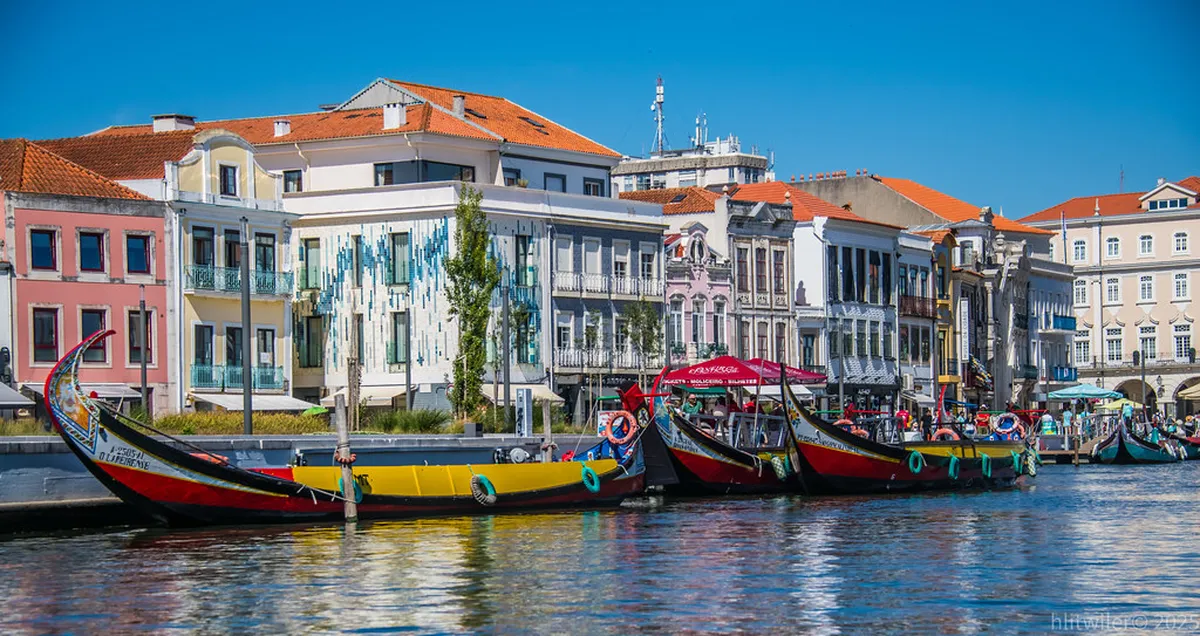
Nazaré is one of Portugal's most dramatic coastal towns, perched along the Silver Coast about 120 kilometres north of Lisbon. Most visitors make the trip to witness the record-breaking big waves or to explore the clifftop Sítio district above the main beach. Getting there from Lisbon takes roughly 90 minutes to two hours, depending on your chosen transport. This guide covers every option — bus, car, organized tour, and why the train is more trouble than it's worth.
Finding the right how to reach Nazaré method depends on your schedule and budget. The town blends deep fishing heritage with elite surf culture in a way few places in Portugal can match. Planning your journey in advance — especially during the October-to-March wave season — ensures you get the most out of a single day.
Travel Overview: Distance and Time to Nazaré
Turn this guide into a personal route with our free nazaré itinerary planner.
Nazaré sits 120 kilometres north of central Lisbon. By express bus the journey runs about 1 hour 40 minutes to 2 hours. Driving via the A8 motorway takes around 1 hour 20 minutes in normal traffic, though rush hour departures before 09:00 can add 20–30 minutes leaving the capital. Organized tours typically allow 2–3 hours in town after accounting for other stops.
Here is a quick comparison of the three main options for 2026:
| Method | Duration | Approx. Cost | Best For |
|---|---|---|---|
| Express Bus (Rede Expressos) | ~1h 40m | €10–15 one-way | Solo travelers, budget trips |
| Express Bus (FlixBus) | ~1h 50m | €5–12 one-way | Budget travelers, flexible dates |
| Driving (A8) | ~1h 20m | €7 toll + fuel | Families, Silver Coast exploration |
| Organized Day Tour | Full day | €50–90 per person | First-timers, multi-stop itineraries |
The where to stay in Nazaré question often shapes the transport decision too. If you plan to spend the night rather than day-trip, driving or the bus both work well — but the bus drops you closest to the center.
Taking the Bus: Rede Expressos vs. FlixBus
The express bus is the most popular choice for travelers without a car. Two companies run this route: Rede Expressos and FlixBus. Rede Expressos departs from Sete Rios terminal with close to hourly service throughout the day. FlixBus departs from Oriente Station with four to six runs daily. Both take 1 hour 40 minutes to 2 hours depending on stops.
Rede Expressos tickets typically cost €10–15 one-way and can be booked up to 30 days in advance via the Rede Expressos official site. FlixBus fares start as low as €5 when booked early, making it the cheaper option for flexible travelers. Both carriers provide free Wi-Fi, USB charging ports, and air conditioning. Seats fill quickly on summer weekends and during the November-to-February wave season, so book at least a few days ahead during those periods.
The bus drops you at the Nazaré terminal on Avenida Vieira Guimarães, a short flat walk from the main beach promenade. This is a practical advantage over driving, where parking near the waterfront is extremely limited in summer.
Bus Stations in Lisbon: Sete Rios vs. Oriente
Sete Rios is the main terminal for Rede Expressos. Reach it via the Metro Blue Line — exit at Jardim Zoológico (not "Sete Rios," which is a different stop on the suburban rail network). The terminal entrance sits just outside the metro exit. Arrive at least 20 minutes early: the station has multiple platforms and no central departures board, so finding your gate takes a few minutes. The Sete Rios Bus Station guide has a useful platform map.
Important: you cannot buy tickets from the driver at Sete Rios. Purchase at the ticket windows inside the terminal or via the Rede Expressos app before you arrive. Bring your QR code or printed ticket — staff check it at the gate before boarding. Oriente Station, used by FlixBus, is far easier to navigate: it has large digital departure boards and is directly connected to the Metro Red Line from Humberto Delgado Airport.
If you are coming from the Alfama or Baixa neighborhoods, Oriente is actually faster to reach by metro than Sete Rios. Both stations have luggage lockers, cafés, and ATMs. First departures from both terminals are typically around 07:00, with service running until around 19:00–20:00 depending on the day.
Booking Online and Tracking Your Bus
Both Rede Expressos and FlixBus offer mobile apps that display a QR code ticket directly on your phone — no printer needed. Rede Expressos also allows booking via its website up to 30 days in advance. FlixBus often runs promotional fares for trips booked two or more weeks ahead; checking on a Tuesday or Wednesday tends to surface cheaper slots.
FlixBus includes real-time GPS tracking in its app so you can see exactly where your bus is during the journey. This is useful if you are connecting from another service and want to verify the bus is on schedule. Rede Expressos sends SMS updates for gate changes but does not offer live map tracking. Neither company requires you to check in — just show your QR code at the boarding gate and board.
Driving to Nazaré: A8 Route, Tolls, and Parking
Driving gives you the most flexibility to explore the Silver Coast at your own pace. The A8 motorway from Lisbon is the standard route: it is well-maintained, clearly signed, and almost entirely dual-carriageway. Expect to pay approximately €7 in electronic tolls each way. The most convenient way to pay is a Via Verde transponder, which deducts tolls automatically as you pass through gantries without stopping. If you are renting a car, the rental agency will usually offer a Via Verde option for an extra daily fee — it is worth it to avoid manual toll payment queues.
Without Via Verde, rental cars in Portugal are typically registered for the electronic system by the rental company, who charge the toll costs to your card after the trip (sometimes with a handling fee). Check with your rental provider before you travel to understand how tolls will be billed. Budget around €15–18 in tolls for a round trip.
Parking in Nazaré splits into two distinct scenarios. Near the main beach (lower town), parking is extremely tight from June through August and fills by 10:00 on busy weekends. The streets in the old fishing quarter are narrow and difficult to navigate with a rental car. A far better strategy is to park in the Sítio district at the top of the cliff — there are several large open-air lots near the lighthouse with plenty of space even on busy days. From Sítio you can walk to the fort, the viewpoint, and the funicular down to the beach. Consider stopping in the medieval walled town of Óbidos on the way — it adds only 20 minutes and is a natural A8 detour.
Best Nazaré Day Tours from Lisbon
Organized day tours are ideal for first-time visitors who want to combine Nazaré with nearby landmarks without the logistics of driving. The most popular itineraries pair Nazaré with Fátima, Batalha Monastery, and Óbidos — covering four significant stops in a single day. Browse current options on GetYourGuide Nazaré; group tours typically run €50–65 per person with hotel pickup included.
Private tours cost more (usually €80–120 per person) but let you set the pace. If watching the big waves is your primary goal, a private guide can time the Praia do Norte visit around the morning swell when light and conditions are best. Group tours generally allow two to three hours free time in Nazaré, which is enough to ride the funicular, walk to the lighthouse, and have lunch — but not much more.
A two-day option running through Sintra, Cascais, Fátima, and Nazaré is worth considering if you have the time. This format lets you sleep in Nazaré rather than rushing back to Lisbon by evening. Check the Óbidos to Nazaré day trip route for a focused coastal itinerary that suits self-drivers and tour-goers alike.
The Train to Nazaré: Why It Is Not Recommended
There is no direct train to Nazaré. The town simply does not have a station. The nearest rail stop is Valado dos Frades, about 6 kilometres from the beach — still requiring a taxi or local bus to cover the final stretch, and local bus timings rarely align with train arrivals.
An alternative rail route goes Lisbon Santa Apolónia → Caldas da Rainha, then a connecting bus from Caldas into Nazaré. The train leg to Caldas alone takes around two and a half hours, making the total journey three hours or more door to door. By comparison, the direct express bus from Sete Rios takes under two hours. Unless you have a specific reason to travel by rail, the bus is faster, cheaper, and drops you closer to the center.
What to See: Sítio District, the Funicular, and the Big Waves
The Sítio district sits on a clifftop 110 metres above the lower town and delivers the most spectacular coastal views in Nazaré. The best way to reach it is the funicular, which departs roughly every 15 minutes and costs €4 roundtrip. The funicular was built in 1889, designed by a protégé of Gustave Eiffel — the engineering is part of the experience. The ride takes about two minutes and ascends over a dramatic sweep of red-tiled rooftops before arriving at the Sítio square.
At the top, a short walk leads to the São Miguel Arcanjo Fort and its lighthouse (Farol da Nazaré), built in 1577 and now home to the Surf Museum. Admission is €1. The fort terrace is the premier viewing platform for the big waves — but the key detail most first-timers miss is that the giant waves break at Praia do Norte (the north beach, on the far side of the headland), not at the main beach below the town. If you arrive expecting to see 20-metre walls of water from the promenade, you will be disappointed. From the fort, however, you look directly down onto Praia do Norte and the full force of the Atlantic swell.
The big wave season runs October through March. The underwater Nazaré Canyon — one of the deepest submarine canyons in Europe — channels Atlantic swells and causes them to double in height as they approach the shore. The current official world record stands at 86 feet, surfed by German big-wave surfer Sebastian Steudtner at Nazaré in 2020 (confirmed by Guinness World Records). In 2026, the WSL Nazaré Tow Surfing Challenge continues to draw the world's top big-wave athletes each winter. Summer brings calmer water, a 1.5-kilometre sandy main beach ideal for sunbathing, and water temperatures around 18°C — cool but swimmable.
Also worth a visit in Sítio: the Sanctuary of Our Lady of Nazareth, a pilgrimage church dating to 1377, and the Miradouro do Suberco viewpoint, from which the classic wide-angle shot of Nazaré beach is taken.
- Funicular hours: roughly 07:00–24:00 in summer, 07:00–20:00 in winter (check locally on arrival)
- Funicular cost: €4 roundtrip, €2 one-way
- Fort/Surf Museum: open daily, €1 entry
- For big waves: aim for November–February; check Windguru or local surf reports before traveling
What to Eat and What to See Nearby
Seafood is the main event in Nazaré. Skip the tourist-facing restaurants directly on the promenade and walk a block or two inland into the fishermen's quarter (Bairro dos Pescadores) where prices drop and quality rises. Grilled sardines, caldeirada (fish stew), and arroz de marisco (seafood rice) are the dishes to order. The Michelin-listed Taberna d'Adélia draws long lunch queues; arrive when they open to avoid a wait.
You may notice older women in the streets wearing layered, colorful skirts. This is the traditional Nazaré dress — seven skirts worn simultaneously, one for each day of the week. The tradition originates from the fishing community: women wore multiple layers while waiting on the beach for fishing boats to return, partly for warmth and partly as a form of portable wardrobe. Today the dress is largely ceremonial, worn by a shrinking number of older residents and by vendors selling dried fish along the seafront.
Within easy reach of Nazaré, Batalha Monastery (30 minutes south by car) is a UNESCO World Heritage site worth the detour — its unfinished Gothic chapels are among the most striking in Europe. Óbidos, a medieval walled town 25 minutes south, is a natural add-on for drivers. Fátima lies about 40 minutes east and combines well on organized day tours. Check the best seafood Nazaré restaurants guide before you go to reserve ahead in peak season.
Planning the rest of your Nazaré trip? See our complete Nazaré itinerary, Nazaré beaches and Praia do Norte and Nazaré weather month by month.
Frequently Asked Questions
How much is the bus ticket between Lisbon and Nazaré?
A one-way bus ticket typically costs between 10 and 15 euros. Prices may vary based on the company and how far in advance you book. Using mobile apps often provides the best available rates for travelers.
How long does it take from Lisbon to Nazaré by bus?
The journey usually takes about 1 hour and 40 minutes on an express bus. Some routes with extra stops might take closer to two hours. Traffic leaving Lisbon can occasionally add a few minutes to the trip.
Are there buses running every day from Lisbon to Nazaré?
Yes, express buses run every day of the week including holidays and weekends. Rede Expressos provides the most frequent service with nearly hourly departures. Always check the official schedule for any seasonal timing changes.
Is there a direct train from Lisbon to Nazaré?
No, there is no direct train station in the town of Nazaré. The nearest rail stop is in Valado dos Frades, which requires a taxi or bus to reach the beach. Most travelers find the direct bus much more convenient.
When is the best time to see the big waves in Nazaré?
The big wave season occurs between October and March each year. Massive swells depend on specific weather conditions and Atlantic storms. You can check local surf reports for real-time updates during your visit.
Nazaré rewards every type of traveler — the express bus works perfectly for a car-free day trip, while driving opens up the Silver Coast and smaller villages along the way. Organized tours handle all the logistics if you want to combine Nazaré with Fátima or Batalha in a single day. Whatever method you choose, book your transport and the funicular timing around the morning hours to get the best views and avoid the midday crowds at the lighthouse viewpoint.
The town's combination of dramatic cliffs, world-record waves, traditional fishing culture, and genuinely excellent seafood makes it one of the most rewarding half-day drives from Lisbon. Plan your logistics in advance during wave season, pack a windproof layer for the Sítio cliffs, and leave time for a proper sit-down lunch before the return trip.