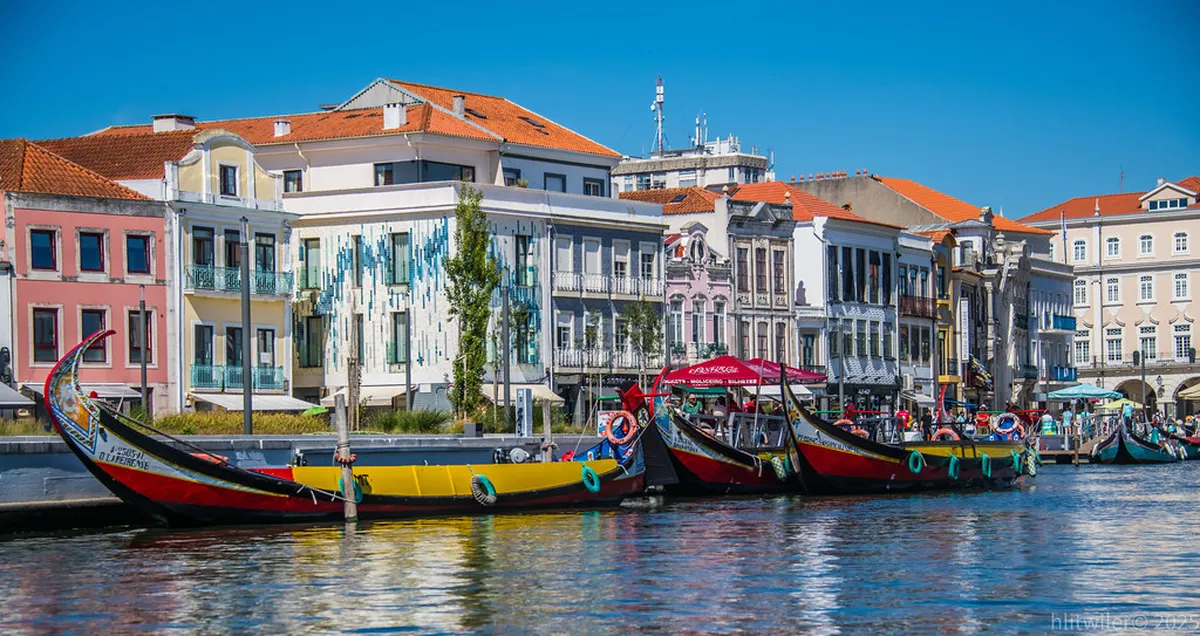
Late spring (May to early June) and early autumn (September to October) are the sweet spots for Nazaré. The Atlantic Ocean shapes every month here — cooling summer days, amplifying winter swells, and keeping temperatures moderate year-round. Whether you want 100-foot waves at Praia do Norte or a calm day on the main beach, timing your visit around the weather makes a significant difference. This guide covers temperatures, sea conditions, rainfall, sunshine hours, and packing advice for each season in 2026.
Our late-May trip hit the Nortada wind on three of seven days, so pack a windbreaker even in summer. This coastal breeze keeps Nazaré noticeably cooler than inland Portugal during heat waves. You will find that the best time to visit Nazaré depends entirely on what you want to do there. Surfers, swimmers, hikers, and budget travelers all have different ideal months.
Nazaré Weather Overview: Year-Round Climate
Turn this guide into a personal route with our free nazaré itinerary planner.
Nazaré has a temperate oceanic climate with strong maritime influences from the Atlantic. Daytime highs range from around 14°C / 57°F in January to 23°C / 73°F in August — a relatively narrow band compared to interior Portugal. Night temperatures fall between 8°C / 46°F in January and 16°C / 60°F in August. Humidity is consistently high, averaging 80% in winter and dropping to around 66% at the peak of summer.
Rainfall is concentrated between November and March. November is the wettest month, with roughly 104 mm of rain spread across 12 days. July is the driest, typically seeing just 2 days of measurable rain and almost no accumulated precipitation. According to data from WeatherSpark, the year divides cleanly into a wet winter half and a dry summer half.
Sunshine hours follow the same pattern. December and January offer only 4 hours of sunshine per day on average. By July, that rises to 11 hours. Spring delivers a rapid improvement: March averages 6 hours, April 7 hours, and May 9 hours. This acceleration makes May one of the most pleasant months for outdoor activity.
Nazaré Weather in Winter (December – February)
December brings daytime temperatures of around 15°C / 59°F and nights that drop to 9°C / 48°F. Rain is frequent — expect 10 to 11 rainy days in December and 11 in January. Rainfall totals in January reach approximately 91 mm. The humidity sits at its annual peak of 80%, which makes the air feel colder than the thermometer suggests.
February is slightly cooler than January for sea temperatures, bottoming out at around 14°C / 57°F. Daytime air temperatures are similar — around 15°C / 59°F — but rainy days begin to decrease toward 10 per month. Sunshine starts to recover in February, climbing back toward 5 hours per day. Wind speeds are elevated throughout winter, adding a persistent chill to any exposed clifftop walk.
Winter is the prime season for big-wave watching at Praia do Norte. The same Atlantic storm systems that bring the rain also generate the massive swells. If you visit in January or February, dress for cold and wind even on clear days. The spectacle is worth it — but so is the thermos of soup.
Nazaré Weather in Spring (March – May)
March marks the beginning of improvement. Daytime highs reach 17°C / 63°F and rainfall totals fall to around 54 mm across 8 rainy days. March also records the highest annual wind speeds, which can make the clifftop feel raw even on bright days. Sea temperatures lag behind the air, typically sitting at around 14–15°C / 57–59°F through the end of the month.
April is a transitional month with 10 rainy days but noticeably longer daylight. Temperatures rise to 18°C / 64°F during the day and 11°C / 52°F at night. The rainfall amount in April is approximately 63 mm — heavier in volume than March, even though temperatures are warmer. Sea temperatures begin to rise to around 15°C / 59°F by late April. Morning mist is common and usually burns off by midday.
May is when Nazaré genuinely opens up for leisure visitors. Daytime temperatures reach 19°C / 66°F with nights around 13°C / 55°F. Rainy days drop to around 7 per month and sunshine extends to 9 hours per day. Sea temperatures climb to 16°C / 61°F, which is still cool for swimming but manageable with a wetsuit. Crowds remain moderate and accommodation prices are lower than peak summer.
Nazaré Weather in Summer (June – August)
June is the gateway to the dry season. Daytime temperatures average 22°C / 71°F and rain effectively disappears — only about 4 rainy days and 19 mm of precipitation for the month. Sea temperatures reach 18°C / 64°F. Daylight peaks at 15 hours in late June, giving visitors maximum outdoor time. The Nortada breeze begins to dominate afternoon conditions, especially along the seafront.
July is the peak of the dry season. Daytime temperatures hold at around 22–23°C / 72–73°F, night temperatures at 15°C / 59°F. Only 2 rainy days are typical and the sea stays at 18°C / 65°F. Sunshine reaches its annual maximum of 11 hours per day. This is the high-season month: beaches are packed, accommodation is expensive, and the town is lively from morning until late at night.
August is the warmest month, with daytime highs of 23°C / 73°F and sea temperatures peaking at 19°C / 66°F — the warmest the Atlantic gets here all year. Humidity drops to its annual low of 66%, making the heat feel manageable. Crowds and prices remain at their peak. If you visit in August, book accommodation at least two months in advance and arrive at the beach before 10:00 to claim a spot.
Nazaré Weather in Autumn (September – November)
September is widely considered the best month for swimming in Nazaré. Sea temperatures remain near their August peak at 18–19°C / 64–66°F, while air temperatures begin to soften to 22°C / 71°F. Rain is still rare — only about 5 days — and sunshine averages 8 hours per day. Crowds thin out after the first week of September, and prices drop noticeably from mid-month onward.
October brings the first signs of the transition to winter. Daytime temperatures dip to 21°C / 69°F and nights cool to 14°C / 57°F. Rainy days increase to around 9 per month and rainfall totals reach 94 mm. The sea begins to cool, dropping toward 18°C / 64°F. Crucially, the first large Atlantic swells of the new wave season typically arrive in late October, making the month interesting for surf watchers even as conditions become less ideal for swimming.
November is the rainiest month of the year, with 12 rainy days and 104 mm of precipitation. Daytime temperatures fall to 17°C / 62°F. Sea temperatures sit around 16°C / 61°F, making swimming uncomfortable for most visitors. However, the big-wave season is now fully active, and accommodation rates are well below peak levels. November offers the cheapest prices of any month that still has significant daylight.
Month-by-Month Temperature and Rainfall Breakdown
The table below summarises the key climate figures for each month in Nazaré. All temperature data is sourced from historical averages compiled by SunHeron. Use it as a quick reference when planning your itinerary around the Nazaré itinerary that suits your travel style.
| Month | Day Temp | Night Temp | Sea Temp | Rain (mm) | Rainy Days | Sunshine (hrs/day) |
|---|---|---|---|---|---|---|
| January | 14°C / 57°F | 8°C / 46°F | 14°C / 57°F | 91 mm | 11 | 4 |
| February | 15°C / 59°F | 9°C / 48°F | 14°C / 57°F | 74 mm | 10 | 5 |
| March | 17°C / 63°F | 10°C / 50°F | 14–15°C / 57–59°F | 54 mm | 8 | 6 |
| April | 18°C / 64°F | 11°C / 52°F | 15°C / 59°F | 63 mm | 10 | 7 |
| May | 19°C / 66°F | 13°C / 55°F | 16°C / 61°F | 50 mm | 7 | 9 |
| June | 22°C / 71°F | 15°C / 59°F | 18°C / 64°F | 19 mm | 4 | 10 |
| July | 23°C / 73°F | 15°C / 59°F | 18°C / 65°F | ~5 mm | 2 | 11 |
| August | 23°C / 73°F | 16°C / 60°F | 19°C / 66°F | ~5 mm | 2 | 10 |
| September | 22°C / 71°F | 14°C / 57°F | 18–19°C / 64–66°F | 33 mm | 5 | 8 |
| October | 21°C / 69°F | 14°C / 57°F | 18°C / 64°F | 94 mm | 9 | 6 |
| November | 17°C / 62°F | 11°C / 52°F | 16°C / 61°F | 104 mm | 12 | 5 |
| December | 15°C / 58°F | 9°C / 48°F | 15°C / 59°F | 91 mm | 11 | 4 |
Best Time to Visit Nazaré for Big Waves
The world-famous big waves at Praia do Norte typically occur between October and March. Large Atlantic storms generate powerful swells that the underwater Nazaré Canyon funnels and amplifies into the enormous walls of water that have broken world records. There is no fixed schedule — waves depend on specific combinations of swell height, swell period, and wind direction. Most professional surfers wait for a forecast showing 6-metre-plus swells with light offshore winds.
January is historically the peak month for ocean energy at Nazaré. The WSL Big Wave Tour events are typically scheduled between November and March, with the exact dates announced only when conditions align. If you want to witness a major surf event in 2026, sign up for alerts from the WSL and be prepared to travel on short notice. Watching from the lighthouse viewpoint at Sítio is free and gives the best vantage point over Praia do Norte.
Wind chill at the clifftop can be severe during a swell event, even on a sunny day. Bring a windproof outer layer regardless of the air temperature in town. The main beach below is significantly more sheltered — a detail covered in more detail in the microclimate section below. Give yourself at least three days to increase the probability of catching a significant swell.
The Sítio Microclimate and the Nortada Wind
Nazaré effectively has two distinct weather environments separated by 110 metres of vertical cliff. The main beach area at sea level is sheltered from the north by the cliffs themselves, which block the dominant northerly winds. The Sítio district at the top — where the lighthouse and the big-wave viewpoint are located — sits fully exposed to the Atlantic and can feel 4–5°C colder than the beach below on a windy day.
The Nortada is a persistent northerly coastal breeze that blows along the Portuguese coast from roughly June through September. It typically builds during the afternoon, peaking between 14:00 and 18:00 before easing after sunset. At sea level on the main beach it arrives as a welcome cooling breeze in the heat of summer. At the Sítio, the same wind can make a 23°C August afternoon feel like a 17°C spring day. If you plan to spend the evening at the lighthouse for sunset photographs, bring a jacket even in July.
This microclimate difference also affects coastal fog. Low cloud and sea mist roll in from the Atlantic and tend to cling to the Sítio first, sometimes obscuring the lighthouse completely while the beach below is in full sunshine. This can happen any time of year but is most common in spring and early summer. If the Sítio is fogged in on your first morning, wait until after midday — it usually clears within a couple of hours as the land warms up.
Best Time to Visit Nazaré for Swimming and Sunbathing
Sea temperatures in Nazaré are cooler than most visitors expect from a southern European beach. The Atlantic here is consistently influenced by the cold Canary Current, keeping water temperatures well below what you would find on the Algarve or the Mediterranean. The warmest months — August and September — see sea temperatures peak at around 18–19°C / 64–66°F. For most swimmers, that is on the cool side but entirely manageable for a session of 20–30 minutes.
September is the single best month for swimming. Sea temperatures are at or near their peak, air temperatures are warm without being oppressive, and the summer crowds have largely left. The waves on the main beach are also typically calmer in September than in July or August, when wind-generated chop can make conditions rougher. The main beach (Praia de Nazaré) is far more sheltered than Praia do Norte and suitable for families and casual swimmers throughout the summer.
From October onward, sea temperatures fall below 18°C and most visitors without wetsuits will find sustained swimming uncomfortable. Surfers using a 3/2 mm wetsuit can extend their season through October and into early November. For sunbathing without swimming, June is arguably the best choice: 15 hours of daylight, 10 hours of sunshine, minimal crowds compared to August, and a gentle breeze that prevents overheating.
What to Pack for Nazaré's Changing Seasons
Layers are the single most important packing principle for Nazaré, regardless of the month. The difference in temperature between the beach at midday and the Sítio at sunset can be substantial, and the Nortada can arrive and depart within an hour. A compact windproof jacket takes up little space and solves the most common comfort problem visitors face here.
- Winter (November–February): waterproof jacket, thermal mid-layer, waterproof walking shoes, warm hat and gloves for clifftop viewing. Lighter clothing for indoor meals — the town stays mild enough for a jumper inside.
- Spring (March–May): mid-weight waterproof layer, sturdy walking shoes for the wet cobbled streets, an umbrella for the frequent afternoon showers in April, light trousers and a fleece for evenings.
- Summer (June–August): light cotton clothing for the beach, a windbreaker or fleece for Sítio evenings, high-SPF sunscreen (the Atlantic breeze masks the UV intensity), and a hat for the midday cliff walk.
- Autumn (September–October): swimwear for September sea swimming, a light jacket for evenings, and a full waterproof layer for October when rain returns quickly.
Comfortable footwear is essential year-round. The terrain between the beach and the Sítio — whether you take the funicular or walk — involves steep inclines and uneven stone surfaces. Sandals are fine for the sand but inadequate for a full day of exploring.
Planning the rest of your Nazaré trip? See our Nazaré beaches and Praia do Norte and why Nazaré's waves get so big.
Frequently Asked Questions
What is the best month to see big waves in Nazaré?
The best months are usually November through February. Giant swells depend on Atlantic storms and specific wind patterns. I recommend checking surf forecasts a few days before your visit.
Is the water in Nazaré warm enough for swimming?
The water is generally cold, peaking at 18–20°C / 64–68°F in August and September. Most swimmers prefer the late summer months. A wetsuit is recommended for longer sessions in the Atlantic.
Does it rain a lot in Nazaré during the winter?
Nazaré receives moderate rainfall from November to March. Expect about 10 to 12 rainy days per month during this period. Showers are often heavy but pass quickly due to coastal winds.
Nazaré rewards visitors who match their timing to their interests. September and early October offer the most balanced conditions for most travelers — warm sea, mild air, and the first hints of the big-wave season. Winter visitors get dramatic waves and low prices in exchange for wet days and wind. Whatever month you choose, the Sítio–beach microclimate means you should always pack more than you think you need.