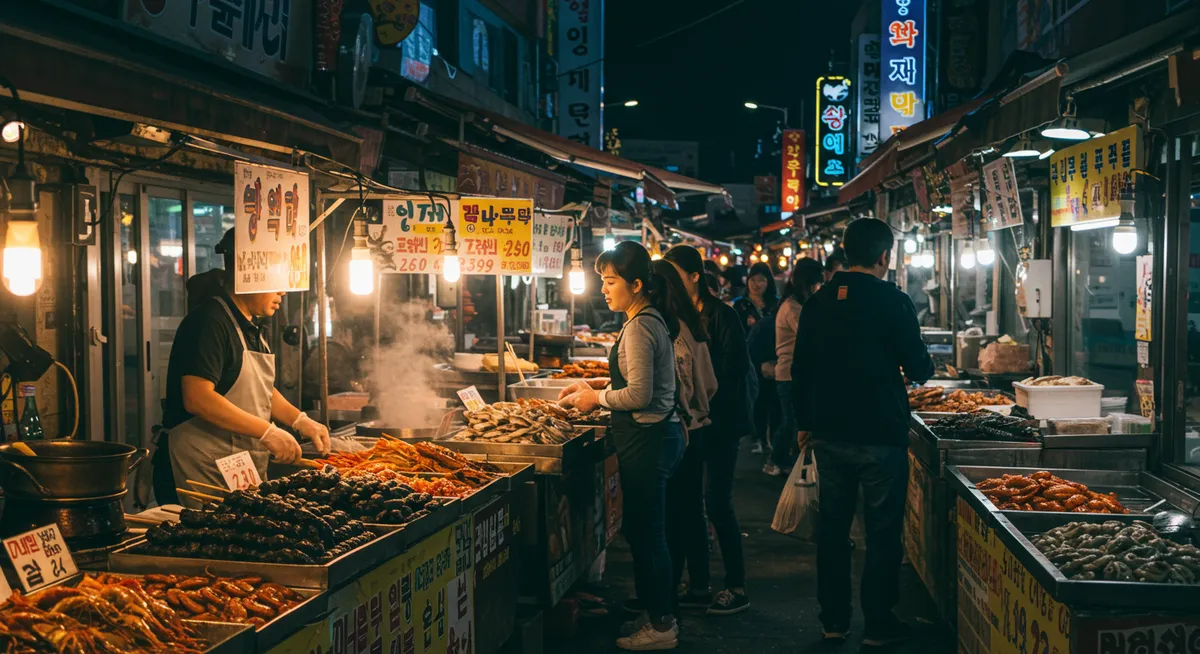
TL;DR: Jeju's night markets are a must-do for any 2026 visit. Dongmun Night Market is the flagship — open nightly from 6 PM with fire-torched black pork, tangerine hotteok, and abalone gimbap. Seogwipo Maeil Olle Market and the Arboretum Night Market offer quieter alternatives. Budget 15,000–30,000 KRW, bring cash, arrive before 6 PM for parking, and come hungry.
Jeju Island's night markets are where the island truly comes alive after dark. The sizzle of black pork on a blowtorch, the sweet scent of hallabong tangerine juice, the neon-lit rows of food stalls stretching into the warm evening — this is the Jeju experience that no traveler should skip in 2026. Whether you're a first-time visitor or returning to the island, this guide covers every market, every must-try dish, and every practical tip you need for an unforgettable street food adventure. For a broader overview of the island, start with our guide to things to do in Jeju.
Dongmun Night Market: Jeju's Iconic Street Food Destination
Turn this guide into a personal route with our free Jeju itinerary planner.
Dongmun Traditional Market, established in 1945, is the largest and oldest permanent market on Jeju Island. During the day, it operates as a traditional market selling fresh produce, seafood, clothing, and household goods. But the real magic begins at 6 PM, when the Dongmun Night Market fires up with music, neon lights, and rows of sizzling food stalls.
The night market section is concentrated toward the rear of the main market building. This is where you'll see the famous blow-torch action — vendors torching black pork belly right in front of you, creating that signature smoky char. The atmosphere is electric, with both locals and tourists weaving between stalls, sampling bites, and soaking in the energy.
The market stays lively until around 10 PM on weekdays and even later on weekends. If you're driving, aim to arrive before 6 PM — traffic surges in the evening and parking fills fast. The multilevel parking garage near Gate 8 is your best bet, as it sits right by the entrance to the food stall area. For tips on getting around the island, check our Jeju public transportation guide.
Beyond Dongmun: Other Night Markets Worth Visiting in 2026
While Dongmun dominates the night market scene, Jeju offers several other excellent options that deliver a different vibe and fewer crowds.
Seogwipo Maeil Olle Market
Located in Jeju's southern city, Seogwipo Maeil Olle Market is the second-largest market on the island and the biggest night market in Seogwipo. Established in the early 1960s, it transforms each evening into a bustling food hub. The selection mirrors Dongmun in quality but with a more relaxed, local atmosphere. You'll find fresh seafood, grilled skewers, and seasonal Jeju specialties without the intense crowds of the northern market.
Arboretum Night Market
Held every evening near Halla Arboretum, this night market is perfect for families. Trees decorated with lanterns create a magical setting, while food trucks serve juicy burgers, kebabs, and Korean fusion dishes. The child-friendly stalls and open layout make it a relaxed alternative to the more intense market atmosphere elsewhere. If you're traveling with kids, pair this with our Jeju family travel guide.
Sumokgil Night Market
Tucked away in a lush forest setting, Sumokgil Night Market is part of a larger multi-purpose theme park complex featuring 5D theaters, VR attractions, and an ice museum. It's a unique combination of entertainment and street food that works especially well for groups looking for more than just a food crawl.
Five-Day Markets
For a more traditional experience, Jeju's rotating five-day markets (held on dates ending in specific numbers) offer a glimpse into local commerce that's been running for generations. The food at these markets tends to be hyper-local — think homemade tteok (rice cakes), fresh produce from nearby farms, and seasonal catches sold directly by fishermen.
Must-Try Jeju Street Food Dishes
Jeju's street food scene goes far beyond standard Korean market fare. The island's unique geography, volcanic soil, and ocean-surrounded location create ingredients you won't find on the mainland. Here are the dishes you absolutely cannot miss in 2026.
Fire-Torched Black Pork (Heukdwaeji)
Jeju's famous black pigs are raised on the island and produce meat that's notably more tender and flavorful than standard pork. At Dongmun Night Market, vendors blowtorch thick slices of black pork belly right in front of you, creating a smoky, caramelized crust. Served on skewers or in wraps with vegetables, this is the single most iconic street food item on the island. Expect to pay around 5,000–8,000 KRW per serving.
Tangerine Hotteok
A Jeju twist on the classic Korean street pancake, tangerine hotteok uses hallabong tangerine — a citrus fruit that Jeju is famous for — mixed into the sweet filling. The result is a crispy, golden pancake with a warm, citrusy center. It's available at most night markets from late autumn through spring.
Abalone Gimbap and Grilled Abalone
Jeju's haenyeo (female free-divers) have harvested abalone from the island's waters for centuries. At the night markets, you'll find abalone prepared multiple ways: tucked into gimbap rolls, grilled with butter and garlic on small portable stoves, or served as abalone cheese gratin. Fresh abalone is a luxury on the mainland but surprisingly affordable at Jeju's markets.
Black Pork Dumplings (Mandu)
Savory dumplings filled with seasoned black pork, vegetables, and glass noodles. These are pan-fried to a perfect golden crisp and served with a soy-vinegar dipping sauce. A filling snack that pairs perfectly with a cold beer from the market's convenience stalls.
Hairtail Fish Cake (Galchi Eomuk)
Galchi (hairtail fish) is a Jeju staple, and at the night markets, it's transformed into savory fish cakes served on sticks with a warming broth. Another popular preparation is galchi jorim — hairtail braised in a spicy soy sauce — available at some of the sit-down stalls within the market.
Freshly Squeezed Hallabong Tangerine Juice
Simple but essential. Jeju's hallabong tangerines are sweeter and more aromatic than standard tangerines, and freshly squeezed juice is available at virtually every market stall. Some vendors also sell tangerine mochi and tangerine-flavored ice cream. For more on Jeju's food scene beyond the markets, see our guide to the best restaurants in Jeju.
Gangjeong Chicken and Seafood Pajeon
Gangjeong chicken — crispy fried chicken coated in a sweet and spicy sauce — is a crowd favorite at every night market. For something more traditional, look for haemul pajeon (seafood green onion pancakes), cooked on large flat griddles and served in shareable portions.
Practical Tips for Visiting Jeju Night Markets in 2026
A little preparation goes a long way toward maximizing your night market experience. Here's what you need to know before you go.
Bring cash. While card acceptance is improving, most street food vendors still prefer cash. Budget 15,000–30,000 KRW per person for a satisfying food crawl. ATMs are available at convenience stores near the major markets.
Arrive early. The best stalls sell out. Getting to Dongmun by 5:30–6:00 PM means you'll catch vendors setting up and avoid the peak crowd that hits around 7:30 PM. Weekend evenings are the busiest.
Use a translation app. English menus are becoming more common at Dongmun, but smaller markets rarely have them. Papago or Google Translate's camera feature works well for reading Korean menus on the spot.
Pace yourself. With dozens of stalls to sample, it's tempting to fill up on the first few items. Share portions with your travel companions and aim to try at least 5–6 different items across the market.
Getting there. Dongmun Market is a 15-minute taxi ride from Jeju International Airport. City buses (routes 100, 200, and 500) stop nearby. If you're renting a car, our car rental guide for Jeju covers everything you need. For budget-conscious travelers, check out our Jeju budget travel tips.
Seasonal considerations. Summer markets (June–August) run later and feature seasonal seafood. Winter markets (December–February) offer warm soups and hotteok. Spring and autumn are the most comfortable seasons for outdoor eating. For detailed timing advice, see our guide on the best time to visit Jeju.
How to Build a Night Market Itinerary
If you're spending 3 days in Jeju, dedicate one evening entirely to a night market food crawl. A suggested flow for Dongmun:
- 5:30 PM — Arrive and park. Browse the daytime market section for fresh tangerines, dried seafood, and souvenirs.
- 6:00 PM — Start at the black pork stalls near Gate 8. Get a blowtorched pork skewer and tangerine juice.
- 6:30 PM — Move deeper into the market for abalone gimbap, grilled seafood skewers, and gangjeong chicken.
- 7:00 PM — Try the local specialties: ojingeo sundae (squid sausage), galchi fish cake, and a seafood pajeon to share.
- 7:30 PM — Finish with dessert: tangerine hotteok, omegi tteok (traditional Jeju rice cakes), and tangerine mochi.
- 8:00 PM — Wind down with a stroll through the illuminated market, picking up any last-minute snacks or souvenirs.
For travelers who want to explore beyond the main markets, our guide to Jeju hidden gems and local spots covers lesser-known food areas that locals love.
Frequently Asked Questions
What are the operating hours for Jeju night markets in 2026?
Is street food safe to eat at Jeju markets?
How much money should I bring for a Jeju night market food crawl?
Are there vegetarian or vegan options at Jeju night markets?
Which Jeju night market is best for families with kids?
What is the single must-try dish at Jeju night markets?
How do I get to Dongmun Night Market from Jeju Airport?
Jeju's night markets are more than just a place to eat — they're where you experience the island's culture, warmth, and culinary identity all at once. From the legendary fire-torched black pork at Dongmun to the lantern-lit family stalls at Halla Arboretum, there's a night market experience for every type of traveler in 2026. Come hungry, bring cash, and let the island's flavors guide your evening. For more inspiration on planning your Jeju trip, explore our complete guide to essential Jeju travel tips.