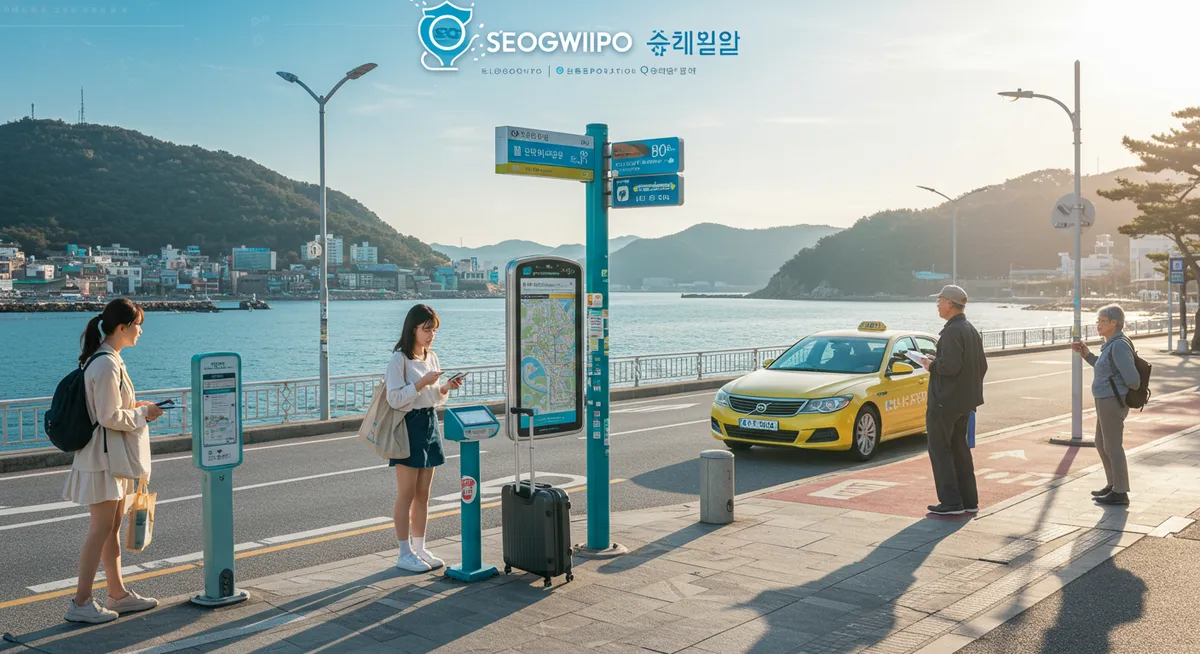
Seogwipo sits on the southern coast of Jeju Island, surrounded by volcanic cliffs, cascading waterfalls, and some of South Korea's most spectacular coastal scenery. Whether you are visiting for a long weekend or spending a full week exploring the region, choosing the right transportation makes the difference between a stressful trip and a seamless one. This 2026 Seogwipo transportation guide breaks down every option available so you can spend less time figuring out logistics and more time enjoying the island.
From the expanded bus network to new cycling infrastructure completed in late 2025, Seogwipo has become more accessible than ever for international visitors. Below you will find practical details on fares, routes, apps, and insider tips drawn from extensive on-the-ground experience.
Public Buses: The Budget-Friendly Backbone
Turn this guide into a personal route with our free Jeju itinerary planner.
Jeju's public bus system remains the most affordable way to travel around Seogwipo in 2026. The network is divided into three tiers: express buses (급행) connecting Jeju City to Seogwipo in about 40 minutes, trunk-line buses (간선) linking major districts, and community buses (지선) serving smaller neighborhoods and rural attractions.
A single ride costs approximately ₩1,300 when paying with a T-Money or Cashbee card, which you can purchase at any convenience store for ₩2,500. Cash fares run about ₩200 higher. Transfers between buses within 30 minutes are free when using a transit card, making multi-leg journeys surprisingly economical.
Key routes for visitors include the 600 Airport Limousine (Jeju Airport to Jungmun Resort and Seogwipo), Route 281 (Seogwipo Intercity Terminal to Cheonjiyeon Falls), and Route 782 (looping through Jungmun Tourist Complex). Real-time tracking is available through KakaoMap or Naver Map — both display live bus positions, estimated arrival times, and walking directions to stops in English.
For those planning a full sightseeing agenda, buses connect directly to attractions featured in our 5-day Seogwipo itinerary, including Cheonjiyeon Falls, Jeongbang Waterfall, and the Seogwipo Maeil Olle Market. If you are exploring beyond Seogwipo, the Jeju-si public transportation guide covers the northern half of the island.
Taxis and Ride-Hailing Apps
Taxis in Seogwipo are plentiful, metered, and reasonably priced compared to other South Korean cities. The base fare starts at ₩4,800 for the first 2 kilometers, with increments of ₩100 per 131 meters thereafter. Late-night surcharges (midnight to 4 AM) add roughly 20 percent to the total.
The easiest way to hail a ride is through Kakao T, South Korea's dominant ride-hailing app. It works similarly to Uber — enter your destination, confirm the fare estimate, and a driver arrives within minutes. The app supports English and eliminates the language barrier entirely since the driver receives your destination on screen. Regular taxis, deluxe taxis (mobeom), and jumbo taxis for larger groups are all bookable through the app.
Taxis are especially useful for reaching Seogwipo's hidden gems that sit outside convenient bus routes — places like Soesokkak Estuary or the quieter sections of the Olle Trail. A typical cross-city taxi ride within Seogwipo runs ₩8,000–15,000, making it a practical supplement to buses for specific legs of your trip.
Renting a Car for Maximum Freedom
A rental car remains the single best way to explore Seogwipo and greater Jeju Island at your own pace. The road network is well-maintained, signage includes English, and traffic outside Jeju City is generally light. In 2026, electric vehicle rentals have expanded significantly — multiple agencies at Jeju International Airport now offer EVs with island-wide charging station coverage.
To rent, you need a valid driver's license from your home country plus an International Driving Permit (IDP). Major agencies include Lotte Rent-a-Car, Jeju Rent-a-Car, and SK Rent-a-Car, all operating shuttle buses from the airport to their lots. Daily rates start around ₩40,000 for a compact car and ₩70,000 for an SUV during shoulder season, though summer and holiday pricing can double.
Parking is straightforward — most attractions, restaurants, and accommodations offer free lots. Navigation through Kakao Navi or Naver Map (both support English) handles routing efficiently, including real-time traffic and speed camera alerts. If you are considering this option, our detailed guide to renting a car in Jeju covers insurance, fuel, toll-free roads, and local driving etiquette.
A rental car is especially valuable if you are planning day trips from Seogwipo to destinations like Hallasan National Park, Udo Island ferry terminal, or the eastern coastal road.
Ferries and Coastal Transport
Seogwipo's coastal location opens up water-based transport options that many visitors overlook. Regular ferry services connect Seogwipo Port to nearby islands and coastal attractions. The Seogwipo–Udo Island ferry runs multiple times daily (₩11,000 round trip for adults) and takes approximately 15 minutes.
Sightseeing boats departing from Seogwipo Harbor offer submarine-style tours along the Jungmun coastline, where you can view coral formations and marine life through glass-bottom windows. These tours typically last 30–40 minutes and cost around ₩15,000 per adult.
For travelers arriving from the Korean mainland, the Seogwipo Coastal Ferry Terminal also handles seasonal routes from Mokpo and Wando, though most international visitors prefer flying into Jeju International Airport. Always check schedules in advance, as weather conditions can cause cancellations, particularly during the July–September typhoon season.
Walking, Cycling, and the Olle Trails
Seogwipo's compact city center and stunning coastline make it one of the best places in South Korea to explore on foot or by bicycle. The famous Jeju Olle Trails — a network of 26 long-distance walking routes circling the island — have several of their most scenic sections passing directly through Seogwipo, including Routes 6 (Soesokkak to Oedolgae) and 7 (Oedolgae to Wolpyeong).
Cycling infrastructure expanded in 2025 with new dedicated bike lanes along the Seogwipo coastal road and improved connections to the island-wide bike path network. Public bike-sharing stations (Kakao T Bike) are available throughout the city center, with rates starting at ₩1,000 for 15 minutes. Full-day rental from private shops near Seogwipo Harbor runs ₩15,000–25,000 and typically includes a helmet and lock.
Walking and cycling pair naturally with the city's food scene — you can easily stroll between the highlights in our Seogwipo food guide without needing any motorized transport.
Getting from Jeju Airport to Seogwipo
Jeju International Airport sits on the northern side of the island, roughly 40–60 minutes from Seogwipo depending on traffic and your chosen transport mode. Here are the main options for the airport-to-Seogwipo transfer in 2026:
- Airport Limousine Bus 600: The most popular budget option. Runs every 15–20 minutes, stops at Jungmun and central Seogwipo. Fare: ₩5,000. Duration: 50–80 minutes.
- Express Bus (intercity terminal): Departs from Jeju Intercity Bus Terminal (10-minute taxi from airport). Faster but less convenient. Fare: ₩3,300. Duration: 40 minutes.
- Taxi: Direct door-to-door service. Fare: ₩35,000–50,000 depending on destination and time of day. Duration: 40–50 minutes.
- Rental car pickup: Agencies provide free shuttle buses from the airport to their lots. Best for multi-day stays.
Practical Tips for Getting Around Seogwipo
- Download KakaoMap before you arrive. It is the most accurate navigation app for Jeju, covering bus routes, walking paths, and driving directions with English support.
- Get a T-Money card on day one. Available at airport convenience stores for ₩2,500, it works on all buses and taxis island-wide and saves money on every ride.
- Budget ₩15,000–30,000 per day for transport if combining buses and occasional taxis. A rental car may cost more upfront but saves money for groups of three or more.
- Avoid driving during Chuseok and Lunar New Year. Traffic across Jeju spikes dramatically during major Korean holidays.
- Use the Jeju Travel Organization website (visitjeju.net) for up-to-date route changes, seasonal ferry schedules, and road closures.
Frequently Asked Questions
Is it easy to get around Seogwipo without a car in 2026?
Do I need an International Driving Permit to rent a car in Seogwipo?
How much does public transportation cost in Seogwipo?
How long does it take to get from Jeju Airport to Seogwipo?
What is the best transportation app to use in Seogwipo?
Can I use Uber in Seogwipo?
Getting around Seogwipo in 2026 is straightforward once you understand the options. Buses handle the heavy lifting for budget travelers, taxis and Kakao T fill the gaps, and a rental car unlocks the full freedom of Jeju Island's southern coast. Pair the right transport mode with a well-planned Seogwipo itinerary and you will cover more ground with less hassle — leaving you free to focus on the waterfalls, volcanic landscapes, and fresh seafood that make this corner of South Korea unforgettable.