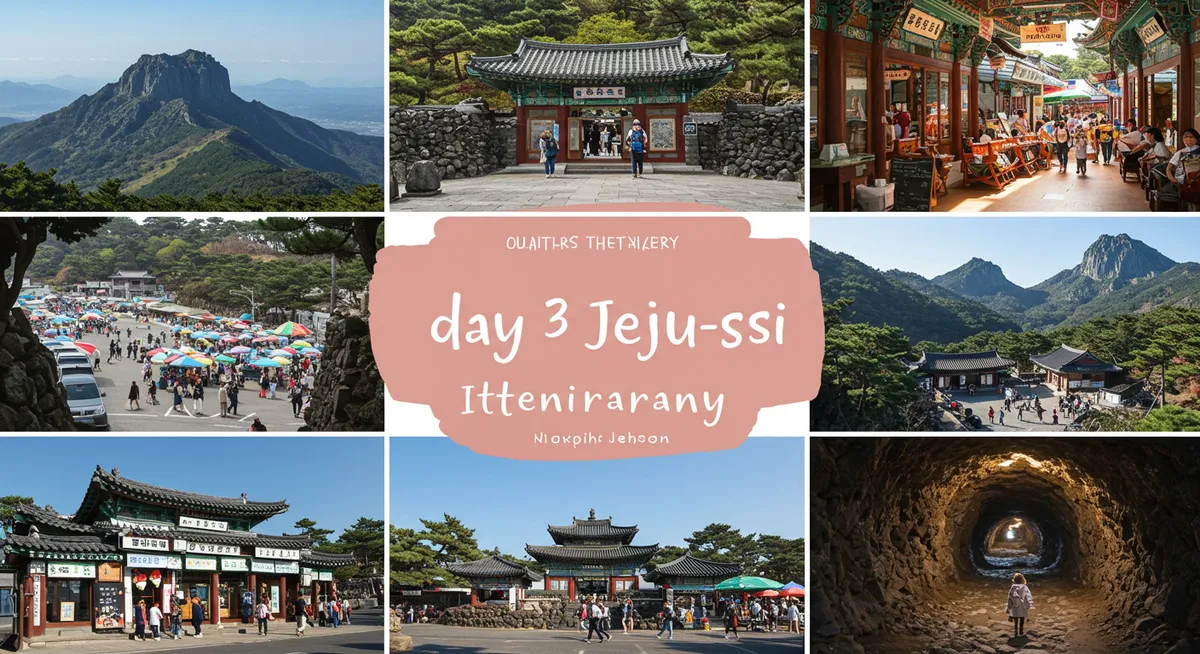
TL;DR: Three days on Jeju Island is enough to hike a UNESCO volcanic peak at sunrise, explore the world's finest lava tubes, sip ocean-view coffee on Aewol Cafe Street, and relax on emerald-water beaches. This 2026 guide gives you an optimized day-by-day Jeju 3 day itinerary with budget tips, transport advice, accommodation picks, and local food recommendations so you can make the most of every hour on South Korea's favorite island getaway.
Jeju Island — officially Jeju-do — is South Korea's largest island and one of Asia's most rewarding short-break destinations. With volcanic craters, subtropical forests, turquoise coastlines, and a food scene built around black pork and fresh-caught seafood, three days barely scratches the surface. But with a well-planned Jeju 3 day itinerary, you can experience the best of the east coast's dramatic volcanic landscapes, the south's lush waterfalls, and the west's artistic cafe culture without feeling rushed. For a broader overview of every must-do experience on the island, see our complete guide to things to do in Jeju.
This guide is updated for 2026 with the latest attraction hours, reopened sites (including Manjanggul Cave, which completed renovations in late 2025), current bus routes, and realistic budget breakdowns. Whether you are arriving from Seoul on a cheap domestic flight or making Jeju part of a longer South Korea trip, this itinerary has you covered.
Day 1: East Jeju — Volcanic Peaks, Lava Tubes, and Coastal Magic
Turn this guide into a personal route with our free Jeju itinerary planner.
Start your Jeju 3 day itinerary with the island's most dramatic natural attractions on the east coast. Pick up your rental car at Jeju International Airport early — the east coast is roughly 40 minutes away, and an early start lets you catch the famous sunrise at your first stop.
Morning: Seongsan Ilchulbong (Sunrise Peak)
Seongsan Ilchulbong is a UNESCO World Heritage site formed by a hydro-volcanic eruption over 5,000 years ago. The crater rim trail opens at 5:00 AM in summer (5:30 AM in winter), and the 30-minute hike rewards you with panoramic views of the ocean and, on clear mornings, a breathtaking sunrise over the Pacific. Entry costs 5,000 KRW (about $4 USD in 2026). After descending, walk along the coastal path to watch the famous haenyeo (women sea divers) harvest fresh seafood — a living UNESCO Intangible Cultural Heritage tradition unique to Jeju.
Midday: Manjanggul Cave and Woljeong-ri Beach
Drive 25 minutes northwest to Manjanggul Cave, one of the world's longest and finest lava tube systems. The cave reopened after renovations in late 2025 with improved lighting and walkways. The 1-kilometer visitor section stays a cool 11-15°C year-round, making it a refreshing midday stop. Afterward, head to Woljeong-ri Beach for lunch at one of the colorful beachside cafes. The black volcanic rock outcrops contrasting with the emerald water make this one of Jeju's most photogenic spots.
Afternoon: Seopjikoji Coastal Walk
End the day at Seopjikoji, a dramatic coastal promontory near Seongsan. The gentle walking trail passes through canola flower fields (spectacular in spring), volcanic rock formations, and leads to an iconic lighthouse with 360-degree ocean views. This spot was featured in several Korean dramas and offers some of the best sunset photography on the east coast. For dinner, return to Jeju City and explore Jeju-si's night markets and street food scene at Dongmun Traditional Market.
Day 2: South and Central Jeju — Hallasan, Waterfalls, and Seogwipo
Day two of your Jeju 3 day itinerary ventures into the island's mountainous heart and lush southern coast. This is the most physically active day, so wear sturdy shoes and pack layers.
Morning: Hallasan National Park
Hallasan is South Korea's highest peak at 1,950 meters and the volcanic centerpiece of Jeju Island. For a 3-day itinerary, the Eorimok Trail (4.7 km one-way, 2-3 hours) or Yeongsil Trail (3.7 km, 1.5-2 hours) offer stunning views without requiring a full summit attempt. Both trails pass through temperate forests, alpine meadows, and end at viewpoints overlooking the Baengnokdam crater lake. Entry is free, but trailhead gates close early (typically by 12:00-13:00 depending on season), so start by 7:00 AM. Check the Jeju hiking and natural beauty guide for current trail conditions.
Afternoon: Jeongbang and Cheonjiyeon Waterfalls
After descending Hallasan, drive 30 minutes south to Seogwipo. Visit Jeongbang Waterfall, one of the few waterfalls in Asia that plunges directly into the ocean — a 23-meter cascade that is especially powerful after rainfall. Then walk 15 minutes to Cheonjiyeon Waterfall, set in a subtropical gorge filled with rare ferns and home to a protected species of eel. Both waterfalls charge a small entry fee (2,000 KRW each).
Evening: Seogwipo Olle Market
Wrap up the day at Seogwipo Olle Market, a covered food market brimming with local specialties. Try galchi jorim (braised hairtail fish), fresh abalone porridge, and Jeju's signature hallabong tangerines. The market is more relaxed than Dongmun and offers better prices on local produce. For detailed dining recommendations, see our Jeju culinary delights guide.
Day 3: West Jeju — Cafe Culture, Beaches, and Hidden Gems
The final day of your Jeju 3 day itinerary is intentionally more relaxed, blending west coast scenery with the island's thriving cafe and art scene.
Morning: Aewol Cafe Street and Gwakji Beach
Aewol Cafe Street is Jeju's most Instagram-worthy stretch — ocean-facing cafes with floor-to-ceiling windows, rooftop terraces, and specialty coffee. Arrive by 9:00 AM to beat the crowds. Afterward, walk five minutes to Gwakji Gwamul Beach, a lesser-known gem with natural rock pools that are perfect for a quick dip. For more off-the-beaten-path recommendations, check our Jeju hidden gems guide.
Midday: Hallim Park and Hyeopjae Beach
Hallim Park is a sprawling botanical garden that contains two lava caves (Hyeopjaegul and Ssangyonggul), a subtropical plant garden, a bonsai garden, and a folk village — all in one admission (12,000 KRW). Right next door, Hyeopjae Beach is famous for its white coral sand and clear emerald water. On a clear day, you can see Biyangdo Island just offshore. This beach is perfect for a leisurely walk and beach lunch.
Afternoon: Yongmeori Coast and O'sulloc Tea Museum
Drive 20 minutes south to Yongmeori Coast, where dramatic sandstone cliffs carved by wind and waves create a landscape that looks almost otherworldly. The coastal trail (accessible tide-permitting; check local conditions) winds along the base of the cliffs beside crashing waves. Nearby, the free O'sulloc Tea Museum sits amid expansive green tea fields — sample Jeju matcha, browse the tea shop, and enjoy views of the terraced plantations. End your day with a farewell dinner of Jeju heuk dwaeji (black pork) grilled at your table, a must-try island specialty.
Where to Stay on Jeju Island
Choosing the right base makes a big difference for a 3-day Jeju itinerary. Here are the two main options:
- Jeju City (north) — Best for first-time visitors. Close to the airport (10-15 minute drive), Dongmun Market, and the majority of rental car agencies. Hotel prices range from 50,000-150,000 KRW per night ($38-$115 USD). Most practical if you are arriving late or departing early.
- Seogwipo (south) — Quieter, more scenic, and closer to Hallasan trailheads, waterfalls, and the Olle walking trails. Mid-range guesthouses cost 60,000-120,000 KRW per night. Ideal if you prefer nature over nightlife.
For a 3-day trip, staying in Jeju City for nights 1 and 3 and Seogwipo for night 2 minimizes driving time and matches this itinerary's flow perfectly. See our detailed Jeju accommodation guide for neighborhood breakdowns and booking tips.
Getting Around Jeju: Transport Tips for 2026
Jeju is compact — roughly 73 km east to west — but public transport is limited outside the two main cities. Here is how to choose:
- Rental car (recommended) — The most flexible option. Daily rates start from 30,000 KRW ($23 USD) in 2026. International driving permits are accepted. Parking is free or cheap at most attractions. Read our Jeju car rental guide for tips on insurance, tolls, and navigation apps.
- Public buses — Jeju's bus system was overhauled in recent years and now covers most tourist sites. The longest ride (Jeju City to Seogwipo) costs about 3,000 KRW ($2.30 USD) and takes 60-80 minutes. Use the Kakao Map app for real-time schedules. Check our Jeju public transportation guide for route details.
- Taxis — Affordable by international standards. A cross-island taxi ride costs roughly 30,000-40,000 KRW. Useful for short hops when combined with buses.
For a comprehensive overview of all transport options, see our Jeju transportation guide.
Budget Breakdown: How Much Does 3 Days on Jeju Cost?
Jeju is surprisingly affordable compared to Seoul or Busan. Here is a realistic 2026 daily budget per person:
- Budget traveler (guesthouse, buses, market food): 60,000-80,000 KRW/day ($46-$61 USD)
- Mid-range (hotel, rental car, restaurant meals): 120,000-180,000 KRW/day ($92-$138 USD)
- Comfortable (boutique hotel, car, fine dining): 250,000+ KRW/day ($192+ USD)
Flights from Seoul to Jeju start from as low as 40,000 KRW ($31 USD) one-way on budget carriers like Jeju Air and T'way. Book 2-3 weeks ahead for the best fares. For more money-saving tips, read our Jeju budget travel guide.
Best Time to Visit Jeju Island
Each season offers a different Jeju experience:
- Spring (April-May) — Canola flowers blanket the island in yellow; pleasant 15-20°C temperatures. Peak for Seopjikoji photos.
- Summer (June-August) — Warmest weather (25-33°C), best for beaches. July sees the monsoon season with heavy rain spells.
- Autumn (September-November) — Mild weather, fall foliage on Hallasan, and the famous silver grass (eulalia) fields. Many consider this the best time to visit.
- Winter (December-February) — Fewer crowds, lower prices, and snow-capped Hallasan. Some outdoor attractions may close early.
For a month-by-month breakdown, see our best time to visit Jeju guide and the Jeju seasonal highlights page.
Frequently Asked Questions
Is 3 days enough for Jeju Island?
What is the best way to get around Jeju for 3 days?
How much does a 3-day trip to Jeju cost?
When is the best time to visit Jeju Island?
Should I stay in Jeju City or Seogwipo?
Do I need an international driving permit to rent a car on Jeju?
Can I do the Hallasan summit in a 3-day Jeju itinerary?
A well-planned Jeju 3 day itinerary lets you experience the extraordinary diversity that makes this volcanic island one of Asia's top destinations. From the dramatic sunrise at Seongsan Ilchulbong to the artistic cafes of Aewol and the emerald waters of Hyeopjae Beach, every day brings a completely different side of Jeju. Use this 2026 guide as your foundation, adjust based on the season you visit, and prepare for an island that consistently surprises even repeat visitors. For more South Korea travel planning, explore our Busan 3-day itinerary or Seoul 3-day itinerary to extend your Korean adventure.