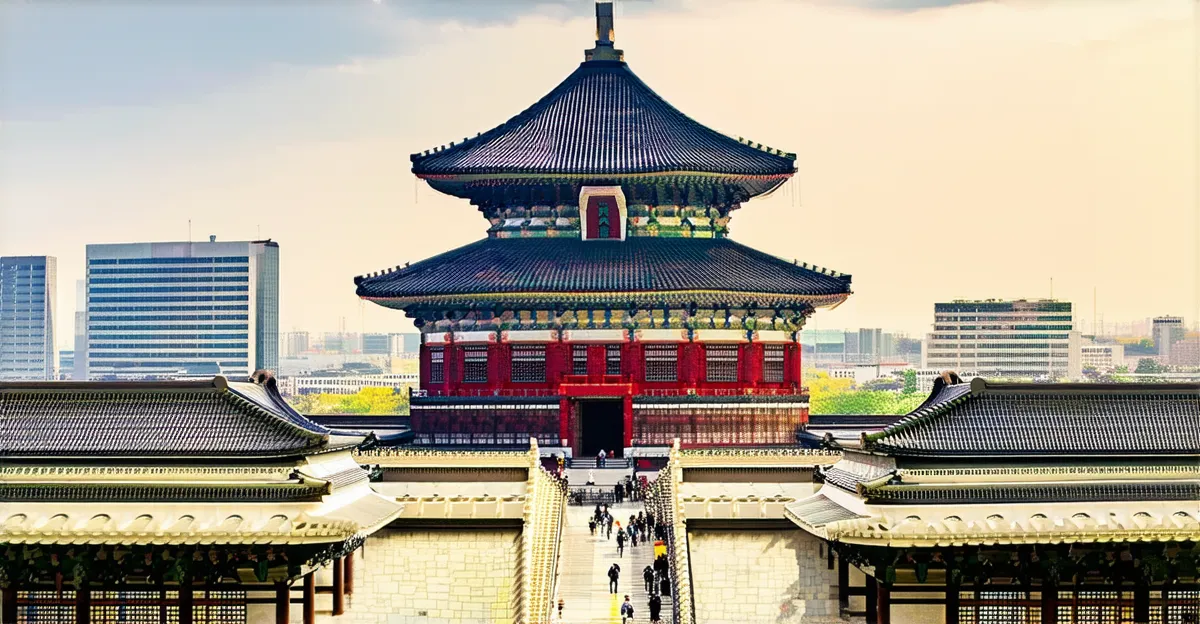
Three days in Seoul is enough to experience the city's greatest hits — royal palaces, world-class street food, futuristic architecture, and panoramic views from N Seoul Tower — though you will be moving at a steady pace. This Seoul itinerary 3 days guide breaks down exactly where to go, what to eat, and how to get around so you spend less time planning and more time exploring South Korea's capital. Whether you are visiting Seoul for the first time or returning for a fresh look in 2026, this day-by-day plan has you covered.
Key Takeaways
Turn this guide into a personal route with our free Seoul itinerary planner.
- Day 1: Visit Gyeongbokgung Palace and the National Folk Museum, explore Insadong's tea houses and craft shops, tour Changdeokgung Palace's Secret Garden, and stroll through Bukchon Hanok Village.
- Day 2: Eat your way through Gwangjang Market, sample bibimbap in Insadong, experience Hongdae's cafe culture and patbingsu, then finish with a Korean BBQ dinner.
- Day 3: Shop for K-beauty in Myeongdong, admire Dongdaemun Design Plaza, explore the artsy streets of Hongdae, and end with sunset views from N Seoul Tower.
Essential Seoul companion guides
- Your Perfect Seoul 3 Day Itinerary - An alternative day-by-day structure
- Best Time to Visit Seoul - Seasonal weather and festival calendar
- How to Use Seoul Public Transportation - Subway, bus, and T-money card guide
Day 1: Discovering the Historical Treasures of Seoul
Your Seoul itinerary 3 days kicks off with a full day dedicated to the historical treasures that define this vibrant capital. Seoul is a city where 600-year-old palaces sit alongside glass skyscrapers, making it one of the most rewarding destinations in Asia for history and culture lovers. On this first day you will explore four landmark sites that narrate the story of Korea's Joseon Dynasty and its living heritage.
Begin your morning at Gyeongbokgung Palace, the most iconic of the Five Grand Palaces. Built in 1395 as the primary royal residence of the Joseon Dynasty, the palace complex spans 40 hectares and includes throne halls, pavilions, and manicured gardens. Arrive by 9 AM to catch the changing of the guard ceremony at the Gwanghwamun Gate — a 20-minute spectacle featuring guards in full Joseon-era military regalia. The ceremony runs at 10:00 AM and 2:00 PM daily (except Tuesdays, when the palace is closed). Admission is 3,000 KRW (about $2 USD), but visitors wearing a hanbok (traditional Korean dress) enter free — rental shops line the streets around the palace starting from 15,000 KRW for two hours.
After exploring the palace grounds, make your way to the National Folk Museum, located within the palace complex. This museum provides fascinating insights into the lives of everyday Koreans through the ages, displaying artifacts and exhibits that depict the evolution of Korean culture from prehistoric times to the modern era. Admission is included with your palace ticket, and you can easily spend an hour here. For a deeper dive into top things to do in Seoul, this museum is a strong starting point.
Next, head over to Insadong, a vibrant district known for its blend of traditional and modern culture. Here, you can stroll through narrow alleys lined with antique shops, art galleries, and teahouses. Sample authentic Korean tea at a traditional tea house — omija-cha (five-flavor berry tea) and yuja-cha (citron tea) are local favorites. Insadong is also a fantastic place to pick up unique souvenirs, such as hanji (handmade Korean paper) crafts or ceramic ware, that reflect the essence of Korean culture. Check out our Seoul shopping guide for more retail options.
Pro Tip: Visit a traditional tea house in Insadong to relax before your afternoon palace visit. Samnidaemun Teahouse and Yetchatjip are local institutions with calm ambiance and loose-leaf teas from 5,000 KRW. Find the perfect base for your explorations with our Seoul accommodation guide.
For lunch, indulge in traditional Korean cuisine at one of the local restaurants in Insadong. Bibimbap served in a sizzling stone bowl (dolsot bibimbap) typically costs 9,000-12,000 KRW, while a plate of bulgogi runs 12,000-15,000 KRW. Korean food is known for its diverse banchan (side dishes) served free with every meal — expect kimchi, pickled radish, and seasoned vegetables alongside your main course.
Post-lunch, your journey continues to Changdeokgung Palace, a UNESCO World Heritage Site that emphasizes the beauty of nature integrated into architecture. The highlight here is the Huwon Secret Garden, a 78-acre woodland garden with lotus ponds, pavilions, and centuries-old trees. Secret Garden tours run on a timed schedule and cost 5,000 KRW on top of the 3,000 KRW palace admission. Reserve your spot early during peak season (spring and autumn), as tours fill up quickly.
To conclude your day, visit Bukchon Hanok Village, a preserved neighborhood featuring approximately 900 traditional Korean houses, known as hanoks. Many of these 600-year-old homes still serve as private residences, so be respectful and keep noise levels down. As of 2026, non-resident visitors can only access the main alleys between 10:00 AM and 5:00 PM, Monday through Saturday. The elevated walkways between Bukchon's eight viewing points offer outstanding views of the hanok rooftops with Gyeongbokgung Palace and N Seoul Tower in the background.
To help you navigate Day 1 effectively, here is a convenient reference table:
| Time | Activity | Notes |
|---|---|---|
| 9:00 AM - 10:30 AM | Gyeongbokgung Palace | Catch the 10:00 AM guard ceremony. Rent a hanbok for free entry. |
| 10:30 AM - 12:00 PM | National Folk Museum | Included with palace admission. Allow 1 hour. |
| 12:00 PM - 1:30 PM | Lunch in Insadong | Try dolsot bibimbap (~9,000 KRW) or bulgogi. |
| 1:30 PM - 3:00 PM | Insadong Shopping & Exploration | Visit art galleries and tea houses. |
| 3:00 PM - 5:00 PM | Changdeokgung Palace & Secret Garden | Book Secret Garden tour in advance (5,000 KRW extra). |
| 5:00 PM - 6:30 PM | Bukchon Hanok Village | Visit before 5 PM closing. Walk viewing points 1-8. |
Day 1 of your Seoul itinerary 3 days offers a deeply curated glimpse into the city's historical treasures. With each landmark you visit, you will gain a deeper appreciation for Korea's rich culture and Joseon-era heritage. For extended planning, check out our complete Seoul itinerary or our Seoul itinerary for 5 days.
Essential guides for your Seoul trip
- Seoul Street Food Guide - Every must-try dish and market
- Seoul Budget Travel Tips - Save money without missing out
- Seoul Nightlife Guide: Hongdae - After-dark entertainment
Day 2: A Culinary Journey Through Seoul's Food Scene
Day 2 of your Seoul itinerary 3 days is dedicated entirely to food — from century-old market stalls to modern dessert cafes and sizzling Korean BBQ. Seoul consistently ranks among Asia's top food cities, and three meals here barely scratch the surface. This day is designed to guide you through the most rewarding culinary experiences the city offers, with specific dishes, price ranges, and neighborhood recommendations so you can eat like a local.
Your culinary journey begins at Gwangjang Market, one of Korea's oldest and most beloved traditional markets. Established in 1905, it stretches across several city blocks and houses over 5,000 shops and food stalls. Head straight to the central food alley and claim a stool at one of the communal counters. The two dishes you absolutely cannot skip are bindaetteok (crispy mung bean pancakes, around 4,000 KRW each) and mayak gimbap (bite-sized seaweed rice rolls with sesame oil dipping sauce, 3,000 KRW per plate). Pair these with a bowl of makgeolli, a slightly fizzy traditional rice wine that costs about 5,000 KRW per kettle. For a deeper exploration of Seoul's street food scene, our Seoul street food guide covers every must-try dish.
Next, venture to Insadong for a sit-down lunch. This neighborhood is a haven for food enthusiasts seeking authentic bibimbap — a wholesome rice bowl topped with seasoned vegetables, beef, a fried egg, and gochujang (fermented chili paste). Order the dolsot (hot stone bowl) version for a crispy rice crust at the bottom. Restaurants like Gogung and Sanchon have been serving traditional Korean cuisine in Insadong for decades, with lunch sets ranging from 12,000 to 18,000 KRW.
Pro Tip: While in Insadong, stop by a traditional tea house to sip on jujube tea (daechu-cha), a calming drink made from slow-simmered Korean dates. It is naturally sweet, caffeine-free, and believed to aid digestion — the perfect palate cleanser between meals.
As the afternoon progresses, head to Hongdae to experience Seoul's thriving cafe culture. This university district is home to hundreds of themed cafes, from cat cafes to retro vinyl listening bars. The must-try dessert here is patbingsu, a towering bowl of shaved milk ice topped with sweet red beans, fresh fruit, mochi pieces, and sometimes ice cream. A single serving (enough for two) typically costs 12,000-16,000 KRW. Cafe culture is central to daily life in Seoul — Koreans consume more coffee per capita than any other Asian country, and Hongdae is ground zero for the trend.
In the evening, treat yourself to a traditional Korean BBQ dinner. The experience is as social as it is delicious: you grill marinated cuts of beef (galbi), pork belly (samgyeopsal), or chicken right at your table over charcoal or gas grills. A typical Korean BBQ dinner costs 15,000-25,000 KRW per person and includes unlimited banchan side dishes — kimchi, pickled radish, lettuce wraps, garlic, and ssamjang dipping sauce. Popular neighborhoods for BBQ include Mapo-gu (near Hongdae) and Jongno, where you will find rows of restaurants with outdoor seating and ventilation hoods at every table.
Where to Eat on Day 2: Quick Reference
| Time | Activity | Notes |
|---|---|---|
| 9:00 AM - 11:00 AM | Gwangjang Market | Try bindaetteok (4,000 KRW) and mayak gimbap (3,000 KRW) |
| 11:30 AM - 1:00 PM | Lunch in Insadong | Dolsot bibimbap at Gogung or Sanchon (12,000-18,000 KRW) |
| 2:00 PM - 4:00 PM | Hongdae Cafes | Patbingsu and specialty coffee (12,000-16,000 KRW) |
| 7:00 PM - 9:00 PM | Korean BBQ Dinner | Samgyeopsal or galbi with unlimited banchan (15,000-25,000 KRW/person) |
By the end of Day 2, your Seoul itinerary 3 days will be infused with a deep understanding of Seoul's food culture — from market stalls that have operated for over a century to the modern cafe scene that defines daily Korean life. To learn more about timing your trip for seasonal food festivals, check out our guide on the best time to visit Seoul.
More food and travel guides
- Day Trips from Seoul by Train - Explore beyond the capital
- Seoul Shopping Guide: Myeongdong - K-beauty and fashion
- Where to Stay in Seoul - Best neighborhoods by budget
Day 3: Modern Seoul — Shopping, N Seoul Tower & Art
The final day of your Seoul itinerary 3 days shifts focus to the modern side of this dynamic capital — K-beauty shopping, futuristic architecture, street art, and one of Asia's most iconic observation towers. This is the day where Seoul's reputation as a trendsetting global city comes into sharp focus, and you will end your trip with panoramic views that put the entire journey into perspective.
Start your morning in Myeongdong, Seoul's most popular shopping district and the epicenter of the K-beauty industry. Brands like Innisfree, Etude House, The Face Shop, and Olive Young have flagship stores here, often with exclusive products and free samples. Beyond skincare, Myeongdong offers fashion boutiques, accessory shops, and some of Seoul's best street food — try tteokbokki (spicy rice cakes, 3,000 KRW), hotteok (sweet syrup-filled pancakes, 2,000 KRW), and gyeran-ppang (egg bread, 2,500 KRW) from the vendors lining the main pedestrian street.
After shopping, head to Dongdaemun Design Plaza (DDP), a curving, aluminum-clad marvel of neo-futuristic architecture designed by Zaha Hadid. DDP hosts rotating exhibitions, fashion shows, and design markets throughout the year. The building itself is free to enter and photograph, though special exhibitions may charge 5,000-10,000 KRW. The LED Rose Garden, an installation of 25,550 LED roses on the rooftop, is especially photogenic after sunset.
Pro Tip: Visit DDP in the late afternoon so you can see the building in daylight and then watch the LED Rose Garden illuminate at dusk. The nearby Dongdaemun Night Market opens around 7 PM and offers additional shopping and street food well past midnight.
Next, make your way to the Hongdae area for lunch and creative exploration. Hongdae is Seoul's indie culture capital — named after Hongik University's famed art program, the neighborhood pulses with street performers, graffiti murals, vinyl record shops, and one-of-a-kind boutiques. For lunch, try samgyeopsal (grilled pork belly, around 12,000 KRW per serving) at one of the many tabletop BBQ restaurants, or grab a bowl of jjajangmyeon (black bean noodles, 7,000 KRW) from a casual eatery. After eating, explore the Hongdae Free Market (Saturdays, March-November) where local artists sell handmade goods, or wander through the Trick Eye Museum for interactive 3D art. For more on what Hongdae offers after dark, read our Seoul nightlife guide.
N Seoul Tower: The Perfect Finale
No 3-day Seoul itinerary is complete without a visit to N Seoul Tower (also called Namsan Tower), the city's most recognizable landmark. Perched atop Namsan Mountain at 480 meters above sea level, the observation deck delivers 360-degree panoramic views stretching across the entire Seoul metropolitan area and, on clear days, all the way to the mountains of North Korea. You have two options for reaching the top: take the Namsan Cable Car (round-trip 16,500 KRW, a 3-minute scenic ride) or hike the 20-minute trail from the base — the forest path is particularly beautiful during cherry blossom season in April and autumn foliage in October. The tower observation deck costs 16,000 KRW for adults in 2026. Plan to arrive 30-60 minutes before sunset to watch the city transition from daylight to a glittering nightscape of lights.
The tower plaza also features the famous Love Locks fence, where couples attach padlocks as symbols of their relationships — there are now over 100,000 locks on display. Several restaurants and a souvenir shop round out the tower complex. After descending, take an evening stroll along the nearby Cheonggyecheon Stream, a beautifully restored 10.9-kilometer urban waterway that runs through downtown Seoul with ambient lighting and occasional art installations.
Below is a quick reference table to help you optimize your Day 3 schedule:
| Time | Activity | Notes |
|---|---|---|
| 9:00 AM - 11:00 AM | Shopping & Street Food in Myeongdong | K-beauty flagships, free samples, tteokbokki |
| 11:30 AM - 1:00 PM | Dongdaemun Design Plaza | Free entry. Check exhibitions and Design Market. |
| 1:30 PM - 3:00 PM | Lunch & Exploration in Hongdae | Samgyeopsal or jjajangmyeon. Browse street art. |
| 3:30 PM - 5:00 PM | Hongdae Art & Indie Scene | Free Market (Sat), Trick Eye Museum, cafes |
| 5:30 PM - 7:30 PM | N Seoul Tower | Arrive before sunset. Cable car 16,500 KRW, deck 16,000 KRW. |
| 8:00 PM - 9:30 PM | Cheonggyecheon Stream | Evening stroll with ambient lighting |
Day 3 closes your Seoul itinerary 3 days with lasting memories of a city that seamlessly balances its Joseon-era heritage with cutting-edge modernity. From K-beauty hauls in Myeongdong to sunset at N Seoul Tower, this final day captures the essence of what makes Seoul one of the world's most exciting capitals. To further plan your future trips, explore our complete Seoul itinerary or consider the Seoul itinerary for 5 days for an extended adventure.
Best Time to Visit: Seasonal Highlights for Your Seoul Itinerary
When planning your Seoul itinerary 3 days, understanding the best time to visit is crucial for maximizing your experience. Seoul experiences four distinct seasons, each bringing its own atmosphere, festivals, and temperature range. Choosing the right season can mean the difference between cherry blossom picnics and monsoon downpours, so here is a season-by-season breakdown to help you decide.
Spring (April to June) is the most popular season for first-time visitors. Cherry blossoms typically peak in early to mid-April, transforming parks and palace grounds into tunnels of pink and white. The Yeouido Cherry Blossom Festival draws over a million visitors annually, and Yanghwa Hangang Park along the Han River is ideal for picnicking beneath the flowering trees. Spring temperatures range from 10-20 degrees C (50-68 degrees F), making it comfortable for full days of walking. If you are a nature lover, Seoul Forest — a 116-hectare park featuring walking paths, deer enclosures, and art installations — is a worthwhile addition to your itinerary.
Pro Tip: Spring is peak tourist season in Seoul. To avoid the largest crowds at Gyeongbokgung and Bukchon, visit on a weekday morning and arrive right at opening time (9:00 AM).
Summer (July to August) brings hot, humid conditions with temperatures regularly exceeding 30 degrees C (86 degrees F) and a monsoon season (called jangma) that brings heavy rainfall in July. Despite the heat, summer is rich in festivals — the Boryeong Mud Festival, Incheon Pentaport Rock Festival, and outdoor night markets all take place during these months. Districts like Myeongdong and Dongdaemun offer air-conditioned shopping and late-night street food to escape the humidity.
Autumn (September to November) rivals spring as the best season for a Seoul itinerary 3 days. The city is adorned with red, orange, and golden fall foliage, particularly stunning at Namsan Park, Changdeokgung Palace, and along the tree-lined paths of Deoksugung Stone Wall Road. Autumn temperatures average 10-20 degrees C (50-68 degrees F) with low rainfall. The Seoul Kimchi Making and Sharing Festival in November lets you learn to make kimchi alongside locals — a deeply cultural and delicious experience.
Winter (December to February) brings a magical charm to Seoul, with temperatures dropping below 0 degrees C (32 degrees F). Gyeongbokgung Palace blanketed in fresh snow is one of the most photographed scenes in all of Korea. Nearby ski resorts like Vivaldi Park and Elysian Gangchon are accessible via the ITX-Cheongchun train for a day trip. The holiday season fills Insadong and Hongdae with festive decorations, and the Seoul Lantern Festival along Cheonggyecheon Stream (held in November) showcases hundreds of illuminated lanterns. For more on seasonal planning, see our best time to visit Seoul guide.
Travel Tips for Your Seoul Itinerary: Transport, Costs, and Safety
Getting around Seoul efficiently, staying within budget, and knowing the key safety basics will make your Seoul itinerary 3 days significantly smoother. Here is a practical overview covering the essentials for 2026.
1. Transport: Getting Around in Seoul
Seoul's public transportation network is one of the most efficient and affordable in the world, consistently ranked in the global top 5. The system is clean, punctual, and well-signposted in both Korean and English. For full details, see our Seoul public transportation guide.
- Subway: The Seoul Metropolitan Subway has 23 lines and over 700 stations, connecting every major attraction in this itinerary. A single ride costs 1,400 KRW (about $1 USD) with a T-money card, which you can purchase at any convenience store (2,500 KRW for the card, then load credit). T-money also works on buses and at some taxis.
- Buses: The bus network complements the subway. Blue buses cover long-distance trunk routes, green buses serve local feeder routes, and red buses connect to satellite cities. Transfers between subway and bus within 30 minutes are free with T-money.
- Taxis: Base fare is 4,800 KRW (as of 2026), and most rides within central Seoul cost under 10,000 KRW. Use KakaoTaxi (Korea's dominant ride-hailing app) to avoid language barriers — you can set your destination on the map before the driver arrives.
- Navigation: Use Naver Map or KakaoMap instead of Google Maps for the most accurate transit directions in Korea. Google Maps works for general orientation but does not provide reliable public transit routing in Seoul.
2. Costs: Budgeting for Your Visit in 2026
Seoul remains one of the most affordable major Asian capitals for travelers, especially when it comes to food and transportation. Here is an updated daily budget breakdown:
| Category | Estimated Daily Cost (USD) |
|---|---|
| Transportation (T-money) | $5 - $10 |
| Food (street food + sit-down meals) | $20 - $40 |
| Attractions Entry Fees | $5 - $15 |
| Souvenirs & Shopping | $10 - $30 |
| Total Daily Estimate | $40 - $95 |
Budget travelers who stick to street food, free palace entry with hanbok rental, and subway transit can comfortably spend under $50 per day (excluding accommodation). Mid-range travelers should budget $70-$95 per day. For detailed money-saving strategies, see our Seoul budget travel tips.
3. Safety: What Every Visitor Should Know
Seoul is consistently ranked among the safest major cities in the world for travelers. Violent crime against tourists is extremely rare, and the city is well-patrolled with extensive CCTV coverage. That said, standard precautions apply:
- Stay Aware: Petty crime is rare, but keep an eye on your belongings in crowded markets like Gwangjang and Myeongdong. Pickpocketing is uncommon but not unheard of in tourist-heavy zones.
- Emergency Contacts: Dial 119 for fire or medical emergencies and 112 for police. The 1330 Korea Travel Hotline provides 24/7 multilingual tourist assistance.
- Language: English is widely understood in tourist areas, subway stations, and major restaurants. In less touristy neighborhoods, download Papago (Naver's translation app), which handles Korean-English translation far more accurately than Google Translate.
- Tap Water: Seoul's tap water (called Arisu) is safe to drink, though many locals prefer filtered or bottled water out of habit.
Pro Tip: Keep a digital copy of your passport and travel insurance documents in your phone's cloud storage. If you lose the originals, you can access replacements instantly at the nearest embassy.
Han River Activities: A Bonus Seoul Experience
If you have any free time during your Seoul itinerary 3 days — particularly on a warm afternoon or evening — the Han River (Hangang) offers a refreshing change of pace from palace-hopping and market-browsing. The river runs through the center of Seoul, and 11 riverside parks line its banks with cycling paths, picnic lawns, and convenience stores.
The most popular activity is a chicken-and-beer picnic (chimaek) on the grass at Yeouido Hangang Park or Banpo Hangang Park. Order fried chicken via delivery apps like Baemin or Yogiyo — delivery drivers will bring it directly to your spot on the riverbank, a uniquely Korean experience. At Banpo Bridge, the Moonlight Rainbow Fountain show runs nightly from April to October (7:30 PM, 8:00 PM, and 8:30 PM on weekdays; additional 9:00 PM show on weekends), projecting 10,000 LED-lit water jets from both sides of the bridge in synchronized patterns.
Bike rentals are available at all Hangang parks through the Seoul Bike (Ttareungyi) public bike-sharing system — a one-hour pass costs 1,000 KRW via the app. The riverside cycling path stretches uninterrupted for over 40 kilometers, making it one of the best urban cycling routes in Asia. For those looking to extend their Korean adventure beyond Seoul, consider a day trip from Seoul by train to cities like Suwon, Gapyeong, or the DMZ.
Frequently Asked Questions
What is the best time to visit Seoul for a 3-day trip?
Is 3 days enough to see Seoul?
What are the must-visit attractions in Seoul in 2026?
How do I get around Seoul on a budget?
Are there day trips worth adding to a Seoul itinerary?
How much does a 3-day trip to Seoul cost?
What should I eat in Seoul for the first time?
This 3-day Seoul itinerary for 2026 blends royal history, world-class street food, modern shopping, and panoramic views into a tightly packed but manageable schedule. Adapt it based on your interests — spend more time at palaces if you love history, or swap an afternoon for a day trip from Seoul if you want to venture beyond the capital. Start planning your Seoul adventure today and make memories that will last a lifetime.
Complete Seoul travel guides
- Complete Seoul Itinerary - Full guide for any trip length
- Seoul Itinerary for 5 Days - Extended adventure with day trips
- Top Things to Do in Seoul - Comprehensive attraction guide