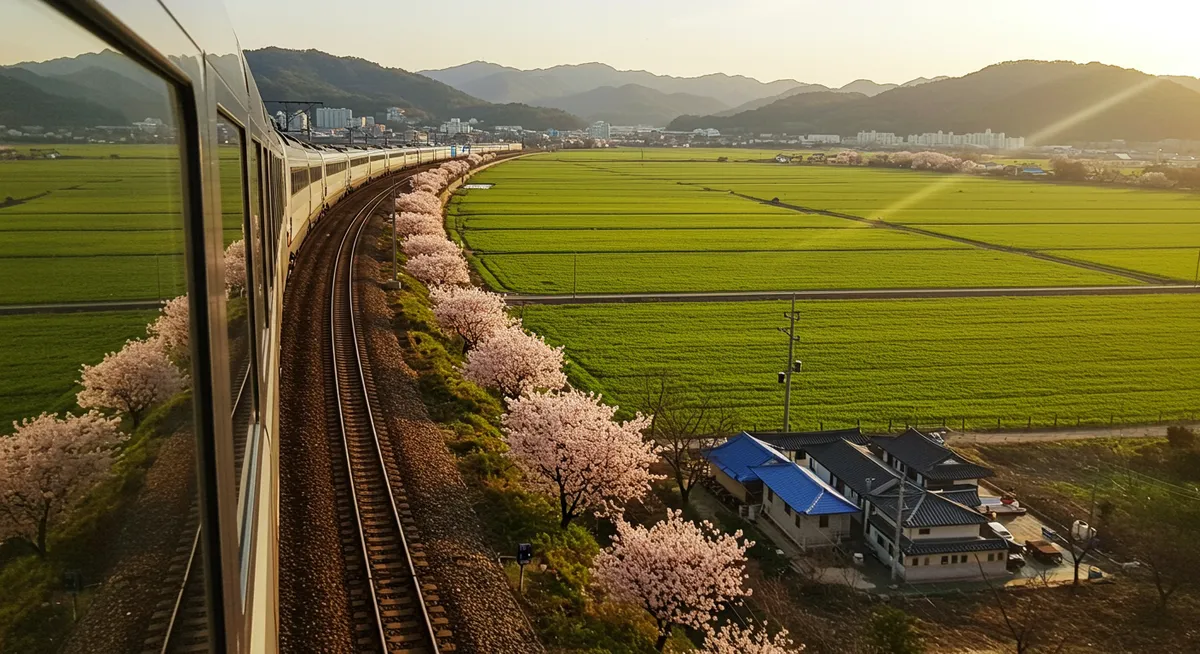
TL;DR: South Korea's rail network makes it easy to escape Seoul for the day. Top train day trips include Nami Island (50 min by ITX), Suwon Hwaseong Fortress (30 min by subway), Gangneung's beaches (2 hrs by KTX), Chuncheon for dakgalbi (1 hr by ITX), and Incheon's Chinatown (1 hr by subway). Book KTX and ITX tickets in advance on weekends, grab a T-Money card for seamless transfers, and consider a Korea Rail Pass if you plan multiple excursions.
South Korea's train system is one of the most efficient in Asia, connecting Seoul to dozens of fascinating destinations within a few hours. Whether you want ancient fortress walls, seaside panoramas, or countryside cycling paths, these day trips from Seoul by train let you experience the country's diversity without renting a car or sitting through long bus rides. As of 2026, KTX high-speed trains, ITX express services, and the Seoul Metropolitan Subway make it remarkably easy to plan spontaneous getaways from the capital.
1. Nami Island and Gapyeong: A Scenic Train Escape
Turn this guide into a personal route with our free Seoul itinerary planner.
Nami Island remains one of the most beloved day trips from Seoul by train, and for good reason. This crescent-shaped island in Chuncheon city is famous for its towering Metasequoia Lane, Ginkgo Tree Lane that turns golden in autumn, and the filming locations from the iconic Korean drama "Winter Sonata." The island is compact enough to explore on foot in two to three hours, or you can rent a bicycle to cover more ground at a leisurely pace.
To reach Nami Island, take the ITX-Cheongchun train from Yongsan or Cheongnyangni Station to Gapyeong Station. The journey takes approximately 50 to 60 minutes and costs around 5,700 to 8,500 won one way. Alternatively, the Gyeongchun Line subway from Sangbong Station reaches Gapyeong in about 80 minutes at a lower fare. From Gapyeong Station, a taxi to the ferry terminal costs roughly 6,000 to 10,000 won and takes five minutes. Entry to Nami Island is 19,000 won for adults in 2026, which includes the round-trip ferry crossing.
While you are in the Gapyeong area, consider combining your visit with the Garden of Morning Calm, a stunning botanical garden with 30 themed gardens spread across a hillside, and the Gangchon Rail Bike, where you pedal converted rail cars along an 8.6 km track through tunnels and alongside rivers. The Gapyeong tourist shuttle bus connects all three attractions conveniently.
2. Suwon Hwaseong Fortress: UNESCO Heritage by Subway
Suwon Hwaseong Fortress is the easiest day trip from Seoul by train because you can reach it on Seoul Subway Line 1 without any special tickets. The ride from Seoul Station to Suwon Station takes about 30 to 40 minutes, or you can take the KTX for a 20-minute express trip costing around 4,800 won each way.
Built in the 1790s by King Jeongjo of the Joseon Dynasty, Hwaseong Fortress is a UNESCO World Heritage Site with nearly 6 kilometers of fortress walls studded with gates, command posts, watchtowers, and bastions. You can walk the entire wall circuit in two to three hours, enjoying panoramic views of Suwon city along the way. The Paldalmun Gate area offers the most dramatic vistas and makes an excellent starting point. After your fortress walk, head to the Suwon Chicken Street near the fortress for the city's legendary Korean fried chicken, a local specialty since the 1970s.
3. Gangneung: Coastal Beauty via KTX
Gangneung on South Korea's east coast became dramatically more accessible after the KTX Gangneung line opened for the 2018 PyeongChang Winter Olympics. The high-speed train from Seoul Station reaches Gangneung Station in approximately 1 hour and 49 minutes, with economy class tickets costing around 27,600 won each way in 2026. This makes Gangneung one of the best day trips from Seoul by train for beach lovers and coffee enthusiasts.
Start your day at Gyeongpo Beach, one of the most famous stretches of sand on the east coast, then walk along the scenic coastal trail to Anmok Beach, home to Gangneung's celebrated Coffee Street where dozens of specialty cafes line the waterfront. For culture, visit the 600-year-old Ojukheon House, birthplace of the revered Joseon scholar Yulgok Yi I, whose face appears on the 5,000 won banknote. If you want a deeper dive into this coastal city, check out our guide on getting to Gangneung from Seoul for detailed transport options and tips.
4. Chuncheon: Dakgalbi Capital of Korea
Chuncheon, the capital of Gangwon Province, is a food lover's paradise reachable in about one hour by ITX-Cheongchun from Yongsan Station. The city is famous throughout South Korea for dakgalbi, spicy stir-fried chicken cooked at your table with rice cakes, cabbage, and sweet potato, and the best place to try it is Dakgalbi Street near Chuncheon's Myeongdong area, where a dozen competing restaurants serve this fiery local specialty.
Beyond the food scene, Chuncheon offers beautiful Soyang Lake, the largest artificial lake in South Korea, where you can take a ferry cruise surrounded by forested mountains. The nearby Gangchon area, just one subway stop from Chuncheon, features the popular Rail Bike experience and bungee jumping over the Bukhangang River. A day in Chuncheon pairs well with a Nami Island visit since both are on the same ITX line.
5. Incheon: Chinatown, Islands, and Songdo
Incheon is often overlooked as a day trip destination because visitors associate it primarily with the airport, but this port city has a surprisingly rich cultural scene. Seoul Subway Line 1 reaches Incheon Station in roughly one hour, placing you right at the entrance to Korea's only official Chinatown, where jajangmyeon (black bean noodles) was invented.
After exploring Chinatown and the adjacent Open Port area with its colonial-era architecture, head to Wolmido Island for seafood and amusement rides along the waterfront. In the afternoon, take the subway to Songdo International Business District to walk through Central Park, a canal-lined green space modeled after New York's Central Park, and ride up the G-Tower observation deck for panoramic city views. For a comprehensive plan, see our Incheon day trip from Seoul guide.
6. Jeonju: Hanok Village and Bibimbap
Jeonju is widely considered the culinary capital of South Korea, and the KTX gets you there from Seoul's Yongsan Station in just 1 hour and 30 minutes. The city's star attraction is Jeonju Hanok Village, a living neighborhood of over 700 traditional Korean houses that has been continuously inhabited for centuries. Wander through narrow alleyways, try on hanbok (traditional clothing) for photos, and sample Jeonju bibimbap, the original and most authentic version of Korea's signature rice bowl dish, made with locally sourced bean sprouts and gochujang.
Jeonju is also home to Gyeonggijeon Shrine, which houses the portrait of Joseon Dynasty founder King Taejo, and the Jeonju National Museum for deeper historical context. The KTX fare runs approximately 17,800 won each way, making this an affordable and deeply rewarding day trip from Seoul by train.
7. Gyeongju: The Museum Without Walls
Often called "the museum without walls," Gyeongju served as the capital of the ancient Silla Kingdom for nearly a thousand years. The KTX from Seoul Station reaches Singyeongju Station in about 2 hours, and from there a short bus ride brings you to the historic center. Key sites include the Bulguksa Temple and Seokguram Grotto (both UNESCO World Heritage Sites), the Daereungwon Tomb Complex with its grass-covered royal burial mounds, and the serene Anapji Pond, which is especially magical at night. Our Seoul to Gyeongju transport guide covers all route options and schedules in detail.
8. DMZ and Dorasan Station: The Train to the Border
One of the most unique day trips from Seoul by train takes you to the edge of the Korean Demilitarized Zone. The Gyeongui Line from Seoul Station reaches Dorasan Station, the northernmost train station in South Korea, located just 700 meters from the North Korean border. While independent travel to the DMZ is restricted, several tour operators run guided day trips that include the Third Infiltration Tunnel, Dora Observatory where you can peer into North Korea through binoculars, and Dorasan Station itself, a hauntingly empty terminal built in hope of eventual reunification.
Most DMZ tours depart from Seoul in the early morning and return by mid-afternoon. Booking in advance is essential as visitor numbers are strictly controlled for security reasons. Bring your passport, as identification checks are required at military checkpoints.
9. Asan and Onyang: Hot Springs and Heritage
For a more relaxing day trip from Seoul by train, head to Asan in South Chungcheong Province, reachable by KTX from Seoul Station in approximately 40 minutes. The Onyang Hot Springs district has been a popular bathing destination since the Joseon Dynasty, and several modern spa complexes offer both traditional Korean bathhouse experiences and private soaking pools fed by naturally heated mineral water.
Asan is also home to the Hyeonchungsa Shrine, dedicated to Admiral Yi Sun-sin, one of Korea's greatest naval heroes. The shrine grounds are particularly beautiful during cherry blossom season in April. Combine a morning at the shrine with an afternoon soak in the hot springs for a perfectly balanced day.
10. Busan: South Korea's Coastal Gem by KTX
While Busan is often considered a multi-day destination, the KTX high-speed train from Seoul Station reaches Busan in just 2 hours and 15 minutes, making a long but rewarding day trip entirely feasible. Focus your time on Haeundae Beach, the colorful Gamcheon Culture Village, and the Jagalchi Fish Market, the largest seafood market in South Korea. For travelers considering a longer stay, our Busan itinerary guide helps you plan the perfect trip.
Essential Tips for Train Day Trips from Seoul in 2026
Planning your day trips from Seoul by train is straightforward, but a few practical tips will make your experience smoother. Book KTX and ITX-Cheongchun tickets in advance through the KORAIL app or website (letskorail.com), especially for weekend and holiday travel when trains sell out quickly. Consider purchasing a Korea Rail Pass (KR Pass) if you plan three or more long-distance trips during your stay, as it offers unlimited KTX travel for a set number of days.
A T-Money card is essential for seamless transfers between subway, bus, and some regional trains. You can purchase and recharge T-Money cards at any convenience store. For navigating stations and schedules, the Naver Map and KakaoMap apps are far more reliable than Google Maps in South Korea. Understanding how to use Seoul public transportation will help you connect smoothly between the city subway and intercity rail services. Finally, plan your seasonal timing carefully: cherry blossoms peak in late March to mid-April, autumn foliage is best from mid-October to early November, and the best time to visit Seoul guide can help you align your trip with festivals and ideal weather.
Frequently Asked Questions
What is the fastest train day trip from Seoul?
Do I need to book train tickets in advance for day trips from Seoul?
What is the best way to get to Nami Island from Seoul by train?
Is the Korea Rail Pass worth it for day trips from Seoul?
Can I visit the DMZ from Seoul by train?
What apps should I use for planning train trips in South Korea?
South Korea's train network transforms Seoul into the perfect base for exploring the entire country in 2026. Whether you are walking ancient fortress walls in Suwon, pedaling through autumn foliage on Nami Island, tasting the original bibimbap in Jeonju, or gazing across the DMZ border, each of these train day trips from Seoul offers a distinct and memorable experience. The combination of affordable fares, frequent departures, and punctual service means you can pack an extraordinary amount of discovery into a single day, returning to your Seoul hotel each evening with new stories and full camera rolls. Start planning your Korean rail adventures and see how much lies just a short train ride beyond the capital.