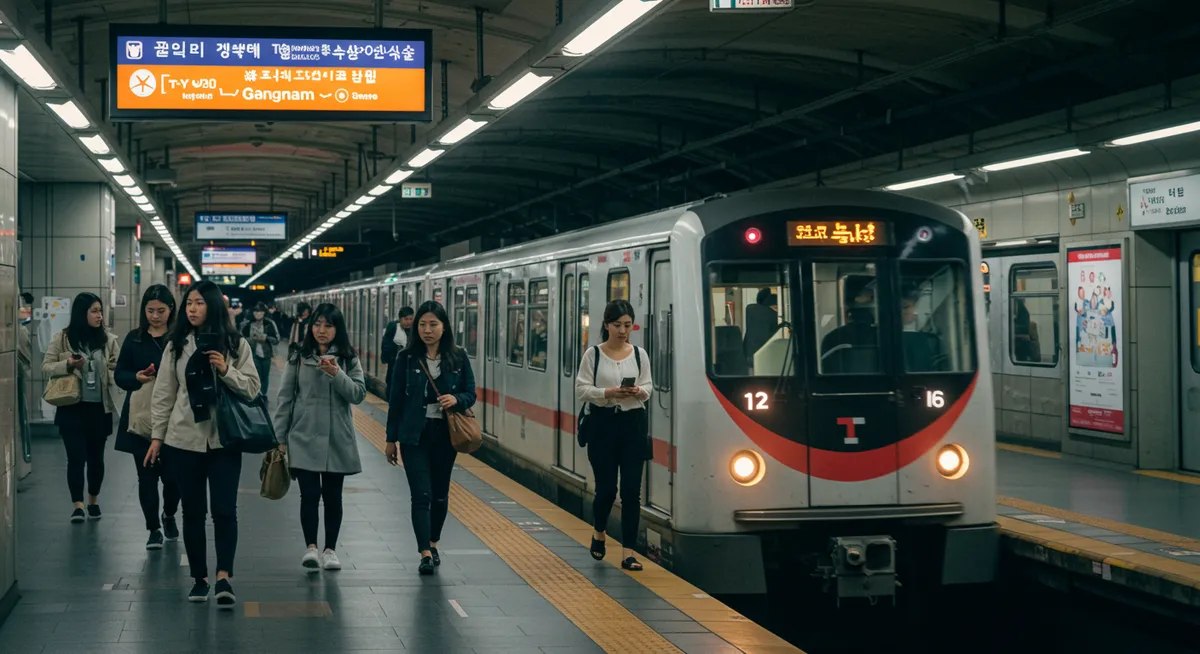
TL;DR: Seoul has one of the world's best public transit systems. Get a T-Money card for flexibility or a Climate Card for unlimited rides, download KakaoMap for navigation, and use the color-coded subway and bus networks to reach every corner of the city. Fares start at 1,550 KRW per ride with free transfers within 30 minutes. In 2026, new metro lines including the Dongbuk Line, Wirye Line, and GTX-A expansion make getting around even easier.
Seoul's public transportation system consistently ranks among the most efficient, clean, and affordable in the world. Whether you are visiting for a weekend getaway or spending weeks exploring South Korea, understanding how to use Seoul public transportation is the single most important skill for making the most of your trip. This guide covers everything you need to know in 2026, from choosing the right transit card to navigating new metro expansions and mastering the bus system. Plan your days efficiently with our Seoul itinerary.
T-Money Card vs Climate Card: Choosing the Right Transit Pass in 2026
Turn this guide into a personal route with our free Seoul itinerary planner.
Before you take your first ride, you need a transit card. In 2026, visitors to Seoul have two main options: the classic T-Money card and the newer Climate Card. Understanding the difference is essential for saving money on how to use Seoul public transportation.
T-Money Card
The T-Money card is a rechargeable smart card that works on subways, buses, taxis, and even at convenience stores across all of South Korea. Purchase one for 3,000 KRW at any subway station kiosk or convenience store such as GS25, CU, or 7-Eleven, then load it with your desired amount. To use it, simply tap on the card reader when you enter and exit subway stations, or when you board and alight buses. The T-Money card has no expiration date, making it perfect for repeat visitors. It is also the only card accepted on the AREX airport express train from Incheon International Airport.
Climate Card
Launched in 2024, the Seoul Climate Card offers unlimited rides on Seoul's subways and city buses for a flat daily rate. Short-term tourist passes are available for 1 day (5,000 KRW), 2 days (8,000 KRW), 3 days (10,000 KRW), 5 days (15,000 KRW), and 7 days (20,000 KRW). As of March 2026, Climate Cards can be purchased and recharged using international credit and debit cards, making them far more accessible to foreign visitors. If you plan to ride transit six or more times per day for three or more days, the Climate Card delivers significant savings.
Which Card Should You Choose?
For stays of three days or longer with heavy sightseeing, the Climate Card is the better value. For shorter visits, day trips outside Seoul, or if you want one card that works everywhere including taxis and convenience stores, stick with T-Money. Many experienced travelers carry both: a Climate Card for daily transit and a T-Money card with a small balance as backup for the airport train and purchases outside Seoul's transit zone. Check our Seoul budget travel tips for more ways to save money.
Navigating the Seoul Subway System
The Seoul Metropolitan Subway is the backbone of the city's transit network, with over 20 lines, 700+ stations, and billions of annual rides. Learning how to use Seoul public transportation starts with mastering this world-class subway system.
How the Subway Works
Every subway line is color-coded and every station is numbered, making navigation straightforward even if you do not read Korean. Stations feature signs in Korean, English, Chinese, and Japanese, and onboard announcements are made in all four languages. Trains run from approximately 5:30 AM until midnight, with frequencies of 2 to 5 minutes during peak hours and 5 to 10 minutes during off-peak times.
Fares and Transfers
A standard adult subway fare is 1,550 KRW (about $1.10 USD) when using a transit card. The base fare covers up to 10 kilometers, with small surcharges for longer distances. One of the best features of Seoul's system is the transfer discount: you can transfer between subway lines and buses up to four times within 30 minutes without paying additional base fares.
2026 Metro Expansions
Seoul's subway network continues to grow in 2026 with several major additions:
- Dongbuk Line (July 2026): A new light metro line in northeastern Seoul with 14 stations between Wangsimni and Eunhaeng Sageori, opening up previously underserved neighborhoods.
- Wirye Line (September 2026): A light metro connecting southeastern Seoul with 12 stations, branching from Macheon station on Line 5 to Bokjeong and Namwirye stations on Line 8.
- GTX-A Central Section (September 2026): The high-speed Great Train Express connecting Seoul Station to Suseo in just minutes, completing the full GTX-A corridor for rapid cross-city travel.
- Sinansan Line (December 2026): Starting at Yeouido and branching south, this line will dramatically improve connectivity for commuters and visitors in the southwestern corridor.
Seoul also redesigned its entire subway map for the first time in 40 years, making station layouts and transfer points clearer for both residents and tourists. These expansions make it easier than ever to reach top things to do in Seoul without a taxi.
Mastering Seoul's Color-Coded Bus Network
Seoul's bus system complements the subway by reaching neighborhoods, hillside attractions, and local areas that trains cannot access. Understanding the color-coded bus system is a key part of learning how to use Seoul public transportation effectively.
Bus Types by Color
- Blue buses: Trunk routes connecting major districts across the city along main corridors. These are the workhorses for longer cross-town trips.
- Green buses: Branch routes that connect subway stations and blue bus routes with residential neighborhoods. Use these for the last leg of your journey.
- Yellow buses: Circulation routes in central Seoul, ideal for hopping between attractions in downtown, Myeongdong, and Jongno areas.
- Red buses: Express routes connecting Seoul with surrounding metropolitan areas like Bundang, Ilsan, and Incheon. Useful for day trips from Seoul.
- Green maeul (village) buses: Short local routes within a single district, perfect for reaching places deep in residential or hillside areas.
How to Ride the Bus
Board through the front door and tap your transit card on the reader next to the driver. When your stop approaches, press the stop button, then tap your card again on the rear-door reader before exiting. This second tap is crucial for registering your exit and enabling transfer discounts. Bus stops display route maps, destinations, and real-time arrival information on digital screens.
Night Owl Buses
Seoul operates late-night owl buses (marked with an "N" prefix) that run from midnight until approximately 5:00 AM, covering major routes through the city center. These are a lifeline for travelers coming back from exploring Seoul's nightlife in Hongdae or late-night dining in Gangnam.
Essential Navigation Apps for Seoul Transit
The right app transforms how to use Seoul public transportation from confusing to effortless. Here are the must-have apps for 2026:
- KakaoMap: The most reliable navigation app in South Korea. It provides door-to-door directions combining subway, bus, and walking segments with real-time bus tracking and estimated arrival times. Available in English.
- Naver Map: South Korea's most popular map service with excellent public transit routing, real-time bus positions, and detailed indoor maps of major subway stations. More accurate than Google Maps for Korean transit.
- KakaoMetro: A dedicated subway app showing real-time train schedules, optimal routes, which car to board for the fastest transfer, and exact fare calculations.
- Subway Korea: A lightweight, offline-capable subway map app that works without internet, making it a valuable backup when Wi-Fi or data is unavailable.
Pro tip: Download KakaoMap and save your hotel, key attractions, and frequently visited stations as favorites before you arrive. This makes daily route planning much faster, especially when you are in areas with weak signal.
Money-Saving Tips and Transit Etiquette
Getting the most out of Seoul's transit system goes beyond knowing routes. These practical tips will help you travel smarter and more comfortably.
Save Money
- Always tap out: Forgetting to tap your card when exiting a bus or subway charges you the maximum fare. Always tap both on entry and exit.
- Use transfer discounts: Transfer between subway and bus (or bus to bus) within 30 minutes to avoid paying multiple base fares. You get up to four discounted transfers per trip chain.
- Travel off-peak: Rush hours (7:00 to 9:00 AM and 5:00 to 7:00 PM) mean packed trains. Traveling outside these windows is more comfortable and makes navigating stations easier.
- Refund unused balance: Before leaving South Korea, refund any remaining T-Money balance at convenience stores or subway station machines. A small processing fee (500 KRW) applies.
Transit Etiquette
- Keep conversations quiet on trains and buses. Phone calls are considered impolite on public transit.
- Priority seats (marked in a different color) are reserved for elderly passengers, pregnant women, and people with disabilities. Do not sit in them even if they appear empty.
- Stand on the right side of escalators to let people pass on the left.
- Remove backpacks and hold them in front of you during crowded periods.
- Eating on the subway is generally frowned upon, although drinking water is acceptable.
Getting to and from the Airport
Incheon International Airport connects to central Seoul via the AREX (Airport Railroad Express). The express train reaches Seoul Station in 43 minutes for 11,000 KRW, while the all-stop commuter train takes about 66 minutes for 5,150 KRW and accepts T-Money cards. Note that the Climate Card does not work on AREX. From Gimpo Airport, both subway Line 5 and Line 9 provide direct connections into the city. For the best time to visit Seoul, consider that the transit system runs reliably year-round regardless of weather or season.
Taxis, Bikes, and Other Transport Options
While the subway and bus system covers most needs, Seoul offers additional transport options to complement public transit:
- Taxis: Affordable by international standards, with base fares starting at 4,800 KRW. International taxis with English-speaking drivers are available at airports and major tourist areas. All taxis accept T-Money cards.
- Ttareungyi (Seoul Bike): The city's public bike-sharing system with stations across Seoul. Rent via the Ttareungyi app for 1,000 KRW per hour, ideal for exploring areas like the Han River parks and Yeouido.
- KTX High-Speed Rail: For day trips to Busan, Gyeongju, or other cities, the KTX departs from Seoul Station and Yongsan Station. In 2026, new high-speed routes further expand intercity connectivity. Check our guides for getting from Seoul to Gyeongju and Seoul to Gangneung.
Frequently Asked Questions
Can I use Apple Pay or a credit card on Seoul public transportation?
What is the best app for navigating Seoul public transportation in 2026?
Should I get a T-Money card or a Climate Card as a tourist in 2026?
How late does Seoul public transportation run?
How do transfer discounts work on Seoul public transit?
Are there English signs on Seoul subway and buses?
How do I get from Incheon Airport to Seoul by public transit?
Understanding how to use Seoul public transportation opens up the entire city for exploration in 2026. With world-class subway lines expanding further, a comprehensive bus network reaching every neighborhood, affordable fares with generous transfer discounts, and excellent English-language support, Seoul makes it remarkably easy for visitors to travel like locals. Grab your transit card, download KakaoMap, and start exploring one of Asia's most exciting capitals. For detailed neighborhood recommendations, check our guide on where to stay in Seoul, and fuel your adventures with the best finds from our Seoul street food guide.