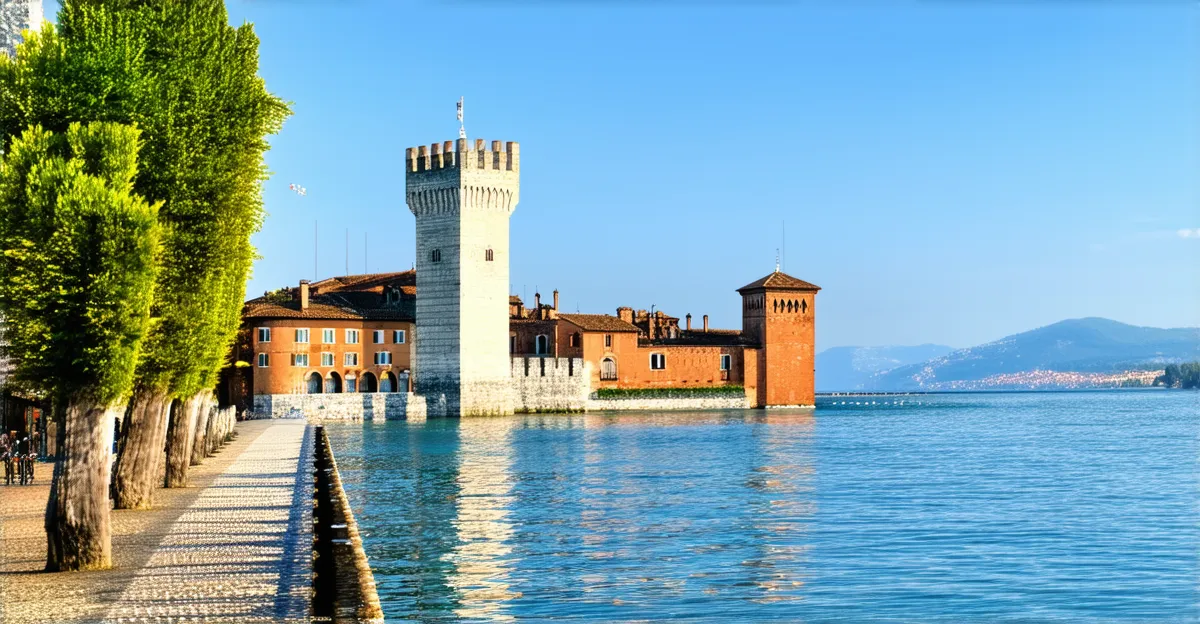
Sirmione sits on a narrow peninsula jutting into southern Lake Garda, and five days here gives you exactly enough time to do it properly. This Sirmione itinerary covers the three anchors every visitor needs — Scaligero Castle, the Grotte di Catullo ruins, and the Terme di Sirmione thermal pools — and pairs them with a full-day excursion to Verona and a relaxed final day through the Lugana wine country around Desenzano. Between those big-ticket items, you get time for the lakeside promenade, fresh lake fish at trattorias, and the unhurried pace that makes this corner of Italy so memorable.
Key Takeaways
Turn this guide into a personal route with our free sirmione itinerary 5 days itinerary planner.
- Day 1: Arrive, settle in, walk the old town, and watch the sunset from Piazza Carducci.
- Day 2: Scaligero Castle in the morning, Grotte di Catullo ruins and museum in the afternoon.
- Day 3: Full thermal spa morning at Terme di Sirmione, then lakefront afternoon and dinner.
- Day 4: Day trip to Verona — Arena, Juliet's House, Piazza delle Erbe, return by early evening.
- Day 5: Desenzano del Garda, Lugana wine country, farewell dinner back in Sirmione.
Explore Sirmione like a pro with these guides
- How Many Days Do You Need to See Rome? - Unlock your adventure
- Verona Itinerary: Unforgettable Adventures in 2026 - Explore with confidence
- Brescia Itinerary: Discover Italy's Hidden Gem in 2026 - Plan your perfect trip
Navigating the ZTL and Where to Stay
Before you book anything, understand Sirmione's ZTL (Zona a Traffico Limitato). The entire walled historic center — the peninsula tip where the castle and main streets are — is closed to all private vehicles around the clock. A camera system records every plate that passes through the arch at the peninsula entrance. If your hotel is inside the ZTL, the hotel will give you a temporary access code to register your plate online before you drive in; without it you receive an automatic fine, usually €80–€160 per entry. You cannot pay at the barrier. The process sounds daunting but takes about five minutes on the municipal portal — your hotel should send the link when you book.
Most visitors find it easier to stay just outside the ZTL in the residential zone along Via Colombare or Via XXV Aprile. There are two public car parks near the ZTL arch — Parcheggio P1 and the larger P2 — where you can leave the car for the whole stay (roughly €2–€3 per hour or a flat overnight rate around €15). From either car park, the castle is a five-minute walk. Hotels inside the walled zone are premium and genuinely atmospheric, but the ZTL logistics add a layer of planning. Budget hotels and apartment rentals outside the gate suit most five-day visitors perfectly well. If you are travelling as a family with a lot of luggage, some hotels inside the ZTL have a loading exception for a brief window — always call ahead and confirm before driving through, and never assume the exception applies automatically.
As a general rule, once you are in Sirmione you do not need a car. The old town is entirely walkable, the ferry terminal for Lake Garda connections is next to the castle, and Sirmione's train station (on the Brescia–Verona line) is about 4 km from the center — a €10–€12 taxi or a local ARRIVA bus connects the two in around 15 minutes. For day trips to Verona or Desenzano, the train is faster and cheaper than driving.
Day 1: Arrival and the Old Town at Your Own Pace
Day 1 is deliberately unhurried. Arrive, check in, and give yourself the afternoon to discover the old town without a checklist. The cobbled main street (Via Vittorio Emanuele) runs the full length of the peninsula and is lined with gelaterie, ceramic shops, and wine bars. It is touristy, yes, but the alleyways branching off it are quieter and lead down to rocky shoreline spots with direct views across the lake. Do not try to squeeze in the castle or the ruins today — save them for tomorrow when you are rested and can arrive early before the day-trippers.
Walk north along the lakeside promenade (Lungolago) in either direction from the castle. The western side faces the open lake toward Monte Baldo; the eastern side faces the calmer bay toward Desenzano. Both are beautiful in different light. The eastern promenade gets afternoon shade, which makes it the better choice for a hot summer day. You will pass the little port where fishing boats dock and where the public ferry stops — check the ferry timetable board here for reference on your later day trips around the lake.
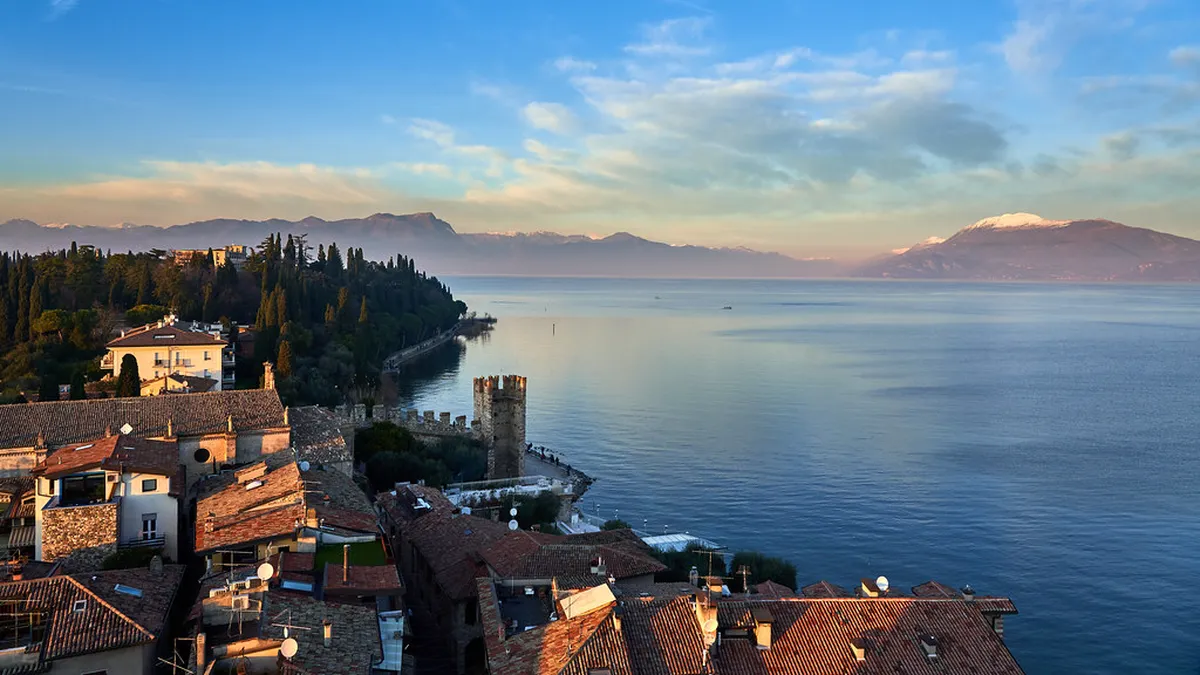
Stop at the Church of San Pietro in Mavino, one of the oldest churches on the lake (8th–11th century frescoes inside, free entry). It sits on the highest point of the peninsula amid olive trees and is almost always quiet. The views back toward the town from the churchyard are some of the best in Sirmione — you can see the full span of the southern lake from here and get a sense of the peninsula's geography that helps the next four days make more sense spatially.
Consider renting a bicycle for an hour in the late afternoon. Sirmione's main street gets congested on foot but a bike lets you reach the northern tip of the peninsula (near the Grotte di Catullo) for a preview of tomorrow's destination without paying entry today. The peninsula is flat and the ride from the ZTL arch to the tip takes about 10 minutes. Several rental shops near the car park rent city bikes for around €5 per hour.
In the evening, take a table at Piazza Carducci and order an Aperol spritz while the sun drops behind the hills to the west. The castle lights up at dusk and the scene is genuinely postcard-perfect. For dinner, the streets parallel to the main drag (particularly Via Catullo) have trattorias that are good quality without the waterfront markup. Fresh lavarello (lake whitefish) or tinca (tench) with a glass of Lugana DOC white wine is the local combination to order on Day 1 and every other day if you are happy repeating a good thing.
Day 2: Scaligero Castle and Grotte di Catullo
Day 2 puts Sirmione's two headline sights back to back. Start at Scaligero Castle when it opens at 08:30. Entry is €6 per adult (2026). The castle was built by the della Scala family of Verona in the 13th century and is unusually well preserved — you can walk the full perimeter of the battlements for a 360-degree view of the peninsula, the lake, and on clear days the Alps to the north. The interior museum has modest displays but the architectural walk-through is the real draw. Aim to be out by 10:30 before the day-trippers from Verona and Milan arrive in numbers.
From the castle, walk the full length of the peninsula (about 20 minutes on foot) to reach the Grotte di Catullo archaeological park at the northern tip. Entry is €6 per adult; the attached Museo Civico Archeologico is included. The ruins are the largest Roman private residential complex in northern Italy — probably not Catullus's villa despite the name, but a 1st-century AD structure of significant scale. Allow at least 90 minutes: the park path winds through olive groves above sheer cliffs, and there are multiple terraces where you can look straight down to the lake below.
The museum is worth 30 minutes for the carved marble heads and mosaic fragments, which give scale to what the villa looked like at its height. Afterward, take the path down to the Lido delle Bionde, a pebble beach immediately below the ruins with clear water and no entrance fee. It fills up fast in summer — arriving by 13:00 secures a reasonable spot. Pack a picnic lunch from one of the delis on the main street before heading up to the ruins.
Return to town in the late afternoon and spend the remaining daylight at your own pace along the lakefront. This is a good evening for a slightly more special dinner — restaurants like Ristorante La Rucola 2 (Via Strentelle) or Osteria al Pescatore (Via Piana) book up in high season, so reserving a table the day before is worth doing. If you have walked the peninsula twice today, you will also have noticed the dramatic difference in scale between the Grotte di Catullo and the castle: the Roman villa complex covers roughly 2 hectares; the castle grounds are far smaller. The ruins give a more honest sense of what ancient Sirmione was — a place where wealthy Romans came to summer, not a military outpost. That context makes the entire day feel more cohesive.
| Time | Activity | Notes |
|---|---|---|
| 08:30 – 10:30 | Scaligero Castle | €6 entry; arrive at opening |
| 10:30 – 11:00 | Walk to Grotte di Catullo | Pick up picnic supplies on the way |
| 11:00 – 13:00 | Grotte di Catullo ruins + museum | €6 entry, museum included |
| 13:00 – 15:00 | Lido delle Bionde beach | Free; bring your own food and towel |
| 15:00 – 19:00 | Lakefront and old town | Relax, browse shops |
| 19:30 | Dinner reservation | Book ahead in peak season |
Day 3: Thermal Baths and the Lakefront
Day 3 is the slow day. The Terme di Sirmione complex operates two main facilities: the Aquaria spa (the public wellness pool and indoor spa, Via XXV Aprile 11) and the Terme Virgilio medical thermal center. For leisure visitors, Aquaria is the right choice. A standard day-pass costs around €35–€45 depending on season and includes access to the outdoor thermal pools, indoor pool, steam room, and relaxation areas. Book online in advance — the complex has limited daily capacity and sells out on summer weekends. Need extra inspiration for Sirmione? Check Terme in Sirmione for insider ideas.
Arrive when Aquaria opens (usually 09:00). The outdoor pools are 37°C and sit directly on the lake shore — there is a moment when you step into the warm sulphurous water with the Alps visible across the lake that justifies the entire trip. The morning light is especially good for this. Crowds build from 11:00 onward as day visitors arrive from Verona and Milan. Spending three to four hours here is plenty; a couple of hours in the pools, one steam session, and time in the outdoor sun loungers is the standard rhythm.
Leave the spa by early afternoon and walk the eastern lakeside promenade (Lungolago Verdi). This is the quieter, less-trafficked side of the peninsula and has a different character from the tourist strip — local families, olive trees coming down to the water, and benches overlooking the bay. You can rent a pedalo or small electric boat from the dock near the ferry terminal for an hour if you want to see the peninsula from the water. The thermal water that feeds the Aquaria complex actually bubbles up from the lake floor at this eastern shore — you can see the gas rising in certain spots near the shore even from the promenade path.
If the weather is good, the pebble coves on the eastern side of the peninsula (accessible via steps from the Lungolago Verdi path) are sheltered and rarely crowded on weekday afternoons. They are rocky rather than sandy but the water is clear and the swim after a morning in the spa is genuinely refreshing. Bring flip-flops for the rocks.
This evening is the right time to try Sirmione's local specialty gelato at Gelateria Punto Gelato on Via Vittorio Emanuele — try the Lugana wine sorbet, which is made with wine from the estates just south of town and genuinely reflects the local terroir. For dinner, the lakefront restaurants along Lungolago Europa on the western shore have the best sunset views; arrive at 19:00 to secure a table before the main rush. Day 3 is the most relaxed on this itinerary by design — you need the rest before the full day in Verona tomorrow.
Day 4: Day Trip to Verona
Verona is the obvious day trip from Sirmione and the most rewarding. The cities are 39 km apart, and the train from Sirmione's station (Sirmione FS, served by Brescia–Verona line) takes around 35–40 minutes with trains running roughly every hour. A second-class return ticket is approximately €8. Leave by 09:00 to maximize time in Verona and aim to be back in Sirmione by 19:00.
Start at the Arena di Verona on Piazza Bra. This is a nearly intact Roman amphitheater from the 1st century AD — still functioning as an open-air opera venue every summer — and it is visually stunning from both inside and out. Entry to the interior is €10. Allow 45 minutes, more if you want to climb to the upper tiers for the city view. The piazza outside is where locals do the passeggiata (evening stroll), lined with café terraces.
Walk northeast through the historic center to Piazza delle Erbe, the old Roman forum and the most atmospheric square in the city. The market stalls, medieval tower houses, and Baroque fountain make it one of the most photographed spots in the Veneto. Have a coffee here, then walk another five minutes to Piazza dei Signori, the civic heart of Verona with the Scaligeri tombs adjacent. The Scaligeri were the same family who built Sirmione's castle — seeing their tombs in Verona completes that historical thread nicely.
For lunch, the streets between the two piazzas (Via Mazzini, Via Cappello) have dozens of options. Juliet's House (Casa di Giulietta, Via Cappello 23) is a five-minute walk from Piazza delle Erbe. Entry to the courtyard is free; entry to the house itself is €6. The famous bronze Juliet statue is in the courtyard. The association with Romeo and Juliet is entirely literary rather than historical, but the courtyard atmosphere is charming and the balcony makes an obvious photo stop.
If you have energy for a final stop, walk 10 minutes north to the Castelvecchio museum complex (€6, closed Mondays). It sits on the Adige river with an impressive medieval bridge and houses Verona's main art collection. Otherwise, spend the late afternoon in the Piazza delle Erbe area over an Aperitivo before catching the early evening train back to Sirmione. Our separate Verona itinerary covers the city in more detail if you want to plan a second visit.
| Time | Activity | Notes |
|---|---|---|
| 09:00 – 09:40 | Train to Verona | ~€4 one way; Sirmione FS station |
| 10:00 – 11:00 | Arena di Verona | €10 entry |
| 11:00 – 12:30 | Piazza delle Erbe + Piazza dei Signori | Free; coffee break here |
| 12:30 – 13:30 | Lunch in the old center | Budget €15–€25 per person |
| 13:30 – 15:00 | Juliet's House + Castelvecchio | €6 each; Castelvecchio closed Mondays |
| 17:30 – 18:15 | Train back to Sirmione | Check return times in advance |
Day 5: Desenzano del Garda and Lugana Wine Country
The final day takes you south to the towns and vineyards that bookend Sirmione's peninsula. Start with Desenzano del Garda, the largest town on the lake's southern shore and about 15 minutes by car or taxi from Sirmione (or 10 minutes by train from Sirmione FS). Desenzano is more of a working town than a tourist postcard, which is part of its appeal — it has a lively morning fish market on the lakefront (usually 08:00–13:00), a genuinely intact Roman villa (Villa Romana, €3, one of the best-preserved mosaic floors in northern Italy), and a compact old center around the 15th-century castle.
The Villa Romana di Desenzano (Via Crocifisso 22) deserves at least 45 minutes. The 4th-century AD floor mosaics — hunting scenes, mythological figures, geometric borders — are among the finest in the country outside of Sicily. The villa was clearly the country retreat of a very wealthy Roman family, and the scale of the mosaic program makes Grotte di Catullo look modest by comparison. Entry is €3; it is rarely crowded even in high season.
After Desenzano, head into the Lugana DOC wine zone, which sits on the flatlands immediately south of Sirmione on both sides of the peninsula's base. Lugana is a white wine made from Turbiana grapes — crisp, mineral-driven, and practically unknown outside northern Italy despite its quality. Several estates offer walk-in tastings: Cantina Pratello (Raffa di Puegnago), Azienda Agricola Cá dei Frati (Lugana di Sirmione), and Zenato (Peschiera del Garda) all welcome visitors without formal reservations on weekday mornings. A standard tasting of three or four wines typically costs €10–€15 and usually includes a purchase discount. If you are driving, designate one non-drinker or limit to small pours and a proper food break between estates.
Return to Sirmione in the late afternoon for a final walk of the old town. This is the time to pick up any remaining souvenirs — local olive oil from the Garda PDO zone, a bottle of Lugana to take home, or the distinctive green-glazed ceramics made in workshops on the peninsula. Evening dinner on Day 5 is worth treating as a proper farewell meal: book a table with lake views at one of the restaurants you have been eyeing all week and order something you have not tried yet, perhaps grilled eel (anguilla) if it is on the menu, a Garda specialty that most visitors miss.
| Destination | Highlights | Travel from Sirmione |
|---|---|---|
| Desenzano del Garda | Fish market, Villa Romana mosaics, castle | 15 min by car or 10 min by train |
| Lugana DOC estates | Turbiana wine tasting, Cá dei Frati, Zenato | 5–20 min south by car |
| Sirmione old town | Farewell walk, ceramics, final dinner | Return by 17:00 |
Best Time to Visit: Seasonal Highlights for Your Sirmione Itinerary
Planning your visit to Sirmione is essential for experiencing the best that this picturesque location has to offer. The charming town, nestled at the southern tip of Lake Garda, presents unique seasonal highlights that enhance your Sirmione itinerary 5 days. Each season brings a different ambiance, making it crucial to choose your travel time wisely.
Let's explore what each season brings to Sirmione:
Spring (March to May)
Spring is a beautiful time to visit Sirmione as the flowers bloom and the temperatures begin to warm up. By April, the cherry blossoms create stunning scenery, and the mild weather makes it ideal for strolling along the lakeside promenade. The thermal spa is also pleasantly quieter in April and May than it will be all summer. Spring marks the beginning of local festivals, with the streets livelier on weekends and the lakeside restaurants reopening their terraces.
Summer (June to August)
Summer is peak tourist season in Sirmione, with temperatures often exceeding 30°C. The old town is very busy from late June through August — ZTL enforcement is particularly active during this period, and the public car parks fill by 10:00 on weekends. Book the Aquaria thermal spa well in advance; midweek morning slots sell out days ahead in July and August. On the positive side, the lake is warm enough to swim, the ferry services run frequent schedules, and the long evening light makes the lakefront magical. Explore related insights at Sirmione travel tips.
Autumn (September to November)
September and early October are arguably the best weeks of the year for this itinerary. Temperatures average around 20°C, the summer crowds are gone, prices drop, and the Lugana wine harvest (vendemmia) happens in September — if you are visiting then, some estates offer harvest participation experiences for small groups. The Garda Wine Festival in late October gives another reason to linger in the area. November gets cold and many restaurants reduce hours or close temporarily.
Winter (December to February)
Winter casts a magical spell over Sirmione, despite the colder weather. While temperatures can drop to around 5°C, the serene ambiance and empty streets make for a very different experience. The thermal spa is at its best value in winter — off-peak rates apply and the contrast between cold air and 37°C water is more pronounced. The castle and Grotte di Catullo are almost visitor-free in January and February. December has Christmas market stalls in Piazza Carducci that run through the holiday period.
Getting to Sirmione: Transport and Practical Costs
Sirmione sits at the junction of the A4 motorway (Milan–Venice) and the SS11 state road, about 40 km east of Brescia and 35 km west of Verona. By car from Milan, the drive takes around 1 hour 20 minutes. From Verona, it is under 45 minutes. The nearest airport is Verona Villafranca (VRN), about 30 km away — car rental from VRN is the most convenient option if you are flying in.
By train, the main line runs Brescia–Desenzano–Peschiera–Verona. The stop closest to Sirmione is Sirmione FS (also labelled Colombare di Sirmione on some boards), roughly 4 km from the old town. From Milan Centrale, change at Desenzano or take a direct Intercity to Desenzano and connect by bus. Total journey time from Milan is 1 hour 20 minutes to 1 hour 45 minutes. Bus ATV runs a local service from the station to the ZTL arch, or a taxi costs €10–€12.
In terms of daily costs, budget around €70–€120 per night for a hotel outside the ZTL and €130–€250 inside the walled zone. A mid-range lunch (two courses, wine or water) runs €18–€28 per person; dinner at a proper lake restaurant is €30–€55 per person. The major sights are inexpensive: Scaligero Castle €6, Grotte di Catullo €6, Aquaria day pass €35–€45. The Verona day trip (train return + Arena + Juliet's House) comes to around €25–€30 per person all in.
| Expense Category | Estimated Cost (2026) |
|---|---|
| Accommodation (per night) | €70 – €250 depending on location/season |
| Dining (mid-range dinner) | €30 – €55 per person |
| Aquaria thermal spa day pass | €35 – €45 |
| Scaligero Castle + Grotte di Catullo | €6 each |
| Verona return train (Sirmione FS) | ~€8 return |
| ZTL fine (if unregistered) | €80 – €160 per entry |
For further planning, our complete Sirmione itinerary guide covers the town's highlights in more detail, and our 3-day Sirmione itinerary is useful if you only have a shorter window.
Frequently Asked Questions
What is the best time to visit Sirmione?
How many days are enough for Sirmione?
What are must-visit attractions in Sirmione?
How can you get around Sirmione?
Are there day trips worth adding to the itinerary?
Where can I find authentic local experiences in Sirmione?
This 5-day Sirmione itinerary captures the essence of Italy's beautiful lakeside paradise, offering an array of historical, cultural, and relaxing experiences. Whether you're wandering through cobblestone streets, indulging in spa treatments, or making the short journey to Verona, Sirmione promises unforgettable memories. Start planning your Sirmione itinerary today and immerse yourself in the beauty of this Italian gem!
Essential tips for your Sirmione journey