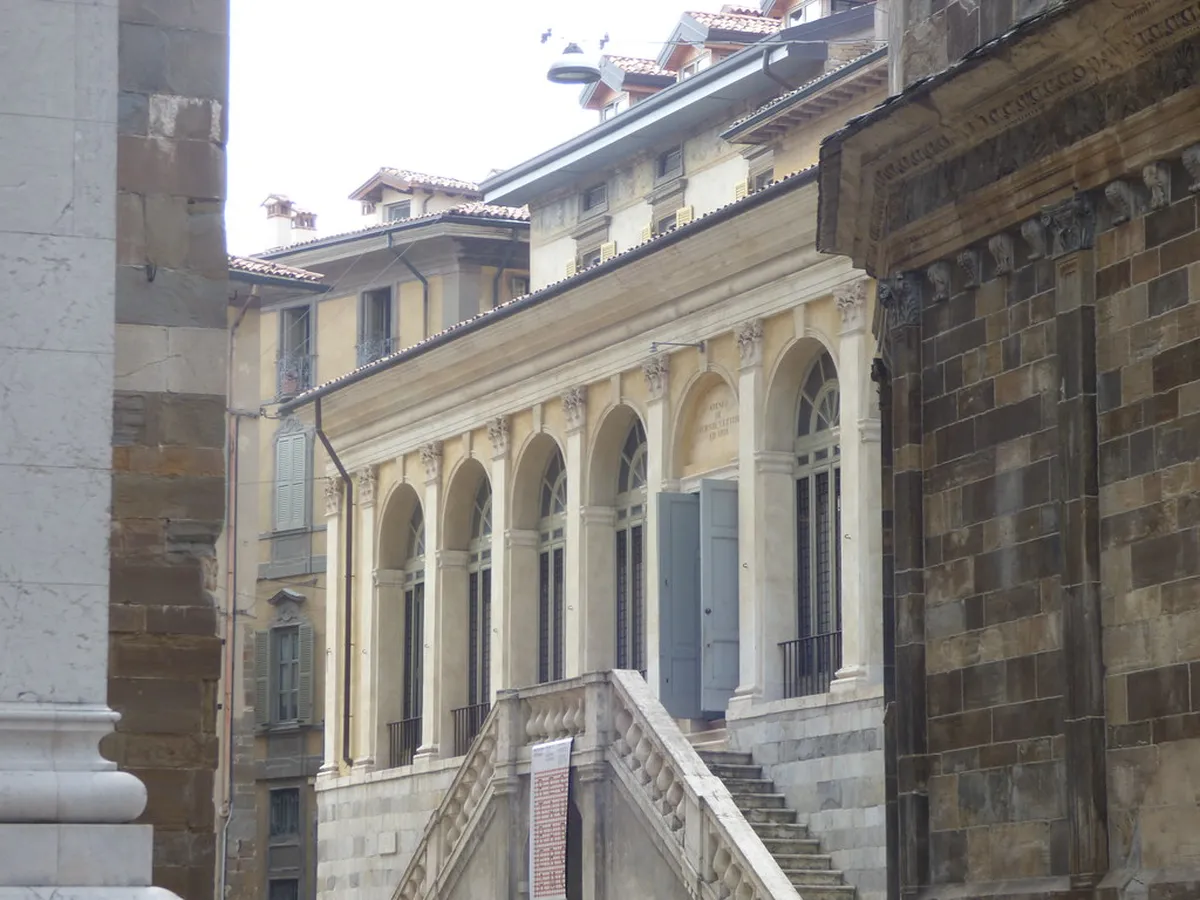
Bergamo is a hidden gem in Northern Italy that many travelers overlook on their way to Milan. I built this 1-day bergamo walking tour after multiple visits to this stunning hilltop city in Lombardy. This guide is perfect for first-timers who want to see the best sights without feeling overwhelmed, and for returning visitors who want a structured self-guided route through the medieval upper city.
Updated for 2026, this plan covers every corner of the Città Alta — from the UNESCO-listed Venetian Walls to the hidden sundials of Piazza Vecchia. We found that starting early helps you beat the large tour groups arriving from Bergamo Orio al Serio airport. You will enjoy the perfect mix of historic architecture, local food, and breathtaking Prealps mountain views.
At a Glance: 1-Day Bergamo Walking Tour
Turn this guide into a personal route with our free bergamo itinerary planner.
This summary helps you visualize the flow of your day in the beautiful upper city. We have grouped the stops to minimize backtracking and maximize time at each landmark. If you have more time available, consider a 3-day Bergamo itinerary to see the lower city and nearby lake towns.
- Route distance: approximately 2.5 km (1.5 miles) within the walls
- Duration: 6 to 8 hours total including stops
- Difficulty: Moderate — steep cobblestones, some inclines
- Morning (9:00–12:00): Funicular ascent, Venetian Walls, Porta San Giacomo
- Afternoon (1:00–4:30): Piazza Vecchia, Basilica, Cappella Colleoni, Campanone
- Evening (5:00–8:00): Rocca di Bergamo, sunset views, dinner in Città Alta
Essential Prep: Meeting Points, Gear, and Timing
The standard starting point for any bergamo walking tour — guided or self-guided — is the lower funicular station on Viale Vittorio Emanuele II in the Città Bassa (lower city). Free walking tour operators meeting points are typically set at Sant'Agostino Gate (Porta Sant'Agostino) at the top of the funicular, or at the base near the historic Piazza Mercato delle Scarpe. Check your specific tour's instructions if joining a guided group.
If you prefer a fully self-guided approach, the funicular station is the most convenient assembly point because it places you directly inside the walls with no uphill effort. I recommend arriving at 9:00 AM to beat the first wave of tour buses from Milan. Most free walking tour Bergamo options depart at 10:00 AM and 2:00 PM in high season — confirm times in advance.
Gear checklist for Bergamo cobblestones: Unlike smooth-paved Roman streets, Bergamo's Città Alta is paved with ancient rounded cobblestones that are unforgiving on flat soles or heels. Wear trail shoes or thick-soled sneakers — this is non-negotiable. Bring a light jacket even in summer because the hilltop elevation creates a 3–4 °C temperature difference from the lower city. A small daypack, water, and a printed or offline map complete your kit.
For a shorter visit, our one day in Bergamo guide covers the absolute must-see highlights in under four hours. Check the Bergamo Funicular Timetables (ATB) for current operating hours and seasonal changes before you arrive.
Stop 1 — The Ascent: Reaching Città Alta via Funicular or Foot
I recommend starting your journey at the lower funicular station for a classic Bergamo experience. This historic cable car has connected the two parts of the city since 1887 and is one of the oldest working funiculars in Italy. The funicular costs approximately €1.70 for a single trip to the upper town, and tickets are available at the automated machines inside the station.
You will find that the ride — just under two minutes — offers some of the best views of the Lombard plains below. If you prefer to walk, the stone paths via Via Porta Dipinta take about 20 minutes of steady climbing and reveal a quieter, more residential side of the city. I suggest taking the funicular up and walking down to save your knees from the steep descent.
The funicular vs. foot comparison at a glance:
- Funicular: €1.70, 2 min, best views, can have queues 10:00–14:00
- On foot via stone path: Free, 20 min uphill, quieter, passes residential palazzi
- Bus Line 1: €1.70, 8 min, least scenic but useful with heavy luggage
Stop 2 — Walking the Venetian Walls (Mura Veneziane)
The walls are part of the UNESCO Venetian Works of Defence heritage list, inscribed in 2017 alongside fortifications in Croatia and Montenegro. Walking along this 6-kilometer perimeter provides a panoramic view of the lower city, the industrial Po Valley, and on clear days the snow-capped Prealps beyond. The walls were built by the Venetian Republic between 1561 and 1588 to defend against Ottoman expansion and remained militarily relevant for over 200 years.
We found that Porta San Giacomo is the most photogenic gate for photography — its double arch frames the lower city perfectly in the morning light. For a longer wall circuit, also seek out Porta Sant'Alessandro on the western side, which retains its original drawbridge mechanism housing. The four main gates — Porta San Giacomo, Porta Sant'Agostino, Porta Sant'Alessandro, and Porta San Lorenzo — each tell a different chapter of the Venetian Republic's history:
- Porta San Giacomo: Best views of Città Bassa; most photographed
- Porta Sant'Agostino: Main vehicle entrance; widest arch
- Porta Sant'Alessandro: Quietest gate; intact gate machinery visible
- Porta San Lorenzo: Faces north toward the hills; best at golden hour
Stop 3 — Piazza Vecchia and the Historic Heart
After the walls, head into Piazza Vecchia, which is the beating heart of the old town and arguably one of the most beautiful medieval squares in Italy. The square features the Contarini Fountain (built 1780) at its center and the impressive Palazzo della Ragione — a 12th-century civic palace with Venetian Gothic loggia — on its eastern flank. Le Corbusier himself called this square "the most beautiful I have ever seen."
I love grabbing a quick espresso at one of the outdoor cafes here while watching the local university students gather between classes. The Civic Tower, known as the Campanone, rises 52 meters above the square and still rings its bells 100 times every evening at 10:00 PM — a tradition dating back to 1656 when it served as a nightly curfew signal. Climbing the tower costs €5 and the views reward every step.
From the piazza, follow the narrow alley northwest for two minutes to find the Gombito Tower — a 12th-century defensive tower now embedded into surrounding buildings. It once served as a watchtower for the city's merchant families and stands 52 meters tall. You can see it from multiple angles as you navigate the warren of medieval lanes.
Stop 4 — The Spiritual Center: Duomo and Santa Maria Maggiore
Adjacent to Piazza Vecchia stands the religious core of Città Alta. Visit the Duomo of Bergamo for current religious service times and visitor rules — the cathedral is dedicated to Saint Alexander of Bergamo, the city's patron, and features a Neoclassical facade that replaced the Romanesque original.
Directly beside the Duomo, the Basilica of Santa Maria Maggiore is the architectural showstopper of the two. Built from 1137 onward in Lombard Romanesque style, it features incredible Flemish and Florentine tapestries commissioned in the 15th century, along with ornate wooden choir stalls inlaid with biblical scenes. Entrance to the Basilica typically costs around €5 for adults. The composer Gaetano Donizetti — Bergamo's most famous son — is buried in a sarcophagus inside. His presence is felt throughout the city; look for plaques and a dedicated museum nearby.
Stop 5 — The Castles of Bergamo's Città Alta
To end your walk, climb up to the Rocca di Bergamo for a full defensive castle experience at the eastern tip of the Città Alta. Built by the Visconti lords in 1331 and expanded by the Venetians, the castle changed hands multiple times before becoming a public park in the 20th century. The castle grounds are free to enter; the small Risorgimento history museum inside requires a paid ticket (approximately €3).
We caught the sunset from the castle walls on our most recent visit, and it was the undisputed highlight of the entire trip. The panorama sweeps from the industrial plains of Città Bassa in the south to the forested foothills of the Prealps to the north. For an extended castle circuit, the Fortezza della Luna (the upper citadel) connects via a covered walkway and is free to explore.
Local Flavor: Gelato, Polenta, and Where to Eat
No bergamo walking tour is complete without a stop for stracciatella gelato — because Bergamo is its birthplace. The flavor was invented in 1961 by gelatiere Enrico Panattoni at the La Marianna gelateria on Largo Colle Aperto, just inside the Città Alta walls. Order a cup there and you are tasting the original.
For a sit-down lunch mid-route, the narrow streets off Piazza Vecchia hide several trattorie serving polenta taragna — Bergamo's signature buckwheat polenta — alongside slow-braised brasato. Expect to pay €12–18 for a full lunch with house wine. Check out our guide to Bergamo restaurants for our current top picks near the main walking route.
Where to Stay in Bergamo
We found that choosing a hotel in the upper city adds to the magic of the stay. Staying in the Città Alta allows you to enjoy the quiet cobblestone streets after the day-trippers leave for Milan on the last evening train. However, hotels in the lower city are often 30–40% more affordable and sit closer to the train station and airport bus stops.
The lower city offers a more modern vibe with excellent shopping and contemporary Italian cafes. You can easily reach the upper city using the funicular (last ride typically around 12:30 AM on weekends) or the local bus system. Consider splitting your stay: one night in Città Alta for the atmosphere, one night below for convenience.
Add an Extra Day: Nearby Excursions from Bergamo
Consider a day trip to Lake Como if you stay longer than 24 hours in the area. The train from Bergamo to Lecco takes only 40 minutes and costs under €5 for travelers on a regional pass. You can also reach the center of Milan in about 55 minutes by direct regional train, or catch the Orio al Serio airport bus for connections onward.
If you enjoy spa culture, the town of San Pellegrino Terme is a short 30-minute bus ride northeast. This area is famous for its mineral water — the same brand sold in restaurants worldwide — and stunning Art Nouveau thermal architecture built during the Belle Époque. Adding an extra half-day to San Pellegrino makes an elegant contrast to the medieval intensity of Città Alta.
Frequently Asked Questions
Is 1 day in Bergamo enough?
One day is perfect for exploring the main sights of the upper city on foot. You can see the walls, the main square, and the basilica easily. Consider staying longer to explore the lower city's museums.
Can you walk the Bergamo walls for free?
Yes, the Venetian Walls are entirely free to access for all visitors. They provide a beautiful paved path for walking and running. It takes about one hour to walk the full loop at a relaxed pace.
Is the Bergamo funicular worth the wait?
The funicular is definitely worth the wait for the historic experience and views. If the line is too long, the walk up is also very scenic. Tickets are affordable and valid for 90 minutes.
A bergamo walking tour is the best way to experience the soul of this Italian treasure in 2026. From the UNESCO Venetian Walls to the quiet medieval alleys and the Cappella Colleoni's breathtaking Renaissance facade, every step reveals a new piece of Lombard history. I hope this stop-by-stop itinerary helps you plan a perfect day in the beautiful Città Alta.
Remember to pack sturdy shoes, a sense of curiosity, and an appetite for stracciatella gelato at La Marianna. Enjoy your time in Bergamo — it is a city that rewards slow walking above all else.