Bergamo's Upper City hides one of Italy's most stunning architectural treasures within its ancient walls. The Basilica Santa Maria Maggiore Bergamo stands as a powerful testament to local faith and history. Visitors often feel breathless when they step from the quiet square into this golden sanctuary. This guide explores the secrets of this Romanesque masterpiece and its rich cultural heritage.
Walking through the historic streets leads you directly to the spiritual heart of the Bergamo Città Alta guide district. The church serves as a focal point for art lovers and pilgrims from around the world. Its unique design sets it apart from other cathedrals found throughout the Lombardy region. Prepare to discover a building where every stone tells a story of survival and artistic triumph.
The History and Spiritual Origins of the Basilica
Turn this guide into a personal route with our free bergamo itinerary planner.
The origins of this sacred site date back to a severe drought in 1133. Local citizens promised to build a church if the rains finally returned to the region. History records that the rains did come, leading to the construction of this monument. Learn more about this historic basilica on Italia.it. Work on the foundation began in 1137 under the supervision of Master Fredo.
Before the Christian basilica existed, a Roman temple dedicated to the goddess Clemence occupied the ground. Archaeologists found evidence of these ancient foundations during modern restoration projects. The transition from a pagan site to a Christian sanctuary reflects the city's long evolution. This layers of history make the ground beneath the church incredibly significant.
Architectural styles shifted over several centuries as the building slowly took its final shape. The original Romanesque design focused on strength and simplicity to honor the community's vow. Later generations added complex details that reflect the growing wealth of the city. Today, the structure represents a perfect blend of medieval grit and Renaissance elegance.
The Romanesque Exterior and the Famous Lions
The exterior of the basilica lacks a traditional central facade because other buildings lean against it. Entrances are found on the sides, featuring magnificent porches known as protiro structures. These portals showcase the incredible skill of medieval stone carvers from the Campionese school. Finding these hidden entrances is one of the top things to do in Bergamo for first-time visitors.
Red marble lions guard the northern entrance with silent strength and impressive detail. These figures were carved from Verona marble, which gives them a distinct and warm hue. The southern entrance features white lions carved from fine marble found in the local quarries. Each lion supports a column, symbolizing the protection of the church by the faithful.
Master Giovanni da Campione designed these porches in the middle of the 14th century. The use of Candoglia marble adds a touch of prestige to the intricate decorative arches. You can see smaller statues of saints and biblical figures tucked into the stone niches. These exterior details offer a rare look at the transition from Romanesque to Gothic art.
The Baroque Interior: A Riot of Gold and Stucco
Stepping inside the basilica reveals a stunning contrast to its simple stone exterior. The 16th-century renovations transformed the space into a masterpiece of Baroque decoration. Golden stucco and intricate carvings cover almost every inch of the high vaulted ceilings. This lavish style was intended to inspire awe and devotion in every visitor.
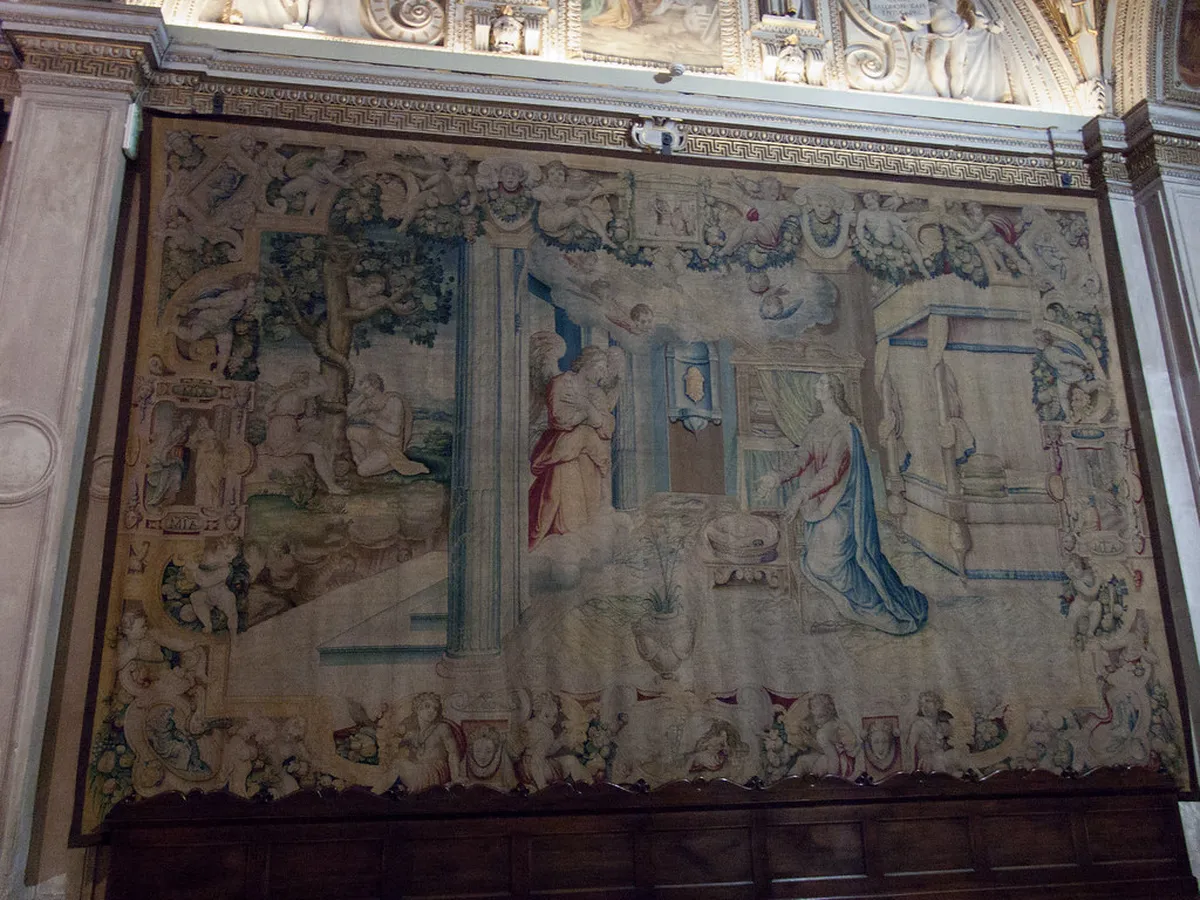
The walls are adorned with massive Antwerp tapestries that date back to the late 16th century. These woven artworks depict scenes from the life of Mary and the Passion of Christ. The Crucifixion scene is particularly famous for its incredible detail and emotional depth. Taking a moment to look up at these treasures is a highlight of any Bergamo itinerary for art lovers.
Art enthusiasts should also examine the wooden inlays designed by the famous artist Lorenzo Lotto. These intricate panels decorate the choir stalls and show complex scenes from the Old Testament. The craftsmanship required to create such detailed images from different types of wood is remarkable. These elements combine to make the interior one of the most beautiful in Lombardy.
Practical Information for Your Visit
The basilica is located at Piazza Duomo 5, right in the heart of the Upper City. Travelers can reach the square by using the historic funicular or local bus routes. Consulting Bergamo public transport tips helps you navigate the steep climb with ease. You can also use the historic Città Alta funicular, which deposits you just minutes from the basilica entrance. Walking from the lower town is also possible for those who enjoy a scenic hike.
Visitors should verify current opening hours on the official https://www.fondazionemia.it/it/basilica website before arriving. The church often closes during religious services to maintain a quiet atmosphere for prayer. Entry typically requires a small donation to help with the ongoing preservation of the art. Respectful behavior and quiet voices are expected from everyone entering the sacred space.
- Essential Visiting Information for Tourists
- Address: Piazza Duomo 5
- Entry: Small donation required
- Phone: +39 035 223327
- Dress: Shoulders/knees covered
- Nearby Transport Options in 2026
- Funicular: Upper station nearby
- Bus: Line 1 stop
- Walking: 20 minutes from center
- Taxi: Drop-off at square
The Medieval Measurements: Cavezzo and Braccio
Historical trade in Bergamo relied on standard units carved directly into the church walls. These carvings ensured that merchants and buyers followed the same local rules for length. You can still see these precise lines etched into the stone near the northern portals. They served as the official reference for the city's bustling textile and construction markets.
The larger measurement is known as the Cavezzo and spans exactly 2.63 meters. Builders used this length for measuring land and larger architectural projects across the region. It provided a reliable scale that kept construction projects consistent throughout the Middle Ages. Spotting this line feels like touching a piece of living history.
The smaller unit is the Braccio, which measures 53.1 centimeters in length. Local fabric merchants used the Braccio to measure out expensive silks and wools for customers. Seeing these units helps visitors understand how the Bergamo walking tour self-guided routes connect to ancient trade. These marks remain a unique highlight of the basilica's exterior wall.
Notable Monuments: The Tomb of Gaetano Donizetti
The interior of the basilica houses the final resting place of a local legend. Gaetano Donizetti was a world-famous opera composer born right here in the city of Bergamo. His music continues to fill theaters across the globe with drama and beauty. Fans often visit the church to pay their respects to this musical master.
His tomb is a masterpiece of sculpture created by the talented artist Vincenzo Vela. The monument features a weeping muse representing lyric poetry mourning the great composer's death. It stands as a powerful symbol of the city's deep pride in its cultural heritage. You will find it located along the left aisle of the nave.
The presence of this monument links the church to the modern Donizetti Opera festival. This annual event celebrates his life and works with performances throughout the Upper City. Visiting the tomb provides a quiet moment to reflect on the impact of his artistic legacy. It is a must-see for anyone interested in the history of Italian music.
Nearby Landmarks: Piazza Duomo and Colleoni Chapel
The basilica sits in the heart of Piazza Duomo, surrounded by other architectural gems. One of the most striking sights is the Colleoni Chapel located right next door. This chapel features a colorful Renaissance facade that contrasts sharply with the basilica's Romanesque style. Together, they create a visual timeline of Italian art and design.
Standing in the square allows you to appreciate the 'twin sisters' relationship of the local plazas. Piazza Duomo feels intimate and spiritual, while the adjacent Piazza Vecchia serves as the civic center. Exploring both areas is essential for anyone spending one day in Bergamo during their trip. The transition between these two spaces defines the character of the Upper City.
The nearby Baptistery also adds to the rich historical atmosphere of this specific corner. Its octagonal shape and elegant statues complement the grandeur of the larger church structures. Walking through this area feels like stepping back into the height of the Middle Ages. Every corner of the square offers a new detail for photographers and history lovers.
Frequently Asked Questions
Why are there lions at the entrance of Santa Maria Maggiore?
The lions represent the protective power of the church and the strength of the faith. Red marble lions guard the north, while white lions guard the south. They support the columns of the entrance porches, a classic feature of Lombard Romanesque architecture from the 14th century.
Where is Gaetano Donizetti buried?
The famous opera composer Gaetano Donizetti is buried inside the Basilica of Santa Maria Maggiore in Bergamo. You can find his impressive funeral monument along the left aisle. It was sculpted by Vincenzo Vela and remains a site of pilgrimage for music lovers visiting the city.
What are the medieval measurements on the Basilica wall?
The wall features the Cavezzo (2.63 meters) and the Braccio (53.1 centimeters) carved into the stone. These served as official standards for local merchants during the Middle Ages. They are located near the northern entrances and are a unique piece of Bergamo's commercial history.
Is the Basilica of Santa Maria Maggiore free to enter?
Entry typically requires a small donation to support the maintenance of the historic artwork and structure. It is one of the best sites to see during the best time to visit Bergamo for clear weather. Always check the official website for any changes to ticketing or access rules.
The Basilica Santa Maria Maggiore Bergamo is far more than just a religious building. It represents the heart and soul of the city through its art, history, and unique trade secrets. Make sure to include this golden sanctuary on your next trip to Northern Italy.