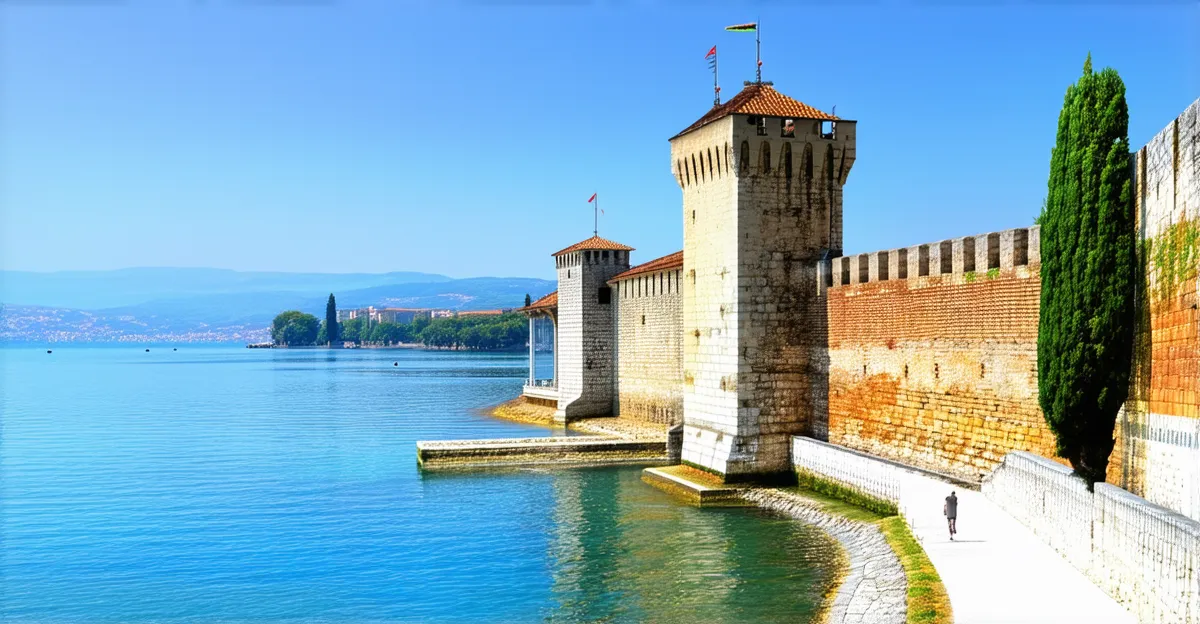
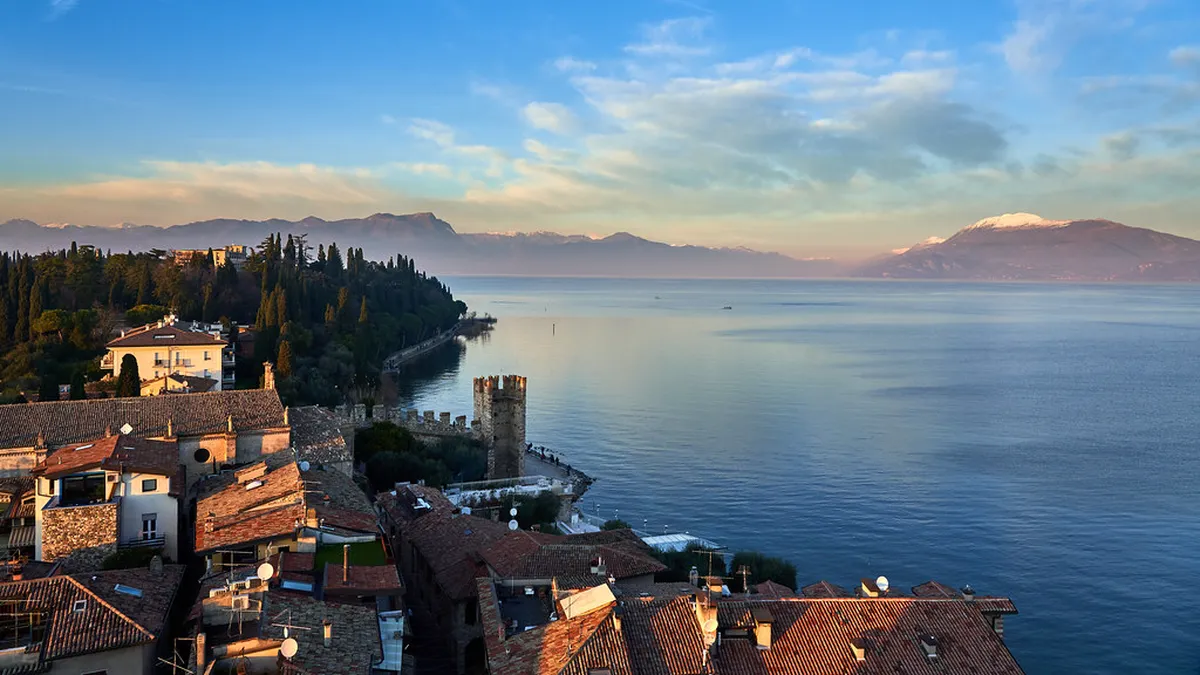
Sirmione, a stunning gem on Lake Garda, is renowned for its picturesque landscapes and rich history. This charming town occupies a narrow limestone peninsula jutting into the lake's southern end, home to a perfectly preserved medieval castle, sprawling Roman ruins, and sulfurous thermal springs that have drawn visitors since antiquity. Three days is the ideal window — enough to cover the peninsula's highlights without rushing, and enough time to squeeze in a day trip to Verona or cruise the lake by ferry. This guide structures each day into clear morning, afternoon, and evening blocks so you can step off the train and immediately know what to do.
Key Takeaways
Turn this guide into a personal route with our free sirmione itinerary 3 days itinerary planner.
- Day 1: Scaliger Castle in the morning, lunch in the old town, Grotte di Catullo ruins in the afternoon, lakeside dinner at sunset.
- Day 2: Terme di Sirmione thermal spa in the morning, old-town lunch, Jamaica Beach in the afternoon, evening stroll on the promenade.
- Day 3: Day trip to Verona by train (30 min) or ferry cruise on Lake Garda — return for a farewell dinner.
- ZTL zone: the historic center is car-restricted. Understand the rules before driving in or you will be fined.
Make your Sirmione trip unforgettable with these guides
- How Many Days Do You Need to See Rome? - Create your ideal travel schedule
- Verona Itinerary: Unforgettable Adventures in 2026 - Start your adventure right
- Brescia Itinerary: Discover Italy's Hidden Gem in 2026 - Structure your adventure
Before You Arrive: ZTL Parking and Getting In
Sirmione's historic center sits inside a Zona a Traffico Limitato (ZTL) — a restricted traffic zone enforced by cameras and police at the single gate onto the peninsula. If you are driving, you cannot simply park inside the old town. The main parking options are Parcheggio Lugana (the largest lot, around €2–3 per hour) and Parcheggio Porto Galeazzi, both located just outside the ZTL gate. From either lot it is a 5-minute walk into the historic center.
Hotels inside the ZTL can issue a limited permit that covers your arrival and departure window — not free movement throughout the day. Many first-timers assume the hotel permit means they can drive in and out at will; it does not. The camera logs your plate on every pass, and fines (around €80–€165 in 2026) arrive by post weeks later. The safest strategy: park outside, walk or use the free hotel shuttle if offered, and never drive through the gate twice in the same day unless your hotel has pre-notified the municipality.
If you are arriving by public transport, direct buses run from Desenzano del Garda train station (Trenitalia, Milan–Venice line) to Sirmione in about 15 minutes. From Verona airport, a taxi to Sirmione costs roughly €50–€60 and takes 40 minutes. Ferries from Desenzano and Peschiera del Garda also dock at Sirmione's port — a scenic option in summer.
Day 1: The Historical Heart of Sirmione
Day 1 concentrates everything inside the peninsula so you build a strong mental map before venturing further. Start at the castle, walk the old town, then climb to the Roman ruins at the tip — the natural arc of the peninsula guides you from south to north and back.
Morning: Scaliger Castle
The Castello Scaligero (Scaliger Castle) guards the entrance to the old town and is the first thing you see coming off the bridge from the mainland. Built by the Scaliger dynasty of Verona in the 13th century, it is one of the best-preserved lakeside fortresses in northern Italy. Admission costs €6 per adult (2026 rate). The ticket covers the full circuit including the battlements and the keep tower, where the panoramic view over Lake Garda's southern basin is genuinely spectacular — arrive before 09:30 to have the ramparts to yourself.
Plan 60–90 minutes inside the castle. The interior rooms are spare but the architectural detail is rich: the portcullis mechanism, the boat harbor enclosed within the castle walls (still used), and the four corner towers each give a different angle on the lake. Bring a camera and comfortable shoes — the stone stairs are steep and uneven in places.
Afternoon: Old Town Lunch and Grotte di Catullo
After the castle, wander the cobblestone lanes of the centro storico for an hour. Via Vittorio Emanuele is the main drag — lined with ceramics shops, wine bars, and gelaterias. For lunch, the trattorias on the quieter side streets offer lake fish (lavarello, persico, trota) at better prices than the lakefront terraces. Expect to pay €12–€18 for a first course plus wine at a sit-down trattoria.
Head north after lunch to the Grotte di Catullo, the largest Roman residential villa ruins in northern Italy. Entry costs €6 per adult; the small on-site museum is included. The ruins date to the 1st century BC and are popularly attributed to the poet Catullus, though no inscription confirms it — the villa was certainly built for someone of extreme wealth given its scale (roughly two hectares). Allow 75–90 minutes. The views from the northern terrace — where the original frigidarium and caldarium pools once stood — look straight up the length of Lake Garda on a clear day.
Evening: Lakeside Dinner
Sirmione's sunsets face west across the water toward Lombardy. The promenade along the eastern shore (Via Colombare direction) gets the warm evening light reflecting off the lake. Book a table at one of the restaurants near the port for an early dinner around 19:30 — the outdoor terraces fill fast in summer. Lugana DOC is the local white wine, made from Turbiana grapes grown on the moraine soils south of the lake; it pairs cleanly with anything from the lake. End the night with a slow walk back through the illuminated castle gate.
| Time | Activity | Notes |
|---|---|---|
| 09:00 – 10:30 | Scaliger Castle | €6 entry; go early for empty ramparts |
| 10:30 – 12:00 | Old town stroll | Via Vittorio Emanuele, gelato stop |
| 12:00 – 13:30 | Lunch at a trattoria | Lake fish dishes; avoid lakefront markup |
| 13:30 – 15:30 | Grotte di Catullo | €6 entry; museum included; wear sun protection |
| 19:30 onward | Lakeside dinner | Book ahead in peak season; order Lugana wine |
Sirmione essentials: don't miss these!
- Is 2 Days Enough Time in Rome? Maximize Your Trip! - Plan your perfect trip
- Como Itinerary: Explore the Best of Como in 2026 - Explore with confidence
- How Many Days Do You Need to See Rome, Italy? - Coordinate your travel plans
Day 2: Thermal Baths and the Beach
Day 2 slows down deliberately. Sirmione sits above natural sulfurous springs that feed the thermal spa complex — this is not a sideshow, it is the reason many Italians come here. Give the spa a full morning, then spend the afternoon at Jamaica Beach before a quieter evening on the promenade.
Morning: Terme di Sirmione
The Terme di Sirmione complex contains two distinct operations. The medical thermal center (Stabilimento Termale) requires a doctor's referral and treats respiratory and musculoskeletal conditions — it is not the tourist spa. The visitor option is the AcquAria day spa, set in a modern building with indoor and outdoor thermal pools, a sulfurous grotto cave, saunas, and a full menu of massages and treatments. Day entry to AcquAria costs around €30–€40 for the pools alone (2026 pricing); treatment add-ons are priced separately. Book online at least 48 hours ahead in summer — the spa caps daily capacity and walk-ins often cannot get in.
Arrive at 09:00 when the doors open. The outdoor thermal pool faces directly onto the lake, and the morning light on the water makes it worth the early start. Bring your own flip-flops and a padlock for the lockers; rental towels cost €5. The sulfur smell is noticeable but not overpowering once you are in the water. A full morning here — about three hours — leaves you genuinely relaxed for the rest of the day.
Afternoon: Jamaica Beach and the Peninsula Walk
After lunch in the historic center (the same side-street trattorias as Day 1, or pick up a focaccia from a bakery), walk north along the peninsula's western edge to Jamaica Beach (Spiaggia Jamaica). The name sounds incongruous but it refers to the beach's reputation as Sirmione's most scenic natural spot — flat limestone terraces sloping into clear, shallow water, ringed by cypress trees and backed by the ruins of the Roman villa above. There is no sand; you swim from the rocks and terraces. Entrance is free. Bring water shoes as the rocks are sharp underfoot.
The beach is at its calmest between 14:00 and 17:00 on weekdays. On summer weekends it fills early; arrive by 13:30 to claim a flat ledge with a view. The water is clear enough to see the bottom at 2–3 metres depth. From the beach you can look back south along the full length of the peninsula with the castle visible at the far end — one of the signature views of Sirmione that appears on every postcard.
Evening: Sunset Promenade
Walk south as the afternoon light fades. The promenade on the lake's western side catches the last direct sun of the day. Ice cream from one of the gelaterias near the castle gate, then an aperitivo at a bar on the main square around 18:30, is the local routine. Dinner can be lighter tonight — a pizza or a board of local cheeses and cold cuts with more Lugana. Reserve energy for the day trip tomorrow.
| Time | Activity | Notes |
|---|---|---|
| 09:00 – 12:00 | AcquAria thermal spa | Book online; ~€35 pool entry; bring flip-flops |
| 12:30 – 13:30 | Lunch in historic center | Side-street trattoria or bakery focaccia |
| 13:30 – 17:00 | Jamaica Beach | Free entry; bring water shoes; weekdays less crowded |
| 18:30 – 19:30 | Aperitivo on the main square | Local routine; Lugana or a Campari spritz |
| 20:00 onward | Light dinner | Pizza or cold cuts; early night for tomorrow's day trip |
Want insider tips for Sirmione?
- How Many Days Do I Need to Visit Rome? - Your trip, your way
- How Many Days Do You Need to Rome? - Unlock your adventure
- Rome Itinerary 5 Days: Your Ultimate Guide - Create your ideal travel schedule
Day 3: Day Trip to Verona (or a Lake Ferry Cruise)
Day 3 is your excursion day. Sirmione is an ideal base for reaching two very different destinations within an hour: Verona by train, or a multi-stop Lake Garda ferry cruise that calls at Desenzano, Peschiera, Bardolino, and Lazise. Choose based on your interests — Verona suits history and opera buffs; the ferry suits those who want more lake scenery and wine-village stops.
Option A: Verona Day Trip
Verona is 30 minutes from Desenzano del Garda station on the Milan–Venice Trenitalia line — the same station you likely used arriving at Sirmione. From Sirmione's bus stop, the bus to Desenzano runs roughly every 30 minutes and takes 15 minutes; a return bus+train combination ticket costs around €8–€10. First bus departures allow you to reach Verona's Porta Nuova station by 09:00.
A focused Verona morning covers the Arena di Verona (the intact Roman amphitheater, €10 entry, open from 09:00), the Casa di Giulietta (Juliet's House, €6 entry — skip the queue with an online ticket), and a wander through the Piazza delle Erbe market. The Arena is large enough to justify an hour on its own; the views from the upper tiers over the city are striking. Lunch in one of the osterie around Via Mazzini, then return to Desenzano by 16:00 and take the bus back to Sirmione for a final dinner. The full round trip is easily done without a car. If you want a more detailed plan, our Verona itinerary breaks the city into a full day.
Option B: Lake Garda Ferry Cruise
The Navigazione Laghi ferry service operates scheduled routes across Lake Garda from spring through autumn. From Sirmione's port, a day ticket (biglietto giornaliero) covering unlimited hops costs around €25–€30 per adult in 2026. The most useful stops heading north are Desenzano (20 min), Peschiera del Garda (30 min), and Bardolino (1 hr 15 min). Bardolino is the wine town — the Bardolino DOC red and Chiaretto rosé are both worth tasting at one of the enotecas on the harbor front. The scenery heading north shifts as the lake narrows; Monte Baldo rises on the eastern shore and the Alps become visible on clear days.
Check the Navigazione Laghi timetable before the trip — ferry frequency drops significantly outside June–September. The last return ferry to Sirmione typically departs Bardolino around 17:30–18:00 in summer, earlier in shoulder season. Confirm the schedule the evening before and do not miss the last boat.
Evening: Farewell Dinner
Whether you return from Verona or from the lake, plan a proper sit-down farewell dinner back in Sirmione. If you have not yet tried a full lake fish tasting menu — lavarello in butter and capers, risotto al pesce persico, a grilled trota as a secondo — this is the night for it. The restaurants on Via Piana and Via Catullo are consistently rated above the lakefront terraces for quality-to-price ratio. Finish with a digestivo of the local amaro and a final walk to the castle gate before bed.
| Time | Option A: Verona | Option B: Ferry Cruise |
|---|---|---|
| 08:00 – 08:30 | Bus to Desenzano station | Walk to Sirmione port |
| 09:00 – 13:00 | Verona: Arena + Juliet's House + Piazza Erbe | Ferry north via Peschiera to Bardolino |
| 13:00 – 14:30 | Lunch in Verona osteria | Lunch + wine tasting in Bardolino |
| 15:00 – 17:00 | More Verona or head back early | Return ferry south |
| 20:00 onward | Farewell dinner in Sirmione | Farewell dinner in Sirmione |
Where to Stay in Sirmione
Sirmione's accommodation clusters in three zones. Inside the ZTL historic center, a handful of small hotels and B&Bs occupy medieval buildings — these are the most atmospheric but often the hardest to reach by car (see the ZTL section above). The hotels along Via Colombare and the road south toward Lugana are outside the ZTL, easier for drivers, and typically 15–20% cheaper. A third cluster sits along the lake edge north of the town gate, with direct water access and some of the best thermal spa connections.
Sirmione has a hotel for almost every budget. Grand Hotel Terme and Villa Cortine Palace are the luxury benchmarks — both sit lakeside within the peninsula and have private thermal pools. Mid-range options like Hotel Eden and Hotel Olivi (about €120–€180 per double in high season) offer lake views without the full-resort price. Budget travelers will find better value staying in Desenzano (10–15 min by bus) and commuting in; Desenzano has a wider choice of two-star hotels and apartment rentals at €60–€90 per night. Book any Sirmione accommodation at least 6–8 weeks ahead for June–August; the peninsula is small and fills fast.
Best Time to Visit Sirmione
April, May, and September are the strongest months. Temperatures sit between 18°C and 26°C, crowds are manageable, restaurants are fully open, and the ferry service runs on an extended schedule. The lake is swimmable from late May onward. April can bring brief afternoon rain showers — pack a light layer.
July and August are peak season with temperatures regularly above 32°C and the historic center genuinely crowded by 11:00 on summer days. If you visit in summer, do the castle and ruins before 09:30 and spend midday at the spa or beach. October is quieter and the light on the lake turns golden, but some attractions cut their hours and the Terme di Sirmione AcquAria pool switches to winter hours (shorter sessions, fewer outdoor options). December through February is off-season — some restaurants close for weeks at a time, and the thermal medical center continues operating while the AcquAria may run reduced hours.
Insider tip: The Sirmione Musical Festival typically runs in late July, with classical and opera performances staged in the Scaliger Castle courtyard. Tickets sell out months in advance; check the comune di Sirmione website in spring for the 2026 programme and booking dates.
Practical Travel Tips
Sirmione's peninsula is about 4 km long and 600 m wide at its widest point. Everything described in Days 1 and 2 is walkable — the furthest point, Grotte di Catullo at the northern tip, is roughly 1.5 km from the castle gate. There is no internal bus or tuk-tuk service inside the ZTL (some hotels run a private electric shuttle for guests). Comfortable flat shoes are essential; the cobblestones are uneven and become slippery when wet.
The Lugana wine zone begins immediately south of the peninsula. The Lugana DOC Superiore (aged at least one year) is worth seeking out at local wine shops — it costs €12–€18 per bottle retail and is rarely marked up aggressively in Sirmione's enotecas. It is one of the best food-friendly whites produced anywhere on Lake Garda.
Sirmione's restaurants work on Italian meal timing: lunch is 12:30–14:30 and dinner service typically does not begin until 19:00, with peak seating at 20:00–21:00. Do not arrive at 18:00 expecting to eat. Most restaurants close one day per week (often Tuesday in the off-season) — confirm before walking over. Reservations are strongly recommended for dinner from June through August.
Cash is still useful in Sirmione: a few small gelaterias and market stalls are card-only-sometimes or card-never. ATMs are located just outside the ZTL gate near the main parking areas. Phone coverage is solid throughout the peninsula — Italian SIMs or EU roaming covers data fine for maps and ferry timetables.
For a longer stay, our 5-Day Sirmione Itinerary adds Gardone Riviera and the Vittoriale degli Italiani to the mix, along with a full northern lake day reaching Limone sul Garda. And if you are pairing Sirmione with a broader Lombardy trip, our Brescia itinerary is 30 minutes by train and covers a city most Lake Garda visitors skip entirely.
Pair this with our broader Sirmione itinerary to plan the rest of your trip.
Frequently Asked Questions
What is the best time to visit Sirmione?
How many days are enough for Sirmione?
What are must-visit attractions in Sirmione?
How to get around in Sirmione?
Are there day trips worth adding to the itinerary?
Where can I find authentic local experiences in Sirmione?
This 3-day Sirmione itinerary covers the castle, Roman ruins, thermal baths, Jamaica Beach, and a full day trip to Verona or across the lake by ferry. The peninsula is small enough to cover on foot but rich enough to fill three days comfortably. Adapt the day-trip option to your interests, respect the ZTL parking rules, and book the thermal spa and any summer restaurant reservations ahead of time. Sirmione rewards slow travel — there is no need to rush between sites when the lake views are this good at every turn.
For more Sirmione insights, check out these guides