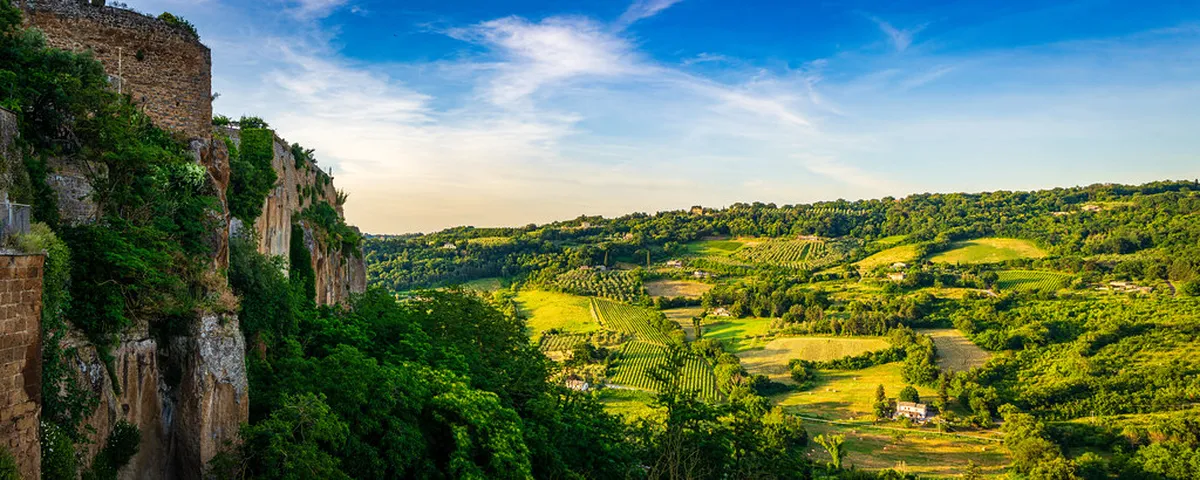
Orvieto rises dramatically from a volcanic pedestal in the heart of Umbria. This ancient city offers more than just stunning views and golden cathedrals. It serves as the gateway to one of Italy's most storied white wine regions, with a winemaking tradition stretching back over two thousand years.
Visitors often arrive for the architecture but stay for the complex flavors. The local DOC appellation produces everything from crisp dry whites to rare dessert wines. Planning your visit requires understanding the unique geology of this landscape and the specific tour formats available in 2026. Explore the ideal Orvieto itinerary to balance wine and culture on the same trip.
The Etruscan Roots: History of Wine in Orvieto
Turn this guide into a personal route with our free orvieto itinerary planner.
The story of wine in Orvieto begins long before the Romans. Etruscan settlers were producing wine on this volcanic plateau as early as the 7th century BC. They carved elaborate underground chambers directly into the tuff rock to store their vessels at a constant cool temperature. The same tunnels that held Etruscan amphorae now age bottles of Orvieto Classico Superiore.
Medieval popes and cardinals were among Orvieto's most devoted wine patrons. Pope Gregory XI reportedly ordered large supplies of local wine during his Avignon exile in the 14th century. The papal connection elevated Orvieto's reputation across Europe and drove demand for higher-quality production. That aristocratic heritage still shapes the standards the Consorzio Tutela Vini di Orvieto enforces today.
The Renaissance brought further refinements. Winemakers began selecting the best plots on the slopes below the clifftop city, establishing the zone that would eventually become Orvieto Classico. The frescoes of Luca Signorelli inside the Duomo — painted during the same period — are a reminder that the artistic and viticultural ambitions of the town were developing in parallel. Understanding this history transforms a simple tasting into a genuinely layered experience.
What is Orvieto DOC Wine?
The Orvieto DOC designation protects the quality and origin of wines produced in this specific Umbrian zone. Most bottles feature a blend of Grechetto and Procanico grapes. Grechetto provides structure and a distinct nutty finish. Procanico — a local biotype of Trebbiano Toscano — adds freshness and acidity to balance the overall profile.
You will encounter several distinct styles during your visit. Secco is the dry style that most modern drinkers prefer, showing mineral citrus notes from the volcanic soil. Abboccato and Amabile offer progressively sweeter profiles without reaching dessert-wine territory. Wines labeled Superiore must meet higher alcohol and aging requirements, and these bottles often represent the best value for money in the appellation.
Orvieto Classico is the most prestigious sub-zone, covering the historic production area immediately surrounding the clifftop town. The volcanic soil here is more concentrated and the microclimates more consistent than the wider DOC zone. Expect greater complexity, a more pronounced minerality, and a longer finish compared to standard DOC bottles. The Classico designation is worth seeking out if you are buying to take home.
The region is also famous for its rare Muffa Nobile wines. This is the local equivalent of Sauternes or Tokaji — a noble rot dessert wine made from grapes infected by Botrytis cinerea in the autumn humidity of the Paglia River valley. The resulting wine is honeyed, complex, and produced in very small quantities. Only a handful of estates make it each year, and bottles sell out quickly through cellar-door allocation.
Top Wineries to Visit Near Orvieto
Decugnano dei Barbi is the most historically significant estate in the appellation. Located at Fossatone, the property was among the first in Orvieto to produce méthode champenoise sparkling wine. Their cellars are carved into fossil-rich tuff and hold a permanent collection of antique winemaking tools. A standard tour with tasting runs approximately €30–€60 per person.
Palazzone, located at Rocca Ripesena with views across the valley, consistently produces some of the finest Orvieto Classico Superiore in the region. The estate is small enough that the family is often present during visits, which makes for an unusually personal experience. Tasting sessions start at around €25–€45 and include a walk through the underground barrel room.
Custodi operates from Orvieto Scalo and takes a modern organic approach that contrasts with the older estates. Their focus on minimal intervention in the winery highlights the fruit character of Grechetto in a way that older-style producers rarely achieve. Entry-level tastings cost approximately €20–€40. Tours at all three estates require advance booking and are available in English when arranged several days ahead.
Check the Official Orvieto Tourism Portal for seasonal opening hours and current availability, as harvest periods in September can cause temporary closures for private visits.
Essential vs. Premium Wine Tour Experiences
Orvieto wine tours are organized by local agencies — notably Teseotur — into three clearly defined tiers, each with a fixed duration and a specific set of inclusions. Understanding the differences before you book prevents overspending and disappointment. All tiers include a private licensed guide and private transfer departing from Orvieto city center or the train station at Orvieto Scalo.
The Essential Winery Guided Tour lasts around 2.5 hours and visits one winery. You taste five different wines paired with local snacks — typically bread, cured meats, olive oil, and aged pecorino. Tours run every day except Sunday and usually start at 11:00. This tier suits travelers with a half-day to spare or those joining a broader sightseeing itinerary.
The Orvieto Classico Guided Tour (the most popular format in 2026) runs for approximately 5 hours and visits two wineries, with eight wine samples and a light lunch included. This is the format most guide books and local operators recommend as the best balance between depth and logistics. It starts at 11:00 and returns in the mid-afternoon, leaving time for a walk through the historic center.
The Premium Wineries Guided Tour also covers two wineries over 5 hours but tends to visit higher-rated estates and includes a more substantial lunch. Starting at 10:45, it allows slightly more time at each stop. This tier suits serious wine enthusiasts or small groups celebrating a special occasion. Prices for both the Classico and Premium formats typically range from €120–€180 per person, depending on group size and current operator rates.
How to Reach Wineries from the City Center
Most top-tier wineries sit 5–12 km outside the city on narrow roads through the Umbrian countryside. Your transport choice directly affects how much wine you can drink. Here is a practical comparison of the three main options available in 2026.
Private driver or guided tour van is the safest and most common approach. Tour operators pick you up from your hotel or the train station and handle all transfers. Costs are bundled into the tour price (see the tiers above). This is the only realistic option if you want to visit two or more wineries in one day without restriction.
Self-driving is possible for designated non-drinkers in the group. Parking at most wineries is free and easy. The roads are scenic but winding, and some signage is in Italian only. If even one person in the car plans to taste seriously, this option is not practical — Italian road policing near tourist areas has tightened significantly and the legal blood-alcohol limit is 0.05%.
City-center tasting rooms are the car-free alternative. Several enoteca shops and wine bars inside the historic walls offer structured flights of Orvieto DOC wines by the glass, typically €8–€15 per flight. You miss the vineyard scenery and cellar tours, but the savings on transport are real. Consult our guide on getting around Orvieto for local transport options.
Travelers arriving from Rome should note that the train station is in the valley below the town. The funicular connects the station to the old city in about 3 minutes and costs €1.30. Many visitors choose an Orvieto Day Trip From Rome: 8 Essential Tips for Your Visit and book the Classico wine tour for the afternoon after a morning of sightseeing. Check the guide on reaching Orvieto to see all transit options from major Italian cities.
Understanding the Unique Tuff Rock Cellars
The secret to Orvieto's wine aging lies beneath the city itself. The plateau is built on tuff, a porous volcanic rock formed from compressed ash deposits. The Etruscans discovered that chambers carved into this material hold a near-constant temperature of 14–16°C year-round, with humidity levels between 75–80%. Those are precisely the conditions needed for slow, even aging of white wines without mechanical cooling.
Modern winemakers still use original Etruscan-era shafts to access their underground cellars. Some of these vertical tunnels drop 15–20 meters below street level before opening into vaulted aging rooms. During a winery tour you will often pass ancient graffiti scratched into the tuff walls — marking plots, vintage years, and owner names dating back centuries. This is not scenery fabricated for tourists; the documentation is genuine.
The volcanic geology also directly affects the flavor of the wine in the glass. Grechetto and Procanico roots must penetrate deep into the tuff to reach water, often pushing 3–5 meters down. This stress concentrates flavors and draws up minerals — particularly calcium and potassium — that translate into the pronounced saline finish that distinguishes authentic Orvieto Classico from cheaper alternatives. When a sommelier says an Orvieto has a "volcanic mineral edge," this is the literal explanation.
First-Timer Tasting Order: The Progression to Know
No competitor guide tells you this, but the sequence in which you taste Orvieto wines matters. Starting with the wrong bottle makes the progression confusing. A logical tasting order moves from driest and youngest to sweetest and most complex, giving your palate a coherent narrative across the session.
Begin with Orvieto Classico Secco from the current vintage. This sets the baseline — crisp acidity, green apple, white peach, and that signature mineral finish from the tuff. Next, try a Classico Secco Superiore from a year or two older. You will immediately notice the added texture and how the nutty Grechetto character becomes more assertive with a little aging.
If the estate produces one, move to an Abboccato — the off-dry style. The residual sugar amplifies the fruit but the acidity keeps it from feeling heavy. This is often the crowd-pleaser that converts wine-skeptical traveling companions. Finally, if available, request a small pour of Muffa Nobile or Muffati as a closing wine. The honey, apricot, and ginger complexity is best appreciated after you have tasted the drier styles — you understand exactly what the botrytis transformation does to the base grape character.
Ask your guide to follow this sequence and explain each transition. Most licensed guides in Orvieto are trained by the Consorzio and will appreciate the informed request. It also signals to the winery that you are a serious visitor, which occasionally results in access to reserve bottles not on the standard tasting menu.
Orvieto vs. Montefalco: Planning an Umbrian Wine Route
Orvieto is a white-wine destination and Montefalco is a red-wine destination. This distinction is the most useful planning frame for travelers spending more than one day in Umbria. Orvieto DOC is built around Grechetto and Procanico; Montefalco DOC Rosso is built around Sagrantino, one of Italy's most tannic and age-worthy indigenous reds. Visiting both in sequence gives you a complete picture of Umbrian viticulture.
The drive from Orvieto to Montefalco takes approximately 1 hour 20 minutes via the SS448. Other notable appellations along the route include Torgiano (home to the Lungarotti family winery and museum) and Todi, both worth a brief stop. A logical two-day wine circuit would base in Orvieto on night one, complete the Classico tour on day two morning, then drive northeast to Montefalco for an afternoon tasting and overnight stay.
For single-day visitors, Orvieto is the stronger choice. The combination of the historic center, the winery tour infrastructure (three organized tour tiers, English-speaking guides, no rental car needed), and the unique tuff cellars makes it more visitor-ready than Montefalco, which is less set up for drop-in tourism. If your itinerary includes Rome at either end, the train to Orvieto (about 1 hour 15 minutes from Roma Termini on the IC line) makes it the obvious anchor for an Umbrian wine day.
What to Ask Before Booking a Winery Visit
Most winery websites in Orvieto are in Italian, and email responses can be slow. A short checklist sent in your initial booking message speeds up the process and avoids surprises on the day.
- Is the tour conducted in English, or will we need an interpreter?
- Are snacks or a meal included, or should we eat before we arrive?
- Does the cellar tour involve steep stairs or narrow passages? (Relevant for mobility limitations.)
- Can children join, and is there grape juice or a non-alcoholic option for them?
- Is private transfer included, or do we arrange our own transport?
- Is the tour available on Sundays? (Many operators are closed.)
- How many wines are included in the tasting flight, and is a Muffa Nobile sample possible?
- What is the cancellation policy? (Weather can affect outdoor vineyard sections.)
Booking through a local agency like Teseotur generally resolves most of these questions in advance, since their packages come with fixed inclusions. Direct bookings with individual estates require more coordination but often allow greater flexibility on the tasting selection and can be cheaper for larger groups.
Must-See Orvieto Attractions Between Tastings
A balanced day includes more than just wine. The Duomo di Orvieto is an architectural masterpiece that anchors the city. Its golden mosaic facade, commissioned in 1290, glows brilliantly in the afternoon sun. Read our Duomo visitor guide for entry times and ticket prices before you go.
The Pozzo di San Patrizio is a 16th-century well with a famous double-helix staircase: two separate spiraling ramps allowed pack animals to descend and ascend simultaneously without crossing paths. Walking down the 248 steps provides a cool respite from summer heat. Entry costs €5 for adults. Details are available in the San Patrizio well guide.
The underground city tour is often overlooked by wine-focused visitors but directly relevant to the tuff cellar experience. A 1-hour guided walk beneath the streets visits original Etruscan tunnels, medieval olive-oil presses carved into rock, and the remains of a pigeon farm used to provision the city during sieges. Booking via the tourist office near the Duomo costs approximately €7 per person. Seeing the tunnel network in context makes the winery cellar visits far more legible.
Orvieto is a proud member of the Cittaslow (Slow Food) movement. Wandering the side streets between appointments will surface small artisan shops selling local ceramics, truffle-based preserves, and cold-pressed olive oil. These make more meaningful gifts than bottles — which are harder to carry home — and the quality is genuinely high.
Best Seasons and Timing for Your Visit
Spring is the most comfortable time for touring the vineyards. May and June bring lush green vines, mild temperatures (18–24°C), and fewer crowds than the summer peak. Most wineries are fully operational and booking windows are wider. Check the Best Time to Visit Orvieto: Your 2026 Travel Guide for detailed weather and event charts.
The harvest season (Vendemmia) falls in September, usually the second and third weeks. This is the most dramatic time to visit — the vineyards are active, the air smells of fermenting grape skins, and estates that rarely open their doors will sometimes host pick-your-own experiences. The trade-off is that winemakers are under intense time pressure, and some tours are shortened or rescheduled to accommodate the harvest schedule. Book at least three weeks ahead if traveling in September.
Winter provides a quiet, intimate atmosphere for cellar tastings. Visitor numbers drop sharply after October, and many estates offer informal drop-in tastings without the structured tour format. Prices are often lower, and the winemakers have more time to talk. The underground caves feel pleasantly warm against December cold. Note that Orvieto hosts an Advent market on the main piazza in December — combining a wine visit with the Christmas market is a particularly rewarding one-day trip from Rome. See also our Discover the Best Restaurants in Orvieto for 2026. See also our Best Orvieto Day Trip Ideas for 2026 Adventures.
Frequently Asked Questions
What is the difference between Orvieto and Orvieto Classico?
Orvieto Classico refers specifically to wines produced in the historic heart of the region. This zone features the best volcanic soil and microclimates. Standard Orvieto DOC covers a larger area with more varied terrain. Classico bottles often command a higher price due to their superior aging potential.
Can you visit wineries in Orvieto without a car?
Yes, but your options are more limited within the city walls. Several tasting rooms in the historic center offer flights of local wine. To reach the scenic vineyards, you should hire a private driver or join a guided van tour. This ensures safety after your tasting sessions.
Are Orvieto wine tours family-friendly?
Many wineries in Umbria welcome families and offer non-alcoholic grape juice for children. The open spaces of the vineyards provide a relaxing environment for kids. However, the historic tuff cellars often have steep stairs and narrow passages. Always notify the winery if you are bringing children to ensure accessibility.
How much does a private wine tour in Orvieto cost?
A standard tasting usually costs between €20 and €40 per person. Full-day private tours with a driver and lunch can range from €150 to €300. Prices vary based on the number of wineries visited and the quality of wines served. Booking as a group often reduces the per-person transportation cost.
An Orvieto wine tour is a journey through geology and history, not just a tasting itinerary. From the Etruscan-carved tuff cellars to modern organic estates producing Muffa Nobile in tiny quantities, the variety and depth here genuinely earns the region's prestige. Book your winery visits several days in advance, follow the tasting progression from dry to sweet, and leave time for the underground city tour — it will change how you interpret every glass of Classico you drink afterward.
Pair the wine tour with the Duomo, the double-helix well, and a slow lunch in the city. Orvieto rewards the traveler who is in no hurry.