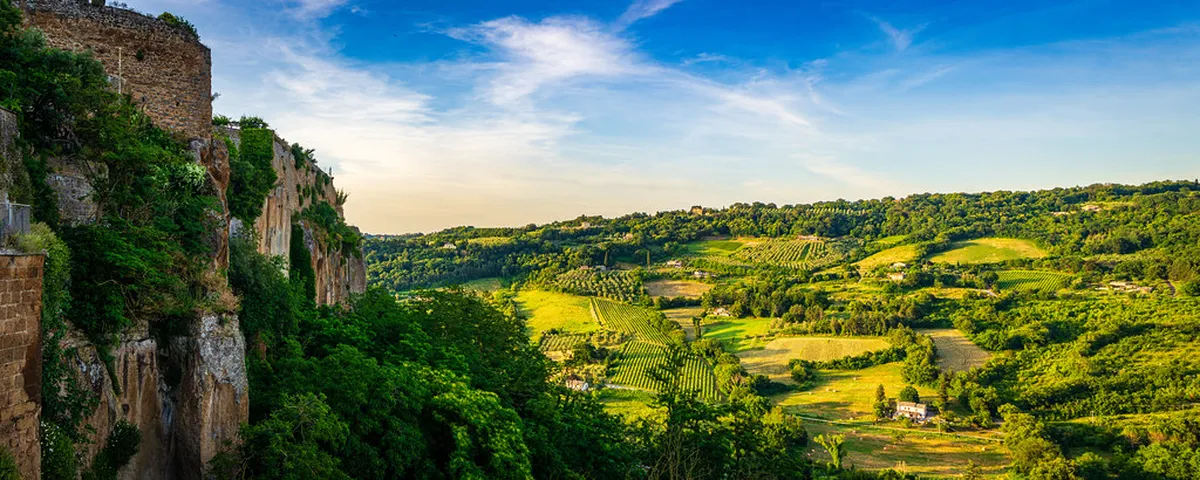
Orvieto, a hilltop town in Umbria rising sharply above the Paglia river valley, rewards visitors differently depending on when they arrive. Planning around weather, crowd cycles, and the town's dense calendar of local festivals makes the difference between a rushed visit and one that feels genuinely unhurried. This guide breaks down every month so you can match your 2026 trip to exactly what you want from Orvieto. For a full day-by-day plan once you've chosen your dates, see our Orvieto itinerary for first-timers.
Month-by-Month Breakdown: Weather, Crowds, and What's On
Turn this guide into a personal route with our free Orvieto itinerary planner.
The table below summarises average high temperatures, typical monthly rainfall, and a rough crowd index (1 = very quiet, 5 = peak) drawn from climate records at climate-data.org. Use it as a quick reference before diving into the seasonal sections.
- January — 8°C high / 2°C low. Rainfall ~55 mm. Crowd index 1. Umbria Jazz Winter wraps up in the first days of January; after that, the town is almost entirely locals.
- February — 10°C / 3°C. Rainfall ~55 mm. Crowd index 1. Coldest nights, occasional frost. Best prices of the year.
- March — 14°C / 5°C. Rainfall ~60 mm. Crowd index 1–2. Days lengthen noticeably; almond and cherry blossom starts in the valley below.
- April — 17°C / 8°C. Rainfall ~65 mm. Crowd index 2–3. Easter week pushes crowds up sharply for four or five days; book accommodation weeks in advance.
- May — 22°C / 12°C. Rainfall ~55 mm. Crowd index 3. Ideal temperatures. The Corpus Domini celebrations (30 May–7 June in 2026) are among Orvieto's most important events, and the Palombella ceremony takes place on Pentecost Sunday (24 May in 2026).
- June — 26°C / 16°C. Rainfall ~40 mm. Crowd index 3–4. Warm but rarely oppressive.
- July — 30°C / 19°C. Rainfall ~25 mm. Crowd index 5. Peak heat and peak crowds. Queues at the Duomo and Pozzo di San Patrizio are longest now.
- August — 30°C / 19°C. Rainfall ~30 mm. Crowd index 5. Ferragosto (15 August) sees many Italian day-trippers alongside international tourists. Some smaller restaurants close for staff holidays.
- September — 26°C / 15°C. Rainfall ~55 mm. Crowd index 3–4. Grape harvest begins in the second week. Warm days, cool evenings — arguably the single best month.
- October — 20°C / 10°C. Rainfall ~75 mm. Crowd index 2–3. Olive harvest begins; white-truffle season opens. Peak rainfall month; pack a compact umbrella.
- November — 13°C / 6°C. Rainfall ~80 mm. Crowd index 1–2. Wettest month statistically. Atmospheric mist around the tufa cliffs. Very few tourists.
- December — 9°C / 3°C. Rainfall ~65 mm. Crowd index 2 (rising to 3–4 over Christmas week). Christmas markets open from early December; Umbria Jazz Winter runs from 30 December 2026 to 3 January 2027.
Spring in Orvieto: Mild Weather and Major Festivals
Spring — broadly April through June — is consistently the most recommended window for a first visit. Temperatures sit between 15 °C and 26 °C, rainfall is moderate rather than heavy, and the tourist infrastructure is fully open without the July–August crush. You can walk the medieval lanes around Corso Cavour in the morning and still have the Duomo largely to yourself before 10:00.
Easter week is the one spring exception to the "fewer crowds" rule. Pilgrimage traffic and Italian domestic tourists fill the station shuttle (and the funicular, once it reopens) and the better hotels. If your dates overlap with Easter, book your Orvieto accommodation at least six to eight weeks out and pay the premium — it is worth it for the solemn Good Friday processions through the old town.
The single most spectacular spring event is Corpus Domini, a religious and civic pageant that has been held continuously since 1337. In 2026 the feast day itself is Thursday 4 June, and Orvieto's programme runs from 30 May to 7 June, with the Corteo delle Dame on Friday 5 June and the main historic procession of the Sacro Corporale on Sunday 7 June, with more than 400 participants in medieval costume. The procession fills the streets around the Piazza del Duomo and re-enacts the miracle of Bolsena that prompted Pope Urban IV to commission the Duomo itself. Crowds are largely Italian pilgrims and regional visitors rather than international package tourists, which gives it an authentic texture. See the Orvieto Duomo visitor guide for context on why the cathedral matters so much to this event.
Palombella — celebrated on Whit Sunday (Pentecost, 24 May 2026) — is the older and more local of the two spring festivals. A dove-shaped carrier on a wire runs from Via Maitani across the Piazza del Duomo to a cage containing live doves set against the cathedral facade, igniting a firework display. The ceremony takes place around midday and draws a crowd primarily from the town itself. Tourists who happen to be there are welcome but rarely outnumber locals.
Summer in Orvieto: Peak Season, Heat, and Long Evenings
July and August are warm and sunny, with daily highs regularly touching 30 °C. Rainfall drops to its lowest of the year — just 25–30 mm per month — so you are almost guaranteed blue skies. That same combination of reliable weather and Italian school holidays makes this the busiest period by a wide margin.
Book flights and hotels for summer 2026 well in advance. Prices are at their annual peak and availability for well-reviewed properties in the centro storico narrows from March onward. Long queues build at the Duomo and Pozzo di San Patrizio by 10:00; aim to arrive at opening time or after 16:00 when day-trippers from Rome start heading back. Explore the Orvieto Underground in the late morning when the surface streets are hottest — the tunnels stay at a constant 14 °C year-round.
Evenings are genuinely pleasant. The hilltop position means a reliable breeze by 19:00, and the town's restaurants stay open late. Try the outdoor tables along Via della Cava for dinner. The nearby Umbria Jazz Festival in Perugia runs in early-to-mid July (3–12 July in 2026) — it is roughly an hour by car or a train-and-bus combination from Orvieto and worth a day trip. For the best table choices, see our guide to the best restaurants in Orvieto.
Autumn in Orvieto: Harvest Season and the Best Month to Visit
September stands out as the single best month on a value-for-experience calculation. Temperatures remain warm — highs around 26 °C — but the August crowds evaporate after the first week. Hotels drop prices, the Duomo queue shrinks to minutes, and the countryside below the town turns golden. It is the window that travel writers consistently cite and that local accommodation owners confirm is their personal favourite period.
The grape harvest runs from the second week of September through mid-October across the Orvieto Classico DOC zone, which surrounds the town on all sides. Orvieto Classico — a dry white made mainly from Grechetto and Trebbiano Toscano — is produced within walking distance of the city walls. Several wineries along the Strada del Vino (wine route) on the slopes of the tufa plateau offer harvest tastings; confirm arrangements directly with estates in advance. The official Consorzio del Vino Orvieto Classico maintains a producer directory at orvietodoc.it.
October brings truffle season. The Umbrian black truffle (Tuber melanosporum) peaks from December through March, but the white truffle (Tuber magnatum) — rarer and more aromatic — is harvested from October into December. Orvieto sits on the edge of a truffle-rich zone; several local restaurants feature fresh white truffle on the menu from mid-October, shaved over pasta or risotto at a supplement that reflects the scarcity and the forager's effort. If you want to observe a truffle hunt, small-group excursions operate out of the town most October and November mornings — ask your hotel to arrange one.
Rainfall picks up in October and peaks in November, so pack a compact waterproof. Mornings can be misty, which softens the tufa cliffs into something atmospheric rather than just dramatic. The crowds thin to the point where exploring Orvieto's hidden gems feels genuinely possible rather than aspirational.
Winter in Orvieto: Quiet Town, Christmas Markets, and Jazz
December through February is the off-season in the most literal sense. Temperatures sit between 2 °C and 10 °C, with nights occasionally dropping below freezing. Light snow falls on the town roughly two or three times a winter on average, though it rarely settles for more than a day or two. The station shuttle bus that replaces the funicular (suspended since 9 June 2026; checked 19 October 2026) runs all winter, every 10 minutes Monday to Saturday and every 15 minutes on Sundays and holidays until 20:30, and the town's main roads stay open in normal winters, but if you are driving from the autostrada (Orvieto is on the A1 between Florence and Rome), check road conditions before departing — the approach roads on the tufa can ice overnight.
Christmas transforms the centro storico from early December. The municipality installs a large tree in Piazza del Duomo, and a modest but genuine Christmas market runs along the main corso selling local ceramics, cured meats, truffled products, and seasonal sweets. It is not Strasbourg, but it has the advantage of being authentically local rather than tourist-engineered. The market typically runs from the first weekend of December through 6 January (Epiphany), which is the more important gift-giving holiday in Italian tradition.
Umbria Jazz Winter is the event that defines late December in Orvieto. Organised by the same foundation behind the Perugia Umbria Jazz festival, it runs for five days across the New Year: the 2026–27 edition is from 30 December 2026 to 3 January 2027. Concerts take place in the Teatro Mancinelli (a 19th-century opera house seating around 700) and in smaller venues around the old town. Past editions have featured artists such as Chick Corea, Diana Krall, and Pat Metheny. Tickets sell out for marquee names; book through the official site at umbriajazz.com as soon as the programme is announced. The festival drives accommodation demand sharply upward during that festival window — it is the one period when winter rates in Orvieto rival spring prices.
Outside the festival and Christmas week, January and February are Orvieto at its most stripped-back. A handful of the smaller restaurants and most of the ceramics shops operate on reduced schedules or close entirely for a week or two in February. The major sites — Duomo, Pozzo di San Patrizio, and the Underground — remain open year-round with standard hours. Winter is also when you are most likely to encounter the town as its 20,000 residents actually experience it: quiet mornings, a coffee at the bar on Piazza della Repubblica, and the cathedral more or less to yourself. Learn how to reach Orvieto by train from Rome — the journey takes about 75 minutes and runs reliably even in winter.
Truffle Season and Wine Harvest: The Insider Calendar
These two gastronomic windows deserve their own section because they are the main reason food-focused travellers choose autumn and early winter over the more obvious spring peak. The Umbrian truffle calendar works in two distinct phases. The prized white truffle runs from early October through December and commands prices of €200–€400 per 100 g at market; you will see it on menus as "tartufo bianco fresco" and the supplement per plate is usually €15–€30. The black truffle season opens in late November or December and runs through mid-March, offering a more accessible price point and a deeper, earthier flavour profile.
The wine harvest (vendemmia) in the Orvieto DOC zone typically begins in the second week of September for earlier-ripening white varieties and extends into mid-October. This is when the vineyards on the volcanic tufa soil around the town are at their most active and photogenic. The Orvieto Classico Superiore designation — a richer, longer-aged version of the standard white — is produced in smaller quantities from the best plots closest to the town; look for it on wine lists in preference to the ordinary Classico if you want to understand what the appellation can do at its best.
Practical Summary: Which Month Matches Your Trip Type
If you want ideal weather with local festivals, late May and early June hit the peak — you get mild temperatures, the Corpus Domini celebrations (30 May–7 June 2026), and manageable crowds before the full summer influx. If you want the best food experience, September and October give you grape harvest, white truffle season, and warm enough days for outdoor dining. If you want absolute quiet and the lowest prices, January and February are the answer — just avoid the Umbria Jazz Winter window if budget is the priority. If you want Christmas atmosphere, the first three weeks of December offer the markets, festive lighting, and reasonable hotel rates before the Jazz Winter surge.
Summer remains the default for travellers with school-age children or limited flexibility. The heat and crowds are real but manageable with early starts and a siesta in the afternoon. Autumn is the consensus pick among repeat visitors for a reason: the temperature, the food, the light, and the crowd level all converge in September in a way that no other month matches. Whatever window you choose, book the Orvieto Underground tour and the main sites online in advance, and allow time for the shuttle queue at the station on busy days — the town's geography means there is no shortcut up the cliff. For logistics once you arrive, see our guide to getting around Orvieto.
Frequently Asked Questions
What is the cheapest month to visit Orvieto, Italy?
Generally, the cheapest months to visit Orvieto are during the winter season. December (excluding Christmas week), January, and February offer lower prices. You will find reduced rates on accommodations and flights. This is due to fewer tourists traveling. However, some attractions might have shorter operating hours. Always verify schedules for your Orvieto travel budget.
How many days do you need to fully experience Orvieto?
Most travelers find that 1 to 2 full days are sufficient for Orvieto. A single day allows you to see the main attractions like the Duomo and Underground. Two days provide a more relaxed pace for deeper exploration. You can visit the Pozzo di San Patrizio and enjoy local meals. This also allows time for leisurely strolls. For detailed plans, consult an Orvieto itinerary guide.
Is Orvieto very crowded during peak tourist season?
Yes, Orvieto can become quite crowded, especially during July and August. These summer months see a significant influx of tourists. Expect longer lines at major sites and busier restaurants. Spring and autumn offer a good balance of pleasant weather and fewer people. Visiting outside of peak times provides a more intimate experience. Consider earlier mornings for popular attractions. The funicular is suspended for now, so see the Orvieto funicular schedule for the replacement shuttle timetable; it can get busy when trains arrive.
Choosing the best time to visit Orvieto depends on what you are optimising for. Spring and autumn provide the best weather-to-crowd ratio. Summer is busy but delivers long days and reliable sunshine. Winter is peaceful, surprisingly festive in December, and the cheapest option outside the Jazz Winter window. Each season gives Orvieto a different character — and the town is small enough that even a two-day visit in any season will cover its core. Start building your itinerary at Itimaker.
Key Takeaways
- September is the single strongest month: warm temperatures, thinning crowds, grape harvest in the surrounding DOC zone, and white truffle season starting mid-October.
- Spring (April–June) offers ideal weather and two major festivals — Corpus Domini (feast day 4 June, celebrations to 7 June 2026) and Palombella (Pentecost, 24 May 2026) — with manageable crowds outside Easter week.
- Summer (July–August) is peak season: reliable sun and long evenings, but highest prices and longest queues — arrive at opening time or after 16:00 for main sites.
- Winter (December–March) delivers the lowest prices and fewest crowds; Umbria Jazz Winter (30 December 2026 to 3 January 2027) is the exception and pushes accommodation rates back up sharply.
- Truffle season splits into white truffle (October–December) and black truffle (December–March); both are well represented on Orvieto restaurant menus in season.