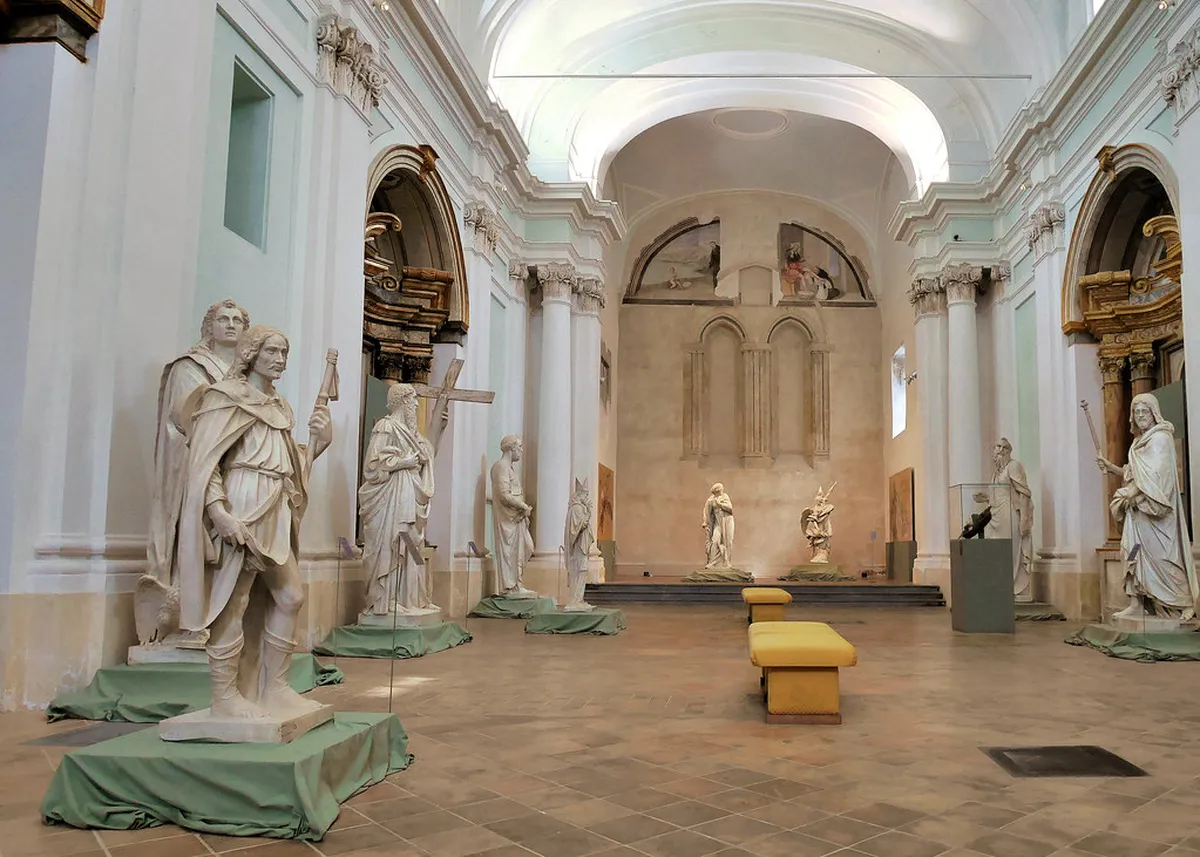
Orvieto's Duomo stands as a true masterpiece of Italian Gothic architecture. This stunning cathedral dominates the ancient city's skyline and draws visitors from around the world, each eager to stand before one of the most ornate facades in Europe. Our comprehensive Orvieto Duomo visitor guide covers everything you need for a confident 2026 visit — verified ticket prices, opening hours, photography rules, the Cappella di San Brizio frescoes, and where to eat and drink nearby.
Whether you are arriving on a day trip from Rome or spending several nights in Umbria, careful planning makes all the difference. We cover essential logistics alongside the art and history that make this cathedral unmissable. Discover the best Orvieto itinerary to structure your full day in the city. Explore more about traveling to Italy with our guides.
The Façade: Lorenzo Maitani's Gothic Masterpiece
Turn this guide into a personal route with our free Orvieto itinerary planner.
Construction of the Duomo began in 1290, commissioned by Pope Nicholas IV to enshrine the Corporal of the Miracle of Bolsena — a linen cloth said to have been stained with blood during a Mass in 1263. The project moved slowly through dozens of architects over two centuries. It was Lorenzo Maitani, appointed capomaestro in 1310, who gave the façade the coherent programme visitors see today.
Maitani designed and carved the four marble pilasters (pilastri) flanking the three portals. The lowest bands of each pilaster are covered in dense bas-reliefs: scenes from Genesis on the left, the Tree of Jesse, New Testament episodes, and the Last Judgment on the rightmost pillar. The carving quality is extraordinary at close range — individual figures barely ten centimetres tall carry full emotional weight. Maitani also cast the four bronze symbols of the Evangelists that stand guard above the doorways: the angel (Matthew), the lion (Mark), the ox (Luke), and the eagle (John). These bronze figures, completed around 1330, are among the finest Gothic bronzes in Italy.
The three large bronze doors currently installed are twentieth-century additions. Emilio Greco's doors (1964–1970) on the left and central portals depict the Works of Mercy and the life of the Virgin in an expressionist style that divides opinion but rewards close looking. The official Duomo website at duomodiorvieto.it carries full documentation of the façade programme if you want to prepare in depth before visiting.
Above the portal zone, gold mosaics cover the gable fields. Most are nineteenth- and twentieth-century restorations of medieval originals lost to earthquake damage, but they retain the same luminous effect against the striped travertine and basalt of the upper façade. The rose window at the centre, attributed to Andrea Orcagna (c. 1354), is framed by small statues in Gothic niches. Stand back to the far end of Piazza del Duomo to take in the full composition: it is best understood as a single enormous altarpiece in stone and gold.
Cappella di San Brizio: Signorelli's Last Judgment Cycle
The Cappella di San Brizio (also called the Cappella Nuova) occupies the right transept of the cathedral and contains what many art historians rank among the greatest fresco cycles of the Renaissance. Entry is included in your standard Duomo ticket — there is no separate charge in 2026.
Fra Angelico began the ceiling vault in 1447 but completed only two sections before returning to Rome. Luca Signorelli picked up the commission in 1499 and completed the entire chapel between 1499 and 1504, working with remarkable speed and ambition. He covered the walls and lower lunettes with eight scenes from the End of Days: the Preaching of the Antichrist, the End of the World, the Resurrection of the Dead, the Damned Condemned to Hell, the Elect Ascending to Heaven, the Crowning of the Elect, the Descent into Hell, and episodes with angels. The lower register features painted illusionistic pilasters and a frieze of portrait medallions that include Dante, Virgil, and — in the bottom-left corner of the Antichrist scene — Signorelli's own self-portrait alongside Fra Angelico.
The frescoes are viscerally physical in a way that anticipates Michelangelo. Signorelli rendered the resurrected dead with anatomical precision unusual for 1499: tangled musculature, foreshortened limbs, figures emerging from the earth mid-twist. Giorgio Vasari later wrote that Michelangelo studied this chapel carefully before painting the Sistine Chapel ceiling (1508–1512), and modern scholars broadly accept that the writhing damned in Signorelli's Hell directly influenced Michelangelo's approach to the human body under extreme duress. Standing in the chapel and then later seeing photographs of the Sistine Last Judgment (1536–1541), the lineage is visible. Orvieto is, in this sense, a missing chapter in the story of the High Renaissance.
Allow at least 20–30 minutes in the chapel alone. The lighting is good but the detail is dense. Bring binoculars if you own a compact pair — the ceiling vault is high and Angelico's blue-robed Christ figure in the Judgment of the Saved repays magnified examination. Photography without flash is permitted inside the chapel. See more on photography rules below. For background reading, the Wikipedia article on the Cappella di San Brizio provides solid iconographic context.
Tickets, Prices, and the Carta Unica Combo (2026)
The standalone Duomo ticket costs €8 per person (the Duomo plus the Claudio Faina Etruscan Museum combination is €11). According to the Opera del Duomo it covers the cathedral (including the Cappella del Corporale and the Cappella di San Brizio), the Museo Emilio Greco, and the Sotterranei (undercrofts), with an audioguide through the "Opera del Duomo di Orvieto" app. Children under 11 enter free, and group, school, and other categories have separate rates on the official site. Tickets can be bought at the Duomo ticket office on Piazza del Duomo or online in advance at duomodiorvieto.it.
The Carta Unica costs €35 (€25 reduced; children under 10 free) and covers the Duomo, the Museo Etrusco Claudio Faina, the Labirinto di Adriano, the Torre del Moro, the Pozzo di San Patrizio (St. Patrick's Well), the Orvieto Underground, the Pozzo della Cava, and the Necropoli del Crocifisso del Tufo (only the Antiquarium has been open since 29 September 2025). Duomo entry is €0 with the card. Pozzo di San Patrizio and Orvieto Underground need an extra booking or voucher pickup, and the standard card does not include transport; a separate "Carta Unica + Funicolare" package adds the funicular return from the station. For a one-day visit that includes the Pozzo and the Underground, add up the individual tickets against the card before buying; buy through cartaunica.it or the official Duomo site.
The Museo dell'Opera del Duomo (MODO) in the Palazzi Papali displays original sculptures removed from the façade for conservation, including marble panels by Maitani, Giovanni Pisano's Madonna and Child, and the Reliquary of the Corporal — a Gothic silver-gilt masterpiece. Check the official site for whether MODO is covered by your ticket before you go. Allow 45–60 minutes for MODO. Visit it before the cathedral to establish historical context, or after to see the originals of carvings you have just examined in situ. Discover more about Orvieto Underground tour tips to plan your Carta Unica day.
Opening Hours, Mass Schedule, and When to Visit
Opening hours vary by season. According to the Opera del Duomo, weekday hours are 09:30–19:00 in March–May and October, 09:30–20:00 in June–September, and 09:30–17:00 in November–February. On Sundays and public holidays the Duomo opens 10:00–11:00 and again 13:00–17:30 (March–October) or 13:00–16:30 (November–February). Masses are held at 09:00 on weekdays in the Cappella del Corporale and on Sundays at 09:00, 11:30, and 17:00 (November–February) or 18:00 (March–October). Tourist visits are not allowed during liturgical celebrations at the high altar and in the Cappella di San Brizio, so plan around them. Check the official Duomo site for the current liturgical calendar, as hours shift for major feast days (Corpus Christi, the Feast of the Assumption on 15 August, Christmas).
The Duomo is closed on New Year's Day, and visits are suspended all day on Corpus Domini (30 May in 2027). Access can also change for liturgical or operational reasons, and the official page does not state a last-entry time, so arrive well before closing. Hours are longest from June through September and shortest from November through February. Always verify the week of your visit rather than relying on cached information from travel aggregators.
For the best experience, arrive when the doors open at 09:30 on a weekday. The nave is quiet for the first hour, the morning light reaches the façade mosaics at an angle that brings out their gold, and the Cappella di San Brizio — which faces south-east — is brightest between 09:30 and 11:00. Midday is the busiest window. Late afternoon (17:00–18:30) is also excellent for the interior but the façade falls into shadow from the surrounding buildings at that hour. Consider the best time to visit Orvieto when building your wider schedule.
Photography Rules and Lighting for the Façade
Photography is permitted inside the Duomo and in the Cappella di San Brizio, but flash is absolutely prohibited. This rule is enforced by wardens stationed in the chapel. Tripods require a written permit from the Opera del Duomo administration office and are not practical for casual visitors. Smartphone photography is unrestricted (no flash). Video recording is permitted under the same no-flash rule.
For façade photography, the geometry of Piazza del Duomo creates predictable light conditions. The façade faces roughly west-north-west. Direct sunlight hits it from mid-morning through early afternoon in summer. The gold mosaics respond intensely to angled morning light: arrive between 09:00 and 10:30 from late April through September for warm light across the upper gables. In winter the sun is lower and the façade receives usable light from around 10:00 to 13:00. Overcast days produce even, shadow-free conditions that are technically clean but remove the mosaic glitter that makes the façade distinctive.
The best shooting position is from the steps of Palazzo dei Papi on the south side of the piazza, roughly 60 metres back. From here the full façade fits in a standard 24mm equivalent frame. Moving closer to the left side of the piazza cuts out the tourists who cluster directly in front of the central portal. Early morning on a weekday in April, May, or late September is the realistic sweet spot: light from the east grazes across the relief carvings, revealing depth in Maitani's bas-reliefs that midday flat light obscures.
Dress Code and Visitor Etiquette
The Duomo enforces the same dress code as all active Italian churches: shoulders and knees must be covered for all visitors regardless of gender or nationality. This rule applies year-round. In summer, scarves or wraps are sold at stalls outside the Piazza del Duomo for roughly €3–5 if you are caught unprepared. The ticket office reserves the right to refuse entry, though in practice wardens usually offer a covering garment rather than turn visitors away immediately.
Inside, keep voices low. The cathedral is still an active place of worship. Avoid crossing into restricted zones during Mass — roped barriers define the tourist area clearly. Switch phones to silent before entering. Eating and drinking are prohibited inside. Large backpacks should be carried in front or left at the luggage deposit near the main entrance.
The Cappella di San Brizio can get crowded at peak times (11:00–14:00 in summer). Wardens manage flow but there is no timed-entry system for the chapel specifically. If the chapel is full when you first arrive, spend time in the nave and return after 20 minutes — the crowd usually cycles through quickly. Discover other Orvieto hidden gems to fill any waiting time in the surrounding streets.
Inside the Duomo: The Nave, Chapels, and the Corporal
The interior is built in alternating bands of white travertine and grey-green basalt, creating horizontal stripes that run the full length of the nave. The effect is less flamboyant than the exterior but powerfully solemn. The nave is wide and the clerestory windows are small, so the interior tends toward a dim, cave-like atmosphere punctuated by shafts of coloured light from the apse windows.
The Cappella del Corporale, on the left side of the nave, houses the relic that prompted the Duomo's construction. The blood-stained corporal — the altar cloth from the Bolsena miracle — is kept inside a gold and enamel reliquary made by Ugolino di Vieri in 1338. The reliquary is displayed on the altar and is remarkable as a piece of medieval metalwork in its own right, with enamel scenes from the Eucharistic miracle around its base. The chapel walls are frescoed by Ugolino di Prete Ilario (1357–1364) with scenes from the miracle and the life of Christ.
The apse behind the high altar contains a Madonna and Child mosaic by Ugolino di Prete Ilario, restored heavily in the nineteenth century. The choir stalls are carved wood from the late fourteenth century. The main altar area is typically roped off from tourist access but is fully visible from the nave. If you plan to spend more time in Orvieto, consider where to stay in Orvieto for a comfortable base.
Nearby Cafés and Where to Eat After Your Visit
Piazza del Duomo and the adjacent streets have several good options for coffee and food within a two-minute walk of the cathedral exit. Caffè Montanucci on Corso Cavour (roughly 200 metres north-east of the piazza) is a long-established Orvieto café and is the practical choice for a post-visit espresso or pastry. It is busy at peak hours but moves quickly. Their house almond cake is locally well-regarded.
For lunch, Trattoria dell'Orso on Via della Misericordia (about 300 metres from the Duomo, near the funicular end) serves Umbrian staples — wild boar ragu, black truffle pasta, roasted pigeon — in a no-frills room that fills with locals at 13:00. Booking is advisable in summer. If you want lighter fare, L'Asino d'Oro on Vicolo del Popolo is a well-known enoteca-restaurant that does excellent small plates and sells Orvieto Classico wine by the glass. Both are priced mid-range (€15–25 per person for a full meal excluding wine).
For gelato, Il Gelato on Corso Cavour does excellent pistachio and fig varieties, both using locally sourced ingredients. Avoid the stalls clustered immediately outside the Duomo ticket office — they charge tourist-zone prices (€4+ for a small cone) and quality is inconsistent. Walking two minutes toward Corso Cavour halves the price and improves the product. Check the best restaurants in Orvieto for a broader dining guide across the city.
Getting to the Duomo and Around Orvieto
Orvieto sits atop a volcanic tuff plateau approximately 325 metres above the surrounding valley. The most direct route from Orvieto train station (on the Rome–Florence line, roughly 1 hour to 1 hour 20 minutes from Roma Termini depending on the train) is the funicular railway, running about every 10 minutes on weekdays from 07:30 to 20:30 and about every 15 minutes on holidays from 08:00 to 20:30. A single funicular ticket costs €1.30, sold as part of the Trenitalia "Orvieto Link" integrated ticket, which also covers local buses.
From the upper funicular station at Piazza Cahen, Bus Line A runs directly to Piazza del Duomo. The bus journey takes about five minutes. Alternatively, the walk from Piazza Cahen to the Duomo takes 15–20 minutes through the medieval streets and is pleasant in dry weather. Check the Orvieto funicular schedule if you are arriving by train and want to plan connection times precisely.
If you are driving, parking is available at the Campo della Fiera car park below the city walls. Free escalators connect the car park to Piazza Cahen. From there, follow the same route as funicular passengers. Central Orvieto is fully pedestrianised around the Duomo; cars cannot enter Piazza del Duomo at any time. Consider how to reach Orvieto from Rome for full transport options including regional train connections. Once in the historic centre, all main attractions — Pozzo di San Patrizio, the Underground, the Torre del Moro — are within 10 minutes on foot from the Duomo. Explore other historical sites like Pozzo di San Patrizio after your cathedral visit.
Key Takeaways
- Standalone Duomo entry is €8; the Carta Unica covering eight sites (including Pozzo di San Patrizio and the Underground) is €35 and includes the Duomo.
- The Cappella di San Brizio houses Signorelli's Last Judgment cycle (1499–1504) — allow at least 20–30 minutes in the chapel alone.
- Opening hours: weekdays from 09:30 (closing 17:00, 19:00, or 20:00 by season); Sundays 10:00–11:00 and from 13:00. Arrive at 09:30 for quietest conditions and best façade light.
- Shoulders and knees must be covered; no flash photography anywhere inside.
- The Carta Unica is sold online at cartaunica.it and through the Duomo site; buying ahead can save time at the ticket office in peak months.
- The funicular from the train station runs about every 10 minutes on weekdays (€1.30 single); Bus Line A continues to Piazza del Duomo.
Frequently Asked Questions
What is the best way to get from Orvieto train station to the Duomo?
The most convenient way is to take the funicular from the train station. It brings you to the top of the hill in a few minutes. From Piazza Cahen, Bus Line A runs directly to Piazza del Duomo. You can also walk the 15–20 minutes through the historic streets. The funicular runs about every 10 minutes on weekdays from 07:30 to 20:30 (every 15 minutes on holidays, 08:00 to 20:30).
Are there any specific dress codes for visiting the Orvieto Duomo?
Yes, respectful attire is mandatory for entering the Duomo. Shoulders and knees must be covered for both men and women. This rule applies to all visitors year-round. If you arrive without appropriate clothing, scarves are sold outside the piazza for €3–5. Dressing appropriately honors the active place of worship.
How long should I budget for my Orvieto Duomo visit?
You should allocate at least 1.5 to 2 hours for the Duomo itself, including 20–30 minutes in the Cappella di San Brizio. If you plan to visit the MODO museum, add another 45–60 minutes. This allows for a comprehensive and unhurried experience. Consider this when creating your Orvieto itinerary for first-timers.
Can I buy Orvieto Duomo tickets in advance online?
Yes, purchasing your Orvieto Duomo tickets online is highly recommended. The standalone ticket costs €8; the Carta Unica is €35 (€25 reduced) and covers eight sites. Check the official Duomo website (duomodiorvieto.it) for current availability and prices.
What other attractions are near the Orvieto Duomo?
Many fascinating attractions are within 10 minutes on foot. The Pozzo di San Patrizio (St. Patrick's Well) is a must-see engineering marvel. Orvieto Underground tours offer a unique perspective on the Etruscan tuff city beneath the streets. The Torre del Moro provides panoramic views of the valley. All are included in the Carta Unica combo ticket. Discover more Orvieto day trip ideas for your adventure.