Orvieto sits on a sheer volcanic tufa cliff in the heart of Umbria, roughly 90 minutes from Rome by direct train. Its Gothic cathedral, ancient underground caves, and medieval hilltop streets give you the depth of a two-day destination packed into a manageable single-day excursion. Crowds stay well below Rome levels even in summer, and the local white wine alone justifies the round trip.
This guide walks you through every practical decision: which train to take, whether the Carta Unica city pass pays for itself, which sights to prioritize, and how to pair Orvieto with Civita di Bagnoregio if you have a car. Follow it and you will arrive knowing exactly what to do the moment you step off the funicular.
Why Orvieto is the Perfect Day Trip from Rome
Turn this guide into a personal route with our free orvieto itinerary planner.
Orvieto is one of the most rewarding and least exhausting day trips available from the capital. The journey takes under ninety minutes, the historic center is entirely walkable, and the compact layout means you can see the headline sites without feeling rushed. Unlike Florence or Naples, there is no second-city chaos to deal with once you arrive.
The city's Etruscan origins date back more than 2,500 years, and you can literally walk through that history. The underground cave network, the hilltop medieval streets, and the finest Gothic cathedral facade in all of Italy exist within a ten-minute walk of each other. For history lovers, architecture enthusiasts, and wine drinkers, Orvieto delivers on every level.
The dramatic cliff setting also provides outstanding photography from the valley below and sweeping Umbrian countryside views from the hilltop gardens. If you are already planning a broader Orvieto Itinerary: A Memorable Trip in 2026, this same route works as the foundation for an overnight stay as well.
How to Get from Rome to Orvieto: Train vs. Car
The train is the default choice for most visitors and for good reason. Direct Trenitalia regional and Intercity trains depart roughly every hour from Roma Termini and Roma Tiburtina. The journey takes between 70 and 90 minutes depending on whether you board a regional or faster Intercity service. You can check current schedules and book tickets on the Trenitalia Official Site before you leave your accommodation.
On the regional trains, a one-way ticket costs between €7 and €15. Intercity services run €12 to €18 for ordinary class and €20 to €25 for first class. On this short journey, first class offers a reserved seat and a small fold-down table, but the legroom and seat padding are nearly identical to ordinary class. The upgrade is rarely worth the extra €7. Book at least the day before during peak summer months, but regional trains can usually be purchased at the station kiosk on the day without problems. Aim for a 09:00 departure from Roma Termini to arrive in Orvieto before 11:00, giving you a full six hours before the last comfortable return service.
Driving makes sense if you plan to combine Orvieto with Civita di Bagnoregio or other nearby Umbrian villages. The A1 autostrada from Rome is a straight 120-kilometre route taking about 90 minutes in moderate traffic. Parking inside the hilltop historic center is restricted to residents. Most visitors use the large free car park near the train station at the base of the cliff and then take the funicular up. For more on transit logistics, see our guide on How to Reach Orvieto: Your Essential 2026 Travel Guide from different starting points.
Navigating the Orvieto Funicular and Local Transport
When you step off the train at Orvieto station, the funicular entrance is directly across the street — you cannot miss it. The cable car ascends the cliff face in about two minutes and deposits you at Piazza Cahen, the gateway to the historic center. Funiculars depart every 10 minutes during standard hours and every 15 minutes in low season. A single ticket costs €1.30 each way, and you must validate it at the yellow machines before entering the boarding area. Unvalidated tickets are treated as unpaid, and inspectors do check.
The smarter option for most visitors is the Orvieto Carta Unica city pass. At approximately €20 for adults in 2026, the pass includes two funicular rides (up and down), entry to the Orvieto Underground tour, the Museo Claudio Faina, and the Orvieto Cathedral (Duomo). If you plan to visit the Duomo (€4), the Underground (€7), and the Museo Faina (€5), you break even on the pass before adding funicular costs. Buy it at the tourist information office on Piazza Cahen, just steps from the funicular exit. You can also purchase online, though the office queue moves quickly.
From Piazza Cahen, the main street Corso Cavour runs straight through the old town toward the Duomo. Everything worth seeing sits within ten minutes' walk of this corridor. Taxis and the small Linea A minibus shuttle also connect the funicular landing to the cathedral area if your legs need a rest, but most visitors walk the pleasant cobblestone route without difficulty.
Top Sightseeing: From the Duomo to the Underground City
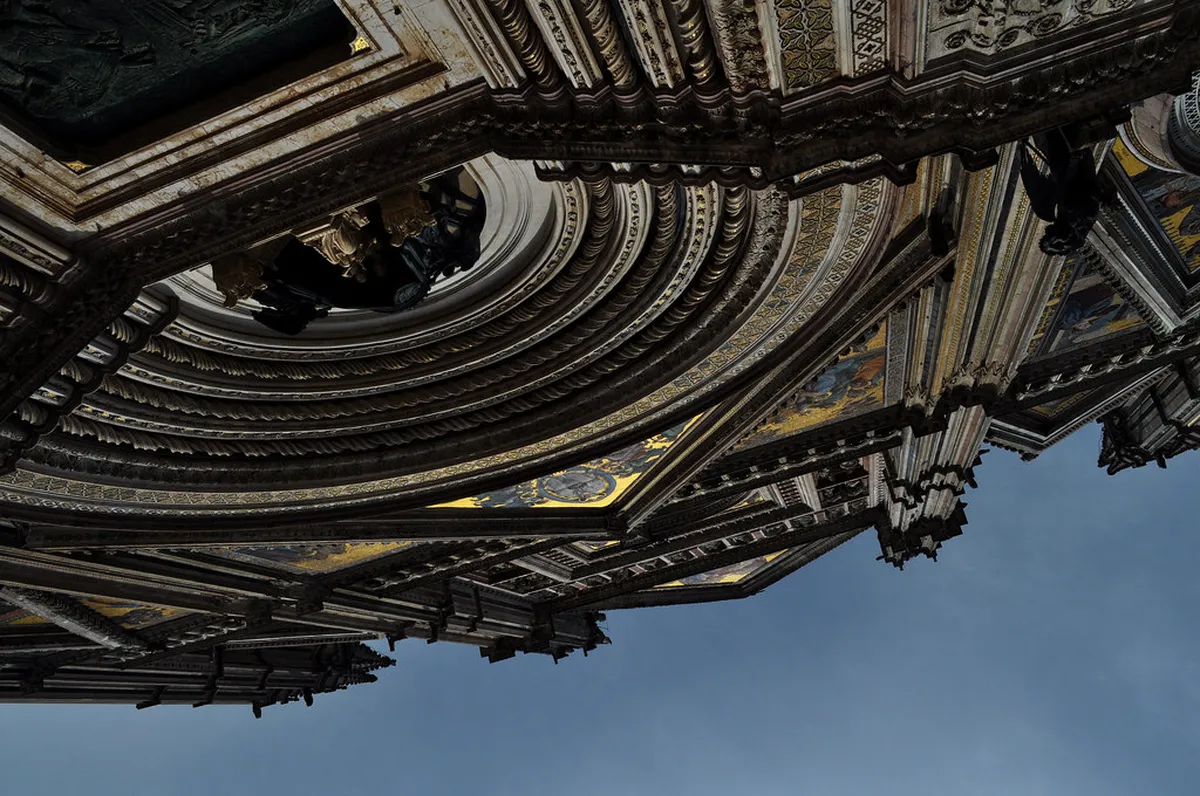
The Orvieto Duomo is the centerpiece of any visit. Construction began in 1290 and continued for three centuries, producing a facade of luminous gold mosaics and carved marble reliefs that ranks among the finest Gothic church exteriors in Italy. Michelangelo reportedly called it the most beautiful facade of any cathedral in Christendom. Inside, the San Brizio Chapel contains Luca Signorelli's cycle of apocalyptic frescoes, painted between 1499 and 1504. Art historians confirm that Michelangelo studied these frescoes before beginning the Sistine Chapel. Entry to the Duomo is €4 (or free with the Carta Unica), but the chapel visit is included. Visit in the late morning when sunlight strikes the golden mosaic tiles directly.
Beneath the city runs a network of over 1,200 caves, tunnels, and cisterns carved by the Etruscans and expanded through the medieval period. Booking an Orvieto Underground guided tour is the only way to access the most interesting sections, and the 45-minute tour costs €7 (included in the Carta Unica). The office sits directly opposite the Duomo facade on Piazza Duomo. Guides explain how ancient residents used these cool chambers for olive oil pressing, wine storage, and pigeon farming. Read our Orvieto Underground Tour Tips: Your Essential 2026 Guide to prepare for the narrow passages and cool temperatures even in summer.
St. Patrick's Well (Pozzo di San Patrizio) stands at the edge of Piazza Cahen, just steps from the funicular exit. Pope Clement VII commissioned it in 1527 after he fled to Orvieto during the Sack of Rome, needing a guaranteed water supply if the city came under siege. The solution was a 53-metre deep well with two separate spiral staircases of 248 steps each, arranged in a double helix. Mules descended one staircase carrying empty urns and climbed the other fully loaded, never crossing paths. Entry costs €5 for adults (€3.50 for students and seniors). The descent is steep and the stones can be slippery — wear shoes with grip.
If time allows before or after the main sites, walk up to the Fortezza Albornoz and the free public gardens adjacent to it. The free viewpoint over the Umbrian valley from the fort wall is one of the best in central Italy. Torre del Moro on Corso Cavour also offers a 360-degree panorama from a partially elevator-assisted bell tower for €2.80 — a worthwhile addition to a full day's itinerary.
Where to Eat and Sampling Local Orvieto Wine
Umbrian cuisine is built around a short list of high-quality local ingredients: black truffles, cured pork, aged Pecorino, and legumes from the surrounding hills. The signature pasta is umbrichelli — a thick, hand-rolled cylinder with no egg, traditionally served with a ragù or shaved truffle. Porchetta (herb-roasted pork) appears in almost every alimentari on Corso Cavour and makes an excellent fast lunch on the go. Many visitors stop for a sit-down meal at the Duca di Orvieto Restaurant, which serves reliable traditional recipes in a vaulted stone dining room. For broader dining options, see our list of the Discover the Best Restaurants in Orvieto for 2026.
Orvieto Classico DOC is the wine that put this city on the map centuries before the Duomo was finished. It is a dry or off-dry white produced primarily from Grechetto and Trebbiano Toscano grapes grown on the volcanic soils around the city. The result is crisp, mineral, and slightly nutty — very different from the generic supermarket "Orvieto" bottles you may have encountered elsewhere. Several enotecas on and around Corso Cavour sell tasting flights for €8 to €12, letting you compare young fresh styles against the richer Superiore or late-harvest Muffa Nobile sweet wines. The red wines of the region — mostly Sangiovese and Merlot blends under the Orvieto Rosso DOC — are worth trying with lunch alongside the cured meats. Our Orvieto Wine Tour Guide: 10 Things to Know for the Perfect Trip lists the best cellars for a deeper tasting experience.
Combining Orvieto with Civita di Bagnoregio
If you are traveling by car, combining Orvieto with Civita di Bagnoregio in a single day is entirely feasible and none of the major competitor guides map out the logistics properly. Civita is a crumbling hilltop village perched on an eroding tufa pedestal 30 kilometres northeast of Orvieto, connected to the world only by a narrow pedestrian bridge. It has fewer than a dozen permanent residents and charges a €5 entry toll at the bridge gate. The drive from Orvieto takes about 35 minutes via the SP18 road.
The recommended sequence is Orvieto first, Civita second. Arrive in Orvieto by 09:30, see the Duomo and Underground before 13:00, have a quick lunch, then drive to Civita. The pedestrian bridge walk takes about 10 minutes each way, and the village itself takes 45 minutes to an hour to explore fully. You can be back on the A1 toward Rome by 17:00, arriving in time for dinner. Do not attempt this combination by train and bus — the bus connections from Orvieto to Bagnoregio run infrequently and add two hours of waiting time to the day. If you plan this route without a rental car, the most practical option is a shared day-tour that departs Rome and covers both sites, several of which operate year-round.
Orvieto or Assisi: Which Hilltop Town Should You Choose?
Both are Umbrian hilltop towns with stunning cathedrals, Etruscan heritage, and easy rail access from Rome. The practical differences matter. Orvieto is 90 minutes from Roma Termini; Assisi requires roughly two to two-and-a-half hours by train with a change at Terontola or Foligno. If you have exactly one free day and want to be back in Rome for dinner, Orvieto is the more sensible choice on travel time alone.
Assisi's appeal is predominantly religious. The Basilica of San Francesco, with its extraordinary Giotto fresco cycle, is a pilgrimage site and draws tour groups throughout the year, resulting in larger crowds than Orvieto. Orvieto feels lived-in and local — the main street has independent food shops and ceramics studios alongside the tourist cafes. If you want art, food, wine, and underground history in a relaxed atmosphere, choose Orvieto. If pilgrimage, Franciscan spirituality, and one of the greatest medieval fresco cycles in the world are your priority, Assisi earns the longer journey. For travelers with more than a week in central Italy, both are worth a day each. You can also drive between them — the route takes about 90 minutes — though train connections between the two towns are not direct.
Seasonal Planning: Visiting Orvieto at Christmas
Winter is an underrated time to visit Orvieto. Crowds fall dramatically in December and January, temperatures sit in the 8 to 14 degrees Celsius range, and the atmosphere in the old town shifts from busy tourist hub to quiet local city. The restaurants are fully open and less hurried, meaning you get better service and easier table access than in peak summer.
The Umbria Jazz Winter festival runs between Christmas and New Year's Eve, bringing internationally recognized musicians to the Teatro Mancinelli and smaller venues across the historic center. Performances sell out, so book tickets well in advance if this is your reason for coming. The other unmissable December event is the Presepe nel Pozzo — a nativity scene installed inside the Pozzo della Cava, a different historic well from St. Patrick's Well, located further along Corso Cavour. Local artisans place illuminated figurines along the well's ancient staircase descending more than 30 metres into the tufa. The effect is genuinely extraordinary and unlike any Christmas display you will see elsewhere. Check local event listings each year for exact dates; it typically runs from mid-December through Epiphany on 6 January. For a fuller guide to the cold months, see our article on Orvieto in Winter: 8 Essential Things to Do & Local Tips.
Practical Summary: Is Orvieto Worth the Trip?
Yes, and it is one of the easiest affirmative answers in Italian travel planning. The train costs under €15 each way, the walk from funicular to Duomo takes five minutes, and you can cover all the major sites in a focused five-hour visit. For a fuller day — Underground tour, St. Patrick's Well, a wine tasting, and lunch — plan for seven hours on the ground, meaning an 09:00 departure from Rome and a 17:30 return train.
Budget roughly €50 to €70 per person for a full day: train return (€15 to €30 depending on class), Carta Unica city pass (€20), a sit-down lunch with wine (€20 to €25), and the Torre del Moro tower if you add it (€3). Wear comfortable, flat-soled shoes — the cobblestones are uneven, the Underground tour requires ducking, and St. Patrick's Well has 248 steps with no elevator. Orvieto is stroller-accessible along the main street but not inside the underground sites. The Carta Unica is almost always worth buying if you are visiting two or more major attractions. Orvieto is a destination that consistently exceeds expectations, and almost everyone who does it as a day trip wishes they had stayed overnight. See also our how to reach Orvieto guide. See also our Best Orvieto Day Trip Ideas for 2026 Adventures. For related Orvieto deep-dives, see our Rome to Orvieto train guide.
Frequently Asked Questions
Is Orvieto worth a day trip from Rome?
Yes, Orvieto is absolutely worth a day trip. It offers a stunning cathedral, fascinating underground tours, and excellent wine, all within an easy 80-minute train ride. It is much less crowded than Rome, providing a relaxing break from the city's chaos.
How do I get from Rome to Orvieto by train?
You can take a Trenitalia regional or Intercity train from Roma Termini or Tiburtina. The journey is direct and takes about 70 to 90 minutes. Tickets are affordable and can be purchased at the station or through the official app before departure.
How much does the Orvieto funicular cost?
A single ticket for the Orvieto funicular costs approximately 1.30 euros. It is also included in the Orvieto Carta Unica city pass. The funicular runs every 10 minutes and connects the train station to the historic hilltop center efficiently.
What is the best way to see the Orvieto Duomo?
The best way to see the Duomo is by purchasing a ticket that includes the San Brizio Chapel. Visit in the afternoon when the sun hits the golden mosaics on the facade. Consider using the Carta Unica pass to save on entry fees for the cathedral.
Orvieto stands as a testament to Italy's enduring beauty and historical depth. A day trip here offers memories that often outlast those from busier cities. From the heights of the Duomo to the depths of the wells, it captivates everyone. Plan your visit today to experience this Umbrian treasure for yourself.