Orvieto in December and January is a different city from the one that fills with tour groups every summer. The crowds thin out, the trattorias slow down to a proper pace, and the Duomo's gold mosaics catch the low winter sun in a way that doesn't happen in July. Late December through early January brings the famous Umbria Jazz Winter festival, while late January through February is the quietest and cheapest window of the year. Check out the Best Time to Visit Orvieto: Your 2026 Travel Guide for a full seasonal breakdown before you book.
The town perches on a volcanic cliff of tuff rock, and on foggy mornings the valley below disappears entirely. Locals call this the Città Narrante — the narrating city. The sensation of standing above a white sea of cloud while the medieval streets are bathed in pale winter light is something the summer visitor simply never sees. This guide covers exactly what to do, what to expect, and how to avoid the most common planning mistakes for a winter visit in 2026.
Why Visit Orvieto in Winter?
Turn this guide into a personal route with our free orvieto itinerary planner.
The Duomo queue at 10 am in August is 45 minutes long. In January, there is no queue at all. That single fact changes the entire texture of a visit. You can stand in front of Luca Signorelli's frescoes in the San Brizio Chapel and study the composition without being nudged forward by the group behind you. The underground cave network, St. Patrick's Well, and the Etruscan Necropolis all operate with the same ease.
Winter also unlocks a food calendar that summer tourists miss entirely. Black truffles from the Norcia hills come into season in November and run through March. Wild boar ragù, roasted pigeon, and thick umbricelli pasta with game sauces are winter-menu staples. The region's white wine, Orvieto Classico, is made to cut through exactly this kind of food. You eat better in Orvieto in winter than at any other time of year.
The main trade-off is weather. Temperatures drop to 2–9°C / 35–48°F in January and February, and the cliff-top position means wind is a genuine factor. A few smaller restaurants close for their annual holiday in mid-January, and some outdoor terraces are packed away entirely. But the core attractions — the Duomo, the underground tours, St. Patrick's Well — all stay open. The city does not shut down; it just quiets down.
Winter Weather and What to Pack
December temperatures average 5–11°C / 41–52°F during the day, dropping sharply after sunset. January is the coldest month, with daytime highs rarely above 9°C / 48°F and nights near freezing. February is marginally warmer but rain is more frequent. Snow falls perhaps once or twice a year and rarely sticks for more than a day. When it does, the tuff-stone alleys become genuinely slippery.
Layering is the right strategy for the cliff-top wind. A wool coat or insulated puffer over a thermal base layer handles most conditions. The underground sites stay at a constant 14°C / 57°F year-round, which feels warm by mid-January — you will want to remove your outer layer before descending. Waterproof walking boots with a grippy sole are non-negotiable on wet cobblestones; smooth-soled shoes are a genuine safety hazard after morning frost melts.
- Wool coat or insulated puffer — essential for cliff-top wind on Corso Cavour
- Waterproof walking boots — cobblestones become slippery after frost and rain
- Thermal base layers — pack-away warmth for the underground tour temperature swing
- Scarf and gloves — evenings drop fast once the sun falls behind the valley
- Compact umbrella — November through February sees the region's highest rainfall
One practical note: fill your water bottle at one of the public drinking fountains near Piazza del Duomo rather than buying plastic bottles. The fountain water is excellent and free. In winter the fountains are never crowded.
The Magnificent Orvieto Duomo in the Off-Season
The Duomo di Orvieto is the reason most people come, and winter is the best season to see it. The facade is covered in gold mosaic panels that were designed to catch direct sunlight, and in December and January the low-angle sun hits them at exactly the right elevation for most of the morning. Arrive between 09:00 and 11:00 for the most dramatic light. In summer, the sun is too high to strike the panels at this angle before the crowds arrive.
Inside, the San Brizio Chapel contains Luca Signorelli's fresco cycle depicting the Last Judgement, painted between 1499 and 1504. Winter opening hours run 09:30–17:00 Monday to Saturday and 13:00–17:00 on Sundays. A combined ticket for the Duomo and the two civic museums costs around €5 and is available at the door via the Opera del Duomo — no advance booking needed in January or February. The Museo dell'Opera del Duomo, housed in the adjacent Palazzo Papale, is worth the extra 20 minutes for its collection of Etruscan bronzes and medieval sculpture.
One practical point: winter restoration work occasionally closes individual chapels or the bell tower for weeks at a time. Check the Comune di Orvieto website (comune.orvieto.tr.it) within a week of your visit for the current access status. This is especially relevant in 2026, as the Duomo's facade maintenance programme that began in 2024 has been running in phases.
Torre del Moro: The Best Vantage Point for Fog Photography
Every guide mentions the cliff-edge viewpoints on Via della Cava and Piazza Cahen. What they skip is the Torre del Moro, the 13th-century communal tower on Corso Cavour. At 42 metres tall, it is the only point in Orvieto that gives you a 360° view above the rooftops rather than from the cliff base. When the valley fog rolls in — which happens most often between December and February, in the two hours after dawn — the tower puts you above both the fog and the buildings simultaneously. The effect is a sea of white with only church towers and hilltops visible in any direction.
The tower is open daily 10:00–18:00 in winter (reduced from summer hours). Entrance costs €3.50. The staircase is 173 steps with no lift, and the final section is narrow. For photography, bring a wide-angle lens or shoot vertical on a phone — the medieval roofscape in the foreground with fog-filled valley behind needs the full frame. The best fog mornings are usually those following a clear, cold night with temperatures near 0°C / 32°F. Check the forecast: a sharp temperature inversion the night before is the reliable predictor.
This is a genuinely underused site in winter. Even during the Umbria Jazz festival week, the tower sees only a fraction of the foot traffic of the Duomo. It pairs naturally with a morning walk along Corso Cavour before the lunch trattorias open at 12:30.
Subterranean Wonders: Orvieto Underground and St. Patrick's Well
The underground cave network is one of the few Orvieto attractions that actively improves in winter. Inside the tunnels the temperature holds at 14°C / 57°F throughout the year, which means on a cold January day the caves feel warm. The guided tour takes about 45 minutes and covers the Etruscan-era cisterns, medieval olive oil pressing chambers, and wartime shelter areas cut directly into the tuff rock. Tours run in English and Italian; check the Orvieto Underground website for the current winter timetable as hours are reduced from November to March.
St. Patrick's Well — Pozzo di San Patrizio — is another all-weather site. The well was commissioned by Pope Clement VII in 1527 as a strategic water source during sieges. Its double-helix staircase means that donkeys carrying water casks up the inner spiral never encountered those going down the outer one. The descent is 248 steps; allow 30 minutes round trip. Tickets cost €5 adult. The well stays open in winter and the enclosed shaft keeps the worst of the cold out, though the stone steps are damp and require careful footing. Read the Orvieto Underground Tour Tips: Your Essential 2026 Guide for booking advice and combined-ticket options.
On days when rain makes street walking miserable, these two sites plus the Museo dell'Opera del Duomo can fill a full day entirely indoors. The Etruscan Necropolis outside the walls does stay open but the grassy paths become muddy after rain — save that for a clear day.
Umbria Jazz Winter and Seasonal Festivities
Umbria Jazz Winter runs from 28 December through 1 January and is the one period when Orvieto genuinely buzzes with visitors. The festival uses the Teatro Mancinelli, the Duomo itself, and various palazzi across the historic center as venues. Performances range from headline acts in the 750-seat theater to free outdoor concerts in Piazza del Duomo. Single-event tickets start at around €15; a festival pass covering multiple shows costs €60–€100. Check the official Umbria Jazz website for the 2026 programme, which is usually published in October.
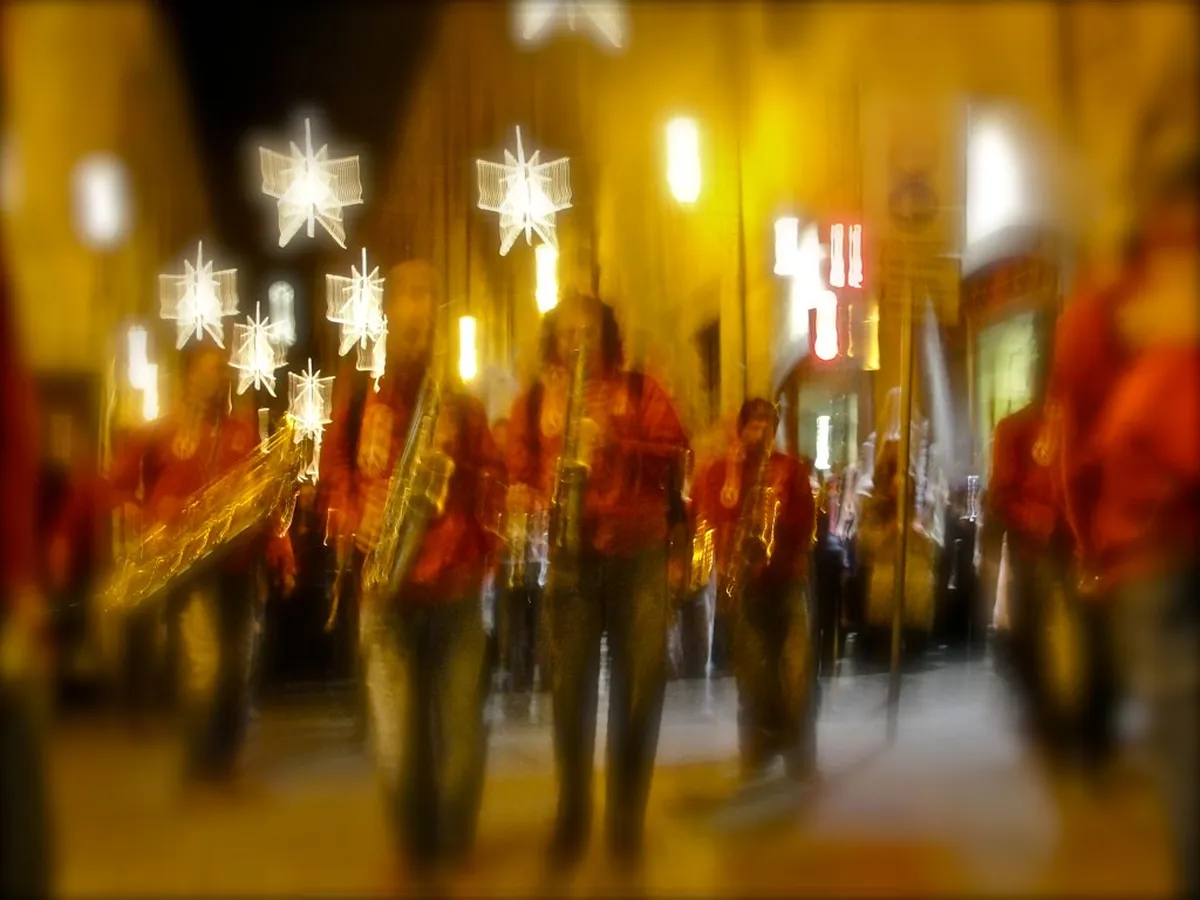
During this week, accommodation prices spike to near-summer levels and book out weeks in advance. The tradeoff is a genuinely festive atmosphere: Christmas lights remain up, brass bands move through the medieval alleys between sets, and the trattorias stay open until midnight. If you are not a jazz fan but want the festive lights and food without the crowds or cost, the week before Christmas — roughly 19–24 December — offers Christmas markets, Nativity displays, and evening concerts at a fraction of the festival-week price.
After the festival ends, typically by 3 January, the town falls quiet in a way that Italy Magazine aptly describes as contemplative. January and February belong almost entirely to locals. This is the right time to book a long lunch at a restaurant you'd normally never get into in summer, or to spend an afternoon talking ceramics with a workshop owner on Via della Cava who now has time to show you how the pieces are made.
Hearty Umbrian Cuisine: Where to Eat in Winter
Winter is the right season for Umbrian food because the cuisine was built around it. Black truffles (tartufo nero) from the Norcia hills are in full season from November through March. You will find them shaved over hand-rolled umbricelli pasta, stirred into scrambled eggs, and pressed onto bruschetta. A proper truffle pasta dish in a central Orvieto trattoria costs €16–€22 in winter — roughly €5 less than the same dish in August. Visit the Discover the Best Restaurants in Orvieto for 2026 for specific recommendations.
Beyond truffles, look for wild boar ragù (cinghiale), roasted pigeon (piccione), and the slow-cooked lamb dishes that appear on lunch menus from December through February. Many trattorias are built into tuff-rock caves along Via della Cava and the side streets off Corso Cavour — the cave walls hold warmth from the kitchen and create exactly the atmosphere the season calls for. Pair everything with Orvieto Classico DOC, a dry white wine made from Grechetto and Trebbiano grapes grown on the volcanic soil around the cliff. The local Foresi enoteca on Piazza del Duomo stocks both bottle and glass pours at fair prices.
Note that some family-run restaurants close for their annual holiday between 7–21 January, immediately after the jazz festival. This is normal and not a sign of general closure. You will always find at least six or seven restaurants open in the historic center, but if you have a specific place in mind, call ahead or check for a sign on the door the day before.
What's Closed in Low Season: Essential Planning
The funicular connecting Orvieto train station to the historic center undergoes annual maintenance, typically for one or two weeks in late January or early February. During maintenance, a replacement Circolare bus runs the same route and accepts the same funicular ticket — you will not be stranded, but the bus takes longer and drops you at a slightly different point near Piazza Cahen. The ATC Orvieto website and the posted notices at the train station will have the current schedule. Always check the week before you arrive.
The Etruscan Necropolis and some smaller civic museums reduce to weekend-only hours in February. A handful of outdoor cafe terraces are fully packed away, though a few keep gas heaters and serve outside even in January. Some agriturismi in the surrounding countryside close entirely — which is an additional reason to stay within the historic walls rather than in a rural property.
The Duomo, Orvieto Underground, St. Patrick's Well, Torre del Moro, and the Museo dell'Opera del Duomo all remain open throughout winter. The train from Rome Termini runs every 60–90 minutes and takes approximately 75–90 minutes depending on the service; the last train back to Rome departs around 21:30. For current timetables check Trenitalia directly.
Practical Tips: Funiculars, Transport, and Staying in Town
Stay within the historic walls. This is the single most important planning decision for a winter visit. Rural agriturismi and converted farmhouses outside the walls turn cold and damp in December, and you lose easy access to the restaurants and lit streets that make winter Orvieto worthwhile. Look at the where to stay in Orvieto guide for central hotel options at various price points. Central hotels also tend to drop their rates 30–40% from summer by early January.
Orvieto is best reached by train from Rome (75–90 min, €10–€15 on Trenitalia) or from Florence (approximately 2 hours, change at Chiusi). The funicular connects the train station to the top of the cliff and runs every 10 minutes during operating hours. A single ride costs €1.30 and the same ticket is valid on the Circolare bus within an hour of purchase. The full How to Reach Orvieto: Your Essential 2026 Travel Guide guide covers car parking and bus options if you are driving from Rome or from Umbrian towns further north.
Once in the historic center, everything is on foot. The main artery is Corso Cavour, running east to west across the plateau. The Duomo is a five-minute walk north from the central bus stops near Piazza della Repubblica. Most restaurants and shops sit within a ten-minute walk of the funicular terminus at Piazza Cahen. The electric minibuses (Line A and B) cover the full length of the plateau if your feet give out, running roughly every 20 minutes and costing the same €1.30 as the funicular.
Sample One-Day Winter Itinerary
Arrive by the 08:30 or 09:30 train from Rome. Take the funicular up and walk directly to the Duomo — you want to be there before 10:00 for the best light on the gold mosaic facade. Spend 60–75 minutes inside: 20 minutes on the facade, 45 minutes in the Signorelli chapel. Buy a combined ticket at the door (no advance booking needed in January).
From the Duomo walk to Torre del Moro on Corso Cavour (5 minutes). Climb the 173 steps and spend 20 minutes at the top. If the valley fog is in, this is the photograph of the trip. Descend by 11:30 and walk along Via della Cava toward St. Patrick's Well. The descent into the well takes 30 minutes return and costs €5. Finish underground by 12:45.
Lunch at a cave trattoria on Via della Cava or the streets off Piazza del Duomo — allow 90 minutes for a proper Umbrian meal with a glass of Orvieto Classico. After lunch, join the afternoon Orvieto Underground guided tour (usually 14:30 or 15:15 in winter; 45 minutes). Finish by 16:30 and take the evening walk along the cliff edge on Viale Cansacchi for the dusk view over the valley. Hot chocolate at a bar on Corso Cavour, then the funicular down to the train station for the return to Rome or onward to Florence. The full Orvieto itinerary covers two- and three-day versions of this route. See also our Duomo visitor guide. For related Orvieto deep-dives, see our Pozzo di San Patrizio guide.
Frequently Asked Questions
Is Orvieto worth visiting in winter?
Yes, Orvieto is definitely worth visiting in winter for its quiet atmosphere. You can enjoy the Duomo without crowds and experience the unique valley fog. The town remains lively enough to be charming but peaceful enough for relaxation.
Does it snow in Orvieto?
Snow in Orvieto is relatively rare but does happen occasionally in January or February. The volcanic cliff looks stunning when covered in a light dusting of white. Most winter days are just cold and occasionally damp rather than snowy.
Are restaurants open in Orvieto during winter?
Most restaurants stay open in winter, though some close for vacation in late January. You will always find several excellent options for a hearty Umbrian meal in the center. It is wise to book ahead during the Umbria Jazz festival week.
Orvieto in winter rewards the traveler who plans ahead and leans into what the season actually offers: shorter queues, lower prices outside the jazz festival week, and a food calendar centered on truffles and game that summer simply does not match. Stay inside the walls, book accommodation early for the Umbria Jazz period if that is your goal, and check funicular maintenance dates before you arrive. The Duomo, the underground, and the Torre del Moro fog view are the anchor points of any winter day. Everything else fills in naturally once you are on the plateau.