The Belgrade Fortress stands as a testament to the city's resilience over sixteen centuries of turbulent Balkan history.
Walking through the gates of kalemegdan fortress belgrade feels like stepping across different eras of European civilization.
This massive complex overlooks the meeting point of two mighty rivers, providing the most dramatic views in the capital.
Travelers often start their journey here to understand why this spot was contested by empires for generations. If you are planning your wider trip, our Belgrade itinerary covers how to fit Kalemegdan into a full city visit.
The History of Belgrade Fortress: 16 Centuries of Conflict
Turn this guide into a personal route with our free belgrade itinerary planner.
The site began as the Roman castrum of Singidunum during the first century AD. Slavic tribes later named the settlement Beograd, which translates to 'White City' in English. This name refers to the white limestone ridge where the fortifications were originally built. You can find more details on these eras at the Serbia.com Cultural Attractions page.
The name Kalemegdan has deep linguistic roots that reflect the city's Ottoman heritage. It combines the Turkish words 'kale' for fortress and 'megdan' for field or battlefield. This 'Battlefield Fortress' saw countless clashes between the Ottoman and Austro-Hungarian empires. These conflicts shaped the unique blend of architectural styles visible throughout the grounds today.
Medieval Serbia saw the fortress reach a peak of prosperity under Despot Stefan Lazarević. He transformed the site into a modern military stronghold and a vibrant capital city. Visitors can still see the remnants of his palace and the massive Despot's Gate. These ruins offer a glimpse into a golden age of Serbian history before the Ottoman conquest.
The Upper Town and the Iconic Victor Monument
The Upper Town serves as the most popular section of the entire fortress complex. It houses the Victor monument, known locally as Pobednik, which commemorates Serbian victories in the Balkan Wars. This bronze statue stands on a high pedestal overlooking the river confluence. It has become the most recognized symbol of the city and a favorite photo spot.
The Sahat Kula, or Clock Tower, rises above the central gate of the Upper Town. Built during the 18th century, this tower features a clock that still functions today. Visitors can climb the narrow stairs for a small fee to see a panoramic view. Check out our guide to top Belgrade attractions for more landmark details.
Stambol Gate remains one of the most impressive entrances to the fortress grounds. Its name refers to the road that once led from this gate directly to Istanbul. The thick stone walls and heavy wooden doors showcase the military engineering of the Ottoman era. Guards once stood here to control access to the inner citadel and the administrative center.
- The Victor Monument (Pobednik)
- Symbol: Freedom and victory
- Artist: Ivan Meštrović
- View: Sava and Danube
- Access: Always open
- Clock Tower (Sahat Kula)
- Style: Ottoman Baroque
- Height: 27.5 meters
- Status: Operational clock
- Entry: Small ticket fee
- Stambol Gate
- Location: Upper Town entrance
- History: 18th-century origin
- Feature: Massive wooden doors
- Function: Main fortress gate
The Lower Town and Riverside Fortifications
The Lower Town stretches toward the banks of the Sava and Danube rivers. This area feels much quieter and more secluded than the bustling Upper Town. Ancient ruins and overgrown paths create a mysterious atmosphere for curious explorers. It is a perfect addition to any Belgrade itinerary for first-timers seeking peace.
Nebojša Tower stands as the most significant surviving structure in the Lower Town. This medieval cannon tower once protected the entrance to the city's former harbor. It later served as a notorious dungeon during the period of Ottoman rule. Today, it houses a modern museum dedicated to the Greek revolutionary Rigas Feraios.
The confluence of the Sava and Danube rivers is best viewed from the lower ramparts. Watching the different colored waters merge is a highlight for many nature lovers. Great War Island sits directly in the middle of this massive aquatic intersection. This protected nature reserve provides a green backdrop to the ancient stone walls. Pair this with a stroll through Zemun by following our Zemun neighborhood guide for a perfect riverside half-day loop.
The Lower Town also contains the remains of a Turkish bath and a planetarium. These diverse buildings show how the fortress served as a living city for centuries. Walking through this area requires sturdy shoes due to the uneven cobblestone paths. Many visitors miss these hidden corners by staying only in the upper park area.
Museums and Cultural Landmarks within the Park
The Military Museum occupies a prominent building within the fortress walls. Its outdoor collection features tanks, cannons, and torpedoes from various 20th-century conflicts. Inside, visitors can explore thousands of artifacts ranging from Roman swords to modern uniforms. This museum provides deep insight into the strategic importance of the Balkan region.
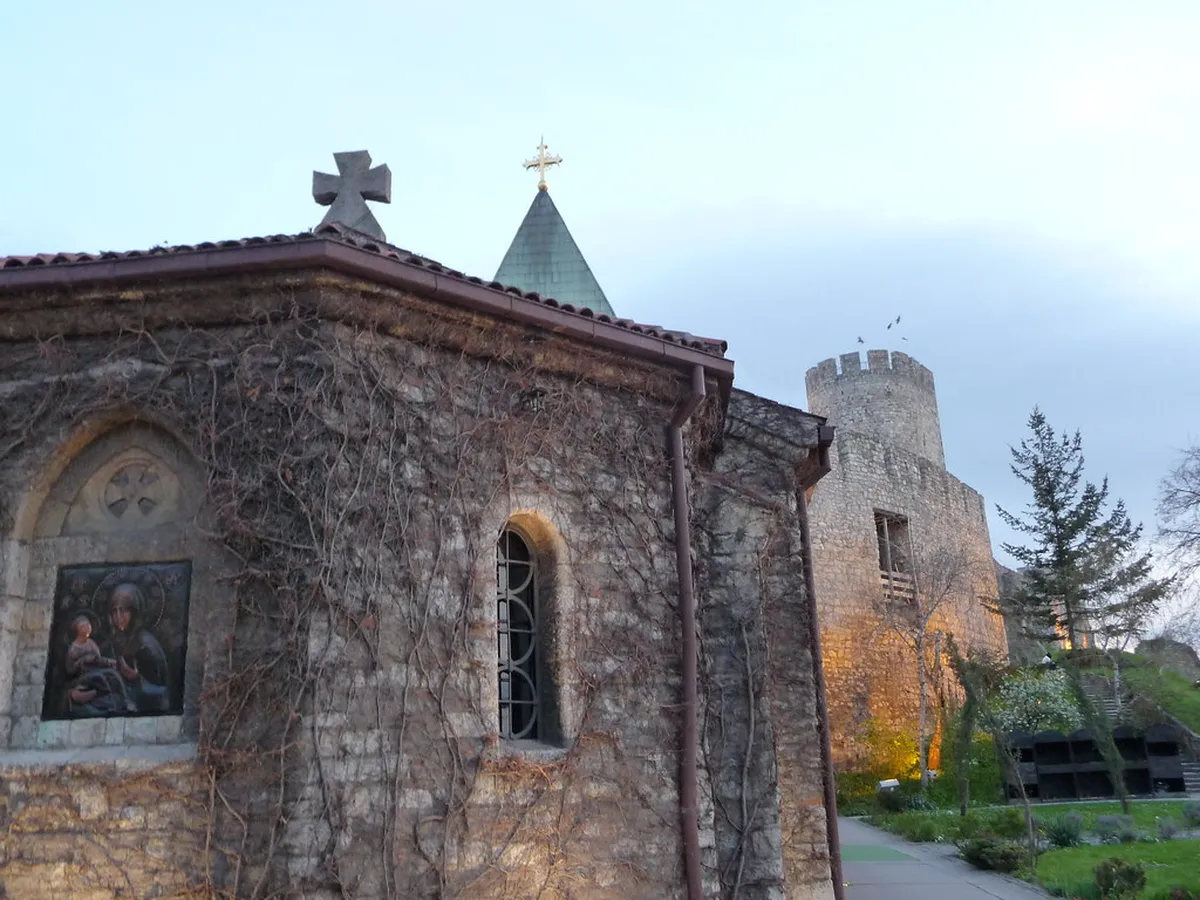
Ružica Church is perhaps the most unique religious site in all of Belgrade. The interior features chandeliers made entirely from spent bullet casings and sword hilts. Ivy covers the exterior walls, making it look like part of the natural landscape. It stands near the Chapel of Saint Petka, which is famous for its holy spring.
The Roman Well remains one of the most mysterious spots in the entire complex. Despite its name, the current structure likely dates back to the Austrian reconstruction in the 1700s. A spiral staircase leads deep into the limestone rock toward the water level. Legend says that this deep pit once held prisoners during times of war.
Art galleries and open-air exhibitions frequently appear throughout the park grounds. Local artists often display their work near the main walking paths in the summer. The Cvijeta Zuzorić Art Pavilion hosts regular rotating shows for contemporary art lovers. Cultural life thrives here, blending ancient stone with modern creative expression. To plan which museums to combine in a single day, see our Belgrade 3-day itinerary.
Practical Visitor Information: Hours and Access
Entrance to the kalemegdan fortress belgrade park grounds is completely free for everyone. The park remains open 24 hours a day, making it a popular spot for late-night walks. Individual museums and specific towers within the complex require separate paid tickets. Check the Belgrade Fortress Official Site for 2026 opening hours of specific exhibits.
The fortress is easily accessible on foot from the end of Knez Mihailova Street. Most visitors prefer walking through this pedestrian zone to reach the main entrance. Public trams and buses also stop frequently at the nearby Kalemegdan station. Consult our Belgrade public transport guide for the best routes from your hotel.
Allow at least three to four hours to explore the main highlights comfortably. The complex covers a massive area with many steep hills and stone stairs. Public restrooms and small kiosks selling water are available near the Upper Town gate. Wear comfortable walking shoes to handle the historic cobblestones and dirt paths.
2026 Ticket Prices: Kalemegdan Fortress Attractions
Kalemegdan Park itself is free to enter around the clock in 2026. Individual paid attractions inside the complex have modest entrance fees payable on-site in Serbian dinars.
The Military Museum charges 350 RSD for adults, 250 RSD for students, and 500 RSD for families. It is open Tuesday to Sunday from 10:00 to 17:00, with the last ticket sold at 16:00. The museum is closed on January 1–2, January 7, and May 1–2.
Other paid attractions within the fortress walls: Roman Well 120 RSD; Nebojša Tower 200 RSD; Military Bunker 100 RSD; Clock Tower 80 RSD. A combined ticket covering all fortress attractions is available for 450 RSD — strong value if you plan to visit several in one day.
The Belgrade Zoo, located inside the fortress moat, operates its own separate admission. Families are advised to check the Zoo's website for its current 2026 season pricing before visiting. The Tourist Organization of Belgrade website (tob.rs) lists updated hours and prices for all city attractions throughout the year.
Note that visiting the Roman Well, Military Bunker, and the Military Museum's casemates requires advance booking at least 24 hours before your scheduled visit. Nebojša Tower needs no prior announcement and can be visited spontaneously during opening hours.
Local Secrets: Best Sunset Spots and Hidden Gems
The wall near the Victor monument offers the most famous sunset view in Belgrade. Arrive at least thirty minutes early to secure a good spot on the stone ledge. Watching the sun sink behind the Pannonian Plain is a truly magical experience. Check the best time to visit Belgrade for ideal seasonal lighting.
Hidden bunkers from the Cold War era are tucked away beneath the fortress ramparts. Guided tours occasionally allow visitors to enter these secret underground chambers. These structures remind us of the city's more recent role in global geopolitics. History buffs should look for the small signs indicating these unique tour opportunities.
The Belgrade Zoo is located right on the edge of the fortress park. Families often combine a visit to the historic walls with a trip to see the animals. It is known for its white lions and its location within the ancient moats. This proximity makes Kalemegdan a versatile destination for travelers of all ages.
Frequently Asked Questions
Is Belgrade Fortress free to enter?
Yes, the main park grounds and the fortress walls are free to enter 24 hours a day. However, specific indoor attractions like the Military Museum, the Roman Well, and Nebojša Tower require paid tickets. You can find more details on our walking tour guide.
What is the best time of day to visit Kalemegdan?
The best time to visit is late afternoon, about two hours before sunset. This allows you to explore the museums during their operating hours before heading to the ramparts for the view. The golden hour light makes the limestone walls and the river confluence look spectacular.
How do you get to Kalemegdan from Knez Mihailova?
Simply walk to the very end of Knez Mihailova Street heading away from Republic Square. You will cross a small street and enter the park directly through the main gate. The walk takes about ten minutes from the center of the pedestrian zone.
How much time should you plan for a full tour of the fortress?
You should plan for at least three hours to see the major landmarks in both the Upper and Lower Towns. If you intend to visit the Military Museum or the Zoo, you may need a full day. The site is vast and requires significant walking.
Kalemegdan is far more than just a park or a collection of old ruins.
It is the living heart of the city where history and daily life meet.
Whether you seek ancient stories or a quiet sunset, this fortress never fails to impress.
Make sure to include a visit here on your next trip to the 'White City'.