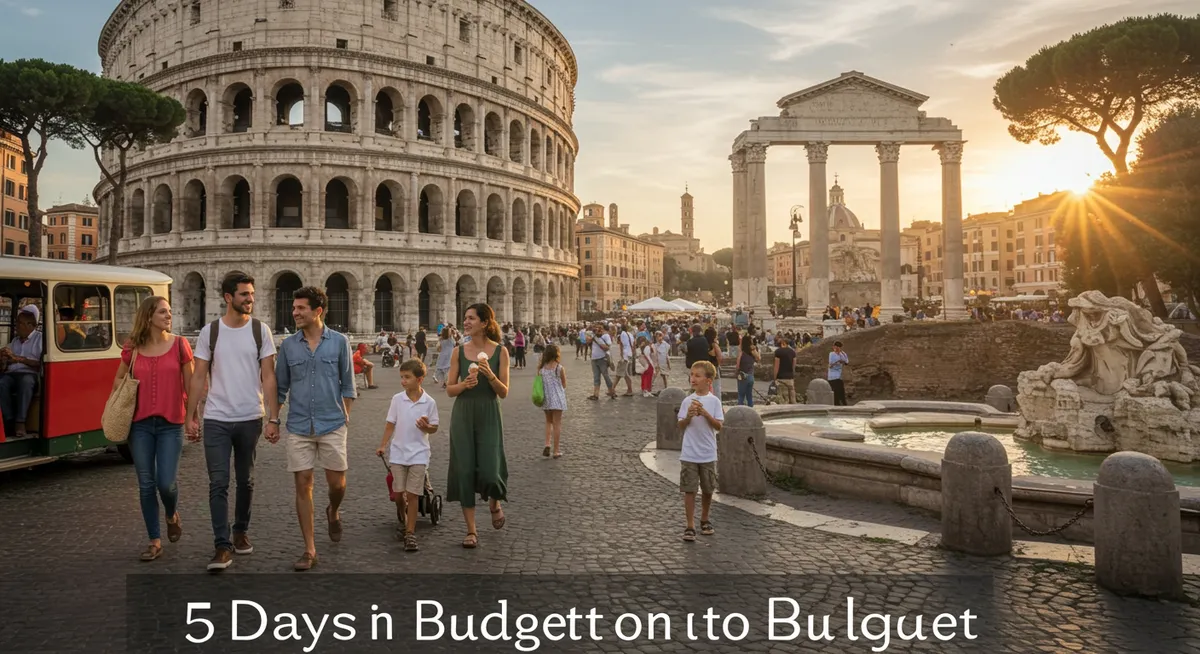
TL;DR: A 5 days in Rome budget trip in 2026 costs roughly €400–€600 total (€80–€120 per day) when you stay in hostels, eat street food, walk everywhere, and focus on free attractions. This guide breaks down every cost category, gives you a day-by-day itinerary, and shares the money-saving strategies that actually work in the Eternal City.
Rome is one of those rare destinations where a tight budget does not mean a lesser experience. Many of the city's greatest treasures — the Pantheon, the Trevi Fountain, the Spanish Steps, and dozens of stunning churches — cost nothing to visit. Street food rivals sit-down restaurants. And the cobblestone streets themselves are an open-air museum. Whether you are a student backpacker or a traveler who simply prefers to spend wisely, this guide will show you exactly how to plan a rewarding 5 days in Rome budget trip in 2026. For a structured day-by-day plan, pair this with our Rome itinerary for 5 days.
How Much Does 5 Days in Rome Cost on a Budget in 2026?
Turn this guide into a personal route with our free Rome itinerary planner.
Before diving into tactics, here is a realistic cost breakdown for a budget traveler spending five days in Rome in 2026. These figures assume one person traveling solo or splitting costs with a partner.
| Category | Daily Estimate | 5-Day Total |
|---|---|---|
| Accommodation (hostel dorm or budget B&B) | €30–€55 | €150–€275 |
| Food & drink | €25–€35 | €125–€175 |
| Transport (metro, bus, walking) | €5–€7 | €24–€35 |
| Attractions & museums | €5–€15 | €25–€75 |
| Miscellaneous (SIM card, souvenirs, gelato) | €5–€10 | €25–€50 |
| Total | €80–€120 | €400–€600 |
These numbers can drop further if you travel during the off-season (November through March), when hotel rates fall 30–40% below summer peaks. Conversely, visiting during major holidays or events can push prices higher. For a shorter trip budget, see our guide on 4-day trip to Rome cost. If you are traveling as a couple, our trip to Rome for 2 cost breakdown covers two-person budgets in detail.
Budget Accommodation: Where to Stay Without Overspending
Accommodation typically eats 40–50% of a Rome travel budget, so this is where smart choices make the biggest difference. Here are your best options for a 5 days in Rome budget stay:
- Hostel dorms: Expect €25–€50 per night for a bed in a shared room. Popular hostels near Termini station offer great transport links and social atmospheres.
- Budget B&Bs and guesthouses: Small family-run spots in neighborhoods like San Lorenzo, Esquilino, or Pigneto often charge €50–€80 for a private double room — excellent value when splitting with a travel partner.
- Religious guesthouses: Rome has dozens of convents and religious houses that welcome tourists for €60–€100 per night, offering simple but clean rooms in central locations.
- Apartments via rental platforms: A studio apartment with a kitchen can save you money on meals. Prices start around €50–€70 per night in less-central neighborhoods.
Pro tip: Book at least 4–6 weeks ahead, especially for summer travel. Early booking saves 20–30% on average. Areas one or two metro stops from the center (like Bologna or Re di Roma stations) offer significantly lower prices while keeping you connected. Check out our where to stay in Rome guide for neighborhood comparisons.
Eating Well in Rome on a Budget
Roman food is legendary, and the good news is that the most authentic bites are often the cheapest. Here is how to eat well during your 5 days in Rome budget trip without spending more than €25–€35 per day:
- Pizza al taglio (pizza by the slice): €2–€4 for a generous portion. Locals eat this standing up at counters — follow their lead.
- Suppli (fried rice balls) and other street food: €1.50–€3 each. Perfect for a quick, filling snack between sights.
- Trattorias away from tourist zones: A primo (pasta course) at a neighborhood trattoria costs €8–€12. Look for handwritten menus and places full of Italians.
- Market picnics: Visit Campo de' Fiori or Testaccio Market for fresh bread, cheese, cured meats, and fruit. A filling picnic lunch costs €5–€8.
- Coffee at the bar: An espresso costs €1–€1.20 when you stand at the counter. Sitting at a table can double or triple the price.
Money-saving hack: Fill your reusable water bottle at Rome's nasoni — the small cast-iron drinking fountains found on nearly every block. The water comes from ancient aqueducts and is perfectly safe and refreshing. For a deeper dive into Roman cuisine, explore our best food tours in Rome guide.
Day-by-Day Budget Itinerary for 5 Days in Rome
This sample itinerary prioritizes free and low-cost experiences while covering Rome's must-see highlights. Adjust based on your interests and energy levels.
Day 1: Ancient Rome (Colosseum, Forum & Palatine Hill)
Start early at the Colosseum with a pre-booked ticket (€16 standard entry, includes the Roman Forum and Palatine Hill). Spend the morning wandering through the Forum's ruins, then climb Palatine Hill for panoramic views of Circus Maximus. In the afternoon, walk to Piazza Venezia and the free-to-enter Vittoriano monument. End the day with a sunset stroll to the Capitoline Hill. Budget for the day: €20–€25 (ticket + meals).
Day 2: Vatican City
Arrive at the Vatican Museums right at opening (pre-book online for €17 to skip the line). Allow 3–4 hours to see the Raphael Rooms and the Sistine Chapel. After lunch, visit St. Peter's Basilica (free entry) and climb the dome for stunning views (€8 with stairs, €10 with elevator). Stroll along the Tiber to Castel Sant'Angelo for an exterior photo. Budget for the day: €30–€40.
Day 3: Historic Center & Free Attractions
This is your lowest-cost day. Visit the Pantheon (€5 entry as of 2024), toss a coin at the Trevi Fountain, wander through Piazza Navona, and explore the charming streets of the Jewish Ghetto. Pop into free churches like Sant'Ignazio (with its incredible ceiling fresco) and Santa Maria sopra Minerva. End the evening in Trastevere for affordable aperitivo. Budget for the day: €15–€20.
Day 4: Villa Borghese, Piazza del Popolo & Shopping Streets
Start at Piazza del Popolo and visit the free Church of Santa Maria del Popolo to see Caravaggio masterpieces. Walk up to Villa Borghese Gardens (free) for a relaxing morning — enjoy the Pincio Terrace views, rent a rowboat on the lake (€3), or simply picnic on the grass. In the afternoon, window-shop along Via del Corso and Via Condotti, then climb the Spanish Steps for sunset views. Budget for the day: €15–€20. For more free activities, see our free things to do in Rome guide.
Day 5: Day Trip or Hidden Gems
Option A: Take a day trip to Naples from Rome by regional train (€10–€15 each way with Italo or Trenitalia). Option B: Explore Rome's hidden gems — the Aventine Hill keyhole view, the Protestant Cemetery (donation-based), the Appian Way, and the neighborhood of Ostiense with its street art. End your trip with a farewell dinner at a budget-friendly trattoria in Testaccio. Budget for the day: €25–€40.
Getting Around Rome on a Budget
Transport is one of the easiest expenses to minimize during your 5 days in Rome budget trip:
- Walking: Rome's historic center is compact. Most major attractions are within 20–30 minutes of each other on foot, and walking lets you discover hidden piazzas and neighborhood charm.
- Metro and bus: A single 100-minute ticket costs €1.50. A 7-day unlimited pass costs €24 and covers all buses, trams, and metro lines — well worth it for five days.
- Roma Pass: The 48-hour Roma Pass (€32) or 72-hour pass (€52) includes unlimited public transport plus free or discounted museum entry. Calculate whether it saves you money based on your planned attractions.
- Avoid taxis: Standard taxi rides within the center cost €10–€15. Reserve them for late-night returns or heavy luggage situations only.
For more transit tips, read our how to get around Rome guide.
Top Money-Saving Tips for Rome in 2026
- Visit on the first Sunday of the month: Many state-run museums (including the Colosseum) offer free entry through Italy's Domenica al Museo initiative.
- Book skip-the-line tickets online: This avoids long queues and the temptation to pay for expensive guided tours on the spot.
- Travel in shoulder season: April–May and September–October offer pleasant weather with prices 15–25% lower than July–August peak.
- Get a local SIM card: An Italian SIM with data costs €10–€15 at any tabacchi shop, saving you from expensive roaming fees.
- Use free walking tours: Tip-based walking tours let you explore neighborhoods with a knowledgeable guide for whatever you can afford.
- Carry cash for small purchases: Some budget eateries and market stalls only accept cash, and ATM withdrawal fees are lower than currency exchange markups.
Frequently Asked Questions
How much money do I need for 5 days in Rome on a budget in 2026?
What is the cheapest way to eat in Rome?
What are the best free attractions in Rome?
Is the Roma Pass worth it for budget travelers?
When is the cheapest time to visit Rome?
Is 5 days enough time in Rome?
How can I save money on Rome attractions?
Ready to start planning your Roman adventure? Use our free trip planner to organize your day-by-day itinerary, or check our Rome budget travel tips for even more ways to save. For spending estimates on shorter trips, see how much spending money for 4 days in Rome.