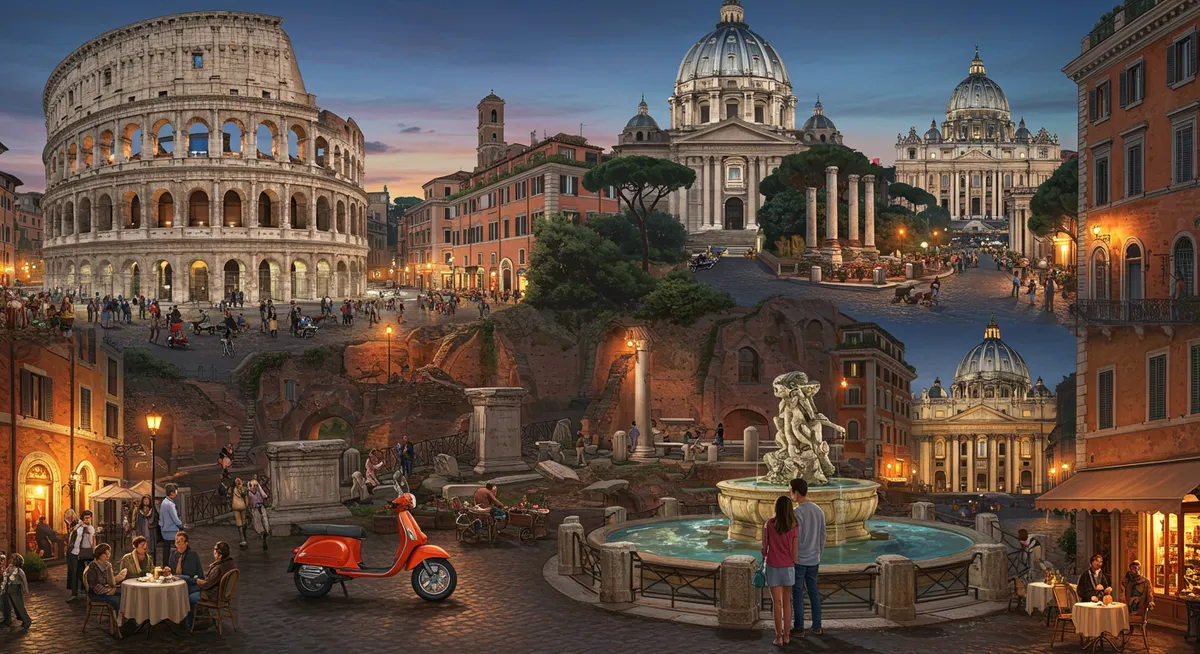
TL;DR: Five days in Rome gives you enough time to explore Ancient Rome and the Colosseum, tour Vatican City, toss a coin at the Trevi Fountain (note the new 2026 entry fee), wander Trastevere, admire masterpieces at the Borghese Gallery, and squeeze in a day trip to Tivoli or the Appian Way. This 2026 guide includes day-by-day plans, budget tips, neighborhood picks, and practical advice so you get the most from every hour in the Eternal City.
Rome packs nearly three millennia of history into a walkable city center, and five days is the sweet spot for experiencing its greatest hits without burning out. Whether you are a first-time visitor or returning after the 2025 Jubilee crowds have thinned, this updated 2026 itinerary lays out exactly what to do in Rome for 5 days, including the newest changes such as the Trevi Fountain entry fee and freshly opened hotels. For a complementary day-by-day planner with neighborhood dining picks, see our Rome in 5 days trip planner. If you are still deciding on trip length, our guide on whether 5 days in Rome is too much breaks down the pros and cons. You can also check our dedicated Rome itinerary for 5 days for an alternative day-by-day breakdown with budget tips.
Day 1: Ancient Rome, the Colosseum, and the Roman Forum
Turn this guide into a personal route with our free Rome itinerary planner.
Start your Roman holiday at the Parco Archeologico del Colosseo. A single ticket grants access to the Colosseum, the Roman Forum, and Palatine Hill, and it is valid for two consecutive days. Book online well in advance because timed-entry slots sell out, especially in spring and autumn. Arrive when the gates open to beat the tour-bus crowds, and plan to spend the entire morning here.
Begin inside the Colosseum, where the restored arena floor now lets you stand where gladiators once fought. The underground hypogeum tour (an optional add-on) reveals the tunnels, lifts, and animal cages beneath the surface. Afterward, cross to the Roman Forum and climb Palatine Hill for sweeping views over the ruins and the Circus Maximus below.
In the afternoon, walk north along Via dei Fori Imperiali toward Piazza Venezia and the imposing Altare della Patria monument. From there, wander into the Monti neighborhood, Rome's oldest rione, for coffee at a local bar and an early dinner at one of its trattorias. Monti is less touristy than the historic center and gives a genuine feel for everyday Roman life. For first-timers still mapping out priorities, our first-time-in-Rome itinerary is a useful companion read.
Day 2: Vatican City, St. Peter's Basilica, and Trastevere
Dedicate your second day to the world's smallest independent state. The Vatican Museums house one of the planet's richest art collections, and the corridor route ends at the Sistine Chapel, where Michelangelo's ceiling frescoes remain as breathtaking as ever. Timed-entry tickets are essential; our step-by-step guide on how to buy Vatican tickets in 2026 walks you through every booking option.
After the museums, enter St. Peter's Basilica (free admission) to see Michelangelo's Pieta and Bernini's towering bronze Baldacchino. For the best panoramic photo opportunity in Rome, climb the 551 steps (or take the elevator partway) to the top of St. Peter's dome. Allow at least four hours total for the Vatican complex.
In the evening, cross the Tiber into Trastevere. This cobblestoned neighborhood comes alive after sunset with outdoor dining, live music, and a bohemian energy that feels distinctly different from the monumental center. Order cacio e pepe or supplì at a family-run trattoria, then stroll along the riverbank as the city lights reflect on the water.
Day 3: Trevi Fountain, Pantheon, and the Historic Center
Day three takes you through Rome's Baroque and Renaissance heart. The biggest 2026 change here is the Trevi Fountain entry fee: since February 2026, visitors who want to descend the steps and get within coin-tossing distance of the fountain pay a 2-euro ticket (bookable online or at kiosks). The fee applies from 9 AM to 10 PM; after hours, close-up access is free, and you can always admire the fountain from the piazza above at no cost. Arrive early or visit after 10 PM for thinner crowds and better photos.
From the Trevi, it is a short walk to the Pantheon, the best-preserved ancient Roman building in the city. Its unreinforced concrete dome, completed around 125 AD, is still the world's largest of its kind, and the central oculus remains open to the sky. Note that a 5-euro entry ticket now applies (introduced in 2023), though it is free on the first Sunday of each month.
Continue to Piazza Navona, built on the footprint of Emperor Domitian's stadium, and admire Bernini's Fountain of the Four Rivers. Then walk south to the Jewish Ghetto, one of Rome's most atmospheric and historically significant neighborhoods. Try the famous carciofi alla giudia (Jewish-style fried artichokes) at a local restaurant before heading to Campo de' Fiori for its lively evening market scene. If you are looking for no-cost activities, check our list of free things to do in Rome.
Day 4: Borghese Gallery, Spanish Steps, and Via del Corso
Slow the pace on day four with a morning devoted to the Galleria Borghese, housed inside the lush Villa Borghese Gardens. The collection includes Bernini's Apollo and Daphne, Canova's Pauline Bonaparte, and several Caravaggios. Entry is strictly timed in two-hour slots and limited to 360 visitors at a time, so book weeks ahead.
After the gallery, rent a rowboat on the garden's lake or simply wander the shaded pathways to the Pincio Terrace for a postcard-perfect view over Piazza del Popolo. Descend the Spanish Steps (recently restored) into the designer-boutique stretch of Via dei Condotti, then continue along Via del Corso for more accessible shopping.
For dinner, venture to the Testaccio neighborhood, Rome's historic slaughterhouse district turned foodie haven. This is where you will find some of the city's most authentic Roman dishes: carbonara, amatriciana, and coda alla vaccinara. Our guide to the best food tours in Rome for 2026 covers guided options if you prefer a curated tasting experience.
Day 5: Appian Way, Day Trip, or Culinary Deep Dive
Your final day is flexible. Choose the option that fits your travel style:
- The Appian Way (Via Appia Antica): Rent a bicycle and ride along one of Rome's oldest roads, passing ancient tombs, aqueduct ruins, and the atmospheric Catacombs of San Callisto or San Sebastiano. Sunday is ideal because the road is closed to cars.
- Day trip to Tivoli: A 45-minute train ride brings you to Villa d'Este (Renaissance fountains and gardens) and Hadrian's Villa (a sprawling imperial retreat), both UNESCO World Heritage Sites. See more options in our easy day trips from Rome guide.
- Cooking class or food tour: Spend the morning learning to make fresh pasta, then explore Campo de' Fiori market for seasonal produce and local cheeses. A hands-on cooking class is one of the most memorable souvenirs you can bring home.
Whichever you pick, save the late afternoon for a final gelato and a sunset walk along the Tiber or up to the Gianicolo (Janiculum Hill) for a farewell panorama of Rome's skyline.
Rome 5-Day Budget Breakdown for 2026
Knowing what to do in Rome for 5 days is half the equation; knowing what it costs is the other half. Here is a realistic mid-range budget per person:
- Accommodation: 80-150 euros per night (budget hotel or well-rated B&B in Monti, Trastevere, or Prati)
- Food: 40-60 euros per day (breakfast at your hotel, lunch at a trattoria, dinner out)
- Attractions: roughly 80-100 euros total (Colosseum combo 18 euros, Vatican Museums 17 euros, Borghese Gallery 15 euros, Pantheon 5 euros, Trevi close-up 2 euros, plus any catacombs or day-trip entries)
- Transport: a 72-hour Roma Pass costs 38.50 euros and includes unlimited metro and bus rides plus free entry to one or two museums; individual metro tickets are 1.50 euros each
A comfortable five-day total typically lands between 600 and 900 euros per person including accommodation. For a deeper cost analysis, our 5 days in Rome budget guide has detailed breakdowns.
Practical Tips for Visiting Rome in 2026
- Best time to visit: April through June and September through October offer mild weather and manageable crowds. July and August are hot (often above 35 C) and packed. Our best time to visit Rome guide goes deeper on seasonal pros and cons.
- Post-Jubilee infrastructure: The 2025 Jubilee Year prompted major upgrades to Rome's public transport, pedestrian zones, and tourist flow management. Several new luxury hotels (Corinthia Rome, Rosewood Rome, Baccarat Rome) are opening in 2026, expanding high-end accommodation options near the Pantheon and Trevi Fountain.
- Book timed entries early: The Colosseum, Vatican Museums, and Borghese Gallery all require advance reservations. Book at least two to four weeks ahead during peak season.
- Dress codes: Shoulders and knees must be covered to enter St. Peter's Basilica and most churches. Carry a light scarf or shawl.
- Stay hydrated: Rome has over 2,500 public drinking fountains (nasoni) dispensing clean, cold water. Bring a refillable bottle.
- Pickpocket awareness: Stay alert on the metro (especially Line A), at Termini Station, and around major tourist sites. Use a crossbody bag and keep valuables in front pockets.
Frequently Asked Questions
Is 5 days enough to see Rome?
How much does the Trevi Fountain cost to visit in 2026?
What is the best neighborhood to stay in Rome for 5 days?
Do I need the Roma Pass for 5 days?
When is the best time to visit Rome for a 5-day trip?
Is Rome walkable or do I need public transport?
How much should I budget for 5 days in Rome in 2026?
This 2026 guide to what to do in Rome for 5 days is designed to help you experience the best of the Eternal City without wasted time or missed highlights. Whether you are drawn to ancient ruins, Renaissance art, neighborhood culture, or Roman cuisine, five well-planned days deliver a trip you will remember for years. For more detailed planning and customizable itineraries, explore our full collection at ItiMaker.com.