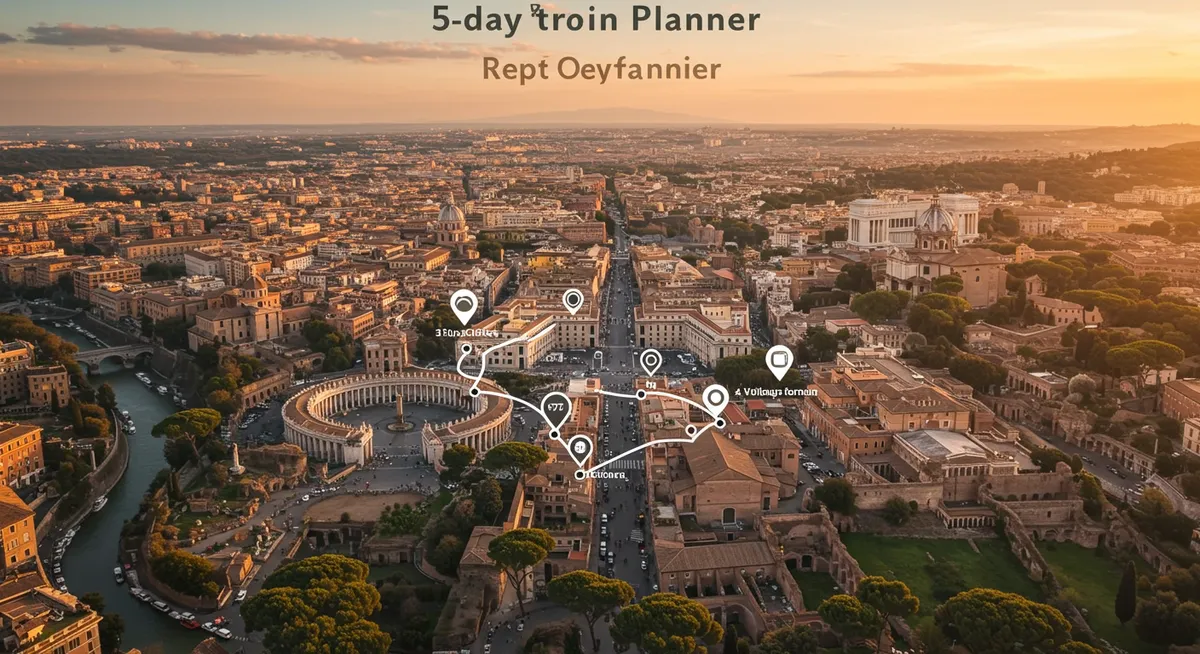
TL;DR: Five days is the sweet spot for a first visit to Rome. This 2026 trip planner walks you through ancient ruins on Day 1, the Vatican on Day 2, fountains and Trastevere on Day 3, hidden gems and the Borghese Gallery on Day 4, and a flexible day trip or revisit on Day 5. You will also find updated ticket prices, the new Trevi Fountain access fee, neighborhood dining picks, and a budget breakdown to keep spending on track.
Rome rewards travelers who plan ahead but leave room for spontaneity. With five full days, you can cover every headline attraction, wander quieter neighborhoods, and still sit in a piazza long enough to finish a second espresso. This rome in 5 days trip planner reflects the latest 2026 changes — including controlled entry at the Trevi Fountain and updated Colosseum ticket tiers — so you can spend less time in queues and more time soaking in 2,700 years of history. Whether you are visiting Rome for the first time or returning after a few years away, this guide will help you build a balanced itinerary that mixes must-see monuments with local flavor.
Day 1: Ancient Rome — Colosseum, Forum, and Palatine Hill
Turn this guide into a personal route with our free Rome itinerary planner.
Start your rome in 5 days trip planner where the city itself began. Arrive at the Colosseum by 8:30 AM with a timed-entry ticket booked online at least two weeks in advance. In 2026, the standard ticket costs around 18 EUR and includes same-day access to the Roman Forum and Palatine Hill. Upgrade to the Full Experience ticket if you want to explore the underground hypogeum and the top tier — it sells out fast during peak season.
After the Colosseum, cross Via dei Fori Imperiali to enter the Roman Forum. Give yourself at least 90 minutes to walk through the Temple of Saturn, the Arch of Septimius Severus, and the House of the Vestal Virgins. Continue uphill to Palatine Hill for panoramic views over Circus Maximus and the Forum below. This elevated vantage point is one of the best photo spots in the city and is far less crowded than street-level viewpoints.
For lunch, head to the Monti neighborhood just north of the Forum. This former working-class quarter is now home to independent trattorias, wine bars, and vintage shops. Try a classic cacio e pepe at a local spot before spending the afternoon at Capitoline Hill to visit the Capitoline Museums, which house the original bronze statue of Marcus Aurelius and Caravaggio's Saint John the Baptist. For tips on organizing your first visit, see our first-time Rome itinerary.
Day 2: Vatican City — St. Peter's, the Sistine Chapel, and Castel Sant'Angelo
Dedicate your entire second day to Vatican City. The Vatican Museums open at 8 AM, and the first hour is the quietest you will find all day. Book a timed ticket online (around 17 EUR plus a 4 EUR reservation fee in 2026) and head straight to the Sistine Chapel before the corridors fill. On the way, pause in the Gallery of Maps and the Raphael Rooms — both are stunning and often overlooked by visitors rushing to Michelangelo's ceiling.
Exit through the internal passage that leads directly into St. Peter's Basilica. Climb the 551 steps to the top of the dome (or take the elevator partway for 10 EUR) for the most dramatic aerial view of Rome. Back at ground level, explore Bernini's baldachin and Michelangelo's Pieta near the entrance. Remember that a strict dress code applies: shoulders and knees must be covered for both men and women.
In the afternoon, walk along the Tiber to Castel Sant'Angelo, the cylindrical fortress originally built as Emperor Hadrian's mausoleum. The rooftop terrace offers a perfect sunset view over St. Peter's dome. For dinner, cross the bridge into the Prati neighborhood, where you will find quieter restaurants with better value than the tourist-heavy streets directly around the Vatican. If you are planning a broader Italian trip, our Rome and Florence in 5 days guide covers combined itineraries.
Day 3: Fountains, Piazzas, and the Trastevere Food Scene
Day three of your rome in 5 days trip planner focuses on the historic center and one of Rome's most atmospheric neighborhoods. Begin at the Pantheon — entry is free, but a 5 EUR reservation is now required in 2026. Arrive when doors open at 9 AM to experience the oculus light beam with fewer crowds. From there, walk five minutes to Piazza Navona, anchored by Bernini's Fountain of the Four Rivers.
Next, head to the Trevi Fountain. As of 2026, the city charges a 2 EUR access fee for visitors entering the immediate viewing area between 9 AM and 10 PM. The fee funds ongoing restoration and limits overcrowding, which actually makes the experience more enjoyable. Toss your coin and continue uphill to the Spanish Steps, another landmark that has controlled access during peak hours.
Reserve the afternoon for Trastevere. Cross the Tiber via Ponte Sisto and lose yourself in cobblestone alleyways lined with ivy-covered buildings and family-run eateries. For the best Roman-Jewish cuisine, walk south to the Jewish Ghetto and try carciofi alla giudia (fried artichokes). As evening falls, Trastevere comes alive with street musicians and aperitivo bars — it is arguably the best neighborhood in Rome for a night out. Check our best food tours in Rome for guided culinary experiences.
Day 4: Borghese Gallery, Hidden Gems, and Panoramic Views
With the major landmarks behind you, day four is about the art and the quieter side of Rome. Start with a reserved visit to the Borghese Gallery — tickets must be booked in advance and are released in two-hour time slots. The collection includes Bernini's Apollo and Daphne, Canova's Pauline Bonaparte, and multiple works by Caravaggio. After your visit, stroll through the surrounding Villa Borghese gardens, the largest public park in central Rome.
From there, head south to the Aventine Hill. Walk through the Orange Garden (Giardino degli Aranci) for sweeping views of the Tiber and St. Peter's dome, then peer through the famous Knights of Malta keyhole for a perfectly framed view of the basilica. Continue down to Testaccio, a neighborhood known for its covered market and traditional Roman cooking — this is where locals eat.
If you prefer an off-the-beaten-path afternoon, visit the Coppede Quarter near Piazza Buenos Aires. This small cluster of Art Nouveau buildings feels transplanted from a fairy tale and sees a fraction of the visitors that major sites attract. Alternatively, explore the Appian Way and the Catacombs of San Callisto for a fascinating underground journey through early Christian history. For ideas on how long to spend overall, read our guide on how many days you need to see Rome.
Day 5: Day Trip or Relaxed Farewell
Your final day offers flexibility depending on your flight time and energy level. If you have a full day, consider a half-day trip to Tivoli (35 minutes by train from Roma Tiburtina). Villa d'Este's Renaissance water gardens and the ruins of Hadrian's Villa are both UNESCO World Heritage Sites and make for a memorable excursion. See our easy day trips from Rome for more options including Ostia Antica, Orvieto, and the Castelli Romani hill towns.
If you would rather stay in Rome, spend the morning at Campo de' Fiori market, which operates daily except Sundays. Browse stalls of fresh produce, spices, and dried pasta before settling into a nearby cafe. Alternatively, revisit a favorite neighborhood or check off a museum you missed earlier — the Palazzo Doria Pamphilj or the Museo Nazionale Romano are excellent less-crowded choices.
For a final meal, head back to Trastevere or try the Pigneto neighborhood east of Termini station, which has become a hub for younger chefs experimenting with modern Roman cuisine. Whatever you choose, end the day with one last gelato — you have earned it.
Practical Tips: Tickets, Transport, and Budget for 2026
A well-organized rome in 5 days trip planner saves both time and money. Here are the essentials for 2026:
- Tickets: Book the Colosseum, Vatican Museums, Borghese Gallery, and Pantheon online before you arrive. Most sell out days or weeks in advance during April through October.
- Transport: Buy a 7-day Metrebus pass (24 EUR) covering metro, buses, and trams. Rome's Metro Line C expansion continues in 2026 with improved connections near the Colosseum. Walking remains the best way to explore the historic center. Learn more in our guide to getting around Rome.
- Budget: A mid-range 5-day Rome trip for two costs roughly 2,000-2,800 EUR including accommodation, meals, transport, and attractions. Staying in Monti or Trastevere offers the best balance of location and value. For a detailed cost breakdown, see our 5 days in Rome budget guide.
- Best time to visit: April-May and September-October deliver pleasant weather (18-25 C) with smaller crowds. July-August brings extreme heat above 35 C and peak tourist numbers. Check our best time to visit Rome page for month-by-month details.
- Safety: Rome is generally safe, but watch for pickpockets on crowded buses and around Termini station. Keep valuables in a front pocket or crossbody bag.
Frequently Asked Questions
Is 5 days enough time to see Rome?
How much does a 5-day trip to Rome cost in 2026?
What is the best way to get around Rome in 5 days?
When is the best time to visit Rome?
Do I need to book Colosseum and Vatican tickets in advance?
What are the best day trips from Rome?
Where should I stay in Rome for 5 days?
Rome is a city that reveals itself slowly, and five days gives you enough time to move beyond the postcard views and discover what makes it one of the world's most rewarding destinations. Use this rome in 5 days trip planner as your framework, but leave room for the unplanned moments — a side street that leads to a hidden church, a trattoria recommended by a local, or a sunset over the Tiber that stops you mid-step. Plan smart, pack comfortable shoes, and let the Eternal City do the rest. For more expert itineraries and planning tools, explore ItiMaker.