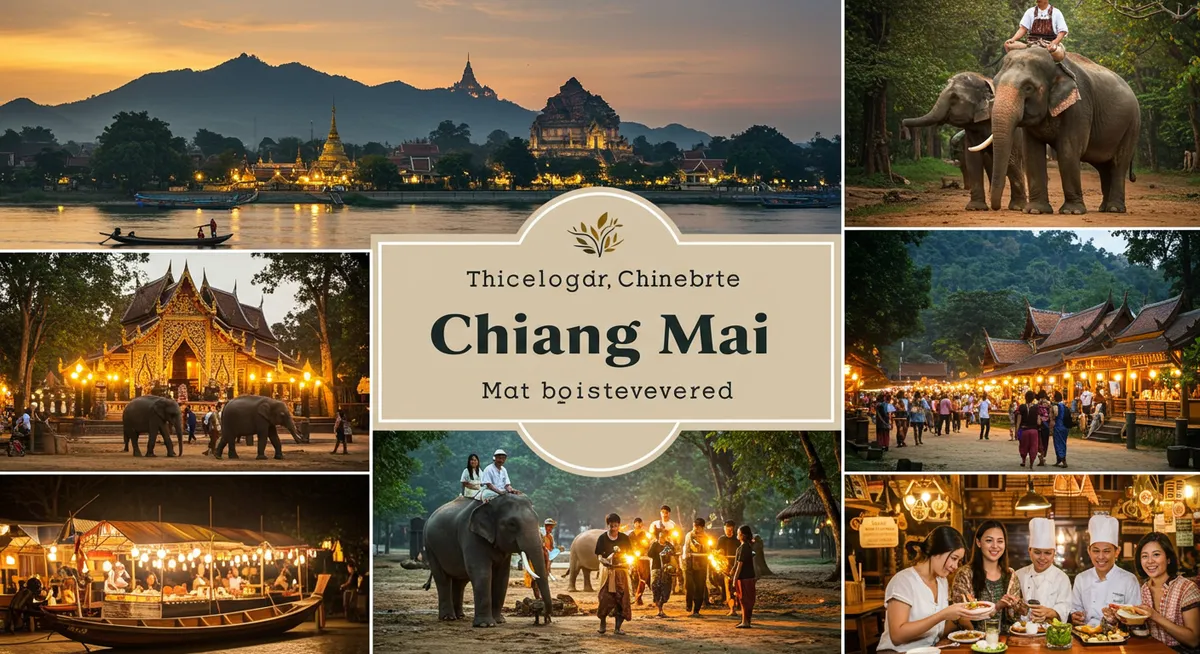
TL;DR: Chiang Mai is Northern Thailand's cultural heart, packed with over 300 temples, ethical elephant sanctuaries, world-class cooking classes, vibrant night markets, and jaw-dropping nature. This 2026 guide covers 25 must-do experiences organized by category — temples, nature, food, adventure, culture, and family fun — plus practical tips on when to visit, how to get around, and how many days you need. Whether you have 3 days or 2 weeks, use this pillar guide alongside our 3-day itinerary or 5-day itinerary to plan the perfect Chiang Mai trip.
Chiang Mai consistently ranks among Southeast Asia's top destinations, and for good reason. The former capital of the ancient Lanna Kingdom blends centuries-old temples with a thriving creative scene, farm-to-table dining, and easy access to misty mountains and jungle waterfalls. After spending extended time exploring every corner of this city and its surroundings, we compiled this definitive list of things to do in Chiang Mai for 2026 — covering everything from iconic landmarks to hidden gems most visitors miss.
Sacred Temples and Historic Sites
Turn this guide into a personal route with our free Chiang Mai itinerary planner.
1. Climb to Wat Phra That Doi Suthep
Perched 1,055 meters above sea level on Doi Suthep mountain, this gleaming golden temple is Chiang Mai's most iconic landmark. Climb the 309-step Naga staircase (or take the funicular) to reach the 14th-century chedi, then soak in panoramic views of the entire city below. Visit at sunrise or late afternoon to avoid the midday heat and tour-bus crowds. A songthaew from the Old City costs around 60–80 THB per person each way.
2. Explore Wat Chedi Luang's Ancient Ruins
This massive 15th-century temple in the heart of the Old City once housed the Emerald Buddha. The partially ruined chedi still towers at 42 meters and is especially atmospheric when illuminated at night. Free "Monk Chat" sessions are held daily, giving visitors a chance to have genuine conversations with Buddhist monks about meditation, Thai culture, and daily monastic life.
3. Admire Wat Phra Singh's Lanna Architecture
Home to the revered Phra Singh Buddha image, this temple showcases the finest Lanna-style architecture in Northern Thailand. The intricate wood carvings, gold-leaf murals depicting scenes from the Jataka tales, and tiered rooflines make it a photographer's dream. Located at the western end of Ratchadamnoen Road, it is an easy walk from the Sunday Walking Street.
4. Discover the Silver Temple — Wat Sri Suphan
Often overlooked by tourists, this temple on Wualai Road is constructed almost entirely from hand-hammered silver and aluminum panels crafted by local artisans. Visit on a Saturday evening when the adjacent Wualai Walking Street market comes alive with handicrafts, street food, and live performances. Note that the ordination hall is open to male visitors only, per Buddhist tradition.
5. Visit the Serene Wat Umong Tunnel Temple
Hidden in a forest at the base of Doi Suthep, Wat Umong dates back to the 1200s and features a network of moss-covered tunnels decorated with faded murals. The surrounding woodland has walking paths, a lake with catfish, and a "talking tree" garden with Buddhist proverbs. It is one of the most peaceful things to do in Chiang Mai, far from the Old City bustle.
Nature, Wildlife, and Outdoor Adventures
6. Visit an Ethical Elephant Sanctuary
Interacting with rescued elephants at a responsible sanctuary is one of the most meaningful things to do in Chiang Mai. Reputable sanctuaries such as Elephant Nature Park and Elephant Jungle Sanctuary let you feed, walk alongside, and bathe elephants in a no-riding, no-chains environment. Book directly through the sanctuary and read reviews carefully — the demand for ethical tourism has unfortunately led some operators to greenwash their practices. Check out our full ethical elephant sanctuaries guide before booking.
7. Hike Doi Inthanon National Park
Thailand's highest peak (2,565 meters) is just 90 minutes southwest of Chiang Mai and offers cool temperatures, cloud forest trails, dramatic waterfalls like Wachirathan and Mae Klang, and the twin Royal Pagodas with sweeping valley views. The Ang Ka Nature Trail boardwalk through moss-draped cloud forest is a highlight. Most visitors do this as a day trip — see our best Chiang Mai day trips guide for logistics.
8. Swim at Bua Tong Sticky Waterfalls
These unique limestone waterfalls about 60 km north of the city have mineral-rich surfaces that provide surprising grip, letting you actually climb up the cascading water without slipping. It is a surreal experience unlike any other waterfall in Thailand. Pack water shoes for comfort, arrive before 10 AM to beat day-trippers, and combine the visit with a stop at Mae Ngat Reservoir.
9. Trek Through the Jungle to Hill Tribe Villages
Multi-day treks through the mountains surrounding Chiang Mai lead to remote Karen, Hmong, and Lahu hill tribe villages where you can learn about traditional lifestyles, weaving, and agriculture. Most treks include bamboo rafting and overnight stays in village homestays. Choose a licensed guide and small-group tour (6–8 people maximum) for the most authentic and responsible experience.
10. Go Zip-Lining Through the Canopy
Several operators offer zip-line courses through old-growth rainforest canopies, with platforms set 30–50 meters above ground level. Flight of the Gibbon and Eagle Track are among the longest-established courses with strong safety records. Most half-day experiences include hotel transfers, lunch, and 20-plus stations. It is an exhilarating way to experience the jungle from a different perspective.
11. Cycle Through the Rice Paddies of Mae Rim
Rent a bicycle or join a guided cycling tour through the lush countryside north of the city. Routes pass through rice paddies, small villages, and orchid farms with views of the Doi Suthep mountain range. Early morning rides are best for cooler temperatures and soft golden light. Many tours include stops at local farmsteads for fruit tastings.
Food, Markets, and Cooking Experiences
12. Take a Thai Cooking Class
Chiang Mai is the cooking-class capital of Thailand, with dozens of schools offering half-day and full-day courses. Most begin with a guided market tour to select fresh ingredients, then you prepare 4–6 dishes — typically pad thai, green curry, tom yum, mango sticky rice, and a stir-fry of your choice. Momma's Kitchen, Thai Farm Cooking School, and Pantawan are popular, well-reviewed options. Read our detailed Chiang Mai cooking classes guide for recommendations.
13. Feast at the Sunday Walking Street
Every Sunday evening, Ratchadamnoen Road transforms into Chiang Mai's largest market, stretching over a kilometer with hundreds of food stalls, live musicians, and artisan vendors. Must-try dishes include khao soi (Northern Thai curry noodle soup), sai oua (herbal Chiang Mai sausage), khanom jeen nam ngiao (rice noodles in spicy tomato broth), and mango sticky rice. Arrive by 5 PM to browse before the biggest crowds hit around 7 PM.
14. Explore the Chiang Mai Night Bazaar
Running nightly along Chang Klan Road, this sprawling market is the city's oldest and most famous shopping destination. Beyond the main covered halls, side streets and plazas host food courts, live music stages, and hill tribe handicraft vendors. Bargaining is expected — start at about 40–50% of the asking price. For a deeper dive, see our Night Bazaar guide.
15. Eat Your Way Through Warorot Market
Known locally as Kad Luang, this century-old market along the Ping River is where Chiang Mai residents do their daily shopping. The ground floor overflows with Northern Thai snacks, dried fruits, spices, and nam prik chili pastes. Upstairs, you will find textiles, clothing, and household goods. It is the most authentic market experience in the city and a food photographer's paradise. Check out our street food guide for the best stalls.
16. Try Khao Soi at a Local Favorite
No list of things to do in Chiang Mai is complete without eating khao soi — the city's signature dish of egg noodles in a creamy coconut curry broth, topped with crispy fried noodles and served with pickled mustard greens and shallots. Khao Soi Khun Yai, Khao Soi Mae Sai, and Khao Soi Nimman are perennial local favorites. Budget 50–80 THB per bowl.
Culture, Arts, and Wellness
17. Learn Traditional Thai Massage
Chiang Mai is home to respected massage schools where you can take courses ranging from one day to several weeks. Even if you are not studying, a 2-hour traditional Thai massage at a reputable spa costs just 400–600 THB and is one of the most relaxing things to do in Chiang Mai after a day of temple-hopping. Lila Thai Massage, staffed by former female inmates as part of a rehabilitation program, is a meaningful choice.
18. Attend a Monk's Morning Alms-Giving Ceremony
Wake before dawn to witness or participate in the daily alms-giving ritual, where saffron-robed monks walk through the Old City collecting offerings of rice and food. This centuries-old Buddhist tradition is a profound cultural experience. Be respectful: dress modestly, kneel lower than the monks, and do not touch them. Wat Phra Singh and the area around Tha Pae Gate are common starting points.
19. Explore the MAIIAM Contemporary Art Museum
Housed in a mirror-tiled building on the San Kamphaeng road, MAIIAM showcases modern and contemporary Thai and Southeast Asian art across rotating exhibitions. The permanent collection includes works by leading Thai artists, and the museum gift shop stocks unique design souvenirs. It provides a refreshing counterpoint to Chiang Mai's traditional temple circuit.
20. Meditate at a Vipassana Retreat
Chiang Mai is a global hub for meditation retreats, with several temples offering multi-day Vipassana programs for beginners and experienced practitioners. Wat Ram Poeng and the International Meditation Center at Wat Suan Dok are two well-known centers that welcome foreigners. Retreats are typically donation-based and include accommodation and vegetarian meals.
Day Trips and Excursions
21. Road-Trip to Pai
The winding 135-km road north to Pai — 762 curves through misty mountains — is an adventure in itself. This laid-back bohemian town offers hot springs, Pai Canyon viewpoints, waterfalls, and a lively walking street. Most travelers spend 2–3 nights, but it works as a long day trip if you start early. For transport options and route tips, read our Chiang Mai to Pai travel guide.
22. Visit the Chiang Mai Night Safari
This open-air zoo sprawls across 211,200 square meters of forested hillside and houses over 400 animals from 50+ species. Tram tours through three zones — Predator Prowl, Savanna Safari, and Jaguar Trail — bring you close to white tigers, giraffes, zebras, and hyenas after dark. The adjacent walking zone and fountain show round out an entertaining evening, especially for families.
23. Explore Chiang Rai's White Temple on a Day Trip
Wat Rong Khun (the White Temple) and its newer counterpart, the Blue Temple, are roughly 3 hours north of Chiang Mai. Organized day tours typically combine both temples with a stop at the Black House (Baan Dam Museum) and the Golden Triangle viewpoint where Thailand, Laos, and Myanmar meet. It is a long but rewarding day — or consider an overnight stay to enjoy Chiang Rai's emerging cafe scene.
Family-Friendly Activities
24. Visit the Royal Flora Ratchaphruek Park
This expansive botanical garden on the outskirts of the city features themed gardens, a stunning Royal Pavilion, greenhouses with tropical orchids and ferns, and wide walking paths suitable for strollers. It is a welcome break from temple fatigue and perfect for families with young children. The park is especially beautiful during the cool season (November–February) when flower displays peak.
25. Ride the Chiang Mai Canyon Waterpark
The Chiang Mai Grand Canyon — a former quarry filled with turquoise water — now operates as a fun waterpark with inflatable obstacles, cliff-jumping platforms, and kayak rentals. Water slides and shaded lounging areas make it a hit with families and groups of friends. It is about 20 minutes south of the Old City and open year-round.
Practical Tips for Visiting Chiang Mai in 2026
When to visit: The best time to visit Chiang Mai is during the cool, dry season from November to February, when temperatures hover around 15–28 °C. March and April bring the burning season with poor air quality. The green season (June–October) offers lush scenery and lower prices but expect afternoon showers.
How many days: Three days covers the highlights — temples, a cooking class, and a night market. Five days lets you add an elephant sanctuary and a day trip to Doi Inthanon or Pai. A full week means you can do it all at a relaxed pace. Use our 3-day, 5-day, or 7-day itinerary for a ready-made plan.
Getting around: Songthaews (red trucks) are the cheapest way to travel within the city at 30–60 THB per ride. Grab is widely available. Renting a scooter (200–300 THB/day) gives you the most freedom for day trips, but traffic in the Old City can be hectic. See our getting around Chiang Mai guide for details.
Where to stay: The Old City is best for first-time visitors who want walkable access to temples and markets. Nimmanhaemin Road suits travelers who prefer trendy cafes, boutique shops, and nightlife. Riverside properties offer a quieter retreat. Browse our best hotels in Chiang Mai picks for curated recommendations.
Budget tips: Street food meals cost 40–80 THB, temple entry is free or 20–40 THB, and many cultural experiences like monk chats and alms-giving are donation-based. A comfortable mid-range daily budget is 1,500–2,500 THB per person including accommodation.
Comparing destinations: Not sure if Chiang Mai is right for you? Read our Chiang Mai vs Phuket comparison and our first-timer tips to decide.
Frequently Asked Questions
What are the top 5 must-do things in Chiang Mai?
How many days do you need in Chiang Mai?
What is the best time of year to visit Chiang Mai?
Is Chiang Mai safe for solo travelers?
What is the best area to stay in Chiang Mai?
How do you get around Chiang Mai?
What should I wear when visiting temples in Chiang Mai?
Chiang Mai rewards every type of traveler — history lovers, foodies, adventure seekers, families, and digital nomads alike. With 25 unforgettable experiences ranging from ancient temple exploration to jungle zip-lining and street-food feasting, this Northern Thai capital deserves a prominent spot on your 2026 travel bucket list. Pair this guide with our detailed itineraries and practical guides linked throughout, and you will have everything you need to plan a trip you will never forget.