TL;DR: Chiang Mai cooking classes cost 1,000–1,500 THB per person, last 3–9 hours, and include market tours, hands-on cooking of 4–6 dishes, and recipe booklets. Book a morning session for the freshest market experience, choose organic farm settings for a more immersive vibe, and reserve at least 2–3 days ahead during peak season (November–February). Keep reading for school comparisons, insider tips, and everything you need to plan the perfect 2026 culinary adventure.
Taking a cooking class in Chiang Mai is consistently ranked among the top experiences in Northern Thailand — and for good reason. You get to wander through a bustling local market, learn the building blocks of Thai cuisine from passionate instructors, and sit down to enjoy an incredible meal you made yourself. Whether you are a complete beginner or an experienced home cook, Chiang Mai's cooking schools deliver a hands-on cultural immersion that no restaurant visit can match. This 2026 guide covers everything from choosing the right school to what you will actually cook, so you can make the most of this unforgettable experience during your Chiang Mai itinerary. If this is your first visit, check out our Chiang Mai travel tips for first-timers for essential planning advice.
Why Chiang Mai Is Thailand's Cooking Class Capital
Turn this guide into a personal route with our free Chiang Mai itinerary planner.
Chiang Mai has more cooking schools per square kilometer than any other city in Thailand. Northern Thai cuisine — known as Lanna food — is distinct from what you find in Bangkok or the islands, with milder heat, herbaceous depth, and unique dishes like khao soi (curry noodle soup) and sai oua (Chiang Mai sausage). The city's proximity to organic farms, its affordable cost of living, and its strong tradition of family-run cooking schools create the ideal environment for learning authentic Thai cooking.
Beyond the food itself, a cooking class connects you to Thai culture in ways that sightseeing alone cannot. You will learn about the medicinal properties of galangal, the difference between Thai and sweet basil, and why mortar-and-pestle curry paste tastes nothing like the store-bought version. Many travelers say their cooking class was the single most memorable part of their Chiang Mai trip, making it an essential addition to your list of things to do in Chiang Mai.
Top Chiang Mai Cooking Schools for 2026
With dozens of schools operating in Chiang Mai, picking the right one matters. Here are several highly-rated options across different styles and budgets:
- Asia Scenic Thai Cooking School — Operating since 2007, this family-run school offers two settings: a Secret Garden campus in the Old City and an Organic Farm Retreat in the countryside. Small groups of 6–10 students ensure personal attention. Full-day classes include an extensive market tour and 5–6 dishes.
- Mama Noi Thai Cookery School — Located in central Chiang Mai, Mama Noi is known for energetic instructors and a welcoming atmosphere. Classes focus on four core dishes with detailed explanations of each ingredient. Great for solo travelers and couples.
- Thai Farm Cooking School — Set on an organic farm outside the city, this school lets you pick ingredients straight from the garden before cooking. The rural setting is quieter and more relaxed. Full-day programs cover 6 dishes and include round-trip transport.
- Grandma's Home Cooking School — A smaller, family-style experience where you cook four traditional dishes in a home kitchen setting. Classes are intimate (4–8 students) and emphasize old family recipes passed down through generations.
- Thai Secret Cooking School — Offers both morning and afternoon sessions with hotel pickup included. Known for patient instruction and a beautiful open-air kitchen setup surrounded by tropical gardens.
Prices across these schools typically range from 1,000 THB (about $28 USD) for a half-day session to 1,500 THB (about $42 USD) for a full-day program, making Chiang Mai cooking classes some of the best-value culinary experiences in Southeast Asia.
Half-Day vs Full-Day Classes: Which Should You Choose?
Your choice between a half-day and full-day class depends on your schedule and how deep you want to go.
Half-day classes (3–5 hours) are ideal if you have a packed Chiang Mai itinerary or want to keep your afternoon free for temple visits or exploring the Old City. You will typically cook 3–4 dishes and may or may not include a market tour. Morning sessions (starting around 8:30–9:00 AM) are the most popular because the markets are at their freshest and liveliest.
Full-day classes (6–9 hours) offer a deeper experience. They almost always begin with an in-depth market tour lasting 45–60 minutes, followed by cooking 5–6 dishes that span appetizers, soups, curries, stir-fries, and desserts. You get more time with the instructor, learn about curry paste preparation from scratch, and finish with a substantial feast. If cooking is a highlight of your trip, the full-day option is worth every extra baht.
Evening classes are less common but available at select schools. These are a good choice if you want to spend your days on Chiang Mai day trips and save the cooking experience for dinnertime.
What to Expect: From Market to Plate
Most Chiang Mai cooking classes follow a satisfying rhythm that blends education, hands-on cooking, and eating. Here is what a typical session looks like in 2026:
The Market Tour
Your instructor meets you at a local fresh market — often Warorot Market or a neighborhood market near the school. For about 30–60 minutes, you will walk through stalls of fresh produce, dried spices, fermented fish sauce, and aromatic herbs. The guide explains each ingredient, its role in Thai cooking, and how to select the freshest options. This is also a fantastic opportunity for photography and picking up local snacks to try.
The Cooking Session
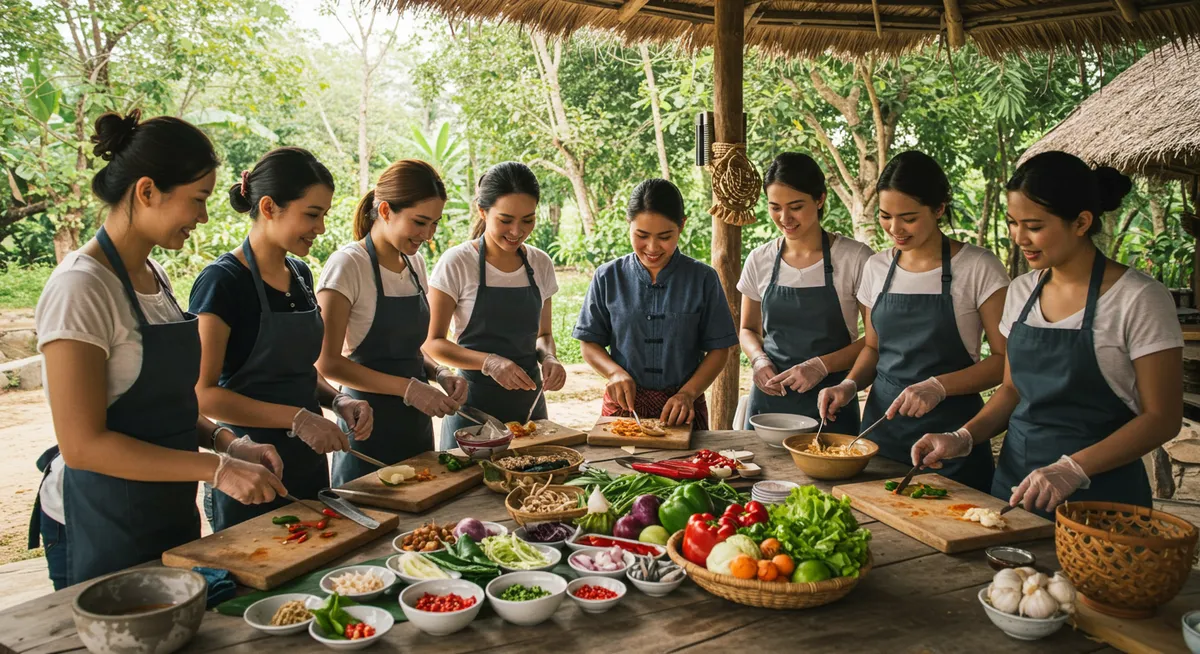
Back at the school, you will find your individual cooking station set up with prepped ingredients. Most schools use a central demonstration station where the instructor shows each step before you replicate it at your own wok or burner. Dishes are cooked one at a time, and you eat each one as it is finished — so you never feel rushed.
Common dishes you might prepare include:
- Tom Yum Goong (hot and sour shrimp soup)
- Green, Red, or Massaman Curry with handmade paste
- Pad Thai or Pad See Ew
- Khao Soi (Northern Thai curry noodle soup)
- Som Tum (green papaya salad)
- Mango Sticky Rice for dessert
Take-Home Recipes
Nearly every school provides a recipe booklet or emails you a PDF with all the recipes you prepared. Some schools also include tips on finding Thai ingredients in Western supermarkets, so you can recreate your favorite dishes at home.
Organic Farm Classes vs City-Based Schools
One of the biggest decisions is whether to cook in the city or head to an organic farm on the outskirts of Chiang Mai.
City-based schools are convenient — many are walking distance from Old City guesthouses — and they pair naturally with market tours at major Chiang Mai markets. If you are short on time, a city school lets you squeeze in a class without spending an hour on transport.
Organic farm schools offer a more immersive, countryside experience. You pick herbs and vegetables directly from the garden before cooking them, which adds an extra layer of connection to the ingredients. The settings are typically quieter, with open-air kitchens surrounded by rice paddies or jungle. Most farm schools include free round-trip hotel transfers. If you have a full day available, the farm experience is hard to beat.
Insider Tips for the Best Experience in 2026
- Book 2–3 days ahead during high season (November–February). Popular schools like Thai Farm Cooking School sell out quickly when tourism peaks.
- Choose morning sessions for the best market experience. Afternoon classes sometimes skip the market tour or visit a quieter market.
- Wear comfortable clothes and closed-toe shoes. Kitchens can be slippery, and you will be standing for several hours.
- Communicate dietary needs when booking. Nearly all schools accommodate vegetarian, vegan, gluten-free, and halal diets with advance notice.
- Bring a small bag for any spices, curry pastes, or snacks you might buy at the market.
- Come hungry. You will eat everything you cook — typically 4–6 full dishes — so skip breakfast or have something light.
- Book through platforms like Cookly, GetYourGuide, or Viator to compare prices and read verified reviews. Direct booking through the school's website sometimes offers a small discount.
- Ask about class size. Groups of 6–12 are ideal for personal attention. Avoid classes that accept 20+ students unless you prefer a more social atmosphere.
Pair your cooking class with a deeper exploration of Chiang Mai's food scene by checking out the best Chiang Mai street food spots for even more culinary inspiration.
Frequently Asked Questions
How much do Chiang Mai cooking classes cost in 2026?
Are Chiang Mai cooking classes suitable for vegetarians or vegans?
Do I need any cooking experience to take a class?
Should I choose a morning or afternoon cooking class?
What dishes will I learn to cook?
Are cooking classes suitable for children?
A Chiang Mai cooking class is one of those travel experiences that stays with you long after you return home. You will leave with new skills, cherished recipes, and a deeper appreciation for Thai cuisine that goes far beyond pad Thai takeout. Whether you choose a half-day city session or a full-day farm adventure, the combination of market exploration, hands-on cooking, and eating your own creations makes this an essential part of any 2026 Chiang Mai trip. Book early, come hungry, and get ready to discover why Northern Thailand is a culinary destination like no other.