TL;DR: The best time to visit Chiang Mai is from November to February during the cool season, when daytime temperatures hover around 26-28°C (79-82°F) and rain is rare. November is especially magical thanks to the Yi Peng Lantern Festival and Loy Krathong. For budget travelers, the rainy season (June-October) offers hotel savings of 40-50% with lush green scenery. Avoid March-April if you are sensitive to air quality, as the burning season brings heavy haze.
Why Timing Matters for Your Chiang Mai Trip
Turn this guide into a personal route with our free Chiang Mai itinerary planner.
Chiang Mai sits in a mountainous valley in Northern Thailand, giving it a climate distinctly different from Bangkok or the southern beaches. The city experiences three well-defined seasons — cool, hot, and rainy — each offering a completely different travel experience. Picking the right month can mean the difference between crisp temple mornings and sweltering afternoons obscured by smoke haze. Whether you are chasing things to do in Chiang Mai, hunting for festivals, or simply looking for the best hotel deals, this 2026 guide breaks down every season so you can plan with confidence.
Cool Season: November to February (Best Overall)
The cool season is widely regarded as the best time to visit Chiang Mai in 2026, and for good reason. Daytime highs settle around 26-28°C (79-82°F) while evenings drop to a refreshing 13-15°C (55-59°F). December and January are the coolest months, with mountain areas like Doi Inthanon occasionally dipping below 5°C (41°F) — pack a light jacket if you plan on highland excursions. Rainfall is minimal, averaging under 20mm for the entire period, so you can explore temples, markets, and countryside trails without worrying about sudden downpours.
This is peak tourist season, meaning hotels in Chiang Mai fill up quickly, especially around Christmas and New Year. Prices for accommodation and flights are at their highest, so booking two to three months in advance is strongly recommended. Despite the crowds, the cool season delivers the most comfortable conditions for sightseeing, trekking, and sampling Chiang Mai street food.
Cool Season Highlights
- November: Yi Peng Lantern Festival and Loy Krathong — thousands of sky lanterns float above the city while candlelit krathongs drift down the Ping River. One of the most photogenic events in Southeast Asia.
- December: Christmas markets and light shows have grown in popularity, blending Thai and Western holiday traditions. Night temperatures make evening walks through the Chiang Mai Night Bazaar especially pleasant.
- January: The Bor Sang Umbrella Festival celebrates the village's traditional hand-painted parasols with parades, live crafts, and cultural performances.
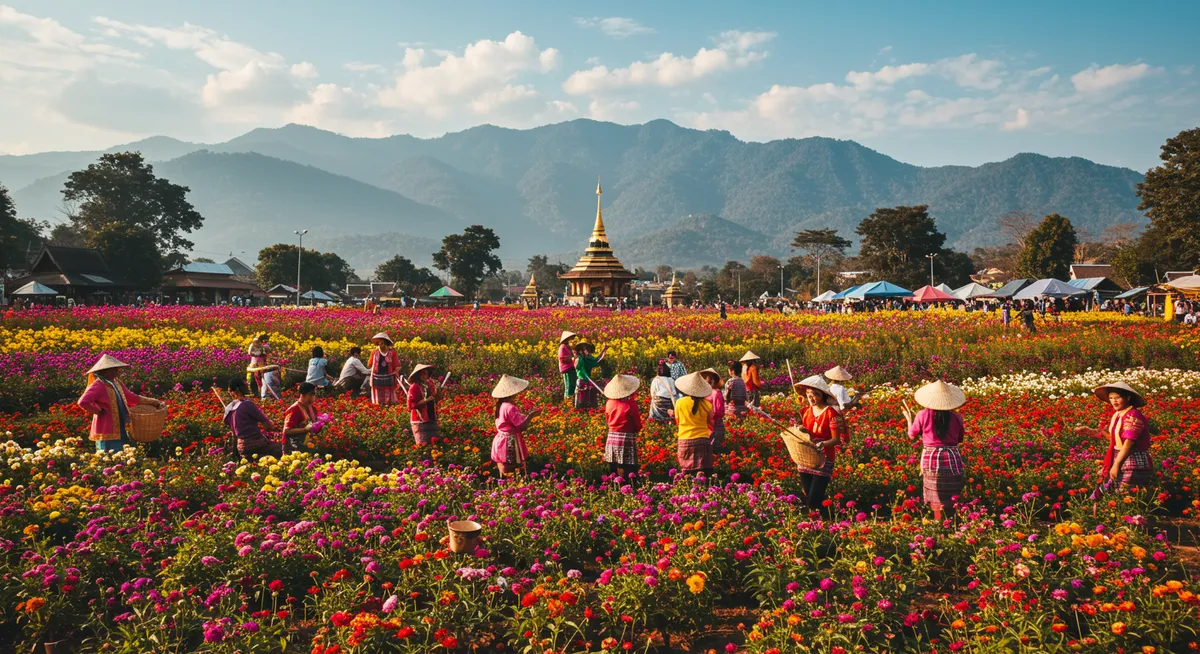
- February: The Chiang Mai Flower Festival transforms the city with elaborate floral floats, garden exhibitions, and beauty pageants.
Hot Season: March to May (Burning Season)
From March through May, Chiang Mai enters its hottest stretch. Temperatures regularly climb above 35°C (95°F), with April often peaking at 40°C (104°F). Afternoons can feel oppressive, particularly in the city center where concrete amplifies the heat. Air-conditioned malls, cafes, and museums become essential retreats.
More importantly, this period overlaps with the infamous burning season. Agricultural clearing fires across Northern Thailand and neighboring Myanmar produce a thick layer of smoke that blankets the valley. Chiang Mai's AQI readings frequently exceed 200 during March and early April, placing the city among the most polluted in the world. If you have respiratory conditions or are traveling with young children, it is best to avoid this window entirely.
That said, the hot season is not without its rewards. Tourist numbers thin out (apart from Songkran week), and hotel rates drop noticeably. The city feels less commercialized, and you will have popular temples and cooking classes largely to yourself.
Hot Season Highlights
- April 13-15: Songkran (Thai New Year) is the country's most famous celebration. In Chiang Mai, the water fights are legendary — the entire old city becomes a splash zone for up to a week. It is chaotic, joyful, and unlike any other festival in the world.
- May: Visakha Bucha Day (Buddha's birthday) brings candlelit processions at Wat Phra Singh and Doi Suthep. The monsoon rains begin clearing the haze toward the end of the month.
Rainy Season: June to October (Best Value)
The rainy season, also called the green season, runs from June through October. Afternoon thunderstorms are common, typically lasting one to two hours before the skies clear. Mornings are usually dry, making it perfectly possible to pack in a day trip from Chiang Mai or a temple circuit before the rain arrives. Monthly rainfall peaks in August and September at around 200-230mm, spread across 17-20 rainy days.
Temperatures moderate to a comfortable 25-32°C (77-90°F), and the air quality improves dramatically as rains wash away residual haze. The surrounding mountains explode with green — rice paddies glisten, waterfalls run at full force, and jungle treks reveal wildflowers rarely seen in the dry months.
Budget-conscious travelers should take note: hotel rates can drop 40-50% compared to the cool season. Flights from Bangkok are cheaper, popular cooking classes and elephant sanctuaries are easier to book, and restaurants are refreshingly uncrowded. If you can tolerate some rain, this is arguably the best value window for visiting Chiang Mai in 2026.
Rainy Season Tips
- Pack a compact rain jacket and waterproof bag for electronics.
- Schedule outdoor activities for the morning; plan indoor experiences (museums, cooking classes, spa visits) for the afternoon.
- October is the shoulder month — rain tapers off, tourists have not yet arrived, and you get the best of both worlds.
Month-by-Month Quick Reference for 2026
| Month | Avg High | Avg Low | Rainfall | Crowd Level | Best For |
|---|---|---|---|---|---|
| January | 29°C | 14°C | 7mm | High | Trekking, temples |
| February | 32°C | 15°C | 5mm | High | Flower Festival |
| March | 35°C | 19°C | 15mm | Low | Quiet exploration (haze risk) |
| April | 36°C | 22°C | 50mm | Medium | Songkran festival |
| May | 34°C | 23°C | 160mm | Low | Budget travel, greenery |
| June | 33°C | 23°C | 130mm | Low | Budget travel, waterfalls |
| July | 32°C | 23°C | 160mm | Low | Lush scenery, cooking classes |
| August | 31°C | 23°C | 230mm | Low | Lowest prices |
| September | 32°C | 22°C | 220mm | Low | Waterfalls at peak flow |
| October | 31°C | 21°C | 120mm | Low | Shoulder season value |
| November | 30°C | 18°C | 50mm | High | Yi Peng, Loy Krathong |
| December | 28°C | 15°C | 16mm | High | Christmas markets, cool weather |
What to Pack for Each Season
Packing correctly for Chiang Mai depends entirely on your travel dates. During the cool season (November-February), bring layers — lightweight clothing for daytime and a warm jacket or fleece for chilly evenings, especially if you are heading to the mountains. Comfortable walking shoes are essential year-round for navigating temple stairs and cobblestone streets.
For the hot season (March-May), breathable fabrics, a wide-brimmed hat, reef-safe sunscreen, and a high-quality N95 mask for smoky days are all worthwhile additions. During the rainy season (June-October), a packable rain jacket, waterproof phone pouch, and quick-dry clothing will keep you comfortable. Regardless of the season, modest clothing that covers shoulders and knees is required for temple entry.
Getting to Chiang Mai and Getting Around
Chiang Mai International Airport (CNX) receives direct flights from Bangkok (about 75 minutes), as well as international routes from Singapore, Kuala Lumpur, and several Chinese cities. From Bangkok, budget carriers like AirAsia and Nok Air offer fares as low as 1,000-2,000 THB during the rainy season. The overnight sleeper train from Bangkok is another popular option, taking roughly 12-14 hours.
Once in the city, red songthaews (shared pickup trucks) are the cheapest way to move around, typically charging 30-40 THB per person within the old city. Grab ride-hailing works well in Chiang Mai, and renting a scooter (200-300 THB/day) gives maximum flexibility for day trips to Doi Suthep or the surrounding countryside. For a full breakdown of logistics, see our guide to getting around Chiang Mai and travel tips for first-timers.
Frequently Asked Questions
What is the best month to visit Chiang Mai in 2026?
What is the burning season in Chiang Mai and when does it happen?
When is Songkran celebrated in Chiang Mai?
Is Chiang Mai worth visiting during the rainy season?
How cold does it get in Chiang Mai during winter?
How many days do you need in Chiang Mai?
No matter which season you choose, Chiang Mai rewards travelers with world-class temples, vibrant markets, and some of the best food in Thailand. The cool season delivers perfect weather and iconic festivals, the hot season offers Songkran thrills and solitude, and the rainy season provides unbeatable value amid stunning green landscapes. Ready to start planning? Browse our complete Chiang Mai itinerary to build your 2026 trip day by day.