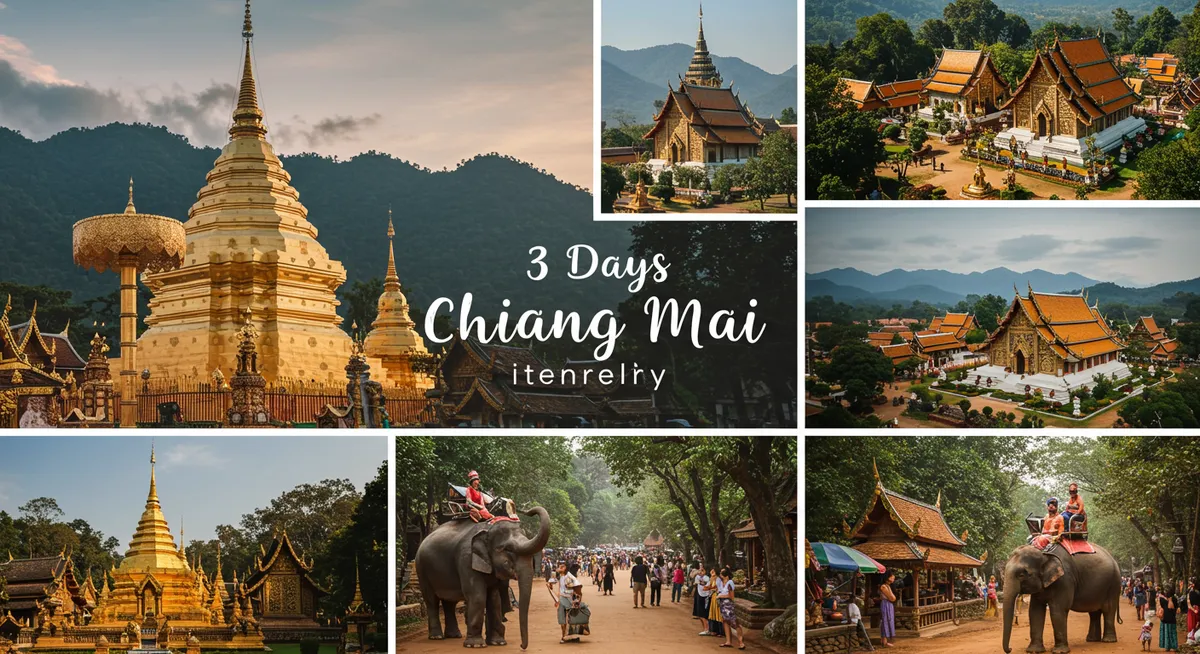
TL;DR: Three days in Chiang Mai is enough to explore the Old City's golden temples, visit an ethical elephant sanctuary, take a hands-on Thai cooking class, eat your way through legendary night markets, and soak in panoramic mountain views from Doi Suthep. This Chiang Mai 3 day itinerary maps out every hour so you can skip the guesswork and maximize your 72 hours in Northern Thailand's cultural capital.
Chiang Mai sits in a lush valley surrounded by mist-covered mountains, and its blend of 700-year-old Lanna heritage, buzzing street food scene, and easy access to nature makes it one of Southeast Asia's most rewarding destinations. Whether you are a first-time visitor or returning to dig deeper, this day-by-day Chiang Mai 3 day itinerary for 2026 balances must-see highlights with local experiences most tourists miss. Before you arrive, check our guide on the best time to visit Chiang Mai to time your trip for ideal weather.
Day 1: Old City Temples, Warorot Market & the Night Bazaar
Turn this guide into a personal route with our free Chiang Mai itinerary planner.
Morning: Explore the Walled Old City
Start your Chiang Mai 3 day itinerary inside the ancient moat that frames the Old City. Head first to Wat Phra Singh, the city's most revered temple, famous for its gilded Lanna-style prayer hall and the Phra Singh Buddha image. From there, walk ten minutes south to Wat Chedi Luang, where a massive 14th-century brick chedi towers above the courtyard. Arrive before 9 AM to beat tour groups and enjoy cooler temperatures. If you want even more ideas for the area, browse our full list of things to do in Chiang Mai.
Midday: Warorot Market & Lunch
Take a songthaew or walk 15 minutes east to Warorot Market (Kad Luang), the city's oldest and largest market. Wander through three floors of dried fruits, northern Thai sausages (sai ua), handwoven textiles, and temple supplies. Grab a plate of khao soi, Chiang Mai's signature egg-noodle curry, from one of the market stalls for around 50-60 THB. For a deeper dive into local eats, see our Chiang Mai street food guide.
Evening: Night Bazaar & Dinner
After freshening up, head to the Chiang Mai Night Bazaar on Chang Klan Road. This sprawling market opens nightly around 6 PM and offers everything from handmade jewelry and hill-tribe crafts to live Muay Thai demonstrations. End the night with a mango sticky rice from a street vendor. For tips on navigating the stalls, read our Chiang Mai Night Bazaar guide.
Day 2: Ethical Elephant Sanctuary & Doi Suthep Sunset
Morning: Ethical Elephant Experience
Day two focuses on nature and wildlife. Book a half-day morning session at an ethical elephant sanctuary near Chiang Mai such as Elephant Nature Park or Elephant Jungle Sanctuary. Ethical sanctuaries emphasize observation, feeding, and bathing rather than riding. Reserve at least two weeks in advance during high season (November through February) because slots fill quickly. Most programs include hotel pickup, lunch, and a mud bath session.
Afternoon & Sunset: Doi Suthep
Return to town by early afternoon, then ascend Doi Suthep, the forested mountain that looms over the city. At the summit sits Wat Phra That Doi Suthep, a shimmering golden temple founded in 1383 during the Lanna Kingdom. Climb the 309-step Naga staircase or take the funicular, then circle the gleaming chedi as the late-afternoon light paints the valley below. On a clear day, the panoramic view stretches across the entire Chiang Mai basin. Aim to arrive by 4 PM for the best photo light and a less crowded experience.
Day 3: Cooking Class, Nimmanhaemin & Departure
Morning: Thai Cooking Class
No Chiang Mai 3 day itinerary is complete without a hands-on cooking class. Most programs start with a guided tour of a local fresh market where you select your own ingredients, then move to an open-air kitchen to prepare four to five dishes such as pad thai, green curry, tom yum, and mango sticky rice. Classes typically run from 9 AM to 1 PM and cost between 800 and 1,200 THB. Explore our roundup of the best Chiang Mai cooking classes for top-rated options.
Afternoon: Nimmanhaemin Road & Last-Minute Exploring
Spend your final hours in the trendy Nimmanhaemin (Nimman) neighborhood west of the Old City. This area is packed with specialty coffee shops, independent boutiques, art galleries, and the multi-level MAYA Lifestyle Shopping Center. Pick up last-minute souvenirs, sip a single-origin Northern Thai coffee, and snap photos of the colorful street art. If you have extra time, consider a day trip from Chiang Mai to Chiang Rai, Doi Inthanon, or the Sticky Waterfalls.
Where to Stay in Chiang Mai
For a 3-day trip, staying inside or just outside the Old City keeps you within walking distance of most attractions. Budget hostels start around 250-400 THB per night for a dorm bed. Mid-range boutique guesthouses in the Old City run 800-1,500 THB, while upscale Lanna-style resorts along the Ping River start at 2,500 THB. Check our curated list of the best hotels in Chiang Mai for trusted picks across every price range.
Getting Around Chiang Mai
The Old City is compact enough to walk, but for longer distances you have several affordable options. Red songthaew shared trucks cruise set routes for 30-40 THB per person. Tuk-tuks charge 60-150 THB per ride depending on distance; always agree on a fare before boarding. Grab, the region's ride-hailing app, offers transparent pricing and air-conditioned comfort. Renting a scooter costs around 200-300 THB per day but requires confidence navigating Thai traffic. For a full breakdown, read our guide on how to get around Chiang Mai.
3-Day Chiang Mai Budget Breakdown (2026)
Here is a realistic daily budget per person based on mid-range spending:
- Accommodation: 800-1,500 THB per night (boutique guesthouse)
- Food: 400-700 THB per day (mix of street food and sit-down restaurants)
- Transportation: 100-300 THB per day (songthaews and occasional Grab)
- Activities: 500-1,200 THB per activity (cooking class, elephant sanctuary, temple entry)
- Total 3-day estimate: 5,400-10,500 THB (approximately $150-$290 USD)
Budget travelers sticking to hostels, street food, and free temple visits can get by on as little as $23-$30 USD per day.
Essential Chiang Mai Travel Tips for 2026
- Best season: November through February offers cool, dry weather ideal for temple-hopping and outdoor activities. March and April bring the smoky season from crop burning, which can affect air quality.
- Dress code: Cover shoulders and knees when entering temples. Carry a lightweight scarf or sarong in your daypack.
- Cash vs. card: Street vendors and songthaews are cash-only. ATMs are plentiful but charge 220 THB per withdrawal, so take out larger amounts less frequently.
- Book ahead: Elephant sanctuaries and popular cooking classes sell out weeks in advance during peak season.
- Stay connected: Pick up a Thai SIM card (AIS or TrueMove) at the airport for around 300 THB with 15 GB of data.
- Respect local customs: Remove shoes before entering temples and homes. Avoid touching anyone's head, and do not point your feet at Buddha images.
First-time visitors should also check our Chiang Mai travel tips for first-timers for a deeper rundown on visas, packing, and etiquette.
Frequently Asked Questions
Is 3 days enough for Chiang Mai?
What is the best way to get around Chiang Mai?
How much does a 3-day trip to Chiang Mai cost?
When is the best time to visit Chiang Mai?
Should I book elephant sanctuary tours in advance?
What food should I try in Chiang Mai?
This Chiang Mai 3 day itinerary packs ancient temples, ethical wildlife encounters, hands-on cooking, vibrant night markets, and mountain sunsets into 72 unforgettable hours. Chiang Mai rewards travelers who slow down and engage with its culture, so leave room to wander, chat with monks, and linger over a bowl of khao soi. Ready to start planning? Use our free Chiang Mai itinerary builder to customize your trip, and check out our tips on getting from Chiang Mai to Pai if you want to extend your Northern Thailand adventure.