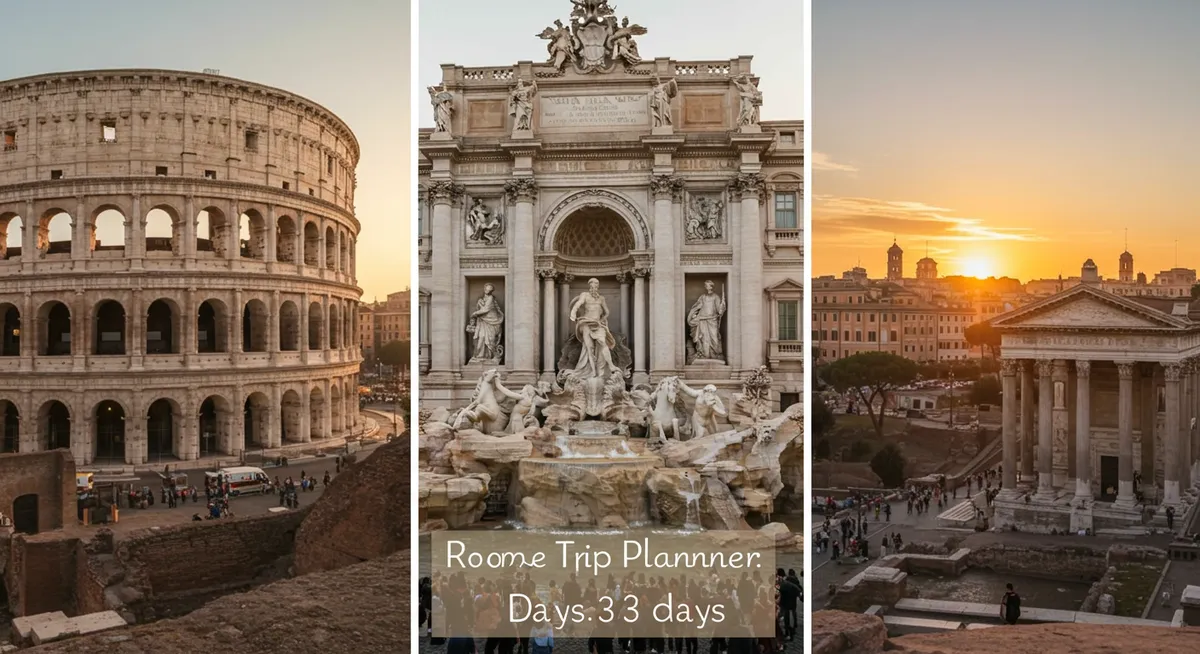
TL;DR: This rome trip planner 3 days guide covers a day-by-day 2026 itinerary through the Eternal City. Day 1 tackles ancient Rome (Colosseum, Forum, Palatine Hill) and the historic center. Day 2 is dedicated to Vatican City and the charming Trastevere neighborhood. Day 3 wraps up with the Borghese Gallery, Spanish Steps, and panoramic sunset views. You will also find 2026-specific updates including the new Trevi Fountain entry fee, budget breakdowns, accommodation tips, and answers to the most common planning questions.
Why 3 Days Is the Sweet Spot for Rome in 2026
Turn this guide into a personal route with our free Rome itinerary planner.
Three days in Rome strikes the right balance between seeing the major landmarks and having time to wander without a schedule. You can cover the Colosseum, Vatican Museums, and the historic piazzas while still leaving room for a long lunch in Trastevere or a gelato detour in Monti. Rushing through Rome in a single day means missing the atmosphere that makes the city special, while a week-long stay is not always practical. This rome trip planner 3 days guide is built for travelers who want to see the essentials without burning out. A well-structured 72-hour plan also helps you book timed-entry tickets strategically, which matters more than ever in 2026 as Rome continues to manage visitor flow at its busiest sites.
Day 1: Ancient Rome and the Historic Center
Start your morning at the Colosseum, booking a timed-entry ticket online at least two weeks in advance. The arena opens at 9:00 AM, and arriving right at opening gives you the best light for photos and the thinnest crowds. Your Colosseum ticket also grants access to the Roman Forum and Palatine Hill, so plan roughly three hours for the entire archaeological zone. Comfortable shoes are non-negotiable here — the terrain is uneven cobblestone and packed earth.
After lunch near the Forum (try a supplì, Rome's signature fried rice ball, at a street-food counter), walk north toward the Pantheon. This 2,000-year-old temple is free to enter, though a €5 reservation fee applies in 2026. From there, stroll to the Trevi Fountain. Note that as of February 2026, the city charges a €2 entry fee to access the fountain viewing area — a new measure to manage the overwhelming crowds. Toss your coin, snap a photo, and continue to Piazza Navona for an evening aperitivo. End the night exploring the Monti neighborhood, Rome's trendiest quarter, packed with wine bars and vintage shops. For a map-based walking route of this day, see our 3-day Rome itinerary with map.
Day 2: Vatican City and Trastevere
Get to Vatican Museums before the 8:00 AM opening. Pre-booked skip-the-line tickets are essential — walk-up queues regularly exceed two hours during peak season. The museum route leads you through the Gallery of Maps, Raphael Rooms, and culminates in the breathtaking Sistine Chapel. Allow at least three hours for the museums alone. A strict dress code applies: shoulders and knees must be covered, regardless of the weather.
After the museums, enter St. Peter's Basilica (free admission) and consider climbing the dome for panoramic views over Rome. The 551 steps are tiring but worth every one. Grab lunch at Pizzarium Bonci near the Vatican — widely considered one of Rome's best pizza-by-the-slice spots.
In the afternoon, cross the Tiber into Trastevere, Rome's most photogenic neighborhood. Wander the ivy-covered alleyways, visit the Basilica di Santa Maria in Trastevere, and settle in for dinner at a traditional trattoria. Order cacio e pepe (pecorino and black pepper pasta) and carbonara — the two dishes Rome does better than anywhere else. Trastevere truly comes alive after dark, so linger for a drink at one of the piazza-side bars. If you are visiting Rome with children, our 2-day Rome itinerary with kids has family-friendly alternatives for this day.
Day 3: Art, Gardens, and Sunset Views
Reserve your morning for the Borghese Gallery, home to masterpieces by Bernini and Caravaggio. Tickets must be booked weeks in advance — the gallery caps visits to two-hour windows and sells out quickly. After your visit, take a relaxing walk through the surrounding Villa Borghese gardens, one of Rome's largest public parks, perfect for a morning stroll or a rowboat ride on the small lake.
Descend to the Spanish Steps and browse the luxury boutiques along Via dei Condotti, or head to Via del Corso for more affordable shopping. For lunch, explore the Testaccio neighborhood, Rome's traditional foodie district, where you can try trapizzino (a pocket of pizza dough stuffed with Roman stew fillings) at the original Trapizzino stand.
As your final evening approaches, make your way to Janiculum Hill for the best free sunset panorama in Rome. The view stretches across the entire city skyline, from St. Peter's dome to the distant Alban Hills. It is a peaceful and memorable way to close out your rome trip planner 3 days adventure. For travelers extending their stay, our 4-day Rome itinerary adds a full day of day trips and hidden gems.
Best Time to Visit Rome in 2026
The ideal months are April, May, September, and October, when temperatures sit between 15 and 25 degrees Celsius, rain is infrequent, and tourist crowds are more manageable than in summer. July and August bring heat above 35 degrees Celsius and peak prices. Winter (December through February) is the cheapest period with the smallest crowds, but shorter daylight hours limit sightseeing time. If you are flexible, mid-September offers the best combination of warm weather, reasonable prices, and thinner queues at major attractions. Check our best time to visit Rome guide for a month-by-month breakdown.
Budget Tips and Costs for 3 Days in Rome
A mid-range 3-day Rome trip in 2026 costs roughly €350 to €550 per person (excluding flights), broken down as follows:
- Accommodation: €80–€150 per night for a double room near Termini Station or in Monti. Staying near Termini gives you direct metro access to both the Colosseum (Line B) and the Vatican area (Line A).
- Food: €30–€50 per day eating at trattorias and street-food spots. Avoid restaurants directly facing major piazzas — prices double for the same dishes.
- Attractions: Colosseum combo ticket (€18), Vatican Museums (€17), Borghese Gallery (€15), Trevi Fountain access (€2), Pantheon (€5). Total: roughly €57.
- Transport: A 72-hour public transport pass costs €18 and covers metro, buses, and trams. Walking handles most of the historic center.
For a deeper cost breakdown, see our Rome trip cost guide and our Rome budget planner.
Where to Stay for a 3-Day Rome Trip
The best neighborhoods for a short visit are Monti (walkable to the Colosseum and Forum, great nightlife), Centro Storico (close to the Pantheon and Navona, but pricier), and the area around Termini Station (budget-friendly, excellent metro connections). Trastevere is charming but slightly less convenient for Day 1 sightseeing. Whichever neighborhood you choose, prioritize proximity to a metro station — it saves significant time on Day 2 when you need to reach the Vatican early. For family travelers, our best kid-friendly hotels in Rome guide narrows down the top options.
Getting Around Rome in 3 Days
Rome's historic center is surprisingly compact. Most of your Day 1 and Day 3 sightseeing can be done entirely on foot. The metro is your best friend for longer hops — Line B connects Termini to the Colosseum in two stops, and Line A reaches the Vatican area (Ottaviano station) in about 15 minutes. Avoid taxis from the airport unless you are arriving very late; the Leonardo Express train runs directly from Fiumicino Airport to Termini in 32 minutes for €14. From Ciampino Airport, a shuttle bus to Termini costs around €6. Ride-hailing apps like FreeNow work in Rome but surge pricing near tourist areas can be steep.
Frequently Asked Questions
Is 3 days enough to see Rome in 2026?
How much does a 3-day trip to Rome cost in 2026?
Do I need to pay to visit the Trevi Fountain in 2026?
What is the best way to get around Rome for 3 days?
Should I buy a Rome Pass or book tickets individually?
What should I pack for 3 days in Rome?
Three days in Rome is enough to fall in love with the Eternal City. This rome trip planner 3 days itinerary for 2026 gives you a day-by-day framework, but leave room for the unplanned moments — a perfect espresso at a counter you stumble upon, a street musician in a quiet piazza, or a sunset that stops you in your tracks. For more planning tools and personalized itineraries, explore our first-time Rome itinerary or browse the full Rome itinerary collection on our site. If you are considering extending your Italian adventure, check our 10-day Italy itinerary for a broader route.