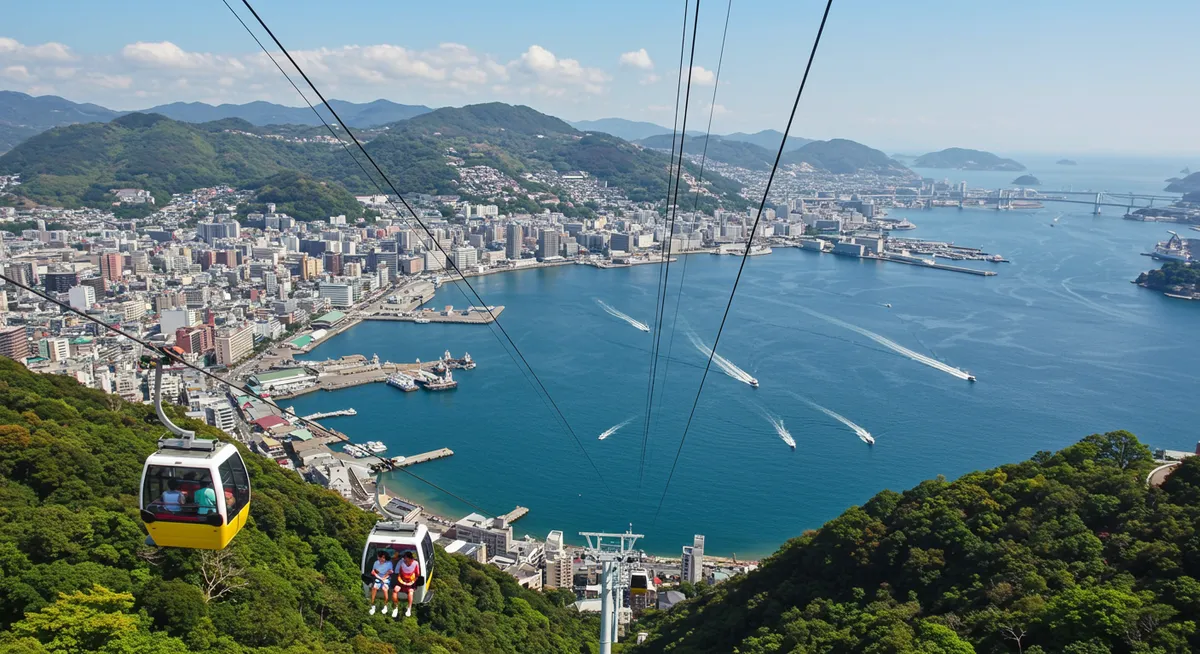
Nagasaki sits on the western edge of Kyushu, surrounded by volcanic peninsulas, remote island chains, and centuries-old ceramics towns — making it one of Japan's finest bases for nagasaki day trips. Whether you want to walk through a UNESCO ghost island, soak in sulfur-scented hot springs, or browse handcrafted porcelain, the destinations below are all reachable within a few hours. This updated 2026 guide covers eight top excursions, complete with transport options, estimated costs, and practical tips to help you plan. For a full city itinerary, pair this guide with our Nagasaki itinerary.
Gunkanjima (Battleship Island) — UNESCO Ghost Island
Turn this guide into a personal route with our free Nagasaki itinerary planner.
Roughly 19 kilometers off the Nagasaki coast, Gunkanjima (formally Hashima Island) is a UNESCO World Heritage Site and one of the most striking day trips you can take anywhere in Japan. This tiny island once housed over 5,000 coal miners in towering concrete apartment blocks — the highest population density the world has ever recorded. After the mine closed in 1974, every resident left, and the island has stood abandoned ever since. Today, licensed boat tours depart from Nagasaki Port and take about 40 minutes each way, with a guided walking tour on the island's reinforced viewing platforms. Tours cost around 4,000–5,000 yen and run year-round, though rough seas can cause cancellations in winter. Book at least a few days in advance during 2026 peak seasons (March–May and October–November), as slots fill quickly. The haunting, crumbling skyline rising from the ocean is genuinely unforgettable.
Unzen Onsen and the Shimabara Peninsula
About two hours southeast of Nagasaki by bus, the Shimabara Peninsula delivers dramatic volcanic scenery and some of Kyushu's best hot springs. Start at Unzen Jigoku (Unzen Hell), where billowing sulfur vents and bubbling mud pools mark the edge of an active volcanic zone. Walking trails loop through the steam fields, and free foot baths line the path. After exploring, head to one of the traditional ryokan or public bathhouses in Unzen Onsen village for a proper soak — the mineral-rich waters are said to ease muscle fatigue and improve skin health. If time allows, continue to Shimabara town to see the reconstructed castle and the atmospheric samurai residence district, where spring-fed streams with colorful koi run alongside the streets. A round-trip bus pass from Nagasaki costs roughly 2,500 yen. For history lovers, this pairs well with our guide to Nagasaki's historical sites.
Hirado — Castle Views and Hidden Christian Heritage
Hirado is a coastal island connected to the mainland by bridge, about 2.5 hours northwest of Nagasaki by car or a combination of train and bus. As one of Japan's earliest international trading ports — predating even Dejima in Nagasaki — Hirado blends Dutch and Portuguese influences with deep-rooted Japanese culture. The hilltop Hirado Castle offers sweeping views over the harbor, while the town below features the unusual sight of a Buddhist temple framed against a Gothic-style church, symbolizing centuries of coexistence. Hirado is also part of the Hidden Christian Sites of the Nagasaki Region, another UNESCO designation, with quiet churches and memorial sites tucked into the hillsides. The fresh seafood here — especially hirame (flounder) and sea bream — rivals anything on the Nagasaki mainland. Renting a car gives you the most flexibility for this trip, though direct buses from Sasebo also run regularly.
Sasebo and the Kujuku Islands
Sasebo, about 1.5 hours north of Nagasaki by JR train, is a port city with a laid-back atmosphere and access to one of Kyushu's most photogenic landscapes. The Kujuku Islands (literally "99 islands," though the actual count is 208) are a sprawling archipelago of pine-covered islets scattered across Sasebo Bay. The best way to appreciate the scenery is from the Tenkaiho and Ishidake observatories, which provide panoramic views over the island-dotted waters — especially stunning at sunset. For a closer look, hop on a sightseeing cruise from Sasebo's Pearl Sea Resort, which weaves between the islands over about 50 minutes. While in Sasebo, do not miss a Sasebo Burger — a local specialty born from the American naval presence, with juicy handmade patties far removed from typical fast food. This makes an excellent half-day addition before or after visiting transit routes between Fukuoka and Nagasaki.
Huis Ten Bosch — A Dutch Theme Park Unlike Any Other
Located just outside Sasebo, Huis Ten Bosch is a sprawling theme park that recreates an entire Dutch town, complete with canals, windmills, brick-paved streets, and seasonal flower displays that change throughout the year. It is easily reachable by JR train from Nagasaki (about 1 hour 40 minutes to the dedicated Huis Ten Bosch Station). The park covers a vast area and offers something for every age group: canal boat rides, VR attractions, a waterpark in summer, and one of Japan's most elaborate winter illumination festivals from November through February. In 2026, the park continues to expand its nighttime programming, with drone light shows and projection-mapped buildings drawing large crowds. A one-day passport costs around 7,400 yen for adults. Families with children should also check our guide to things to do in Nagasaki with kids.
Arita and Hasami — Japan's Porcelain Heartland
The neighboring towns of Arita and Hasami in Saga and Nagasaki Prefectures are the birthplace of Japanese porcelain, with a pottery tradition stretching back over 400 years. Arita is the more famous of the two, home to the Tozan Shrine with its remarkable porcelain torii gate, the Kyushu Ceramic Museum, and dozens of small shops selling everything from affordable everyday tableware to museum-quality pieces. Hasami, just 20 minutes away, has gained popularity with younger visitors for its modern ceramic studios and the Hasami Yakimono Festival held each spring, attracting hundreds of thousands of pottery enthusiasts. Both towns are reachable by JR train from Nagasaki in about 1.5 hours. If you visit during the Golden Week pottery festival (late April to early May 2026), arrive early — the deals are exceptional but crowds build fast. The artistry here complements the cultural depth you will find at Nagasaki's historical sites.
Goto Islands — Remote Beaches and Hidden Churches
For travelers seeking solitude and natural beauty, the Goto Islands are a cluster of remote islands west of Nagasaki accessible by high-speed ferry (about 1.5 hours) or a short flight. The islands feature some of Japan's most pristine beaches — Takahama Beach on Fukue Island consistently ranks among the country's best, with turquoise water that rivals tropical destinations. Beyond the coastline, the Goto Islands hold significant cultural value as home to hidden Christian communities that practiced their faith in secret for over 200 years during Japan's period of isolation. Several of the modest wooden churches here are UNESCO World Heritage–listed. While a full day trip is tight, the early morning ferry and late afternoon return make it doable. A longer overnight stay is ideal if your schedule allows. Check our Nagasaki budget travel tips for ways to keep ferry costs manageable.
Ureshino — Tea Fields and Silky Onsen
About 1.5 hours east of Nagasaki by car or bus, the small town of Ureshino in Saga Prefecture offers two signature experiences: green tea and hot springs. Ureshino is one of Japan's top tea-producing regions, and the rolling hillside tea plantations here are photogenic in every season. Several farms offer tastings and tours, including matcha-grinding workshops. The real draw, though, is the onsen water itself — Ureshino's alkaline springs are nicknamed bihada no yu ("beauty skin water") because the silky-smooth water leaves skin remarkably soft. The town has both upscale ryokan and affordable public baths. Combine this with a stop in Hasami for a full day of Saga Prefecture exploration. For food inspiration on your return, browse our Nagasaki local dishes guide.
Planning Tips for Nagasaki Day Trips in 2026
Getting the most out of your nagasaki day trips comes down to a few practical decisions. The JR Kyushu Rail Pass (3-day or 5-day) is excellent value if you plan two or more train-based excursions — it covers routes to Sasebo, Huis Ten Bosch, Arita, and Shimabara. For destinations like Hirado, Unzen, or the Goto Islands, a rental car or combination of bus and ferry gives you more flexibility. Start early: most destinations are best enjoyed with a morning departure from Nagasaki Station, giving you 6–8 hours before the return journey. Weather matters — typhoon season (August–September) can disrupt ferry services to Gunkanjima and the Goto Islands, while spring (March–May) and autumn (October–November) offer the most reliable conditions and comfortable temperatures. Pack comfortable walking shoes, sun protection, and a small towel if hot springs are on your agenda. For accommodation advice, see our guide on where to stay in Nagasaki.
Frequently Asked Questions
What are the best day trips from Nagasaki in 2026?
How do I get to Gunkanjima from Nagasaki?
Is the JR Kyushu Rail Pass worth it for Nagasaki day trips?
What is the best season for day trips from Nagasaki?
Can I visit Gunkanjima and Huis Ten Bosch in the same day?
How long should I budget for a Nagasaki day trip?
Taking nagasaki day trips transforms a Nagasaki visit into a full Kyushu adventure. From the haunting silhouette of Gunkanjima to the steaming vents of Unzen, the turquoise waters of the Goto Islands, and the centuries-old kilns of Arita, every direction from this historic port city leads somewhere extraordinary. Plan around your interests, grab a rail pass if the numbers work, and leave room for the unexpected detour — Kyushu rewards curiosity. For more trip planning, explore our Nagasaki 3-day itinerary or browse the 5-day version for an extended stay.