TL;DR: Two full days in Rome is enough to visit the Colosseum, Roman Forum, Vatican City, the Pantheon, Trevi Fountain, and Trastevere — provided you book skip-the-line tickets in advance and group sights geographically. Below we lay out a complete day-by-day 2026 itinerary, budget tips, transport advice, and answers to every common question about a 48-hour Roman trip.
Rome deserves a lifetime, but most travelers only get a long weekend. The good news: two full days is genuinely enough to experience the city's greatest hits — ancient ruins, Renaissance masterpieces, cobblestone piazzas, and some of the best pasta on the planet. The trick is planning ahead so you spend your 48 hours marveling at history instead of standing in line. This guide walks you through exactly how to do it in 2026, including new rules, updated ticket prices, and practical neighborhood-by-neighborhood routing.
If you are still deciding how long to stay, our guide on how many days you need in Rome breaks down options from one day to a full week.
Day 1: Ancient Rome and the Historic Center
Turn this guide into a personal route with our free Rome itinerary planner.
Start early at the Colosseum and Roman Forum. These two sites share a combined ticket, and the first entry slot (usually 8:30 AM) has the shortest crowds. Allow roughly three hours to explore the amphitheater floor, the upper tiers, and the sprawling ruins of the Forum and Palatine Hill. Pre-booked timed-entry tickets are essential — walk-up lines regularly exceed two hours in peak season.
From the Forum exit, walk ten minutes north to Piazza Venezia and climb the free terrace of the Vittoriano monument for a panoramic view of the city. Continue on foot through the narrow streets to the Pantheon, which reopened with a small admission fee in 2023 (currently around 5 EUR in 2026). Arrive before noon to watch the famous oculus beam track across the dome's interior.
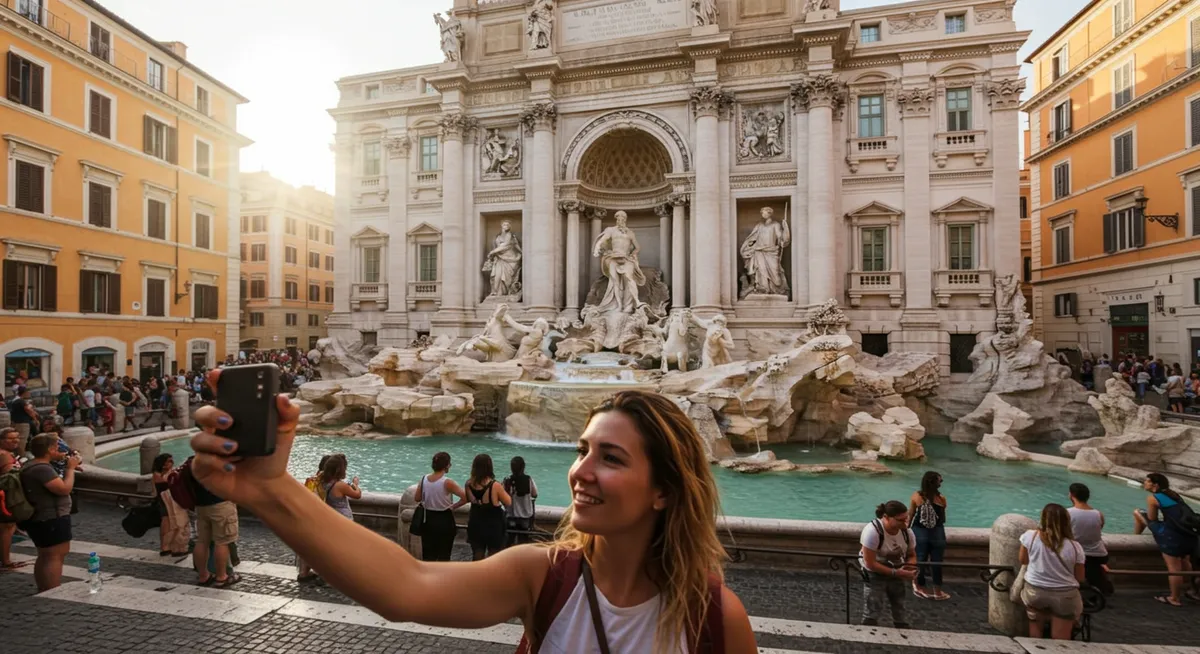
After a lunch break — try cacio e pepe at a trattoria near Piazza Navona — spend the early afternoon exploring the piazza itself and then walk south to Campo de' Fiori, Rome's liveliest open-air market. By late afternoon, head to the Trevi Fountain. Note that starting in 2026, the city charges a 2 EUR access fee to enter the fountain basin area, so keep small change handy. Evening is perfect for a stroll past the Spanish Steps and a gelato on Via del Corso.
For families traveling with children, our 2-day Rome itinerary with kids offers adjusted pacing and kid-friendly dining suggestions.
Day 2: Vatican City, Trastevere, and Hidden Gems
Dedicate the morning to Vatican City. The Vatican Museums and Sistine Chapel require a separate ticket (around 17 EUR online in 2026), and the earliest time slots sell out weeks ahead during spring and summer. Budget at least two and a half hours to move through the galleries, the Raphael Rooms, and the Sistine Chapel at a comfortable pace. Afterward, enter St. Peter's Basilica for free — the security line is much shorter if you exit the Museums directly into the basilica via the internal passage.
If you have energy, climb the 551 steps (or take the elevator partway) to the top of St. Peter's Dome for arguably the best view in Rome. Descend and walk along the Tiber toward Castel Sant'Angelo, the cylindrical fortress that once served as a papal escape route.
Cross the river into Trastevere for lunch. This neighborhood remains one of the most authentic dining districts in Rome — look for places where the menu is handwritten on a chalkboard. After eating, wander the ivy-draped alleys, visit the golden mosaics of Santa Maria in Trastevere, and pick up artisan souvenirs from the small shops lining Via della Lungaretta.
End the day on the Aventine Hill at the Keyhole of the Knights of Malta, where you can peer through a hedge-framed door to see a perfectly aligned view of St. Peter's Dome. It is free, uncrowded, and one of Rome's most photographed secrets.
Planning to extend your Italy trip? See our Rome and Florence in 5 days itinerary for a seamless add-on.
Budget Tips for 2 Days in Rome in 2026
Rome is not the cheapest European capital, but a 48-hour trip can be managed on a moderate budget with a few smart moves:
- Roma Pass (48-hour version): Costs around 33 EUR and includes free entry to one museum or archaeological site, discounts on others, and unlimited public transport. It pays for itself if you use it for the Colosseum combo ticket and take at least two metro rides.
- Free attractions: The Pantheon exterior courtyard, all public piazzas, St. Peter's Basilica (no dome climb), and many churches including Sant'Ignazio and Santa Maria Maggiore cost nothing to enter.
- Eating affordably: Avoid restaurants directly facing major landmarks — prices jump 30-50 percent. Walk one or two streets away for the same quality at local prices. A supplì (fried rice ball) from a takeaway counter makes a perfect 2-3 EUR snack.
- Water: Rome has over 2,500 free drinking fountains (nasoni) throughout the city. Carry a refillable bottle instead of buying plastic.
For a deeper breakdown of spending, check our guide on how much a trip to Rome costs for two people.
Getting Around Rome in 48 Hours
Rome's historic center is surprisingly compact. Most of Day 1's sights are within a 25-minute walk of each other. For Day 2, the metro Line A connects Termini station to Ottaviano-San Pietro (Vatican) in about 15 minutes. Here are your main transport options:
- Walking: The best way to experience Rome. Expect to cover 15,000-20,000 steps per day. Wear broken-in shoes — cobblestones are unforgiving.
- Metro: Two main lines (A and B) intersect at Termini. A single ride costs 1.50 EUR; a 48-hour pass costs 12.50 EUR.
- Buses: Useful for reaching Trastevere from the Vatican (bus 23 or tram 8). Download the Moovit app for real-time arrivals.
- Taxis: Licensed white cabs use meters. Fixed fares apply from Fiumicino airport (48 EUR to city center) and Ciampino (31 EUR). Ride-hailing apps like FreeNow also work in Rome.
Our full how to get around Rome guide covers every option in detail.
Where to Stay for a 2-Day Rome Trip
Location matters enormously when you only have 48 hours. The best neighborhoods for a short stay are:
- Centro Storico (Navona / Pantheon area): Walking distance to nearly everything on Day 1. Mid-range hotels average 150-220 EUR per night in 2026.
- Monti: Rome's trendiest neighborhood, steps from the Colosseum and Termini station. Great for evening aperitivo bars.
- Prati: Quiet residential area next to the Vatican. Slightly lower hotel prices and excellent restaurants favored by locals.
- Trastevere: Charming but slightly farther from the ancient ruins. Best if nightlife and food are top priorities.
Read our detailed where to stay in Rome for 2 days guide for hotel recommendations by budget level.
What You Will Realistically Miss in 2 Days
Honesty is important: two full days means trade-offs. You will likely not have time for the Borghese Gallery (which requires a separate reservation and at least two hours), a day trip to Pompeii or Tivoli, or deep exploration of neighborhoods like Testaccio and EUR. You will also move quickly through the Vatican Museums rather than lingering in every gallery. If any of these are priorities, consider extending to three days — our is 3 days in Rome enough guide explains what extra time unlocks.
That said, two days gives you a thorough introduction to the city. Many travelers find it motivating — you leave knowing exactly what to see on your return trip.
Insider Tips for Maximizing 48 Hours in Rome in 2026
- Book everything 30+ days out: Colosseum, Vatican Museums, and Borghese Gallery slots sell out quickly. Third-party resellers charge 2-3x face value, so always buy from official sites.
- Go early or late: Major monuments are least crowded at opening time and in the final entry hour. Midday (11 AM - 2 PM) is peak.
- Dress code: Shoulders and knees must be covered to enter St. Peter's Basilica and most churches. Carry a light scarf in your daypack.
- Avoid Mondays: Many state museums close on Mondays. The Vatican Museums close on Sundays (except the last Sunday of each month, when entry is free but extremely crowded).
- Stay hydrated: Roman summers regularly exceed 35 degrees Celsius. The nasoni fountains dispense cold, clean water — use them.
- Pickpocket awareness: The metro and crowded piazzas are hotspots. Use a crossbody bag and keep valuables in a front pocket.
First-time visitors will also benefit from our Rome travel tips for first-timers and our curated best things to see in Rome in 2 days list.
Frequently Asked Questions
Is 2 full days enough in Rome for first-time visitors?
What is the best 2-day itinerary for Rome in 2026?
How much does a 2-day trip to Rome cost in 2026?
Should I buy a Roma Pass for a 2-day visit?
Is it worth visiting the Vatican if I only have 2 days in Rome?
What should I skip if I only have 48 hours in Rome?
What is the new Trevi Fountain fee in 2026?
Two full days in Rome will not show you everything — but that is part of the city's charm. With the right preparation, advance bookings, and a willingness to walk, you can cover the ancient ruins, Vatican treasures, and authentic neighborhood life that make Rome unforgettable. Use our complete 2-day Rome itinerary to plan every hour, or start building a custom trip at ItiMaker.com.