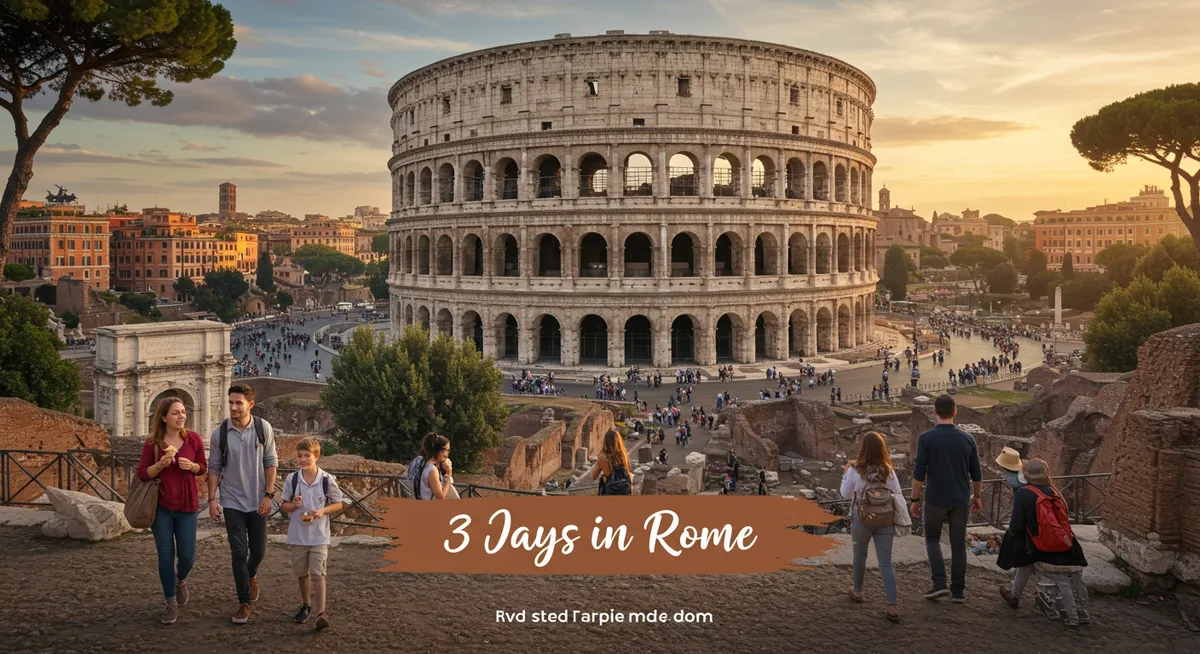
TL;DR: Three days in Rome is enough to visit the Colosseum, Vatican Museums, Trastevere, and Rome's Baroque highlights — provided you book skip-the-line tickets, group nearby sights, and start each morning early. Below you will find a realistic day-by-day breakdown, budget tips for 2026, and answers to the most common questions first-timers ask.
Rome has been welcoming visitors for nearly three millennia, so there is always more to discover. Still, the question "is 3 days in Rome enough?" comes up constantly in travel forums, Reddit threads, and group chats — and for good reason. Most people have limited vacation days and want to know whether a long weekend in the Eternal City is actually worthwhile. The short answer: yes. With a focused plan you can experience Ancient Rome, Vatican City, the Baroque center, and even a few off-the-beaten-path neighborhoods within 72 hours. This guide, updated for 2026, walks you through exactly how to do it.
Why 3 Days Works for Most Visitors in 2026
Turn this guide into a personal route with our free Rome itinerary planner.
Rome's must-see landmarks sit within a surprisingly compact area. The Colosseum, Roman Forum, Pantheon, Trevi Fountain, Spanish Steps, and Vatican City can all be reached on foot or with a short metro ride. In 2026, the city has made travel even smoother with expanded pedestrian zones in the historic center and extended evening hours at several major museums. Three days lets you cover the big-ticket sights without running on fumes — as long as you structure each day around a geographic cluster rather than zigzagging across town.
That said, three days is a minimum. If you can stretch to four or five, you will have room for spontaneous detours and day trips. Curious about the right length of stay? Our guide on how many days in Rome is enough breaks down the trade-offs in detail.
Day-by-Day Itinerary for 3 Days in Rome
Day 1 — Ancient Rome
Start early at the Colosseum (book a timed-entry ticket months in advance — 2026 peak-season slots sell out fast). From there, walk directly into the Roman Forum and up to Palatine Hill for panoramic views. Budget about four hours for this complex. After lunch near Monti — one of Rome's trendiest neighborhoods — head to the Pantheon (free entry, though a reservation is now required). End the day at Piazza Navona for a gelato and people-watching as the sun sets.
Day 2 — Vatican City and Trastevere
Arrive at the Vatican Museums right at opening (8:00 a.m.) to see the Sistine Chapel before the midday rush. Allow roughly three hours. Then tour St. Peter's Basilica and, if energy allows, climb the dome for the best skyline view in Rome. In the afternoon, cross the Tiber to Trastevere — cobblestoned streets, ivy-draped facades, and some of the city's best trattorias. This neighborhood is perfect for a relaxed evening wander.
Day 3 — Baroque Rome and Hidden Gems
Begin at the Spanish Steps, then stroll down Via del Corso to the Trevi Fountain (visit before 8 a.m. for a crowd-free experience). Swing by Piazza Venezia and the Vittoriano for another rooftop panorama. Use the afternoon for whichever interest calls you: the Borghese Gallery (reservations mandatory), the Appian Way by bike, or the street art of Ostiense. If you still have energy, free things to do in Rome abound — from church-hopping to sunset at Pincio Terrace.
Budget Tips for a 3-Day Rome Trip in 2026
Rome does not have to be expensive. Here are practical ways to keep costs down in 2026:
- Roma Pass or Omnia Card — covers public transport and discounted or free entry to top attractions. Crunch the numbers for the 72-hour pass before buying; it pays for itself if you visit at least two paid sites plus use the metro.
- Eat where locals eat — trattorias a block or two off major piazzas charge noticeably less. Look for handwritten menus and a coperto (cover charge) under 3 EUR.
- Free walking tours — tip-based tours depart daily from Piazza di Spagna and the Colosseum area. They are a great way to orient yourself on day one.
- Public transport — a 72-hour BIT ticket (about 18 EUR in 2026) gives unlimited metro and bus access. Taxis from Fiumicino airport to the center run a flat 50 EUR; Ciampino is cheaper with the SIT bus shuttle.
- Water — Rome's nasoni (public drinking fountains) are everywhere. Carry a refillable bottle and skip bottled water entirely.
For a deeper look at costs, see our breakdown of a 4-day trip to Rome cost and our Rome budget travel tips.
How to Beat the Crowds
Crowd management is the single biggest factor in whether three days feels rushed or relaxed. In 2026, Rome continues to attract record visitor numbers, so these strategies matter more than ever:
- Book skip-the-line tickets for the Colosseum, Vatican Museums, and Borghese Gallery. Walk-up queues routinely exceed 90 minutes in spring and summer.
- Start early or go late — most tour groups arrive between 10 a.m. and 2 p.m. Being at the door when a site opens, or visiting in the last entry slot, dramatically improves the experience.
- Visit mid-week — Tuesdays through Thursdays are the quietest days at nearly every attraction.
- Use the "second tier" entrances — the Vatican has a lesser-known entrance via the Vatican Gardens tour; the Colosseum underground tour enters through a side gate with shorter waits.
When Is the Best Time to Visit Rome for 3 Days?
Spring (April–May) and autumn (September–October) offer the best combination of mild weather, manageable crowds, and long daylight hours. Summer is hot — expect 35 °C days in July and August — but attractions extend their evening hours. Winter (November–February) is the cheapest season, with fewer tourists and shorter queues, though some outdoor sites close earlier. For a month-by-month weather breakdown and packing advice, check out our guide on the best time to visit Rome.
Extending Your Trip: Day Trips and Beyond
If your schedule allows even one extra day, Rome makes an excellent base for day trips. Florence is under 90 minutes by high-speed train, and Naples is about the same. Closer options include Tivoli (Villa d'Este and Hadrian's Villa), the Castelli Romani hill towns, and a quick escape into Tuscany. Even with only three core days in Rome, tacking on a fourth day-trip day makes for a deeply satisfying Italian itinerary.
Frequently Asked Questions
Is 3 days in Rome enough for a first-time visitor?
Can I see the Colosseum and Vatican in the same day?
How much does a 3-day trip to Rome cost in 2026?
What is the best way to get around Rome in 3 days?
Is Rome safe for solo travelers?
Should I get the Roma Pass for 3 days?
Final Verdict: Is 3 Days in Rome Enough?
Three days in Rome is enough to fall in love with the city. You will not exhaust everything it has to offer — nobody does, even after a dozen visits — but you will walk away with vivid memories of ancient ruins, world-class art, unforgettable food, and golden-hour light spilling across baroque piazzas. Plan ahead, stay flexible on the ground, and you will be amazed at how much 72 hours can hold.
Ready to start building your itinerary? Use our free trip planner at ItiMaker.com to organize your days, or explore our best places to see in Rome in 3 days for more inspiration.
Written by the ItiMaker Team — travel planners helping you build smarter itineraries since 2023. Learn more about us.