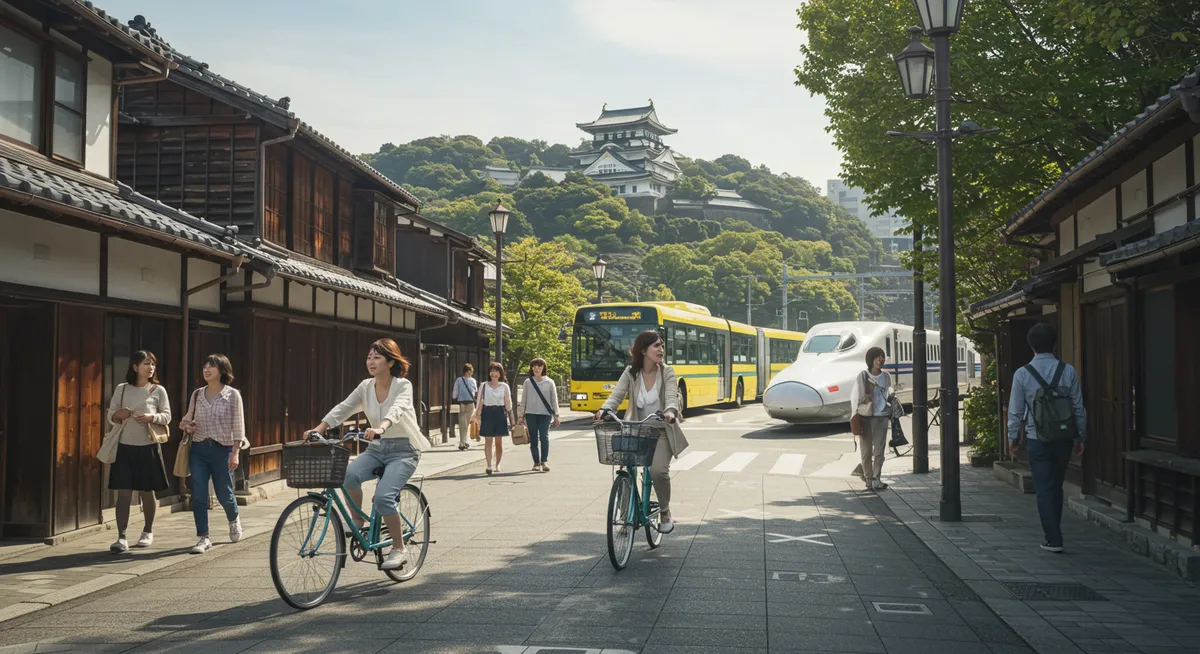
TL;DR: Fukuoka has one of the most traveler-friendly transit systems in Japan. The three-line subway handles most tourist routes in minutes, Nishitetsu buses fill the gaps, and IC cards (Hayakaken, Suica, Sugoca) work everywhere. Grab a Fukuoka Tourist City Pass for unlimited day rides, use contactless credit cards on the subway since 2025, and consider ferries for island trips. This guide breaks down every option so you can move around Fukuoka confidently in 2026.
Fukuoka Subway: The Fastest Way Around the City
Turn this guide into a personal route with our free Fukuoka itinerary planner.
The Fukuoka City Subway is the backbone of urban transit and the single best way to get around Fukuoka for most visitors. Three lines cover the key districts:
- Kuko (Airport) Line — connects Fukuoka Airport to Hakata Station (5 minutes) and Tenjin (11 minutes), running every 3 to 6 minutes during rush hour and every 6 to 8 minutes midday.
- Hakozaki Line — links Nakasu-Kawabata to the eastern suburbs and the Fukuoka PayPay Dome area, useful for sports events and the waterfront.
- Nanakuma Line — runs from Tenjin-Minami southward through residential neighborhoods, handy for reaching Ropponmatsu and the zoo district.
Fares start at 210 yen per ride in 2026. Trains run from approximately 5:30 AM to midnight, with delays being exceptionally rare. A major 2025 upgrade introduced contactless credit card tap-to-pay (Visa, JCB, American Express, Diners Club) at all 36 stations, so you no longer need a physical IC card if you carry a compatible card. Still, a rechargeable IC card remains the most economical choice for frequent riders. If you are planning a full Fukuoka itinerary, building it around subway stations will save you the most time.
Nishitetsu Buses: Reaching Every Neighborhood
Where the subway leaves gaps, the Nishitetsu bus network fills them. With hundreds of routes crisscrossing the city, buses are the way to reach Ohori Park, Momochi Seaside Park, Fukuoka Tower, and residential pockets that sit between subway lines. Key tips for riding buses in Fukuoka:
- Payment: tap your IC card when boarding (rear door) and when alighting (front door). Exact cash is accepted; change machines are onboard.
- Route displays: digital screens at the front show the next stop in Japanese and English. The 100-yen loop bus circling central Hakata and Tenjin is especially useful for sightseeing on a budget.
- Timing: buses run from around 5:00 AM to 11:00 PM. During rush hour, expect some delays on major roads, but dedicated bus lanes keep things moving on trunk routes.
For visitors exploring things to do in Fukuoka beyond the subway map, the bus system is indispensable. Download the Nishitetsu Bus app (available in English) for real-time arrival tracking and route planning.
Nishitetsu Trains: Day Trips and Regional Travel
Nishitetsu operates a private railway network separate from the city subway, and it is essential for reaching destinations outside the urban core. The most important line for tourists is the Nishitetsu Tenjin Omuta Line, which departs from Nishitetsu Fukuoka (Tenjin) Station and runs south through Kurume all the way to Omuta. Key stops include:
- Dazaifu — transfer at Futsukaichi to the Dazaifu Line for Tenmangu Shrine, the Kyushu National Museum, and atmospheric strolling streets (about 40 minutes from Tenjin).
- Yanagawa — famous for canal boat rides, reachable in about 50 minutes by limited express.
- Kurume — a ramen capital and gateway to the Chikugo region.
IC cards work on all Nishitetsu trains. If you are building a Fukuoka 3-day itinerary or a longer 5-day Fukuoka itinerary, set aside at least one day for a Nishitetsu train excursion — the best Fukuoka day trips all start from this network.
JR Kyushu Trains: Shinkansen and Beyond
JR Kyushu operates out of Hakata Station, the city's main rail hub. This is where you board the Sanyo/Kyushu Shinkansen for high-speed connections to Hiroshima, Osaka, and Tokyo, as well as regional limited express trains heading to:
- Beppu and Yufuin — the Sonic and Yufuin no Mori limited expresses reach these hot-spring towns in about 2 hours. See our guide on how to get to Beppu from Fukuoka.
- Nagasaki — the Nishi Kyushu Shinkansen (Kamome) now connects Hakata to Nagasaki via Takeo-Onsen in roughly 1 hour 20 minutes. Read more in our Fukuoka to Nagasaki transport guide.
- Kumamoto — just 33 minutes by Kyushu Shinkansen, making it an easy half-day trip.
If you plan multiple intercity journeys, a JR Kyushu Rail Pass (3-day or 5-day) pays for itself quickly. For understanding bullet train travel times across Japan, Hakata Station is one of the most strategically useful starting points on Kyushu.
Taxis and Ride-Hailing: Door-to-Door Convenience
Taxis are plentiful across Fukuoka and easy to spot by their illuminated roof signs. The base fare in 2026 is approximately 590 yen for the first 1.5 km, with increments of roughly 70 yen per 260 meters. Practical notes:
- Payment: most taxis accept IC cards, credit cards, and cash. Some also work with PayPay and other QR-code payment apps.
- Late night: a surcharge of around 20 percent applies between 10:00 PM and 5:00 AM. After a night exploring the Fukuoka nightlife scene, a taxi from Nakasu to Hakata Station typically costs under 1,000 yen.
- Ride-hailing: Uber and DiDi operate in Fukuoka as of 2026, though availability is thinner than in Tokyo. The GO Taxi app (Japan's largest) offers the widest coverage and English support.
Taxis are the best fallback when trains stop running or when you are carrying heavy luggage to your hotel. Check our guide to where to stay in Fukuoka for accommodation choices near major transit hubs.
Ferries: Island Escapes from the City
Fukuoka offers surprisingly easy ferry access to nearby islands and coastal attractions, a mode of transport many visitors overlook:
- Uminonakamichi and Shikanoshima — ferries depart from Bayside Place Hakata and Marizon (Seaside Momochi), with crossings taking about 15 minutes. Shikanoshima is known for its beaches, seafood, and the historic Kin-in Park.
- Nokonoshima Island — a 10-minute ferry from Meinohama Port leads to Nokonoshima Island Park, famous for seasonal flower fields and panoramic bay views.
- Busan, South Korea — the JR Beetle hydrofoil and Camellia Line offer overnight and high-speed ferry connections from Hakata Port to Busan, opening the door to an international side trip.
Ferries add variety to your trip and provide a refreshing break from trains and buses, especially during the warmer months from April through October.
Walking and Cycling: The Local Way to Explore
Fukuoka's flat terrain and compact layout make it one of the most walkable cities in Japan. The stretch between Hakata Station, Canal City, Nakasu, and Tenjin is entirely manageable on foot in under 30 minutes. For cycling:
- Charichari — Fukuoka's dock-less bike-share system has stations throughout the city. Unlock a bike via the app, ride at your pace, and return it to any station. Rates start at 130 yen per 30 minutes for standard bikes and 200 yen for e-bikes.
- Hotel bike rentals — many accommodations near Ohori Park and the waterfront offer complimentary or low-cost bicycles for guests.
- Recommended routes — the Ohori Park loop, the Naka River promenade, and the Momochi seaside path are flat, scenic, and largely car-free.
Walking is also the best way to discover Fukuoka's legendary street food. Many of the city's famous yatai stalls and hidden restaurants are tucked into side streets you would never find from a train window — browse our best food in Fukuoka guide for top picks. And for retail therapy on foot, see our Fukuoka shopping guide.
IC Cards and Transit Passes: Saving Money in 2026
Choosing the right payment method can meaningfully reduce your transport costs. Here is what to know:
- IC Cards: Fukuoka's local card is Hayakaken (issued by Fukuoka City Subway), but Sugoca (JR Kyushu), Nimoca (Nishitetsu), and nationwide cards like Suica, Pasmo, and Icoca all work interchangeably on subways, buses, and trains throughout the region. Cards are available at station vending machines for a 500-yen refundable deposit.
- Fukuoka Tourist City Pass: available as a 1-day pass (1,800 yen for the city area or 2,800 yen including Dazaifu), it grants unlimited rides on city subways, Nishitetsu buses, and JR local trains within the Fukuoka zone. Sold at tourist information centers with passport verification.
- FUKUOKA 1-Day Pass: a more budget option at 680 yen covering only the subway network — ideal if you plan to stay within the central corridor.
- Credit card tap-to-pay: as of 2025, all 36 subway stations accept contactless Visa, JCB, American Express, and Diners Club cards directly at the gate, no IC card needed.
For most visitors spending 2 to 3 days in the city, a combination of the Tourist City Pass for one heavy-travel day and an IC card for the rest strikes the best balance between convenience and savings.
Practical Tips for Getting Around Fukuoka
- Airport proximity: Fukuoka Airport is just two subway stops from Hakata Station, making it one of the most conveniently located airports in Asia. Allow 30 minutes door-to-door from Tenjin. Learn more about planning your arrival in our best time to visit Fukuoka guide.
- Google Maps reliability: Google Maps provides accurate, real-time transit directions in Fukuoka, including subway, bus, and JR schedules. It is the single most useful navigation tool for visitors.
- Rush hour: weekday mornings (7:30 to 9:00 AM) and evenings (5:30 to 7:30 PM) see crowded trains, especially on the Kuko Line between Hakata and Tenjin. Travel outside these windows when possible.
- Luggage forwarding: if you are arriving with large suitcases, use a takkyubin luggage delivery service (available at Hakata Station and the airport) to send bags directly to your hotel while you explore unencumbered.
- Accessibility: all subway stations have elevators, and most buses are low-floor. Wheelchair-accessible taxis can be booked through the GO app.
- Last trains: subways stop around midnight and resume at 5:30 AM. Plan your Fukuoka nightlife outings accordingly, or budget for a taxi home.
Frequently Asked Questions
What is the best way to get around Fukuoka as a tourist in 2026?
Can I use Suica or Pasmo in Fukuoka?
How do I get from Fukuoka Airport to the city center?
Is the Fukuoka Tourist City Pass worth buying?
Is Fukuoka walkable?
Are taxis expensive in Fukuoka?
Can I rent a bicycle in Fukuoka?
Getting around Fukuoka in 2026 is straightforward, affordable, and genuinely enjoyable. The subway handles the heavy lifting, buses extend your reach, Nishitetsu and JR trains open up world-class day trips, and the flat, walkable streets invite exploration at a slower pace. Add in ferry connections to nearby islands, a growing bike-share network, and new contactless payment options at every gate, and Fukuoka stands out as one of the easiest Japanese cities to navigate. Pick up an IC card at the airport, plan your routes with Google Maps, and spend your energy on what matters — the food, the culture, and the experiences that make this city unforgettable.