Fukuoka 3 Day Itinerary: The Perfect 2026 Trip Plan
Plan your perfect Fukuoka 3 day itinerary for 2026. Day-by-day guide covering Hakata, Dazaifu, Momochi, yatai food stalls, budget tips, and hidden gems in Kyushu's vibrant capital.
ItiMaker Team10 min read
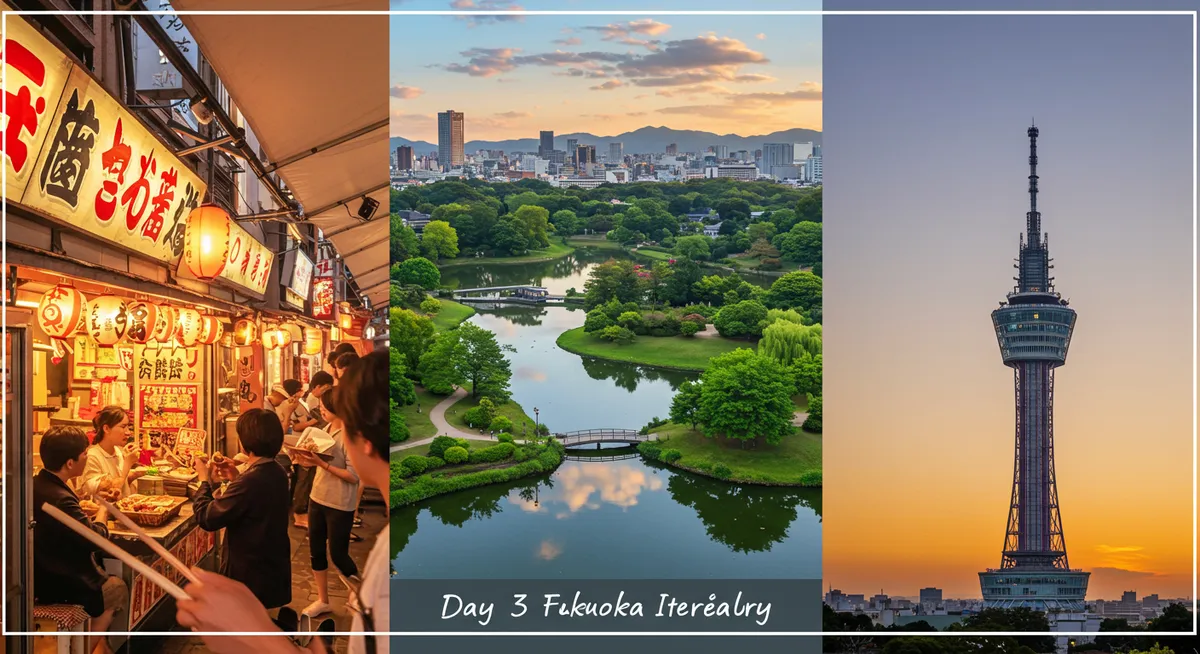
<p><strong>TL;DR:</strong> Three days in Fukuoka gives you the ideal mix of temples, street food, seaside views, and a day trip to Dazaifu. Day 1 covers Hakata's shrines and yatai stalls, Day 2 takes you to Dazaifu Tenmangu and Nanzo-in Temple, and Day 3 explores Momochi Seaside Park, Fukuoka Tower, and Tenjin shopping. Budget around ¥8,000–12,000 per day excluding accommodation.</p>
<h1>Fukuoka 3 Day Itinerary: Your Complete 2026 Guide</h1>
<aside class="affiliate-slot" data-nosnippet
data-affiliate-unit="experience_finder"
data-affiliate-provider="getyourguide"
data-affiliate-widget="getyourguide_city"
data-affiliate-format="widget"
data-affiliate-placement="primary"
data-affiliate-campaign="itimaker-com-unit-gcity-fukuoka-3-day-itinerary"
data-affiliate-city="Fukuoka"
data-affiliate-location-id="32581"
style="min-height:400px">
<span class="affiliate-badge">Sponsored</span>
<div class="affiliate-skeleton" aria-hidden="true"></div>
<p class="affiliate-unit__loading" role="status">Loading live activities…</p>
<div class="affiliate-inner"><div
data-gyg-href="https://widget.getyourguide.com/default/city.frame"
data-gyg-location-id="32581"
data-gyg-locale-code="en-US"
data-gyg-widget="city"
data-gyg-partner-id="26CH4CT"
data-gyg-campaign="itimaker-com-unit-gcity-fukuoka-3-day-itinerary"
data-gyg-cmp="itimaker-com-unit-gcity-fukuoka-3-day-itinerary"
loading="lazy"></div></div>
</aside>
<p>If you're burnt out on the Tokyo–Kyoto–Osaka tourist circuit and craving something less crowded, Fukuoka is exactly where you should head in 2026. As the largest city on Kyushu, Japan's southernmost main island, Fukuoka delivers world-class ramen, ancient shrines, a walkable waterfront, and a food stall culture you won't find anywhere else in the country. With Fukuoka Airport just 10 minutes from Hakata Station by subway, you'll spend less time in transit and more time exploring. This <strong>Fukuoka 3 day itinerary</strong> breaks down exactly how to make the most of 72 hours in this underrated gem.</p>
<h2>Day 1: Hakata Shrines, Canal City, and Yatai Food Stalls</h2>
<p>Start your <strong>Fukuoka 3 day itinerary</strong> in Hakata, the city's historical and transport hub. Pick up an IC card at Hakata Station — Sugoca, Nimoca, or Hayakaken all work interchangeably on every train, subway, and bus in the region. If you already carry a Suica or ICOCA from another Japanese city, those work here too.</p>
<aside class="affiliate-slot" data-nosnippet
data-affiliate-unit="experience_finder"
data-affiliate-provider="viator"
data-affiliate-widget="viator_widget"
data-affiliate-format="widget"
data-affiliate-placement="secondary"
data-affiliate-campaign="itimaker-com-unit-vauto-fukuoka-3-day-itinerary"
data-affiliate-city="Fukuoka"
data-affiliate-location-id=""
style="min-height:600px">
<span class="affiliate-badge">Sponsored</span>
<div class="affiliate-skeleton" aria-hidden="true"></div>
<p class="affiliate-unit__loading" role="status">Loading live activities…</p>
<div class="affiliate-inner"><div
data-vi-partner-id="P00271059"
data-vi-widget-ref="W-d5dc59c4-3a04-417e-8a46-7be440461eba"
data-vi-search-term="Fukuoka"
data-vi-campaign="itimaker-com-unit-vauto-fukuoka-3-day-itinerary"
data-campaign="itimaker-com-unit-vauto-fukuoka-3-day-itinerary"></div></div>
</aside>
<p>Your first stop is <strong>Kushida Shrine</strong>, one of Fukuoka's oldest and most important Shinto shrines, said to have watched over the city since 757 AD. It's the spiritual home of the Hakata Gion Yamakasa festival, and even outside festival season you can see one of the massive festival floats displayed on the grounds. From Kushida, walk 10 minutes south to <strong>Tocho-ji Temple</strong>, home to the largest seated wooden Buddha statue in Japan at 10.8 meters tall. The dimly lit hall creates a genuinely awe-inspiring atmosphere that rivals anything you'll find in Nara or Kamakura.</p>
<p>After lunch — try Hakata-style udon at Shin Shin near the station — head to <strong>Canal City Hakata</strong>, a massive entertainment complex with over 250 shops, restaurants, a theater, and a canal running through the center with scheduled fountain shows. It's a good place to pick up souvenirs or simply enjoy the architecture.</p>
<p>As evening falls, make your way to the <strong>yatai food stalls</strong> along the Nakasu River and around Tenjin. These open-air stalls are a Fukuoka institution — roughly 100 of them line the city's waterways each night, serving <a href="https://www.itimaker.com/blog/best-food-in-fukuoka">Fukuoka's best food</a> including tonkotsu ramen, gyoza, yakitori, and oden. Arrive by 7 PM to grab a seat, and keep cash handy — most yatai don't accept credit cards. For a detailed look at Fukuoka after dark, check our <a href="https://www.itimaker.com/blog/fukuoka-nightlife-guide">Fukuoka nightlife guide</a>.</p>
<h2>Day 2: Dazaifu Tenmangu and Nanzo-in Temple Day Trip</h2>
<p>Day two takes you outside the city center for a half-day trip that ranks among Kyushu's finest cultural experiences. From Hakata Station, take the Nishitetsu train to Dazaifu — the ride takes about 40 minutes and costs around ¥410 each way. Consider the Fukuoka City Tourist Pass (¥2,800 for the Fukuoka + Dazaifu version) if you plan on using public transport heavily today.</p>
<aside class="affiliate-slot" data-nosnippet
data-affiliate-unit="experience_finder"
data-affiliate-provider="getyourguide"
data-affiliate-widget="getyourguide_activities"
data-affiliate-format="widget"
data-affiliate-placement="tertiary"
data-affiliate-campaign="itimaker-com-unit-gact-fukuoka-3-day-itinerary"
data-affiliate-city="Fukuoka"
data-affiliate-location-id="32581"
style="min-height:420px">
<span class="affiliate-badge">Sponsored</span>
<div class="affiliate-skeleton" aria-hidden="true"></div>
<p class="affiliate-unit__loading" role="status">Loading live activities…</p>
<div class="affiliate-inner"><div
data-gyg-href="https://widget.getyourguide.com/default/activities.frame"
data-gyg-location-id="32581"
data-gyg-locale-code="en-US"
data-gyg-widget="activities"
data-gyg-partner-id="26CH4CT"
data-gyg-campaign="itimaker-com-unit-gact-fukuoka-3-day-itinerary"
data-gyg-cmp="itimaker-com-unit-gact-fukuoka-3-day-itinerary" data-gyg-number-of-items="4"
loading="lazy"></div></div>
</aside>
<p><strong>Dazaifu Tenmangu Shrine</strong> is one of the most significant Shinto shrines in all of Japan, dedicated to Sugawara no Michizane, the deity of learning. Students from across the country come here to pray before exams, and the grounds are stunning year-round — plum blossoms in February and March, irises in June, and autumn foliage from late November. Arrive early (before 10 AM) to experience the grounds in relative peace. The approach to the shrine is lined with mochi shops selling umegae mochi, a grilled rice cake with red bean paste that's been made the same way for centuries.</p>
<p>Before returning to the city, make a detour to <strong>Nanzo-in Temple</strong>, just one stop away on the JR Sasaguri Line. This hidden gem houses the largest bronze reclining Buddha statue in the world, stretching 41 meters long and weighing 300 tonnes. Beyond the Buddha, the forested grounds contain 500 stone statues of Buddha's disciples, an Inari fox shrine, and a Shichifukujin shrine dedicated to the seven gods of fortune. Despite its scale, Nanzo-in remains refreshingly uncrowded — a genuine off-the-beaten-path find.</p>
<p>Return to Fukuoka by mid-afternoon and spend a relaxed few hours at <strong>Ohori Park</strong>, the city's largest green space built around a serene lake. Rent a swan boat, visit the adjacent Japanese Garden (¥250 entry), or simply walk the 2-kilometer lakeside path. The nearby <strong>Fukuoka Castle Ruins</strong> (Maizuru Park) offer panoramic views of the city skyline and are particularly beautiful during cherry blossom season in late March and early April. For more on the best season to plan your visit, read our <a href="https://www.itimaker.com/blog/best-time-to-visit-fukuoka">best time to visit Fukuoka</a> guide.</p>
<h2>Day 3: Momochi Seaside, Fukuoka Tower, and Tenjin Shopping</h2>
<p>Your final day in Fukuoka balances seaside relaxation with urban exploration. Start at <strong>Momochi Seaside Park</strong>, an artificial beach at the foot of Fukuoka Tower that offers surprisingly pleasant sandy stretches with views across Hakata Bay. In warmer months (July–September), you can swim here, but the area is enjoyable year-round for a morning walk.</p>
<p>Ascend <strong>Fukuoka Tower</strong>, Japan's tallest seaside tower at 234 meters. The observation deck at 123 meters provides sweeping views of the city, bay, and on clear days, the mountains of Kyushu's interior. Entry costs ¥800 for adults. Adjacent to the tower, <strong>TeamLab Forest</strong> on the 5th floor of Boss E ZO offers an immersive digital art experience with interactive rooms, color-shifting spheres, and a digital forest of projected animals — well worth an hour if you enjoy contemporary art installations.</p>
<p>After lunch, head to <strong>Tenjin</strong>, Fukuoka's premier shopping and entertainment district. Department stores like Iwataya and Mitsukoshi anchor the area, while the underground <strong>Tenjin Chikagai</strong> (Tenjin Underground City) stretches for nearly 600 meters with over 150 shops and restaurants. For unique finds, explore the back streets around Daimyo, a hip neighborhood packed with independent boutiques, vintage shops, and specialty coffee roasters. More shopping recommendations are in our <a href="https://www.itimaker.com/blog/shopping-in-fukuoka">shopping in Fukuoka</a> guide.</p>
<p>End your <strong>Fukuoka 3 day itinerary</strong> with a final bowl of Hakata ramen at one of the city's legendary shops — Ichiran (famous for its solo booth dining system), Ippudo (the internationally renowned chain that started right here), or Shin Shin for a lighter, more delicate broth. For a comprehensive overview of getting between all these spots, see our <a href="https://www.itimaker.com/blog/how-to-get-around-fukuoka">how to get around Fukuoka</a> guide.</p>
<h2>Budget Breakdown and Practical Tips for 2026</h2>
<p>Fukuoka is one of Japan's most affordable major cities, making it ideal for travelers watching their yen. Here's a realistic daily budget breakdown for a mid-range traveler in 2026:</p>
<ul>
<li><strong>Accommodation:</strong> ¥5,000–15,000/night (hostels to mid-range hotels in Hakata — see our <a href="https://www.itimaker.com/blog/where-to-stay-in-fukuoka">where to stay in Fukuoka</a> guide)</li>
<li><strong>Food:</strong> ¥3,000–5,000/day (yatai meals ¥800–1,200, sit-down restaurants ¥1,000–2,000)</li>
<li><strong>Transportation:</strong> ¥1,000–1,500/day with an IC card; subway 1-day pass ¥640</li>
<li><strong>Attractions:</strong> ¥1,000–2,000/day (many temples and shrines are free)</li>
<li><strong>Total:</strong> ¥10,000–23,500/day depending on accommodation and dining choices</li>
</ul>
<p><strong>Key practical tips:</strong> Carry cash — yatai stalls and smaller restaurants rarely accept cards. The Fukuoka City Subway 1-Day Pass (¥640) pays for itself after three rides. Fukuoka Airport's domestic terminal is one subway stop from Hakata Station, making this city one of the easiest in Japan to reach. If you're extending your Kyushu trip, Fukuoka is a natural base for <a href="https://www.itimaker.com/blog/how-to-get-from-fukuoka-to-nagasaki">day trips to Nagasaki</a> (2 hours by train) or <a href="https://www.itimaker.com/blog/how-to-get-to-beppu-from-fukuoka">onsen towns like Beppu</a> (2 hours by limited express).</p>
<h2>Where to Go After Fukuoka: Kyushu Side Trips</h2>
<p>If your schedule allows a fourth or fifth day, Kyushu has no shortage of incredible destinations within easy reach of Fukuoka. <a href="https://www.itimaker.com/blog/nagasaki-3-day-itinerary">Nagasaki</a> offers a fascinating blend of Japanese, Chinese, and European history. <a href="https://www.itimaker.com/blog/beppu-itinerary">Beppu</a> is Japan's hot spring capital with its famous "hells" tour. <a href="https://www.itimaker.com/blog/kumamoto-itinerary">Kumamoto</a> pairs its restored castle with the serene Suizenji Garden. And for nature lovers, Mount Aso — Japan's largest active volcano — makes a dramatic <a href="https://www.itimaker.com/blog/aso-volcano-day-trip-from-kumamoto">day trip from Kumamoto</a>.</p>
<h2>Frequently Asked Questions</h2>
<div itemscope="" itemtype="https://schema.org/FAQPage">
<div class="faq-item" itemprop="mainEntity" itemscope="" itemtype="https://schema.org/Question">
<h3 itemprop="name">Is 3 days enough to visit Fukuoka?</h3>
<div itemprop="acceptedAnswer" itemscope="" itemtype="https://schema.org/Answer">
<div itemprop="text">Yes, 3 days is the ideal amount of time to explore Fukuoka's highlights in 2026. You can comfortably cover Hakata's temples and yatai food stalls, take a day trip to Dazaifu Tenmangu and Nanzo-in Temple, and explore the Momochi seaside area and Tenjin shopping district. If you want to add Kyushu side trips to Nagasaki or Beppu, consider extending to 5 days.</div>
</div>
</div>
<div class="faq-item" itemprop="mainEntity" itemscope="" itemtype="https://schema.org/Question">
<h3 itemprop="name">What is the best time to visit Fukuoka in 2026?</h3>
<div itemprop="acceptedAnswer" itemscope="" itemtype="https://schema.org/Answer">
<div itemprop="text">The best times to visit Fukuoka are spring (March to May) for cherry blossoms and mild weather, and autumn (September to November) for comfortable temperatures and vibrant foliage. Summer (June to August) brings hot, humid weather and the famous Hakata Gion Yamakasa festival in July. Winter is mild compared to northern Japan, with temperatures rarely dropping below 3°C.</div>
</div>
</div>
<div class="faq-item" itemprop="mainEntity" itemscope="" itemtype="https://schema.org/Question">
<h3 itemprop="name">How do I get around Fukuoka during my 3-day trip?</h3>
<div itemprop="acceptedAnswer" itemscope="" itemtype="https://schema.org/Answer">
<div itemprop="text">Fukuoka has an excellent and easy-to-navigate public transportation system. The subway connects Hakata, Tenjin, and the airport efficiently. Buses cover areas the subway doesn't reach. Pick up a Sugoca, Nimoca, or Hayakaken IC card at Hakata Station, or use an existing Suica or ICOCA. The subway 1-day pass costs just ¥640. For the Dazaifu day trip, take the Nishitetsu train from Tenjin Station (about 40 minutes). Many central areas are very walkable.</div>
</div>
</div>
<div class="faq-item" itemprop="mainEntity" itemscope="" itemtype="https://schema.org/Question">
<h3 itemprop="name">How much does a 3-day trip to Fukuoka cost?</h3>
<div itemprop="acceptedAnswer" itemscope="" itemtype="https://schema.org/Answer">
<div itemprop="text">A mid-range 3-day trip to Fukuoka in 2026 costs roughly ¥30,000–70,000 (approximately $200–470 USD) excluding flights. Budget travelers staying in hostels and eating at yatai can manage around ¥10,000/day, while mid-range travelers in hotels spending freely on food and attractions should budget ¥15,000–23,000/day. Fukuoka is one of the most affordable major cities in Japan.</div>
</div>
</div>
<div class="faq-item" itemprop="mainEntity" itemscope="" itemtype="https://schema.org/Question">
<h3 itemprop="name">What food should I try in Fukuoka?</h3>
<div itemprop="acceptedAnswer" itemscope="" itemtype="https://schema.org/Answer">
<div itemprop="text">Fukuoka's must-try foods include Hakata tonkotsu ramen (rich pork bone broth with thin noodles), mentaiko (spicy marinated cod roe), Hakata gyoza (thinner and crispier than standard Japanese dumplings), mizutaki (chicken hot pot), and motsunabe (offal hot pot). Don't miss the yatai food stalls along the Nakasu River for the most authentic street food experience. Umegae mochi at Dazaifu is also a classic local snack.</div>
</div>
</div>
<div class="faq-item" itemprop="mainEntity" itemscope="" itemtype="https://schema.org/Question">
<h3 itemprop="name">Is Fukuoka suitable for a first-time visitor to Japan?</h3>
<div itemprop="acceptedAnswer" itemscope="" itemtype="https://schema.org/Answer">
<div itemprop="text">Absolutely. Fukuoka is arguably one of the best cities in Japan for first-time visitors. It's more compact and less overwhelming than Tokyo or Osaka, yet offers a rich mix of traditional culture, incredible food, modern shopping, and beautiful parks. The airport is remarkably close to the city center (10 minutes by subway), and public transport is straightforward to navigate. It also serves as a convenient base for exploring other Kyushu destinations.</div>
</div>
</div>
</div>
<p>A well-planned <strong>Fukuoka 3 day itinerary</strong> reveals why this city is rapidly becoming one of Japan's most popular destinations in 2026. From the spiritual serenity of Dazaifu to the sizzling energy of Nakasu's yatai stalls, Fukuoka packs an extraordinary range of experiences into a compact, walkable, and genuinely welcoming city. Start building your complete trip with our comprehensive <a href="https://www.itimaker.com/blog/fukuoka-itinerary">Fukuoka itinerary</a> guide, or explore more <a href="https://www.itimaker.com/blog/things-to-do-in-fukuoka">things to do in Fukuoka</a> for additional inspiration.</p>
Make this guide part of your trip.
Turn the ideas you like into a personal day-by-day route, then edit every detail.
Build my itinerary