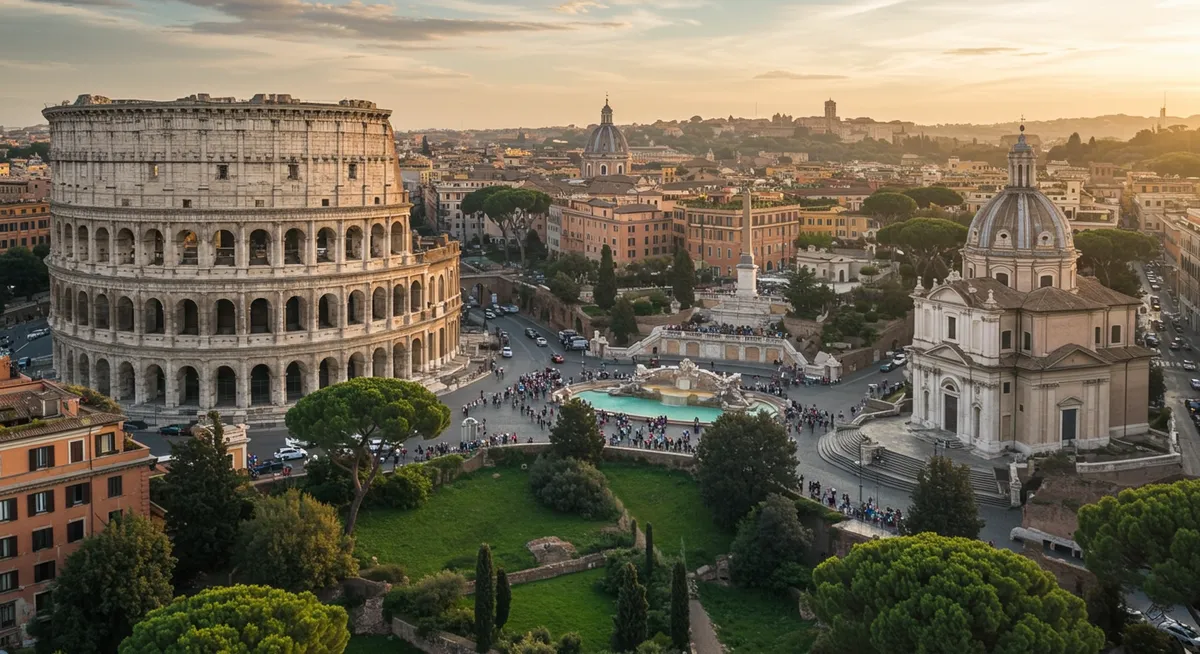
TL;DR: In three days you can experience Rome's greatest hits — the Colosseum and Roman Forum on Day 1, Vatican City and the Baroque historic center on Day 2, and Trastevere with the Borghese Gallery on Day 3. This 2026 guide includes hidden gems like Gianicolo Hill and Galleria Doria Pamphilj, local food recommendations, practical booking tips, and a five-question FAQ to help you plan a stress-free trip. Use ItiMaker to build your personalized Rome itinerary in minutes.
Why 3 Days in Rome Is the Sweet Spot in 2026
Turn this guide into a personal route with our free Rome itinerary planner.
Rome is one of those cities where you could spend a month and still stumble upon something new. However, three days strikes the perfect balance between seeing the iconic landmarks and soaking in the atmosphere without burning out. With what to see in Rome in 3 days carefully mapped across geographical zones, you minimize transit time and maximize every hour in the Eternal City.
For 2026, a few important changes affect planning. A new €2 entry fee for the Trevi Fountain area took effect in early 2026, and timed-entry ticketing at the Colosseum has become stricter. Booking attractions in advance is no longer just recommended — it is essential. The good news: Rome's metro Line C extension now reaches further into the historic center, making cross-city travel faster than ever.
If you are visiting Italy for the first time, check our first-time Italy itinerary guide to understand how Rome fits into a broader trip. And if you have more time, see our 5-day Rome itinerary for a deeper dive.
Day 1: Ancient Rome — Colosseum, Roman Forum, and Palatine Hill
Start your first morning at the Colosseum, the 2,000-year-old amphitheater that once hosted gladiatorial combat. In 2026, the Colosseum arena floor restoration project is nearing completion, offering visitors a perspective that has not been available for centuries. Book a timed-entry ticket at least two weeks in advance — same-day tickets are rarely available during peak season.
Your Colosseum ticket includes entry to the Roman Forum and Palatine Hill, so walk directly through after your visit. The Forum was the political and commercial heart of ancient Rome, and the ruins of temples, basilicas, and triumphal arches tell the story of an empire that shaped the Western world. Palatine Hill, the legendary birthplace of Romulus and Remus, offers shaded gardens and sweeping views over the Forum below.
For lunch, head to the nearby Monti neighborhood, Rome's oldest rione, where you will find trattorias serving classic Roman dishes like cacio e pepe and supplì (fried rice balls) at reasonable prices. After lunch, walk to Piazza Venezia to see the imposing Vittoriano monument, then continue to Capitoline Hill for sunset views and a visit to the Capitoline Museums — one of the world's oldest public museum collections.
If you are traveling with children, our Rome itinerary with kids has family-friendly alternatives for this day.
Day 2: Vatican City, the Pantheon, and the Baroque Historic Center
Arrive at the Vatican Museums by 8:00 AM — this is non-negotiable if you want to experience the Sistine Chapel with some breathing room. The museums contain over 70,000 works spanning centuries, but the highlights for most visitors are the Gallery of Maps, the Raphael Rooms, and of course Michelangelo's ceiling in the Sistine Chapel. A guided tour is worth the investment here; the historical context transforms the experience from sightseeing into storytelling.
After the museums, enter St. Peter's Basilica through the connecting passage. The basilica is free to enter and contains Michelangelo's Pietà, Bernini's towering baldachin, and the papal tombs below. For an unforgettable panoramic view of Rome, climb the 551 steps (or take the partial elevator) to the top of the dome — this is one of the best viewpoints in the city.
Cross the Tiber for a late lunch in the historic center, then spend the afternoon exploring Rome's Baroque treasures on foot. Visit the Pantheon, a nearly 2,000-year-old temple with the world's largest unreinforced concrete dome and a mesmerizing oculus open to the sky. Continue to Piazza Navona, where Bernini's Fountain of the Four Rivers anchors one of Rome's most beautiful squares. End the day at the Trevi Fountain — remember the new 2026 entry fee — and toss your coin to ensure a return trip.
For practical advice on where to base yourself, see our guide to where to stay in Rome.
Day 3: Trastevere, Hidden Gems, and the Borghese Gallery
Your final day starts in Trastevere, Rome's most atmospheric neighborhood. The narrow cobblestone lanes, ochre-colored buildings draped in ivy, and bustling morning markets create a scene that feels more like a film set than a tourist district. Visit the Basilica of Santa Maria in Trastevere, one of Rome's oldest churches, renowned for its stunning 12th-century mosaics. Grab a cornetto and cappuccino at a local bar and simply wander — Trastevere rewards aimless exploration.
From Trastevere, walk uphill to Gianicolo Hill (Janiculum), a hidden gem that most tourists overlook. The hilltop terrace offers a breathtaking 360-degree panorama of Rome's skyline, from St. Peter's dome to the distant Alban Hills. Every day at noon, a cannon fires from the hill — a tradition dating back to 1847.
After lunch, head to the Borghese Gallery in the Villa Borghese gardens. This intimate museum limits visitors to 360 per two-hour slot, creating a calm environment to admire Bernini's Apollo and Daphne, Caravaggio's Boy with a Basket of Fruit, and Canova's Pauline Bonaparte. Reservations are mandatory — book at least a week ahead. After your visit, rent a rowboat on the Borghese lake or stroll through the gardens to the Pincian Hill terrace above Piazza del Popolo for golden-hour views.
If you still have energy, consider visiting the Galleria Doria Pamphilj, a private palace hiding an exceptional collection of works by Caravaggio, Raphael, and Velázquez. It is refreshingly uncrowded compared to the Vatican Museums and offers an audio guide narrated by a member of the Doria Pamphilj family.
Where to Eat: Roman Food You Cannot Miss
Roman cuisine is built on a handful of iconic dishes, and knowing where to find them elevates a good trip to a great one. Here are the essentials for your 2026 visit:
- Carbonara — Try it at Roscioli Salumeria, a legendary deli-restaurant in the historic center, or Da Enzo al 29 in Trastevere.
- Cacio e pepe — Felice a Testaccio has perfected this deceptively simple pasta of pecorino and black pepper.
- Supplì — These fried rice balls with a molten mozzarella center are Rome's favorite street snack. Supplizio near Campo de' Fiori is a dedicated supplì bar.
- Carciofi alla giudia — Deep-fried artichokes from the Jewish Quarter (Ghetto Ebraico), best at Nonna Betta or Ba'Ghetto.
- Gelato — Skip the tourist traps with piled-high neon colors. Instead, visit Fatamorgana or Giolitti for authentic flavors.
For a deep-dive into Rome's food scene, check the latest best food tours in Rome guide.
Practical Tips for Visiting Rome in 2026
These tips will save you time, money, and frustration:
- Book everything in advance. Colosseum, Vatican Museums, and Borghese Gallery all require timed reservations. Last-minute visitors often cannot get in.
- Use the Roma Pass wisely. The 48-hour or 72-hour Roma Pass includes public transport and discounted entry to select museums. Calculate whether it saves money for your specific plans.
- Wear comfortable shoes. You will walk 15,000–20,000 steps per day on uneven cobblestones. Proper walking shoes are essential.
- Carry a refillable water bottle. Rome has over 2,500 public drinking fountains (nasoni) with clean, cold water.
- Watch for pickpockets. Crowded areas like the Colosseum, metro, and Termini station are hotspots. Keep valuables in a front pocket or crossbody bag.
- Best time to visit in 2026: April–May and September–October offer mild weather and fewer crowds than the scorching July–August peak.
Planning your full route? Use ItiMaker to organize your day-by-day schedule with maps, travel times, and booking reminders.
Day Trips From Rome Worth Considering
If your schedule allows flexibility, Rome is an excellent base for day trips. A high-speed train reaches Florence in just 90 minutes, while Naples and Pompeii are about an hour south. For something closer, explore our easy day trips from Rome guide covering Tivoli, Ostia Antica, and the Castelli Romani wine towns.
Frequently Asked Questions
Is 3 days enough to see Rome in 2026?
How much does 3 days in Rome cost in 2026?
What is the best way to get around Rome?
Do I need to book Rome attractions in advance?
What are the best hidden gems in Rome?
When is the best time to visit Rome?
Rome rewards travelers who plan ahead but leave room for spontaneity. Whether you are standing in the Colosseum imagining ancient spectacles, craning your neck at the Sistine Chapel ceiling, or savoring a perfect plate of carbonara in a Trastevere side street, three days in the Eternal City will leave you already planning your return. Now that you know what to see in Rome in 3 days in 2026, use ItiMaker to turn this guide into a personalized, minute-by-minute travel plan — and start packing.