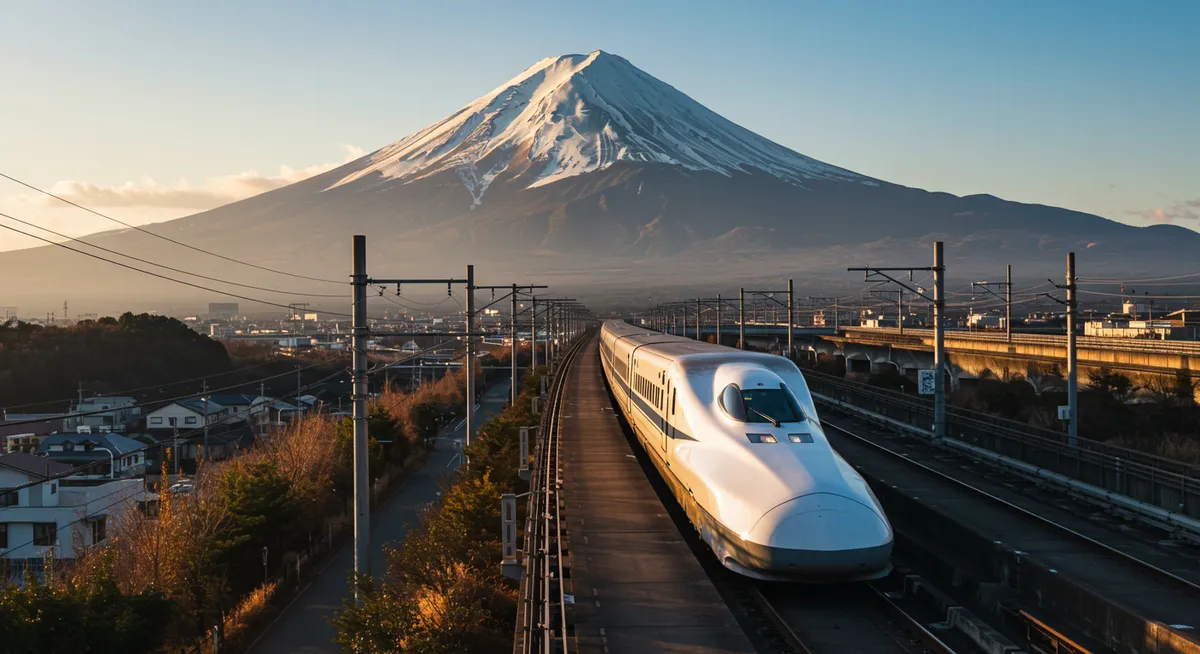
TL;DR: A Tokyo to Mt Fuji day trip by bullet train is one of the best experiences Japan offers in 2026. Take the Tokaido Shinkansen from Tokyo Station to Mishima or Shin-Fuji in roughly 50 minutes, then connect by local bus to Kawaguchiko and the Fuji Five Lakes. Alternatively, ride the Fuji Excursion limited express directly from Shinjuku to Kawaguchiko in under two hours with no transfers. Leave Tokyo before 8 AM, budget around 8,000-12,000 JPY round trip, and aim for winter or early spring mornings for the clearest views of the iconic peak.
Why a Bullet Train Day Trip to Mt Fuji Works Perfectly in 2026
Turn this guide into a personal route with our free Tokyo itinerary planner.
Japan's rail network makes a Tokyo to Mt Fuji day trip by bullet train one of the most efficient day excursions you can plan. The Shinkansen covers the distance from central Tokyo to the Mt Fuji area in under an hour, leaving you a full day to explore viewpoints, lakeside towns, and cultural sites around the mountain. In 2026, improved bus connections from Shin-Fuji and Mishima stations, expanded Fuji Excursion train schedules, and a growing number of attractions around the Five Lakes region make this trip more rewarding than ever. Whether you are visiting Japan for the first time or returning for another look at the country's most famous peak, the bullet train approach gives you maximum flexibility without needing to book an overnight stay. For more ways to fill your time in the capital, check our complete Tokyo day trips guide.
Two Train Routes from Tokyo to Mt Fuji Compared
Choosing the right route is the single most important decision for your Tokyo to Mt Fuji day trip by bullet train. Two main options exist, each with distinct advantages.
Option 1: Tokaido Shinkansen to Mishima or Shin-Fuji
The classic bullet train approach uses the Tokaido Shinkansen departing from Tokyo Station or Shinagawa Station. The Hikari service reaches Mishima Station in roughly 45 to 55 minutes, while the Kodama service takes about 60 to 70 minutes. Shin-Fuji Station is one stop further and served only by Kodama trains, taking around 70 minutes. From either station, Fujikyu local buses connect you to Kawaguchiko and other Five Lakes destinations. A one-way Shinkansen ticket from Tokyo to Mishima costs approximately 4,520 JPY for a reserved seat. The Japan Rail Pass covers this route entirely, making it the most economical choice for JR Pass holders. One bonus: sit on the right side of the train heading west for dramatic Fuji views on clear days, appearing roughly 40 minutes into the journey.
Option 2: Fuji Excursion Limited Express from Shinjuku
The Fuji Excursion (Fuji Kaiyu) limited express runs four daily round trips between JR Shinjuku Station and Kawaguchiko Station with zero transfers. The journey takes approximately one hour and 55 minutes and costs around 4,200 JPY one way. While slower than the Shinkansen, this route drops you directly at Kawaguchiko, eliminating the bus transfer entirely. Departures from Shinjuku leave at 7:30 AM, 8:30 AM, 9:30 AM, and 11:30 AM. Return trains from Kawaguchiko depart at 3:03 PM, 4:25 PM, 4:51 PM, and 5:36 PM. Tickets go on sale one month before the travel date and must be collected at JR East stations in Tokyo, not at stations in the Mt Fuji area. This is the ideal choice for travelers staying near Shinjuku who want a straightforward, transfer-free journey. For a broader look at rail-based excursions, see our Tokyo bullet train day trips overview.
Sample Day Trip Itinerary: Tokyo to Mt Fuji and Back
This hour-by-hour plan helps you get the most out of your Tokyo to Mt Fuji day trip by bullet train in 2026.
6:30 AM — Depart your hotel and head to Tokyo Station or Shinjuku Station. If taking the Shinkansen, aim for a Hikari departure around 7:00 AM. If using the Fuji Excursion, catch the 7:30 AM service from Shinjuku.
8:00 - 9:30 AM — Arrive at Mishima (Shinkansen) or Kawaguchiko (Fuji Excursion). From Mishima, board the Fujikyu bus to the Five Lakes area, arriving around 10:00 AM.
9:30 - 11:00 AM — Head to Lake Yamanaka first if the morning is clear. The eastern side of Fuji catches the morning light beautifully, and this lake is less crowded early in the day. Walk along the lakeside promenade for unobstructed photographs.
11:00 AM - 12:30 PM — Travel to Kawaguchiko. Ride the Mt Fuji Panoramic Ropeway to the observation deck at the summit of Mt Tenjo for sweeping views of both the lake and the mountain. On clear days this is the single best vantage point in the area.
12:30 - 1:30 PM — Lunch in Kawaguchiko town. Try Houtou noodle soup, a hearty Yamanashi specialty made with flat udon noodles and seasonal vegetables in a rich miso broth. Several well-known restaurants line the main street near Kawaguchiko Station.
1:30 - 3:00 PM — Visit the Chureito Pagoda in nearby Fujiyoshida. The five-story pagoda framing Mt Fuji behind it is one of the most photographed scenes in all of Japan. The climb involves roughly 400 steps, but the view from the top is worth every one. During cherry blossom season (typically early to mid-April) and autumn foliage (November), this spot is extraordinary.
3:00 - 4:00 PM — Explore Oshino Hakkai, a small village with eight crystal-clear spring water ponds fed by Mt Fuji's snowmelt filtered through lava rock over 20 years. The village also has thatched-roof farmhouses, souvenir shops, and fresh tofu vendors.
4:30 - 5:30 PM — Return to Kawaguchiko Station for the Fuji Excursion back to Shinjuku, or take a bus back to Mishima for the Shinkansen to Tokyo. You should arrive in central Tokyo between 6:30 and 7:30 PM. For other ways to explore the broader region by rail, browse our guide to Tokyo to Mt Fuji day trips by train.
Costs and Budget Breakdown for 2026
Knowing what to budget keeps your Tokyo to Mt Fuji day trip by bullet train stress-free. Here is a realistic cost breakdown per person in 2026.
Train fares (round trip): Shinkansen Tokyo to Mishima return costs approximately 9,040 JPY for reserved seats. The Fuji Excursion from Shinjuku to Kawaguchiko return runs about 8,400 JPY. Japan Rail Pass holders pay nothing extra for the Shinkansen leg.
Local bus fares: Mishima or Shin-Fuji to Kawaguchiko round trip costs around 4,270 JPY. Not needed if using the Fuji Excursion.
Activities: The Mt Fuji Panoramic Ropeway ticket is 1,000 JPY round trip. A Lake Kawaguchi sightseeing boat cruise costs about 1,000 JPY. Oshino Hakkai entrance is free for most ponds, with a small 300 JPY fee for the main viewing area.
Meals: Budget 1,500 to 2,500 JPY for a Houtou noodle lunch and snacks throughout the day.
Total estimated cost: 12,000 to 17,000 JPY per person without a JR Pass, or roughly 5,000 to 8,000 JPY with one. For a broader look at organized excursions, see our Tokyo day tour to Mt Fuji guide.
Best Time to Visit Mt Fuji from Tokyo
Visibility is everything when planning a Tokyo to Mt Fuji day trip by bullet train. Mt Fuji is famously shy, hiding behind clouds more often than not. Here is what the seasons bring.
Winter (December to February): The best season for clear views. Cold, dry air means fewer clouds, and the snow-capped peak is at its most photogenic. Morning temperatures around the Five Lakes hover near freezing, so dress warmly.
Spring (March to May): Cherry blossoms frame Fuji beautifully from late March through mid-April, especially at Chureito Pagoda. Visibility is generally good, though April can bring occasional rain. Spring 2026 is an excellent time to combine sakura viewing with a Fuji day trip.
Summer (June to August): The official climbing season runs July through early September. However, summer humidity and afternoon clouds frequently obscure the peak. The rainy season (tsuyu) in June and early July makes Fuji sightings unreliable. If you must go in summer, arrive as early as possible.
Autumn (October to November): The second-best season for clear views. Fall foliage around Lake Kawaguchiko peaks in mid-November, creating stunning contrasts of red and gold leaves against the mountain.
Pro tip: Regardless of season, the best time of day to photograph Mt Fuji is before 10 AM. Afternoon backlighting and rising thermals often create haze that obscures the summit. Always check the Fuji visibility forecast the morning of your trip before committing to the journey.
Expert Tips for a Smooth Day Trip
These practical tips will help you avoid common pitfalls on your Tokyo to Mt Fuji day trip by bullet train.
Reserve your seats in advance. Both Shinkansen and Fuji Excursion trains can sell out on weekends and holidays. Book reserved seats through the JR East online reservation system or at ticket machines in major stations.
Carry an IC card. A Suica or Pasmo card works on local buses around the Five Lakes area, saving you from fumbling with exact change at each stop.
Pack layers. The Fuji Five Lakes sit at roughly 800 meters elevation. Even when Tokyo is mild, the lake area can be five to eight degrees cooler. Wind off the lake adds a chill factor year-round.
Download offline maps. Cell signal can be spotty between lakes and in more rural stretches. Having Google Maps or similar cached offline ensures you can navigate between viewpoints without interruption.
Consider a Kawaguchiko sightseeing bus pass. The Retro Bus network offers unlimited-ride passes (Red Line, Green Line, Blue Line) starting around 1,500 JPY for two days. Even for a single day, the pass saves money if you plan to visit three or more stops.
Have a backup plan. If morning cloud cover hides Fuji, pivot to indoor attractions like the Itchiku Kubota Art Museum, the Kawaguchiko Music Forest, or the Fuji-Q Highland amusement park. These are all enjoyable regardless of weather.
Frequently Asked Questions
Is a Tokyo to Mt Fuji day trip by bullet train feasible in 2026?
How much does a bullet train ticket from Tokyo to Mt Fuji cost in 2026?
What is the best time of year to see Mt Fuji clearly?
Should I take the Shinkansen or the Fuji Excursion train?
Can I use the Japan Rail Pass for this day trip?
What should I do if Mt Fuji is hidden by clouds?
How early should I leave Tokyo for a Mt Fuji day trip?
A Tokyo to Mt Fuji day trip by bullet train remains one of the most rewarding experiences Japan offers in 2026. Whether you ride the Shinkansen for speed or the Fuji Excursion for convenience, the journey from the world's largest metropolis to the foot of an iconic volcano is remarkably easy. Plan ahead, start early, and keep your camera ready. For more inspiration on exploring Japan's capital and beyond, visit our main travel hub at ItiMaker.