TL;DR: The fastest way to do a Tokyo to Mt Fuji day trip by train in 2026 is the Fuji Excursion limited express from Shinjuku to Kawaguchiko (about 2 hours, roughly 4,130 yen one-way). Depart on the 7:30 AM service, spend the day at Lake Kawaguchiko, ride the Panoramic Ropeway, visit Chureito Pagoda, and catch the 5:36 PM return. A JR Tokyo Wide Pass covers the entire fare for three consecutive days.
Mount Fuji is the single most photographed landmark in Japan, and a day trip from Tokyo by train is one of the easiest ways to see it up close without renting a car or joining a tour bus. After taking this trip across multiple seasons, the ItiMaker Team put together this updated 2026 guide covering every train option, a realistic hour-by-hour itinerary, and the practical details that other guides tend to skip. Whether you are planning a broader Tokyo day trip by train, checking Reddit's top tips for a Fuji day trip, or dedicating the whole day to Fuji, this article has you covered.
Three Train Routes from Tokyo to Mt Fuji Compared
Turn this guide into a personal route with our free Tokyo itinerary planner.
There is no single "best" train to Mount Fuji because the right choice depends on your budget, your Japan Rail Pass situation, and where you are staying in Tokyo. Here are the three main options available in 2026.
Option 1: Fuji Excursion Limited Express (Recommended)
The Fuji Excursion (Fuji Kaiyu) is the only direct train from central Tokyo to the Mt Fuji area. It departs Shinjuku Station and arrives at Kawaguchiko Station in approximately 1 hour and 55 minutes with no transfers required. In 2026, three daily departures run at 7:30 AM, 8:30 AM, and 9:30 AM. Return services leave Kawaguchiko at 3:03 PM, 4:51 PM, and 5:36 PM. The one-way fare is around 4,130 yen (reserved seat included). This train is fully covered by the JR Tokyo Wide Pass.
Option 2: JR Chuo Line + Fujikyu Railway
Take the Limited Express Kaiji or Azusa from Shinjuku to Otsuki Station (about 70 minutes), then transfer to the Fujikyu Railway for Kawaguchiko (about 50 minutes). Total travel time is roughly 2 hours. This route costs approximately 3,530 yen one-way. The JR portion is covered by the Japan Rail Pass, but the Fujikyu segment requires a separate ticket of about 1,170 yen. This is a solid fallback if the Fuji Excursion is sold out.
Option 3: Tokaido Shinkansen via Mishima or Shin-Fuji
The bullet train from Tokyo Station to Mishima takes only 45 minutes, but you then need a 70-minute bus ride to reach Kawaguchiko. This route is best if you already hold a full Japan Rail Pass and want to combine Fuji with other bullet train destinations. The Shinkansen fare alone is around 4,520 yen (unreserved), and the connecting bus adds about 2,300 yen.
Which Rail Pass Saves You the Most Money
Rail passes can turn this day trip from a moderate expense into an almost-free add-on. Here is what works for the Tokyo to Mt Fuji day trip by train in 2026:
- JR Tokyo Wide Pass (10,180 yen, 3 consecutive days): Covers the Fuji Excursion in full, including the Fujikyu Railway section. If you use it for at least two day trips — say, Fuji one day and Nikko by train or Kamakura by train another — the pass pays for itself easily.
- Japan Rail Pass (7-day, 50,000 yen): Covers the JR portion of Options 2 and 3, but not the Fujikyu Railway. Only worthwhile if you are also traveling to Kyoto, Osaka, or other distant cities.
- No pass: A round-trip on the Fuji Excursion costs roughly 8,260 yen. That is affordable enough if this is your only day trip outside Tokyo.
Hour-by-Hour Mt Fuji Day Trip Itinerary from Tokyo
This sample itinerary works for any season, though specific operating hours may shift slightly. Adjust the pace to match your interests.
7:00 AM — Arrive at Shinjuku Station
Get to Shinjuku at least 30 minutes before departure to buy your ticket or validate your rail pass at the JR ticket office. The Fuji Excursion departs from JR platforms (not the Odakyu side), so follow signs for JR Chuo Line limited express services. Grab an ekiben (station bento) for breakfast on the train.
7:30 AM — Board the Fuji Excursion
Seats on the left side of the train (when facing the direction of travel) tend to offer better mountain views as you approach the Fuji Five Lakes area. The route passes through the Chuo Valley and into Yamanashi Prefecture, with scenery shifting from suburban sprawl to forested hillsides.
9:25 AM — Arrive at Kawaguchiko Station
Kawaguchiko Station is the main hub for the Mt Fuji sightseeing area. Purchase a Kawaguchiko Sightseeing Bus Pass (1,500 yen for two days) at the station counter. The pass covers the Red, Green, and Blue bus lines that loop around the lake and connect all major attractions. Store your bags in the coin lockers at the station (300-700 yen depending on size).
9:45 AM — Mt Fuji Panoramic Ropeway
Take the Red Line bus or walk 10 minutes east from the station to the Panoramic Ropeway base. The ropeway carries you 400 meters up to an observation deck on Mount Tenjo, sitting over 1,000 meters above sea level. On a clear day, the view of Fuji reflected in Lake Kawaguchiko is extraordinary. Tickets cost 1,000 yen round-trip. Budget about 45 minutes including the ride and time at the top.
10:45 AM — Lake Kawaguchiko North Shore Walk
The north shore promenade offers some of the most iconic Fuji views. In spring, cherry blossoms frame the mountain; in autumn, the Momiji Corridor blazes with red maple leaves. Walk or cycle along the lakefront (rental bikes available near the station for about 1,000 yen per hour). Stop at one of the lakeside cafes for coffee with a view.
12:00 PM — Lunch: Houtou Noodles
Houtou is the signature dish of the Fuji Five Lakes region — thick, flat udon-style noodles simmered in a rich miso broth loaded with pumpkin, mushrooms, and seasonal vegetables. Houtou Fudou near the lake is one of the best-known spots. Expect to pay around 1,200-1,500 yen per bowl.
1:00 PM — Chureito Pagoda
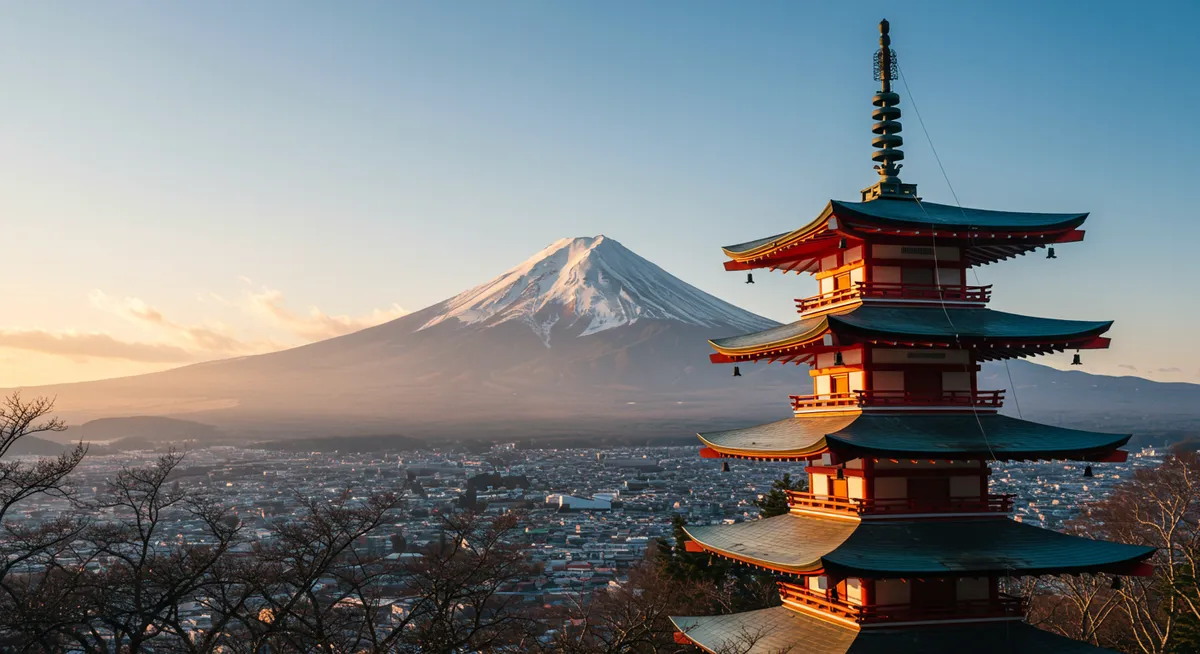
Take the Fujikyu Railway one stop from Kawaguchiko to Shimoyoshida Station (about 8 minutes), then walk 10 minutes to the Arakurayama Sengen Shrine at the base. Climb the 398 steps to reach the five-storied Chureito Pagoda, where you get the postcard-perfect shot of the pagoda with Mount Fuji towering behind it. This is one of the most photographed spots in all of Japan, and it truly delivers if the skies cooperate. Allow 60 to 90 minutes for the round trip including the climb and time at the top.
2:30 PM — Oshino Hakkai or Onsen
If you still have energy, take the Green Line bus to Oshino Hakkai, a cluster of eight crystal-clear spring-fed ponds in a traditional village setting. Alternatively, unwind at one of the lakeside onsen. Fuji Yurari (entry 1,200-1,700 yen) offers outdoor baths with direct views of Mount Fuji — one of the most memorable onsen experiences in the region.
4:30 PM — Return to Kawaguchiko Station
Head back to the station with time to browse the souvenir shops. Fuji-themed snacks, local wine, and Fujiyama cookies make excellent gifts.
5:36 PM — Board the Return Fuji Excursion
The last Fuji Excursion departs at 5:36 PM and arrives at Shinjuku around 7:30 PM, leaving you plenty of time for dinner in Tokyo. If you want to leave earlier, the 4:51 PM service is also available.
Best Time of Year to See Mount Fuji from Kawaguchiko
Visibility is everything on this day trip. Mount Fuji hides behind clouds more often than most travelers expect, so timing matters.
- October through February: The clearest skies. Cold, dry air means the highest probability of an unobstructed view. The snow-capped peak is at its most photogenic. Bring warm layers — temperatures at the lake can drop well below freezing in January.
- Late March to mid-April: Cherry blossom season around Chureito Pagoda. Crowds peak, but the combination of blossoms and Fuji is legendary. Book the Fuji Excursion at least a week in advance.
- May to September: The warmest months, but also the haziest. Morning views are your best bet before clouds build. The official Mt Fuji climbing season (early July to early September) brings extra visitors to the region.
- Mid-November: The Momiji (autumn foliage) Festival around Lake Kawaguchiko lights up the maple corridor along the north shore. Fewer crowds than cherry blossom season, equally stunning.
For more seasonal travel advice, check our Tokyo seasonal guide and our overview of day trips from Tokyo in autumn.
Budget Breakdown for a 2026 Mt Fuji Day Trip by Train
Here is a realistic spending estimate per person for this day trip:
- Train (round trip): 8,260 yen (Fuji Excursion) or effectively 0 yen with a JR Tokyo Wide Pass
- Sightseeing bus pass: 1,500 yen
- Panoramic Ropeway: 1,000 yen
- Lunch: 1,200-1,500 yen
- Onsen (optional): 1,200-1,700 yen
- Snacks, coffee, souvenirs: 1,000-2,000 yen
- Total: Approximately 14,000-16,000 yen without a pass, or 5,000-7,000 yen with a JR Tokyo Wide Pass
If you are watching your budget across the whole trip, our Tokyo budget travel guide covers more money-saving strategies.
Practical Tips That Make or Break the Trip
- Book the Fuji Excursion early: Reservations open 30 days in advance. Weekend and holiday trains sell out fast, especially during cherry blossom and autumn foliage seasons.
- Check the Fuji visibility forecast: Several Japanese weather sites provide a daily "Fuji visibility" rating. Check the evening before and be flexible with your schedule if possible.
- Start with the earliest train: Morning hours consistently offer the clearest views. Clouds tend to form around the summit by late morning, especially in warmer months.
- Pack layers: Kawaguchiko sits at about 830 meters elevation. Even in summer, mornings and evenings are noticeably cooler than Tokyo. In winter, expect temperatures 5-10 degrees Celsius below central Tokyo.
- Bring a portable Wi-Fi or download offline maps: Cell reception is mostly fine around the lake, but having offline maps of the bus routes and walking paths is reassuring, especially at Chureito Pagoda.
- IC cards work everywhere: Your Suica or Pasmo card works on the sightseeing buses and at convenience stores around Kawaguchiko, though the Fuji Excursion requires a separate reserved-seat ticket.
- Return trip backup plan: If the Fuji Excursion is sold out for the return, the Fujikyu Railway to Otsuki plus JR Chuo Line to Shinjuku is a reliable alternative with trains running roughly every 30 minutes.
For more ideas beyond Fuji, see our guides to day trips from Tokyo by train and nature trips near Tokyo.
Frequently Asked Questions
How long does the train take from Tokyo to Mt Fuji?
How much does a Tokyo to Mt Fuji day trip by train cost in 2026?
Can I climb Mount Fuji as a day trip from Tokyo?
What is the best time of year to see Mount Fuji clearly?
Is the Japan Rail Pass or JR Tokyo Wide Pass better for the Mt Fuji day trip?
What should I bring on a Mt Fuji day trip?
Can I visit Mount Fuji and Hakone in one day from Tokyo?
A Tokyo to Mt Fuji day trip by train remains one of the most rewarding single-day excursions you can take in Japan in 2026. With the Fuji Excursion running direct from Shinjuku, the logistics have never been simpler. Start early, check the weather forecast, and you will come back with memories — and photos — that define your entire trip. For more Tokyo trip planning, explore our full Tokyo itinerary or browse all our Mt Fuji day trip options.