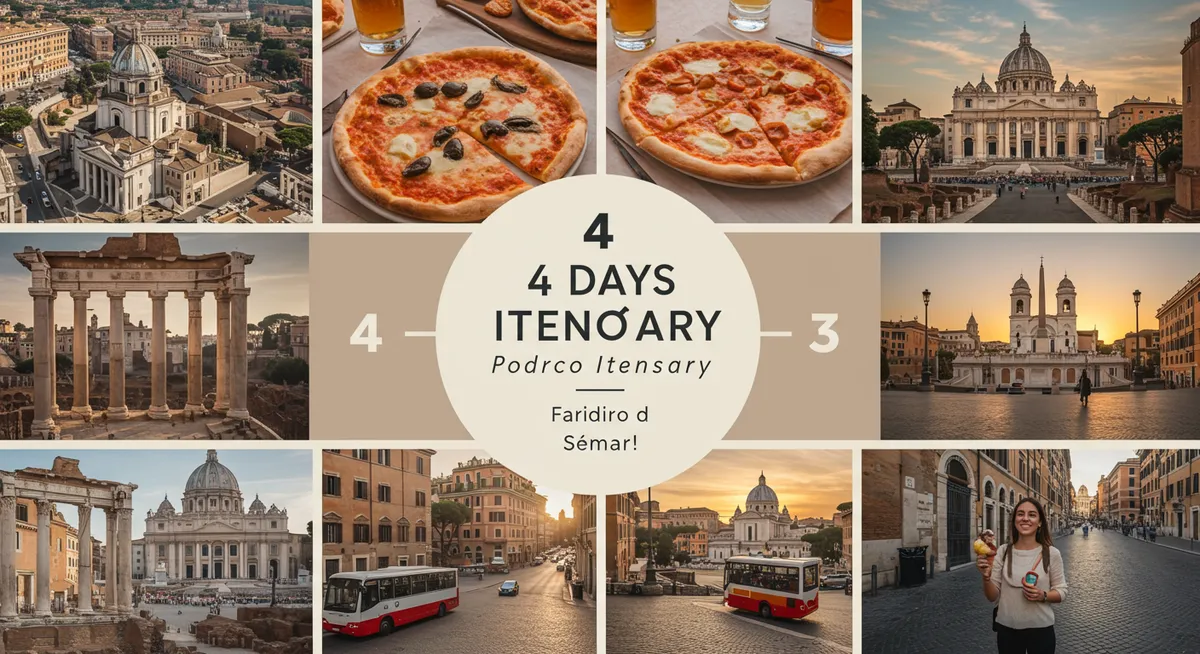
TL;DR: Four days in Rome is the sweet spot for first-time visitors. Day 1 covers ancient Rome (Colosseum, Roman Forum, Palatine Hill). Day 2 is devoted to Vatican City and Trastevere. Day 3 explores Baroque piazzas and the Pantheon. Day 4 takes you to the Borghese Gallery and lesser-known neighborhoods. Budget roughly €300 to €800 per person depending on your travel style, and book Colosseum and Vatican tickets at least two weeks in advance.
Rome is a city where every cobblestone has a story. Having visited multiple times across different seasons, I can confidently say that a 4-day Rome itinerary gives you enough time to explore the major landmarks, discover quieter neighborhoods, and still enjoy long lunches without feeling rushed. This 2026 guide breaks down exactly how to spend each day, what to book ahead, and where to find the best local experiences.
Day 1: Ancient Rome — Colosseum, Roman Forum, and Palatine Hill
Turn this guide into a personal route with our free Rome itinerary planner.
Start your Rome itinerary for 4 days at the very heart of the ancient world. Arrive at the Colosseum when it opens at 9:00 AM to beat the heaviest crowds. In 2026, combined tickets for the Colosseum, Roman Forum, and Palatine Hill cost around €18 for the standard entry, or €24 for the full experience that includes the arena floor and underground chambers. Pre-booking online is essentially mandatory — walk-up tickets frequently sell out by mid-morning.
After touring the Colosseum, walk directly into the Roman Forum through the connecting entrance on Via Sacra. Give yourself at least 90 minutes here. The Temple of Saturn, the Arch of Titus, and the House of the Vestals are highlights that most visitors rush past. Climb Palatine Hill for panoramic views over the Forum and the Circus Maximus below.
For lunch, head to the Monti neighborhood, a 10-minute walk north of the Colosseum. This area has excellent trattorias that locals actually frequent, unlike the tourist traps directly outside the archaeological zone. Try a plate of Cacio e Pepe or Carbonara — both Roman classics.
In the afternoon, stroll to the Trevi Fountain (arrive by 3:00 PM to avoid peak selfie congestion) and then walk to the Pantheon. The Pantheon now requires a €5 reservation in 2026, a change from its previously free entry. The oculus — the open hole in the dome — remains one of Rome's most photographed architectural features, and for good reason. End Day 1 with an aperitivo near Piazza della Rotonda. For a deeper look at getting around Rome efficiently, check our dedicated transport guide.
Day 2: Vatican City and Trastevere
Vatican City deserves a full morning. The Vatican Museums open at 8:00 AM, and I strongly recommend booking the earliest entry slot available. The one-way route through 54 galleries takes roughly 2 to 3 hours, culminating in the Sistine Chapel. Michelangelo's ceiling frescoes are genuinely overwhelming in person — no photograph does them justice. Standard tickets in 2026 cost €17, while guided skip-the-line tours run between €40 and €70.
After the museums, walk directly to St. Peter's Basilica (free entry, but expect a security line of 20 to 40 minutes). Climbing the dome costs €8 by elevator plus stairs, or €6 for the full 551-step climb. The view from the top stretches across the entire city and is absolutely worth the effort.
For a midday break, grab a slice of pizza at Pizzarium Bonci near the Vatican — widely considered some of the best pizza al taglio in Rome. Then cross the Tiber River into Trastevere for the afternoon. This cobblestoned neighborhood is more relaxed than the Centro Storico, with ivy-covered facades, artisan workshops, and some of Rome's best dinner spots. Wander through Piazza di Santa Maria in Trastevere, one of the oldest churches in Rome, before settling into a trattoria for the evening. If you are traveling with kids, Trastevere's car-free streets make it particularly family-friendly.
Day 3: Baroque Masterpieces and Piazza Culture
Day 3 of your Rome itinerary for 4 days shifts from ancient history to Renaissance and Baroque splendor. Begin at the Spanish Steps (Piazza di Spagna), which are at their best in the early morning light before the crowds arrive. From there, walk south along Via dei Condotti — Rome's luxury shopping street — toward Piazza Navona.
Piazza Navona is an open-air gallery of Baroque architecture. Bernini's Fountain of the Four Rivers anchors the square, and the surrounding cafes offer prime people-watching spots. Yes, the coffee is overpriced at the piazza-facing tables, but the experience is part of the Roman ritual.
After Piazza Navona, visit the Pantheon again if you want — it rewards a second visit at a different time of day when the light through the oculus hits differently. Alternatively, explore the area around Campo de' Fiori, where the morning market sells fresh produce, spices, and souvenirs. This is an excellent neighborhood for lunch.
In the afternoon, consider a self-guided walking tour through the Jewish Ghetto, one of Rome's most atmospheric neighborhoods. The Portico d'Ottavia ruins, the Great Synagogue, and the local bakeries serving Roman-Jewish specialties like fried artichokes (Carciofi alla Giudia) make this area a cultural highlight that many visitors overlook. For those interested in saving money, there are many free things to do in Rome that fit perfectly into this day.
Day 4: Borghese Gallery, Hidden Gems, and Farewell
Reserve your final morning for the Borghese Gallery and Museum — but you must book tickets in advance because entry is limited to 360 visitors per two-hour time slot. The collection is small but extraordinary: Bernini's Apollo and Daphne, Caravaggio's Boy with a Basket of Fruit, and Canova's Pauline Bonaparte are all here. Tickets cost €15 in 2026, plus a €2 booking fee.
After the gallery, take a leisurely walk through the surrounding Borghese Gardens. Rent a rowboat on the small lake, find a shaded bench, or simply enjoy being in Rome's largest public park. This is your chance to decompress after three days of intensive sightseeing.
For the afternoon, venture into some of Rome's hidden gems. The Aventine Hill Keyhole offers a perfectly framed view of St. Peter's dome through the keyhole of the Knights of Malta gate — it is free and usually has only a short queue. The nearby Orange Garden (Giardino degli Aranci) provides one of the best sunset viewpoints in the city. Alternatively, explore the quirky Coppede Quarter in the Trieste neighborhood, a surreal Art Nouveau enclave that feels entirely unlike the rest of Rome.
End your 4-day Rome itinerary with dinner in your favorite neighborhood — whether that is Trastevere, Monti, or Testaccio, the working-class district known for its authentic Roman trattorias and lively nightlife.
Practical Tips for Your 2026 Rome Trip
Planning ahead makes a significant difference in Rome. Here are the essentials for 2026:
- Tickets: Book Colosseum, Vatican Museums, and Borghese Gallery tickets at least 2 weeks in advance. Same-day availability is rare for all three.
- Transport: Rome's Metro has two main lines (A and B) that connect major sites. A 48-hour transit pass costs €12.50 and covers buses, trams, and metro. For a complete breakdown, see our Rome transport guide.
- Best time to visit: April to May and September to October offer pleasant weather and smaller crowds. July and August are hot (35°C+) and packed. Read our best time to visit Rome guide for a month-by-month breakdown.
- Budget: A mid-range 4-day trip costs approximately €500 to €600 per person including accommodation, meals, transport, and main attractions.
- Water: Rome has over 2,500 public drinking fountains (nasoni). Carry a refillable bottle to save money and stay hydrated.
- Dress code: Shoulders and knees must be covered to enter the Vatican, St. Peter's Basilica, and most churches. Carry a scarf or light jacket.
Where to Stay in Rome for 4 Days
Your neighborhood choice shapes your entire experience. For a 4-day stay in 2026, consider these areas:
- Monti: Best for first-timers who want to walk to the Colosseum and Roman Forum. Charming streets, independent shops, and excellent restaurants. Mid-range hotels average €120 to €180 per night.
- Trastevere: Ideal for travelers who prioritize nightlife, food, and atmosphere. Slightly removed from major sites but well-connected by tram. Budget to mid-range accommodation available.
- Centro Storico: The most central location, walking distance to the Pantheon, Piazza Navona, and Trevi Fountain. Higher prices but unbeatable convenience.
- Testaccio: An authentic, less-touristy neighborhood with Rome's best traditional food scene. Great for travelers on their second or third visit.
For family-friendly options, see our kid-friendly hotels in Rome guide, or browse our where to stay in Rome overview.
Day Trip Options From Rome
If your schedule allows flexibility on any of the four days, Rome's position in central Italy makes several excellent day trips possible:
- Tivoli: Villa d'Este and Hadrian's Villa, 45 minutes by train. A peaceful escape from the city.
- Ostia Antica: Rome's ancient port city, remarkably well-preserved and far less crowded than Pompeii. Only 30 minutes by metro/train.
- Florence: Reachable in 90 minutes by high-speed train. Ambitious but doable as a day trip. See our Rome to Florence day trip guide.
- Naples and Pompeii: About 70 minutes by Frecciarossa train. Our Rome to Naples day trip guide covers logistics in detail.
Frequently Asked Questions
Is 4 days enough to see Rome?
What is the best way to get around Rome in 2026?
When is the best time to visit Rome?
How much does a 4-day trip to Rome cost in 2026?
Do I need to book Rome attractions in advance?
Is Rome safe for tourists in 2026?
What should I eat in Rome?
A Rome itinerary for 4 days in 2026 offers the perfect balance of ancient history, world-class art, and unforgettable food. Whether you spend your mornings in the Colosseum's shadow or your evenings wandering Trastevere's lantern-lit streets, four days gives you enough time to truly connect with the Eternal City. For more Rome planning resources, explore our complete Rome itinerary guide or browse budget travel tips for Rome.