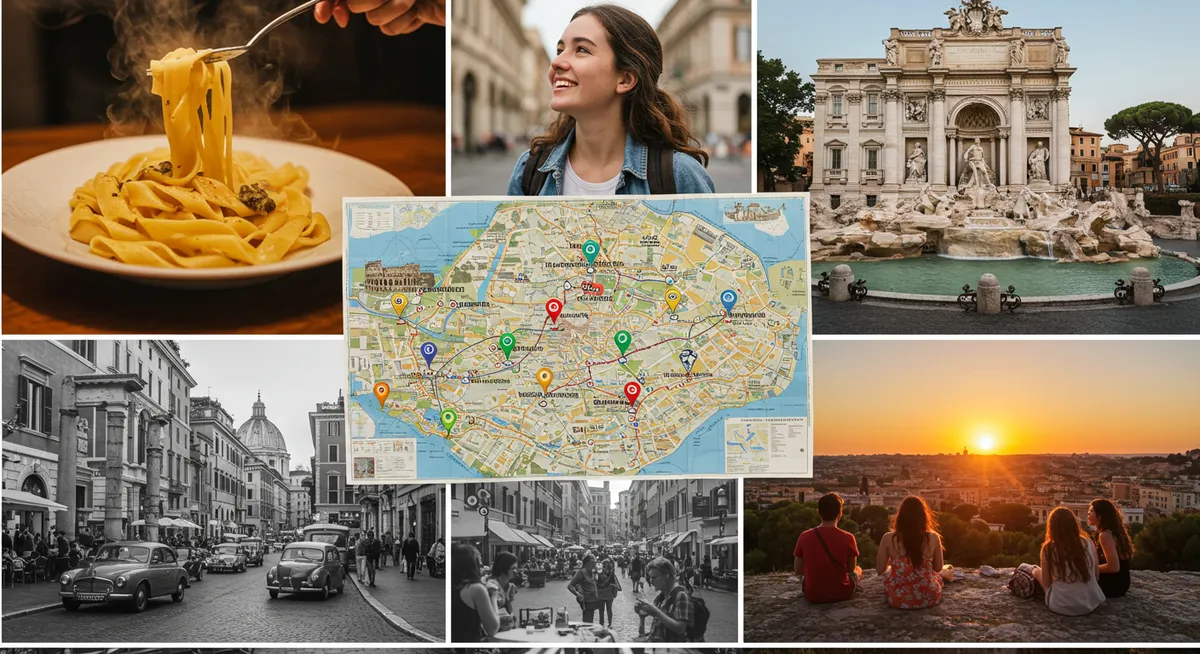
TL;DR: Five days in Rome gives you the ideal balance between must-see landmarks and authentic local experiences. This 2026 itinerary covers Ancient Rome and the Colosseum on Day 1, Vatican City on Day 2, iconic piazzas and fountains on Day 3, the Borghese Gallery and Trastevere on Day 4, and a flexible day trip or hidden-gem exploration on Day 5. We also cover the new 2026 Trevi Fountain entry fee, budget breakdowns, and practical transport tips so you can plan with confidence.
Rome rewards the traveler who takes time to linger. With five full days, you can walk the same stones as emperors, stand beneath Michelangelo's Sistine Chapel ceiling, toss a coin into the Trevi Fountain, and still have an evening free to get lost in a Trastevere alley with a plate of cacio e pepe. This Rome in 5 days itinerary for 2026 is designed to help you experience the Eternal City deeply, not just check boxes on a list. Whether this is your first visit or a return trip, the day-by-day plan below ensures you see the essential highlights while leaving room for spontaneous discovery.
Day 1: Ancient Rome — Colosseum, Roman Forum, and Palatine Hill
Turn this guide into a personal route with our free Rome itinerary planner.
Your Rome in 5 days itinerary begins where the city itself began — in the archaeological heart of the ancient empire. Start early at the Colosseum, the 50,000-seat amphitheater that hosted gladiatorial combat for nearly four centuries. In 2026, timed-entry tickets cost around €18 and can be booked online up to 30 days in advance; arriving for the first entry slot (typically 9:00 AM) means fewer crowds and softer morning light for photos.
From the Colosseum, walk directly into the Roman Forum, the political and social nucleus of ancient Roman life. Highlights include the Temple of Saturn, the Arch of Titus, and the House of the Vestal Virgins. Continue uphill to Palatine Hill, where you can explore imperial palace ruins while enjoying panoramic views over Circus Maximus. The combined Colosseum-Forum-Palatine ticket covers all three sites, so budget roughly four hours for the full circuit.
After lunch at a trattoria near the Celio neighborhood, walk to Piazza Venezia to admire the Altare della Patria (Vittoriano monument). If energy allows, climb to its rooftop terrace for one of Rome's best 360-degree views — a hidden gem many visitors overlook. End the day with an aperitivo in the Monti district, Rome's oldest rione and a favorite among locals for its boutique wine bars and vintage shops. For a shorter version of this ancient core, see our first-time Rome itinerary.
Day 2: Vatican City — St. Peter's, the Museums, and Castel Sant'Angelo
Dedicate your second day entirely to Vatican City, the smallest country in the world and home to some of humanity's greatest art. Book a timed-entry ticket (approximately €20 in 2026) for the Vatican Museums as early as possible — ideally the 8:00 AM opening slot. The museums contain over 70,000 works across 54 galleries, but your path will funnel toward the Sistine Chapel and Michelangelo's ceiling. A licensed guide can transform this visit from overwhelming to revelatory by contextualizing key works like the Raphael Rooms and the Gallery of Maps.
After the museums, exit into St. Peter's Basilica. Entry is free, but the dress code is strict: shoulders and knees must be covered. Climb the 551 steps to the top of the dome (or take the elevator for the first 231) for a breathtaking view over St. Peter's Square and the Roman skyline. Allow at least 90 minutes for the basilica and dome combined.
In the afternoon, cross the Ponte Sant'Angelo to Castel Sant'Angelo, the cylindrical fortress that served as Emperor Hadrian's mausoleum, a papal refuge, and a prison. The rooftop terrace offers exceptional sunset views over the Tiber. If you are planning a longer Italian journey, our guide on day trips from Rome to Florence can help you decide whether to add an extra day.
Day 3: Iconic Piazzas — Trevi Fountain, Pantheon, and Spanish Steps
The midpoint of your Rome in 5 days itinerary is dedicated to the landmarks that define Rome's Baroque and Renaissance streetscape. Start at the Trevi Fountain, arriving before 9:00 AM if you want to avoid the new controlled-access zone. Important 2026 update: Rome now charges a €2 entry fee to access the inner basin area between 9:00 AM and 10:00 PM. You can still admire the fountain from the surrounding piazza at no cost, or visit outside those hours for free close-up access. Toss a coin with your right hand over your left shoulder — tradition says it guarantees a return to Rome.
Walk ten minutes to the Pantheon, arguably the best-preserved building from ancient Rome. The unreinforced concrete dome, completed in 125 AD, remains the largest of its kind in the world. Notice how the oculus — the nine-meter opening at the dome's apex — is the building's only light source, creating a dramatic spotlight that moves across the interior throughout the day. Entry requires a €5 ticket in 2026.
From the Pantheon, stroll through charming side streets to Piazza Navona, built on the footprint of an ancient Roman stadium. Bernini's Fountain of the Four Rivers anchors the piazza, which buzzes with street artists and outdoor cafes. Continue north to the Spanish Steps and climb to the top for sweeping views over the rooftops. This is also Rome's premier shopping district, with Via Condotti stretching below.
Use the afternoon to explore the Largo di Torre Argentina, a sunken square containing four Republican-era temples and Rome's famous cat sanctuary. For dinner, cross the river to the Jewish Ghetto neighborhood for traditional Roman-Jewish cuisine — try the legendary fried artichokes (carciofi alla giudia) at a local trattoria. For context on the best season for this kind of walking-intensive day, check our best time to visit Rome guide.
Day 4: Art, Gardens, and Trastevere's Authentic Charm
Day four shifts the pace from sightseeing to savoring. Begin with a morning visit to the Borghese Gallery, one of the world's finest small museums. Reservations are mandatory and limited to two-hour time slots, so book well in advance. Inside you will find Bernini's dynamic sculptures — Apollo and Daphne, The Rape of Proserpina — alongside Caravaggio's moody masterpieces and Titian's Sacred and Profane Love. The intimate scale of the gallery means you can genuinely study each work rather than rushing past.
After the gallery, wander through the surrounding Villa Borghese Gardens, Rome's answer to Central Park. Rent a rowboat on the lake, visit the Pincio terrace for views over Piazza del Popolo, or simply find a shaded bench and enjoy a quiet moment. This is a welcome respite after three days of intensive sightseeing.
Dedicate your evening to Trastevere, the bohemian neighborhood across the Tiber that many travelers call their favorite part of Rome. Narrow cobblestone streets lined with ivy-draped buildings open onto hidden piazzas and family-run trattorias that have served the same recipes for generations. Start with an aperitivo at a bar near Piazza di Santa Maria in Trastevere, then settle into a long dinner of carbonara, amatriciana, or cacio e pepe — the holy trinity of Roman pasta. After dinner, cross the Ponte Sisto on foot for a postcard-worthy view of St. Peter's dome illuminated against the night sky. Visitors traveling with children should also see our best Rome tours with kids guide for family-friendly alternatives.
Day 5: Day Trip or Hidden Gems — Your Choice
The final day of this Rome in 5 days itinerary offers flexibility based on your interests. You have two excellent options:
Option A: Day trip outside Rome. Excellent half-day and full-day excursions include Tivoli (30 minutes by train), where you can explore the UNESCO-listed Villa d'Este with its Renaissance water gardens and the ancient Villa Adriana; Ostia Antica (35 minutes by metro and train), a remarkably preserved Roman port city that rivals Pompeii with far fewer crowds; or Orvieto (70 minutes by fast train), a hilltop Umbrian town famous for its Gothic cathedral and underground tunnels. For more ideas, browse our easy day trips from Rome roundup.
Option B: Rome's hidden side. If you prefer to stay in the city, spend the morning on the Appian Way (Via Appia Antica), one of Rome's oldest roads. Rent a bike and cycle past ancient tombs, catacombs, and crumbling aqueducts in a surprisingly rural setting just minutes from the city center. Alternatively, visit the Aventine Hill for a peek through the famous keyhole at the Priory of the Knights of Malta, framing St. Peter's dome perfectly. Wrap up with a final gelato in the Campo de' Fiori market square and reflect on five extraordinary days.
2026 Budget Breakdown for 5 Days in Rome
Understanding costs upfront helps you plan smarter. Here is a realistic daily budget range per person for a 2026 trip:
- Budget traveler: €70–110/day (hostels, street food, limited paid attractions, public transport)
- Mid-range traveler: €130–220/day (3-star hotels, sit-down meals, key attractions, occasional taxi)
- Comfort traveler: €250+/day (boutique hotels, guided tours, fine dining)
Key 2026 admission prices to factor in: Colosseum + Forum + Palatine combined ticket €18, Vatican Museums €20, Borghese Gallery €15, Castel Sant'Angelo €15, Pantheon €5, Trevi Fountain inner area €2. The Roma Pass (€53 for 72 hours) includes free entry to two sites and unlimited public transport — it pays for itself quickly. For a deep dive into costs, see our 5 days in Rome budget guide.
Practical Tips for Getting Around Rome in 2026
Rome's historic center is compact and best explored on foot, but the city's public transport network fills important gaps. The Metro has three lines (A, B, and C), with Line B connecting Termini station to the Colosseum in just two stops. Buses and trams extend coverage to neighborhoods the metro does not reach, including Trastevere and the Vatican area. A single BIT ticket (€1.50) is valid for 100 minutes across all surface transport plus one metro ride.
Taxis are metered, but always confirm the driver starts the meter. Fixed fares apply for airport transfers: €50 from Fiumicino (FCO) and €31 from Ciampino (CIA) to central Rome. Ride-hailing apps like Free Now and Uber also operate in the city.
For travelers arriving from outside the EU, note that the ETIAS travel authorization takes effect in 2026. Check your eligibility and apply online before departure — it costs €7 and is valid for three years.
Frequently Asked Questions
Is 5 days enough to see Rome?
What is the best time of year to visit Rome?
How much does the Trevi Fountain cost in 2026?
What are the must-try foods in Rome?
Is Rome walkable, and do I need public transport?
What are the best day trips from Rome?
Do I need to book Colosseum and Vatican tickets in advance?
This Rome in 5 days itinerary for 2026 gives you a thoughtful, day-by-day framework for experiencing everything the Eternal City has to offer — from the grandeur of the Colosseum to a quiet evening in Trastevere. Rome is not a city to rush through; it is a city to live in, even if only for five days. For more destination guides and trip-planning tools, visit ItiMaker.