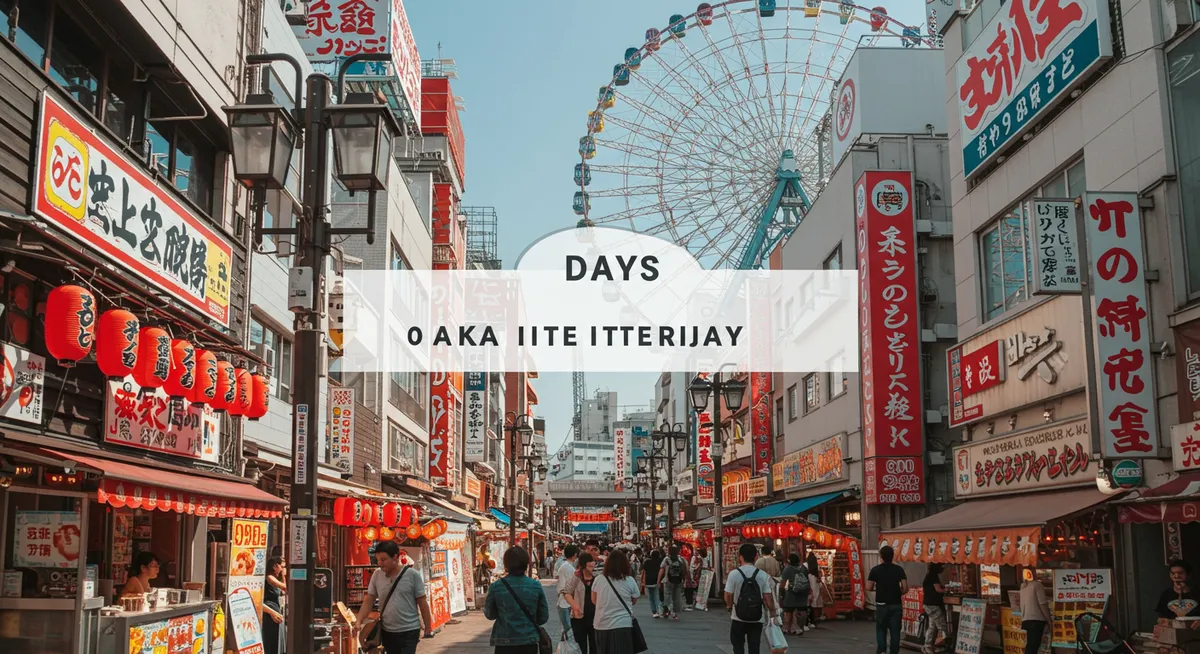
TL;DR: Three days in Osaka is the sweet spot for first-timers in 2026. Day 1 covers Osaka Castle and Dotonbori, Day 2 dives into Shinsekai and Kuromon Market, and Day 3 offers a flexible choice between Universal Studios Japan, a Nara day trip, or deeper neighborhood exploration. Budget around 5,000-8,000 yen per day for food and transport using the Osaka Amazing Pass.
Osaka is where Japan lets its hair down. Known as tenka no daidokoro (the nation's kitchen), this Kansai powerhouse rewards visitors with world-class street food, centuries-old temples, and a nightlife scene that rivals Tokyo at a fraction of the cost. Whether you are a first-timer mapping out your Osaka itinerary or returning to explore deeper, this comprehensive Osaka 3 day itinerary for 2026 ensures you hit every must-see attraction while leaving room for spontaneous discovery.
Day 1: Osaka Castle, Nakanoshima, and Dotonbori at Night
Turn this guide into a personal route with our free Osaka itinerary planner.
Morning: Osaka Castle Park (9:00 AM - 12:00 PM)
Start your Osaka 3 day itinerary at the city's most iconic landmark. Osaka Castle, originally built by Toyotomi Hideyoshi in 1583, sits within a sprawling 106-hectare park that is particularly stunning during cherry blossom season (late March to mid-April) and autumn foliage (November). The castle's eight-story main tower houses an interactive museum tracing Osaka's role in Japanese unification. Head to the top-floor observation deck for panoramic views across the city skyline. Arrive early to beat the crowds; the grounds open at 9:00 AM.
Afternoon: Nakanoshima and Umeda Sky Building (12:30 PM - 5:00 PM)
Walk northwest from the castle to Nakanoshima, a slim island sandwiched between two rivers that serves as Osaka's cultural corridor. Stop at the Nakanoshima Museum of Art (opened 2022) before grabbing lunch at one of the riverside cafes. Continue north to Umeda, Osaka's modern business hub. The Umeda Sky Building's Floating Garden Observatory, 173 meters above street level, delivers jaw-dropping sunset views. Explore the retro Shinumeda Shokudogai alley beneath the building for affordable ramen and gyoza.
Evening: Dotonbori and Namba (6:00 PM - 10:00 PM)
No Osaka 3 day itinerary is complete without Dotonbori after dark. This neon-soaked canal district is the beating heart of Osaka's entertainment scene. Snap photos of the famous Glico Running Man sign, then start your food crawl. Must-try dishes include crispy takoyaki (octopus balls) from Wanaka, fluffy okonomiyaki (savory pancakes) at Mizuno, and freshly grilled kushikatsu at Daruma. For a deeper dive into things to do in Osaka at night, venture into the backstreets of Hozenji Yokocho, a lantern-lit alley with intimate izakayas and a moss-covered Buddhist statue. Check out our full Osaka food guide for more recommendations.
Day 2: Kuromon Market, Shinsekai, and Tennoji
Morning: Kuromon Ichiba Market (8:30 AM - 11:00 AM)
Begin your second day at Kuromon Ichiba Market, nicknamed "Osaka's Kitchen" for over 190 years. This 600-meter-long covered arcade is home to more than 170 stalls selling everything from sashimi-grade tuna and uni (sea urchin) to tamago-yaki (rolled omelet) and matcha desserts. Arrive before 9:00 AM to shop alongside local chefs sourcing the day's freshest ingredients. Budget around 2,000-3,000 yen for a satisfying breakfast of market snacks.
Midday: Shitennoji Temple (11:30 AM - 1:00 PM)
A 15-minute walk south from Kuromon brings you to Shitennoji Temple, founded in 593 AD by Prince Shotoku. As the first state-built Buddhist temple in Japan, it predates many of Kyoto's famous temples by centuries. The five-story pagoda, treasure house, and tranquil Gokuraku-jodo Garden (modeled after the Buddhist paradise) provide a peaceful contrast to the market's energy. The monthly flea market on the 21st and 22nd draws antique hunters from across Kansai.
Afternoon: Shinsekai and Tsutenkaku Tower (1:30 PM - 5:00 PM)
Continue south to Shinsekai ("New World"), one of Osaka's most characterful neighborhoods. Built in 1912 as a futuristic entertainment district modeled after New York and Paris, Shinsekai today pulses with retro charm. Climb Tsutenkaku Tower (108 meters) for city views, then descend into the neighborhood's dozens of kushikatsu restaurants. The rule here is simple: no double-dipping in the communal sauce. Jan Jan Yokocho, a narrow shopping arcade, is the place to find shogi parlors, old-school game centers, and local snack shops.
Evening: Tennoji and Abeno Harukas (5:30 PM - 9:00 PM)
Cap the day at Abeno Harukas, Japan's tallest skyscraper at 300 meters. The Harukas 300 observation deck on the 58th-60th floors offers unobstructed views from Osaka Bay to Mount Ikoma. The building also houses a branch of Kintetsu Department Store, an art museum, and a food hall with over 40 restaurants. For a more budget-friendly evening, stroll through Tennoji Park and visit the surprisingly excellent Osaka City Museum of Fine Arts.
Day 3: Flexible — Universal Studios, Nara Day Trip, or Osaka Bay
Your third day in Osaka offers three excellent options depending on your interests. Choose the one that fits your travel style.
Option A: Universal Studios Japan (Full Day)
If you are traveling with family or love theme parks, dedicate this day to Universal Studios Japan (USJ). The Super Nintendo World zone, expanded in 2024 with a Donkey Kong Country area, is the star attraction in 2026. Harry Potter's Wizarding World, Jurassic Park, and the Minion Park round out a full day of entertainment. Purchase Express Passes online in advance to skip queues on popular rides. See our Universal Studios Japan tips for ticket strategies and family-friendly Osaka activities for more ideas.
Option B: Nara Day Trip (Half or Full Day)
Nara is just 30-45 minutes from Osaka by train and makes one of the best day trips from Osaka. Meet the 1,200+ friendly deer roaming freely in Nara Park, visit the awe-inspiring Todaiji Temple (housing a 15-meter bronze Buddha), and explore the Kasuga Grand Shrine with its thousands of stone and bronze lanterns. Read our guide on getting to Nara from Osaka and Nara 1 day itinerary for a detailed plan.
Option C: Osaka Bay and Neighborhood Exploration
For a more relaxed pace, spend the morning at Osaka Aquarium Kaiyukan in the Tempozan Harbor Village area, one of the world's largest aquariums featuring a massive Pacific Ocean tank with whale sharks. In the afternoon, explore a neighborhood you missed: Amerikamura (Osaka's youth fashion hub), the Tenjinbashi-suji Shopping Street (Japan's longest covered shopping arcade at 2.6 km), or the craft coffee scene in Kitahama.
Osaka 3 Day Itinerary: Practical Travel Tips for 2026
Getting Around Osaka
The Osaka Metro subway system is efficient and covers every major attraction. For this Osaka 3 day itinerary, the Osaka Amazing Pass (2-day version for 3,600 yen) is the best value. It includes unlimited subway and bus rides plus free entry to over 40 attractions including Osaka Castle, Umeda Sky Building, and Tempozan Ferris Wheel. For Day 3, a single-day ICOCA card top-up handles any remaining transport. Review our full Osaka transport guide for routes and pass comparisons.
Where to Stay
For a 3-day visit, Namba or Shinsaibashi offer the best base. Both neighborhoods sit within walking distance of Dotonbori and connect easily via subway to Osaka Castle, Shinsekai, and USJ. Budget travelers can find clean hostel beds from 3,000 yen/night, while mid-range hotels average 8,000-15,000 yen/night. Read our detailed where to stay in Osaka guide for neighborhood breakdowns.
Budget Breakdown
Osaka is one of Japan's most affordable major cities. A reasonable daily budget for 2026 includes 1,500-3,000 yen for meals (street food and casual restaurants), 800-1,000 yen for transport (with a pass), and 500-2,000 yen for attractions. See our Osaka travel budget breakdown for detailed cost planning.
Best Time to Visit
The ideal windows for an Osaka 3 day itinerary are March-May (cherry blossoms, mild weather) and October-November (autumn colors, comfortable temperatures). Summer (June-August) brings intense heat and humidity, while winter (December-February) is cold but crowd-free. Our best time to visit Osaka guide covers seasonal events and weather patterns in detail.
Extending Your Trip: Beyond 3 Days
If your schedule allows, Osaka serves as an excellent launchpad for exploring the wider Kansai region. Combine your Osaka 3 day itinerary with a 3-day Kyoto itinerary for temple-hopping and geisha district walks, or extend to a full 5-day Osaka itinerary that includes both day trips and deeper neighborhood exploration. Planning a longer Japan trip? Our 10-day Tokyo to Osaka itinerary covers the classic Golden Route from east to west.
Frequently Asked Questions
Is 3 days enough in Osaka?
Yes, three days is ideal for first-time visitors to Osaka in 2026. You can comfortably cover the major attractions (Osaka Castle, Dotonbori, Kuromon Market, Shinsekai) in two days and use the third day for a day trip to Nara or Kyoto, Universal Studios Japan, or deeper neighborhood exploration. If you want to do both USJ and a day trip, consider extending to a 5-day Osaka itinerary.
How much does 3 days in Osaka cost?
A mid-range 3-day Osaka trip in 2026 costs approximately 30,000-50,000 yen (roughly $200-330 USD) per person excluding accommodation and flights. This covers food (street food and casual dining), transport (Osaka Amazing Pass plus ICOCA), attraction entry fees, and shopping. Budget travelers can get by on 15,000-20,000 yen for three days by focusing on street food and free attractions.
What is the best area to stay in Osaka for 3 days?
Namba and Shinsaibashi are the top choices for a 3-day stay. Both areas provide walking access to Dotonbori and excellent subway connections to all major attractions. Umeda is better for business travelers or those prioritizing proximity to the Shinkansen at Shin-Osaka Station. See our full where to stay in Osaka guide for more options.
Do I need the Osaka Amazing Pass?
For a 3-day itinerary, the 2-day Osaka Amazing Pass (3,600 yen) is excellent value if you plan to visit three or more included attractions. It covers unlimited subway and bus travel plus free entry to 40+ attractions. For Day 3, a simple ICOCA card works well for individual trips.
What food should I try in Osaka?
Osaka's must-try dishes include takoyaki (octopus balls), okonomiyaki (savory pancakes), kushikatsu (deep-fried skewers), kitsune udon (udon with sweet fried tofu), and yakiniku (Japanese BBQ). Dotonbori and Shinsekai are the best neighborhoods for street food crawls. Check our Osaka food guide for restaurant recommendations and food tour options.
Can I do a day trip from Osaka to Kyoto?
Absolutely. Kyoto is only 15 minutes from Osaka by Shinkansen or 40-50 minutes by JR Special Rapid train (no rail pass needed, just 570 yen). You can see highlights like Fushimi Inari Shrine, Kinkakuji, and the Arashiyama Bamboo Grove in a full day. For a detailed plan, see our Kyoto 3-day itinerary or Osaka day trips guide.
Is Osaka safe for solo travelers?
Osaka is extremely safe for solo travelers, including women traveling alone. Japan consistently ranks among the world's safest countries. The main areas covered in this Osaka 3 day itinerary (Dotonbori, Umeda, Shinsekai) are well-lit and busy even late at night. Standard travel precautions apply, but violent crime targeting tourists is virtually nonexistent.