15 Best Osaka Day Trips in 2026: Temples, Castles & Hidden Gems
Plan the best Osaka day trips in 2026 — from Kyoto temples and Nara deer to Mount Koya, Minoo Park, and Awaji Island. Includes transport tips, costs, and a local-tested itinerary.
ItiMaker Team16 min read
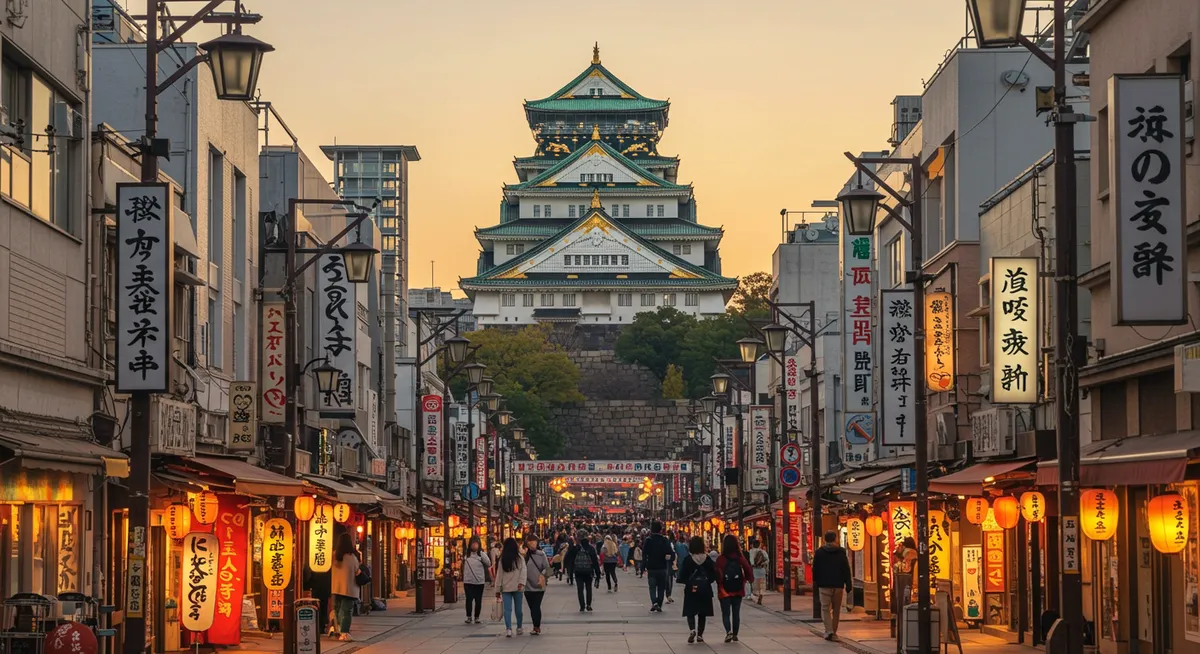
<p><strong>TL;DR:</strong> The best Osaka day trips in 2026 include Kyoto (15 min by shinkansen), Nara (30 min, free-roaming deer), Himeji Castle (1 hr, UNESCO site), Kobe (20 min, world-class beef), Mount Koya (1h40 for sacred temples), and Minoo Park (45 min for nature lovers). All reachable by train with an IC card or JR Pass. This guide covers 15 destinations with transport details, estimated costs, and insider tips.</p>
<h1>15 Best Day Trips from Osaka in 2026</h1>
<aside class="affiliate-slot" data-nosnippet
data-affiliate-unit="experience_finder"
data-affiliate-provider="getyourguide"
data-affiliate-widget="getyourguide_city"
data-affiliate-format="widget"
data-affiliate-placement="primary"
data-affiliate-campaign="itimaker-com-unit-gcity-osaka-day-trips"
data-affiliate-city="Osaka"
data-affiliate-location-id="1204"
style="min-height:400px">
<span class="affiliate-badge">Sponsored</span>
<div class="affiliate-skeleton" aria-hidden="true"></div>
<p class="affiliate-unit__loading" role="status">Loading live activities…</p>
<div class="affiliate-inner"><div
data-gyg-href="https://widget.getyourguide.com/default/city.frame"
data-gyg-location-id="1204"
data-gyg-locale-code="en-US"
data-gyg-widget="city"
data-gyg-partner-id="26CH4CT"
data-gyg-campaign="itimaker-com-unit-gcity-osaka-day-trips"
data-gyg-cmp="itimaker-com-unit-gcity-osaka-day-trips"
loading="lazy"></div></div>
</aside>
<p>Osaka sits at the heart of Japan's Kansai region, making it one of the best base cities for exploring western Japan. With efficient train connections radiating in every direction, you can reach ancient capitals, sacred mountains, coastal islands, and UNESCO World Heritage sites in under two hours. Whether you are visiting Osaka for the first time or returning for a deeper exploration, these 15 day trips will transform your 2026 Japan itinerary. For the best starting point, check our guide on <a href="https://www.itimaker.com/blog/where-to-stay-in-osaka">where to stay in Osaka</a> to pick a hotel near major train stations.</p>
<h2>Kyoto — Ancient Temples and Geisha Districts</h2>
<p>Kyoto remains the most popular day trip from Osaka, and for good reason. Japan's former imperial capital is just 15 minutes away on the Tokaido Shinkansen from Shin-Osaka Station, or about 50 minutes on the cheaper JR Special Rapid train (covered by JR Pass). In 2026, Kyoto continues to draw visitors to Fushimi Inari-taisha's 10,000 vermillion torii gates, the ethereal Arashiyama Bamboo Grove, and the historic Gion geisha district. Start early to beat the crowds at Kinkaku-ji (Golden Pavilion), then work your way through Higashiyama's preserved merchant streets. A full day barely scratches the surface, but hitting 3-4 major sites is realistic. For a deeper dive, read our <a href="https://www.itimaker.com/blog/kyoto-itinerary">Kyoto itinerary</a> or learn about the <a href="https://www.itimaker.com/blog/best-time-to-visit-kyoto">best time to visit Kyoto</a>.</p>
<aside class="affiliate-slot" data-nosnippet
data-affiliate-unit="experience_finder"
data-affiliate-provider="viator"
data-affiliate-widget="viator_widget"
data-affiliate-format="widget"
data-affiliate-placement="secondary"
data-affiliate-campaign="itimaker-com-unit-vauto-osaka-day-trips"
data-affiliate-city="Osaka"
data-affiliate-location-id=""
style="min-height:600px">
<span class="affiliate-badge">Sponsored</span>
<div class="affiliate-skeleton" aria-hidden="true"></div>
<p class="affiliate-unit__loading" role="status">Loading live activities…</p>
<div class="affiliate-inner"><div
data-vi-partner-id="P00271059"
data-vi-widget-ref="W-d5dc59c4-3a04-417e-8a46-7be440461eba"
data-vi-search-term="Osaka"
data-vi-campaign="itimaker-com-unit-vauto-osaka-day-trips"
data-campaign="itimaker-com-unit-vauto-osaka-day-trips"></div></div>
</aside>
<p><strong>Getting there:</strong> JR Special Rapid from Osaka Station (50 min, ~570 yen) or Shinkansen from Shin-Osaka (15 min, ~1,600 yen).<br>
<strong>Recommended time:</strong> Full day (8-10 hours).</p>
<h2>Nara — Friendly Deer and the Great Buddha</h2>
<p>Nara was Japan's first permanent capital (710-784 AD), and its compact historic district makes it an ideal half-day or full-day trip from Osaka. The JR Yamatoji Rapid Line reaches Nara Station in about 45 minutes, while the Kintetsu Railway takes just 30 minutes to Kintetsu-Nara Station, which is closer to the park. Nara Park's 1,200 semi-wild deer have learned to bow for shika senbei (deer crackers, 200 yen), creating one of Japan's most photogenic experiences. Beyond the deer, Todai-ji Temple houses a 15-meter bronze Great Buddha — the world's largest bronze statue — inside the world's largest wooden building. Kasuga Taisha shrine, lined with 3,000 stone and bronze lanterns, is equally mesmerizing. Allow at least 4 hours to explore comfortably. Our <a href="https://www.itimaker.com/blog/nara-1-day-itinerary">Nara 1-day itinerary</a> maps out the perfect route, and our <a href="https://www.itimaker.com/blog/how-to-get-to-nara-from-osaka">guide on getting to Nara from Osaka</a> covers every transport option.</p>
<aside class="affiliate-slot" data-nosnippet
data-affiliate-unit="experience_finder"
data-affiliate-provider="getyourguide"
data-affiliate-widget="getyourguide_activities"
data-affiliate-format="widget"
data-affiliate-placement="tertiary"
data-affiliate-campaign="itimaker-com-unit-gact-osaka-day-trips"
data-affiliate-city="Osaka"
data-affiliate-location-id="1204"
style="min-height:420px">
<span class="affiliate-badge">Sponsored</span>
<div class="affiliate-skeleton" aria-hidden="true"></div>
<p class="affiliate-unit__loading" role="status">Loading live activities…</p>
<div class="affiliate-inner"><div
data-gyg-href="https://widget.getyourguide.com/default/activities.frame"
data-gyg-location-id="1204"
data-gyg-locale-code="en-US"
data-gyg-widget="activities"
data-gyg-partner-id="26CH4CT"
data-gyg-campaign="itimaker-com-unit-gact-osaka-day-trips"
data-gyg-cmp="itimaker-com-unit-gact-osaka-day-trips" data-gyg-number-of-items="4"
loading="lazy"></div></div>
</aside>
<p><strong>Getting there:</strong> Kintetsu-Nara Line from Osaka-Namba (30 min, ~680 yen) or JR Yamatoji Rapid from Osaka Station (45 min, ~820 yen).<br>
<strong>Recommended time:</strong> Half day to full day (4-8 hours).</p>
<h2>Himeji Castle — Japan's Finest Feudal Fortress</h2>
<p>Himeji Castle, nicknamed the "White Heron Castle" for its striking white exterior, is Japan's most spectacular surviving feudal castle and a UNESCO World Heritage site. The Tokaido-Sanyo Shinkansen whisks you from Shin-Osaka to Himeji in about 30 minutes (Hikari), or you can take the JR Special Rapid for about an hour at a lower cost. The castle's six-story main keep survived World War II bombing, earthquakes, and 400 years of weathering, making it an authentic window into samurai-era architecture. After exploring the keep's steep wooden staircases and hidden defensive features, stroll through the adjacent Koko-en Garden — nine interconnected Edo-period gardens offering seasonal beauty. Cherry blossom season (late March to early April) transforms the castle grounds into one of Japan's top hanami spots.</p>
<p><strong>Getting there:</strong> JR Special Rapid from Osaka Station (1 hr, ~1,520 yen) or Shinkansen from Shin-Osaka (30 min, ~3,300 yen).<br>
<strong>Recommended time:</strong> Half day to full day (4-6 hours).</p>
<h2>Kobe — Cosmopolitan Port City and World-Famous Beef</h2>
<p>Just 20 minutes from Osaka on the JR Special Rapid, Kobe delivers a sophisticated blend of international culture, mountain views, and culinary excellence. The city's Kitano-cho district preserves Western-style mansions (ijinkan) from the 19th-century foreign settlement, while the waterfront Meriken Park offers Instagram-worthy views of the port. Riding the Shin-Kobe Ropeway up to Nunobiki Herb Garden provides sweeping panoramas of the city and Osaka Bay. For dinner, splurge on certified Kobe beef at a teppanyaki restaurant — expect to pay 5,000-15,000 yen per person for a lunch set, significantly less than evening prices. Kobe pairs perfectly with a half-day in nearby Arima Onsen (see below).</p>
<p><strong>Getting there:</strong> JR Special Rapid from Osaka Station (20 min, ~420 yen).<br>
<strong>Recommended time:</strong> Half day to full day (4-8 hours).</p>
<h2>Mount Koya (Koyasan) — Sacred Buddhist Mountain Retreat</h2>
<p>Mount Koya is the spiritual heart of Shingon Buddhism and one of Kansai's most powerful cultural experiences. The Nankai-Koya Line express train from Osaka's Namba Station reaches Gokurakubashi Station in about 1 hour 40 minutes (890 yen), followed by a 5-minute cable car ride (390 yen) to the mountaintop temple complex. Okunoin Cemetery, Japan's largest graveyard with over 200,000 tombstones lining a 2 km forest path, culminates at Kobo Daishi's mausoleum — a deeply moving walk regardless of your spiritual background. Kongobu-ji Temple's Banryutei rock garden is Japan's largest. While overnight temple stays (shukubo) are popular, a focused day trip hitting Okunoin, Kongobu-ji, and the Danjo Garan sacred compound is entirely feasible in 2026.</p>
<p><strong>Getting there:</strong> Nankai Express from Namba Station + cable car (1h45 total, ~1,280 yen one-way).<br>
<strong>Recommended time:</strong> Full day (8-10 hours).</p>
<h2>Minoo Park (Minoh) — Osaka's Hidden Nature Escape</h2>
<p>Located just 45 minutes north of central Osaka by Hankyu Railway, Minoo Park (also spelled Minoh) is a forested valley centered around the spectacular 33-meter Minoo Waterfall. The 2.7 km paved trail from Minoo Station to the waterfall follows the Minoo River through lush maple forest, making it accessible for all fitness levels. In autumn (mid-November to early December), the momiji maple leaves turn brilliant red and orange — locals fry them in tempura batter as a seasonal snack called momiji tempura. The park rarely appears on international tourist itineraries, making it a genuinely uncrowded experience even in peak season. It is one of the best ways to experience nature near Osaka without committing to a full-day excursion.</p>
<p><strong>Getting there:</strong> Hankyu Takarazuka Line + Minoo Line from Umeda Station (45 min, ~280 yen).<br>
<strong>Recommended time:</strong> Half day (3-4 hours).</p>
<h2>Arima Onsen — One of Japan's Oldest Hot Spring Towns</h2>
<p>Arima Onsen, nestled in the hills behind Mount Rokko near Kobe, is one of Japan's three oldest hot spring resorts with a history stretching back over 1,000 years. The town is famous for two types of natural spring water: kinsen (gold water, iron-rich and rust-colored) and ginsen (silver water, clear and carbonated). The public bathhouse Kin no Yu offers kinsen baths for just 800 yen, providing a budget-friendly onsen experience. The town's narrow lanes are lined with traditional shops selling tansan senbei (carbonated crackers) and arima-kago bamboo crafts. Combine Arima with a morning in Kobe for a perfect full-day trip from Osaka.</p>
<p><strong>Getting there:</strong> Subway to Shin-Kobe, then bus (1 hr total, ~1,000 yen) or Hankyu + Shintetsu train (1h15, ~900 yen).<br>
<strong>Recommended time:</strong> Half day (3-5 hours).</p>
<h2>Awaji Island — Whirlpools and Farm-to-Table Cuisine</h2>
<p>Awaji Island, the largest island in the Seto Inland Sea, sits between Honshu and Shikoku, connected to the mainland by the Akashi Kaikyo Bridge — the world's longest suspension bridge. The island is a food lover's paradise, famous throughout Japan for its sweet onions, Awaji beef, and fresh seafood. At the southern tip, the Naruto Whirlpools (visible during spring and neap tides) create dramatic natural vortexes up to 20 meters in diameter. Families enjoy Nijigen no Mori, an anime-themed park set in a natural forest, and the Hyogo Prefectural Awaji Yumebutai complex designed by architect Tadao Ando. Highway buses from Osaka reach Awaji in about 1 hour 30 minutes.</p>
<p><strong>Getting there:</strong> Highway bus from Osaka Station or Sannomiya (1h30, ~1,800 yen one-way).<br>
<strong>Recommended time:</strong> Full day (6-8 hours).</p>
<h2>Hiroshima and Miyajima Island — History and the Floating Torii Gate</h2>
<p>With the Tokaido-Sanyo Shinkansen, Hiroshima is reachable from Shin-Osaka in about 1 hour 20 minutes, making it a feasible (if ambitious) day trip. The Peace Memorial Park and Museum provide a profound and essential perspective on the atomic bombing, while just a short ferry ride away, Miyajima Island's "floating" torii gate of Itsukushima Shrine is one of Japan's most iconic images. In 2026, the recently restored grand torii gate continues to draw visitors at high tide when it appears to float on the water. Start early (7 AM departure recommended) to fit in both Hiroshima and Miyajima comfortably. Our <a href="https://www.itimaker.com/blog/hiroshima-itinerary">Hiroshima itinerary</a> helps you maximize your time.</p>
<p><strong>Getting there:</strong> Shinkansen (Nozomi) from Shin-Osaka (1h20, ~10,000 yen one-way) — JR Pass covers Hikari/Sakura (1h30).<br>
<strong>Recommended time:</strong> Full day (10-12 hours, early start required).</p>
<h2>Uji — Matcha Capital of Japan</h2>
<p>Tucked between Osaka and Kyoto, Uji is Japan's most celebrated tea-producing region and home to the UNESCO-listed Byodo-in Temple, whose Phoenix Hall appears on the 10-yen coin. The JR Nara Line from Osaka reaches Uji in about 50 minutes. Nakamura Tokichi and Tsuen Tea, two of Japan's oldest tea houses, offer matcha tasting experiences, parfaits, and soba noodles made with premium Uji matcha. Walk along the Uji River to Ujigami Shrine, Japan's oldest surviving shrine building, dating to the late Heian period. Uji combines beautifully with a half-day in Nara for travelers wanting to cover two destinations.</p>
<p><strong>Getting there:</strong> JR Nara Line from Osaka Station via Kyoto (50 min, ~760 yen) or Keihan Line from Yodoyabashi (55 min, ~420 yen).<br>
<strong>Recommended time:</strong> Half day (3-5 hours).</p>
<h2>Yoshino — Japan's Premier Cherry Blossom Mountain</h2>
<p>If you are visiting Osaka in spring 2026, Yoshino Mountain deserves a spot on your day trip list. Home to over 30,000 cherry trees planted across four ascending zones, Yoshino creates a cascading pink spectacle that has inspired Japanese poets for over 1,300 years. The blossoms progress up the mountainside from late March through late April, giving Yoshino one of the longest sakura viewing windows in Japan. Even outside cherry blossom season, the Kinpusen-ji Temple (a World Heritage site) and the mountain hiking trails make Yoshino worth the journey. The Kintetsu Line from Osaka-Abenobashi Station reaches Yoshino in about 1 hour 45 minutes.</p>
<p><strong>Getting there:</strong> Kintetsu Limited Express from Osaka-Abenobashi (1h45, ~1,600 yen including express surcharge).<br>
<strong>Recommended time:</strong> Full day (6-8 hours).</p>
<h2>Universal Studios Japan — Theme Park Thrills on Osaka Bay</h2>
<p>While technically within Osaka city limits, Universal Studios Japan (USJ) on Osaka Bay operates as a full-day destination and deserves mention as one of the top excursion options. The dedicated JR Yumesaki Line reaches Universal City Station in about 15 minutes from Osaka Station. In 2026, the Super Nintendo World area continues to be USJ's headline attraction, with the Donkey Kong Country expansion adding new rides and themed zones. For shorter wait times, visit on weekdays and purchase an Express Pass. Families with younger children will find the Minion Park and Wizarding World of Harry Potter equally engaging. See our <a href="https://www.itimaker.com/blog/universal-studios-japan-osaka-tips">Universal Studios Japan tips</a> for ticket strategies and crowd avoidance.</p>
<p><strong>Getting there:</strong> JR Yumesaki Line from Osaka Station (15 min, ~190 yen).<br>
<strong>Recommended time:</strong> Full day (8-10 hours).</p>
<h2>Sakai — Samurai Heritage and Knife-Making Traditions</h2>
<p>Just 15 minutes south of Osaka on the Nankai Line, Sakai is a historically rich city that produced many of Japan's finest samurai swords and now manufactures over 90% of Japan's professional kitchen knives. The Sakai Traditional Crafts Museum offers knife-making demonstrations and the chance to purchase artisan blades directly. The massive Daisen Kofun — Emperor Nintoku's tomb and one of the world's three largest burial mounds (alongside the Egyptian pyramids and Qin Shi Huang's mausoleum) — earned UNESCO World Heritage status in 2019. Tea ceremony culture also runs deep here, as Sakai was the birthplace of Sen no Rikyu, the father of Japanese tea ceremony.</p>
<p><strong>Getting there:</strong> Nankai Line from Namba Station (15 min, ~300 yen).<br>
<strong>Recommended time:</strong> Half day (3-5 hours).</p>
<h2>Wakayama and Tomogashima Island — Seaside Castle Town</h2>
<p>Wakayama Prefecture's capital city offers a laid-back seaside atmosphere and an underrated castle reconstructed in its original style. The JR Hanwa Line Rapid Service reaches Wakayama from Osaka in about 1 hour 20 minutes. From Wakayama's Kada Port, a short ferry crosses to the uninhabited Tomogashima Island, a former military fort now overgrown with vegetation that fans compare to a real-life Studio Ghibli setting. Back on the mainland, Kuroshio Market at Marina City serves fresh tuna cutting shows and sushi at reasonable prices. Wakayama is also the starting point for the Kumano Kodo pilgrimage trail for travelers planning extended journeys.</p>
<p><strong>Getting there:</strong> JR Hanwa Line Rapid from Tennoji Station (1h20, ~890 yen).<br>
<strong>Recommended time:</strong> Full day (6-8 hours).</p>
<h2>Amanohashidate — One of Japan's Three Scenic Views</h2>
<p>For travelers willing to commit to a longer journey, Amanohashidate (Bridge to Heaven) ranks among Japan's three most scenic views. This 3.6 km natural sandbar covered in pine trees stretches across Miyazu Bay in northern Kyoto Prefecture. The traditional way to view it is by bending over and looking through your legs from the Kasamatsu Park viewpoint — a pose that makes the sandbar appear to float in the sky. Limited Express trains from Osaka reach Amanohashidate in about 2 hours 20 minutes. Rent a bicycle to cross the sandbar and explore both sides of the bay, visiting Chion-ji Temple and enjoying the local specialty of grilled clams.</p>
<p><strong>Getting there:</strong> JR Konotori/Hashidate Limited Express from Osaka Station (2h20, ~5,000 yen).<br>
<strong>Recommended time:</strong> Full day (10 hours, early departure essential).</p>
<h2>Transport Tips for Osaka Day Trips in 2026</h2>
<p>Getting the most out of your Osaka day trips starts with smart transport planning. Here are the key considerations for 2026:</p>
<ul>
<li><strong>JR Pass vs. IC card:</strong> A nationwide JR Pass (7-day, ~50,000 yen in 2026) is cost-effective only if you are combining Osaka day trips with inter-city travel (e.g., Tokyo to Osaka). For local day trips, an ICOCA or Suica IC card with pay-as-you-go works best.</li>
<li><strong>Kansai Area Pass:</strong> The 1-day Kansai Area Pass (~2,800 yen) covers JR trains to Kyoto, Nara, Kobe, and Himeji — ideal if you plan two or more day trips on the same day.</li>
<li><strong>Kintetsu Rail Pass:</strong> Best value for Nara, Yoshino, and Uji trips. The 1-day pass costs ~1,500 yen.</li>
<li><strong>Start early:</strong> Most temples and attractions open at 8:30-9:00 AM. Catching a 7:00-7:30 AM train maximizes your sightseeing time.</li>
<li><strong>Luggage storage:</strong> Coin lockers at major stations (400-700 yen per day) free you from carrying bags. Osaka Station, Namba, and Tennoji all have large-size lockers.</li>
</ul>
<p>For a broader planning perspective, our <a href="https://www.itimaker.com/blog/osaka-itinerary-5-days">5-day Osaka itinerary</a> integrates the top day trips into a complete travel plan, while our <a href="https://www.itimaker.com/blog/osaka-transport-guide">Osaka transport guide</a> covers every rail pass and ticket option in detail. If you are exploring beyond Osaka, our <a href="https://www.itimaker.com/blog/best-day-trips-from-kyoto">best day trips from Kyoto</a> guide covers additional destinations reachable from the Kansai region.</p>
<h2>Frequently Asked Questions</h2>
<div itemscope="" itemtype="https://schema.org/FAQPage">
<div class="faq-item" itemprop="mainEntity" itemscope="" itemtype="https://schema.org/Question">
<h3 itemprop="name">How many days should I set aside for Osaka day trips?</h3>
<div itemprop="acceptedAnswer" itemscope="" itemtype="https://schema.org/Answer">
<div itemprop="text">Plan 2-4 days for day trips depending on your interests. At minimum, dedicate one day each to Kyoto and Nara. Adding Himeji Castle and Kobe fills a third day, while Mount Koya or Hiroshima deserve a fourth. You can combine shorter trips — for example, a morning in Uji and an afternoon in Nara — to maximize your time. Our <a href="https://www.itimaker.com/blog/osaka-itinerary-3-days">3-day Osaka itinerary</a> shows how to structure this efficiently.</div>
</div>
</div>
<div class="faq-item" itemprop="mainEntity" itemscope="" itemtype="https://schema.org/Question">
<h3 itemprop="name">Is a JR Pass worth it for day trips from Osaka in 2026?</h3>
<div itemprop="acceptedAnswer" itemscope="" itemtype="https://schema.org/Answer">
<div itemprop="text">For day trips only within the Kansai region, a JR Pass is usually not cost-effective since the nationwide pass costs ~50,000 yen for 7 days in 2026. Instead, consider the Kansai Area Pass (1-day ~2,800 yen, 4-day ~7,000 yen), which covers JR trains to Kyoto, Nara, Kobe, and Himeji. The JR Pass becomes worthwhile only if you are also traveling between major cities like Tokyo and Osaka. Check our <a href="https://www.itimaker.com/blog/bullet-train-japan-travel-times">bullet train travel times guide</a> for route planning.</div>
</div>
</div>
<div class="faq-item" itemprop="mainEntity" itemscope="" itemtype="https://schema.org/Question">
<h3 itemprop="name">What is the best time of year for Osaka day trips?</h3>
<div itemprop="acceptedAnswer" itemscope="" itemtype="https://schema.org/Answer">
<div itemprop="text">Spring (late March to May) and autumn (October to November) offer the best weather and scenery for day trips from Osaka. Cherry blossoms peak in late March to early April at Yoshino, Himeji, and Kyoto, while autumn foliage is stunning at Minoo Park, Kyoto's temples, and Mount Koya in mid-November. Summer (June-August) is hot and humid but less crowded, and winter (December-February) offers clear skies and the lowest prices. Learn more in our <a href="https://www.itimaker.com/blog/best-time-to-visit-osaka">best time to visit Osaka</a> guide.</div>
</div>
</div>
<div class="faq-item" itemprop="mainEntity" itemscope="" itemtype="https://schema.org/Question">
<h3 itemprop="name">Can I visit Kyoto and Nara in one day from Osaka?</h3>
<div itemprop="acceptedAnswer" itemscope="" itemtype="https://schema.org/Answer">
<div itemprop="text">Yes, but it requires careful planning and early starts. Spend the morning in Nara (Todai-ji and Nara Park take about 3-4 hours), then take the Kintetsu Line to Kyoto (35 minutes). In Kyoto, focus on one area — Fushimi Inari or Higashiyama — rather than trying to cover the whole city. Alternatively, combine Nara with Uji (which sits between Osaka and Kyoto on the Keihan Line) for a more relaxed pace.</div>
</div>
</div>
<div class="faq-item" itemprop="mainEntity" itemscope="" itemtype="https://schema.org/Question">
<h3 itemprop="name">What are the best day trips from Osaka for families with kids?</h3>
<div itemprop="acceptedAnswer" itemscope="" itemtype="https://schema.org/Answer">
<div itemprop="text">Nara (deer feeding delights children of all ages), Universal Studios Japan (Super Nintendo World), and Minoo Park (easy paved trail to a waterfall) are the top family-friendly day trips. Awaji Island also works well for families with its anime-themed Nijigen no Mori park and beach activities. For more ideas, see our <a href="https://www.itimaker.com/blog/family-friendly-osaka-activities">family-friendly Osaka activities</a> guide.</div>
</div>
</div>
<div class="faq-item" itemprop="mainEntity" itemscope="" itemtype="https://schema.org/Question">
<h3 itemprop="name">Are Osaka day trip destinations crowded in 2026?</h3>
<div itemprop="acceptedAnswer" itemscope="" itemtype="https://schema.org/Answer">
<div itemprop="text">Kyoto, Nara, and Himeji can be crowded during cherry blossom season (late March-April) and autumn foliage (November), especially on weekends. To avoid crowds, visit on weekdays and arrive at opening time. Lesser-known destinations like Minoo Park, Sakai, Uji, and Wakayama offer similar cultural richness with significantly fewer tourists year-round.</div>
</div>
</div>
</div>
<p>Osaka's central location in the Kansai region makes it the ideal launchpad for exploring Japan's most captivating destinations. From the 1,200-year-old temples of Kyoto and Nara to the sacred forests of Mount Koya, from world-class Kobe beef to the hidden waterfall at Minoo Park, each day trip reveals a different facet of Japanese culture, history, and natural beauty. With efficient train connections and affordable regional passes, you can experience an extraordinary variety of destinations without ever changing hotels. Start planning your 2026 Osaka day trips today and discover why the Kansai region remains one of the world's most rewarding travel destinations.</p>
Make this guide part of your trip.
Turn the ideas you like into a personal day-by-day route, then edit every detail.
Build my itinerary