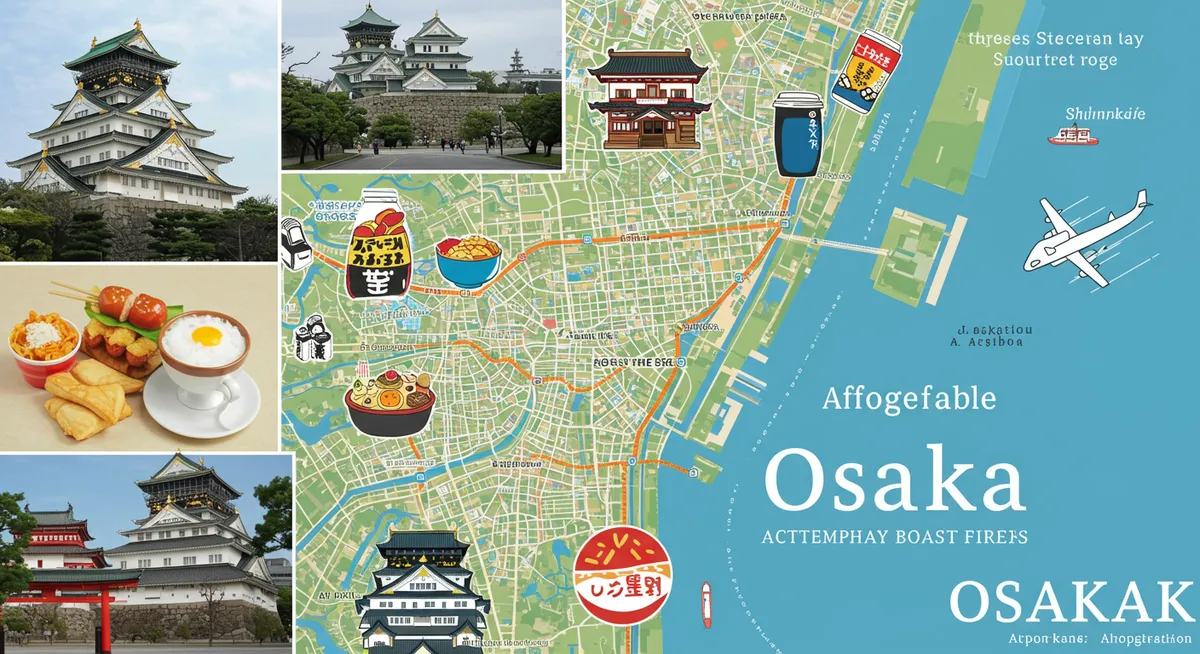
TL;DR: A 2026 Osaka trip costs roughly $54/day on a budget, $200/day mid-range, or $850+ for luxury. Expect to spend $380-$1,400 per person for a full week, excluding flights. Osaka runs 15-30% cheaper than Tokyo, and smart use of transit passes, street food, and off-peak timing can slash costs further.
Osaka consistently ranks as one of Japan's most rewarding yet affordable destinations, and that holds true heading into 2026. Whether you are a backpacker stretching every yen or a family seeking comfortable mid-range experiences, understanding the real costs helps you plan confidently and avoid surprises. This Osaka travel budget breakdown covers every major expense category with updated 2026 prices, practical saving strategies, and a clear daily spending framework so you can focus on enjoying Japan's kitchen capital rather than worrying about your wallet.
Daily Budget Overview by Travel Style
Turn this guide into a personal route with our free Osaka itinerary planner.
Before diving into individual categories, here is what a typical day in Osaka costs per person in 2026, broken down by travel style:
| Category | Budget | Mid-Range | Luxury |
|---|---|---|---|
| Accommodation | ¥3,000-5,000 | ¥12,000-20,000 | ¥30,000+ |
| Food | ¥2,000-3,500 | ¥5,000-8,000 | ¥15,000+ |
| Transport | ¥620-820 | ¥1,000-1,500 | ¥3,000+ |
| Activities | ¥0-1,500 | ¥2,000-4,000 | ¥8,000+ |
| Daily Total | ¥5,620-10,820 | ¥20,000-33,500 | ¥56,000+ |
| USD Equivalent | $36-70 | $130-215 | $360+ |
These figures assume the 2026 exchange rate hovering around ¥155 per USD. The weak yen continues to make Japan exceptionally good value for international visitors, and Osaka offers even better bang for your buck than Tokyo across nearly every category. Use these ranges as your baseline while reading the detailed breakdowns below. For help planning your days, check out our 5-day Osaka itinerary.
Accommodation Costs in Osaka (2026)
Accommodation typically takes the largest bite out of your Osaka travel budget breakdown. The good news is that Osaka's hotel market offers genuine options at every price point, and choosing your neighborhood strategically can save 20-30% without sacrificing convenience.
Budget (¥3,000-5,000 / $19-32 per night): Hostel dormitories and capsule hotels cluster around Shin-Imamiya and Tennoji. These neighborhoods sit on major rail lines, giving you quick access to Namba and Umeda while keeping nightly costs under ¥5,000. Capsule hotels have improved dramatically and many now include free Wi-Fi, luggage storage, and communal lounges.
Mid-range (¥10,000-20,000 / $65-130 per night): Business hotels and boutique properties in Namba, Shinsaibashi, and Umeda fall into this bracket. Chains like Dormy Inn, Hotel Monterey, and Cross Hotel offer reliable quality with onsen baths or breakfast included. Booking direct or through Japanese platforms often beats international OTAs by 10-15%.
Luxury (¥30,000+ / $195+ per night): The Conrad Osaka, W Osaka, and InterContinental occupy the top tier. For families or groups, serviced apartments near Namba can actually undercut luxury hotels while offering kitchenettes that reduce dining costs.
For a detailed neighborhood comparison, see our guide to where to stay in Osaka.
Food and Dining Expenses
Osaka earned the nickname "tenka no daidokoro" (the nation's kitchen) for good reason, and eating well here does not require a big budget. Street food culture is embedded in the city's identity, and some of the most memorable meals cost under ¥1,000.
Street food and quick bites (¥400-1,000): Takoyaki from a Dotonbori stall runs ¥500-700 for 6-8 pieces. Okonomiyaki at a no-frills counter costs ¥600-900. Kushikatsu sets start around ¥800. These are not compromise meals; they are the authentic Osaka experience.
Casual restaurants (¥800-2,000): Ramen shops, gyudon chains like Yoshinoya and Matsuya, curry houses, and udon joints serve filling meals for ¥800-1,200. Conveyor belt sushi (kaiten-zushi) runs ¥1,000-2,000 for a satisfying lunch.
Mid-range dining (¥3,000-6,000): Sit-down izakayas, yakiniku restaurants, and sushi counters fall here. A kaiseki-light dinner at a local restaurant typically costs ¥4,000-6,000 and delivers an exceptional culinary experience.
Money-saving food tips: Convenience store breakfasts (onigiri, sandwiches, coffee) cost just ¥400-600 and are surprisingly good. Department store basement food halls (depachika) at Daimaru or Hankyu discount premium bento boxes and sushi by 30-50% after 7 PM. This hack alone can save ¥1,000-2,000 on a quality dinner. Explore the full culinary scene with our Osaka food guide.
Transportation Costs
Osaka's public transit system is efficient, affordable, and easy to navigate, making transportation one of the most manageable parts of your Osaka travel budget breakdown.
Single rides: Osaka Metro fares start at ¥190 and typically run ¥190-400 depending on distance. JR lines follow a similar structure. A typical day of sightseeing involves 3-5 rides.
Day passes: The Osaka Eco Card costs ¥820 on weekdays and ¥620 on weekends/holidays, covering unlimited Osaka Metro and city bus rides. It breaks even after just 3 rides, making it the default smart choice for active sightseeing days.
Osaka Amazing Pass: At ¥3,500 for one day or ¥5,000 for two days, this combines unlimited transit with free entry to 40+ attractions including Osaka Castle, Umeda Sky Building Observatory, and Shitennoji Temple. If you plan to visit 3+ paid attractions in a day, this pass saves ¥3,000-5,000 easily.
Airport transfers: The Nankai Railway from Kansai Airport to Namba costs ¥930 on the regular express (about 45 minutes). The premium Rapi:t express costs ¥1,450 and shaves off about 10 minutes. Unless time is critical, the regular express offers excellent value.
IC cards: Load an ICOCA card for tap-and-go convenience across all trains, subways, buses, and even convenience stores. It does not offer discounts over cash fares, but the time savings and convenience are worth it. For a complete transit breakdown, see our Osaka transport guide.
Activities and Attractions Budget
Osaka strikes an appealing balance between free cultural experiences and world-class paid attractions. Many of the city's most iconic experiences cost nothing at all.
Free experiences: Walking through Dotonbori, exploring Shinsekai, wandering Shitennoji Temple grounds, strolling through Nakanoshima Park, and people-watching in Amerikamura are all free. Osaka's neighborhood character is itself a major attraction.
Affordable attractions (¥600-2,000): Osaka Castle tower entry costs ¥600. Abeno Harukas observation deck runs ¥1,500. Sumiyoshi Taisha Shrine is free. Osaka Aquarium Kaiyukan costs ¥2,700 for adults but is worth the splurge if you enjoy marine life.
Premium attractions: Universal Studios Japan dominates this category at ¥8,600-10,900 for a one-day pass in 2026, with Express Passes adding ¥4,000-15,000 depending on the season. Budget a full day and bring snacks to manage in-park food costs. For USJ strategies, read our Universal Studios Japan tips guide.
Cultural experiences (¥3,000-7,000): Cooking classes (learning to make takoyaki or ramen from scratch), traditional tea ceremonies, and sake tasting tours fall into this range. These make excellent splurge-worthy memories.
Connectivity, Insurance, and Hidden Costs
Several smaller expenses can add up if you do not plan for them in your Osaka travel budget breakdown.
eSIM / SIM card (¥1,000-3,000): An eSIM from providers like Ubigi, Airalo, or Holafly costs $5-15 for 7-14 days of data. Physical SIM cards are available at Kansai Airport from ¥1,500. Pocket Wi-Fi rentals run ¥500-1,000 per day and work well for groups sharing one device. Pre-ordering online is cheaper than airport pickup.
Travel insurance ($30-80 per week): Japan does not require travel insurance, but medical costs without coverage can be devastating. A basic plan covering medical, trip cancellation, and luggage costs $30-80 for a one-week trip. This is a non-negotiable line item.
Coin lockers (¥300-700): Available at every major station, these are essential for day trips. Small lockers cost ¥300, large ones ¥700.
Souvenirs and shopping (varies): Osaka's Shinsaibashi and Namba shopping districts can be dangerous for your budget. Set a souvenir limit before you go. Hundred-yen shops (Daiso, Seria) are excellent for affordable, uniquely Japanese gifts.
Sample 7-Day Osaka Budget (Per Person)
Here is what a realistic week in Osaka looks like across three travel styles in 2026:
| Expense | Budget (7 days) | Mid-Range (7 days) | Luxury (7 days) |
|---|---|---|---|
| Accommodation | ¥28,000 | ¥105,000 | ¥245,000 |
| Food | ¥21,000 | ¥45,500 | ¥105,000 |
| Transport | ¥5,740 | ¥8,750 | ¥21,000 |
| Activities | ¥7,000 | ¥21,000 | ¥56,000 |
| Misc (SIM, insurance, lockers) | ¥5,000 | ¥7,000 | ¥10,000 |
| Total | ¥66,740 | ¥187,250 | ¥437,000 |
| USD Equivalent | ~$430 | ~$1,210 | ~$2,820 |
These totals exclude international flights and assume one USJ visit for mid-range and luxury tiers. Budget travelers skipping USJ can shave ¥8,600 off their total. For a structured day-by-day plan, explore our 3-day Osaka itinerary or the full Osaka 3-day itinerary.
Top Money-Saving Tips for Osaka in 2026
After multiple trips to Osaka, these are the strategies that consistently deliver the biggest savings:
- Stay in Tennoji or Shin-Imamiya instead of Namba to save 20-30% on accommodation while staying on major transit lines.
- Use the Eco Card on weekends when it drops to ¥620 and plan your heaviest sightseeing for those days.
- Stack the Osaka Amazing Pass on days when you will visit 3+ included attractions. The two-day version (¥5,000) offers even better per-day value.
- Eat at depachika after 7 PM for 30-50% discounts on premium food that would cost triple at a restaurant.
- Book the regular Nankai Express from Kansai Airport instead of the Rapi:t to save ¥520 per person.
- Travel during shoulder season (late November, January-February, or June) for lower hotel rates and thinner crowds.
- Carry cash: Many budget eateries and street food stalls in Osaka are still cash-only. Withdraw from 7-Eleven or Japan Post ATMs to avoid foreign ATM fees.
- Use convenience stores strategically: A ¥500 konbini breakfast frees up budget for a nicer dinner.
Combine two or three of these tactics and you can comfortably trim 15-25% from your total trip cost without sacrificing the quality of your experience. For seasonal planning advice, read our best time to visit Osaka guide.
Day Trips From Osaka: Budget Add-Ons
Osaka's central location in the Kansai region makes it a natural base for affordable day trips. Budget ¥2,000-5,000 per day trip for transport and entry fees:
- Nara (¥560 one-way by JR, 45 min): Free-roaming deer, Todai-ji Temple (¥600 entry), and Nara Park cost almost nothing beyond the train fare. See our guide on getting to Nara from Osaka.
- Kyoto (¥410 one-way by JR, 30 min): Incredible temple-hopping, though popular spots like Fushimi Inari are free.
- Kobe (¥410 one-way by JR, 20 min): Harborland, Chinatown, and the Nunobiki Herb Garden ropeway (¥1,800 round trip).
For more options, explore our Osaka day trips guide.
Frequently Asked Questions
Is Osaka expensive compared to Tokyo?
How much money do I need per day in Osaka in 2026?
How much does a week in Osaka cost in 2026?
What is the best way to save money on food in Osaka?
Is the Osaka Amazing Pass worth buying?
Do I need travel insurance for Osaka?
Should I carry cash or use cards in Osaka?
An Osaka travel budget breakdown does not have to be intimidating. The city genuinely rewards budget-conscious travelers with world-class street food, efficient public transit, and countless free cultural experiences. Whether you are spending $430 or $2,800 for a week, Osaka delivers extraordinary value in 2026. Start building your itinerary today and see how far your budget can stretch in Japan's most delicious city.