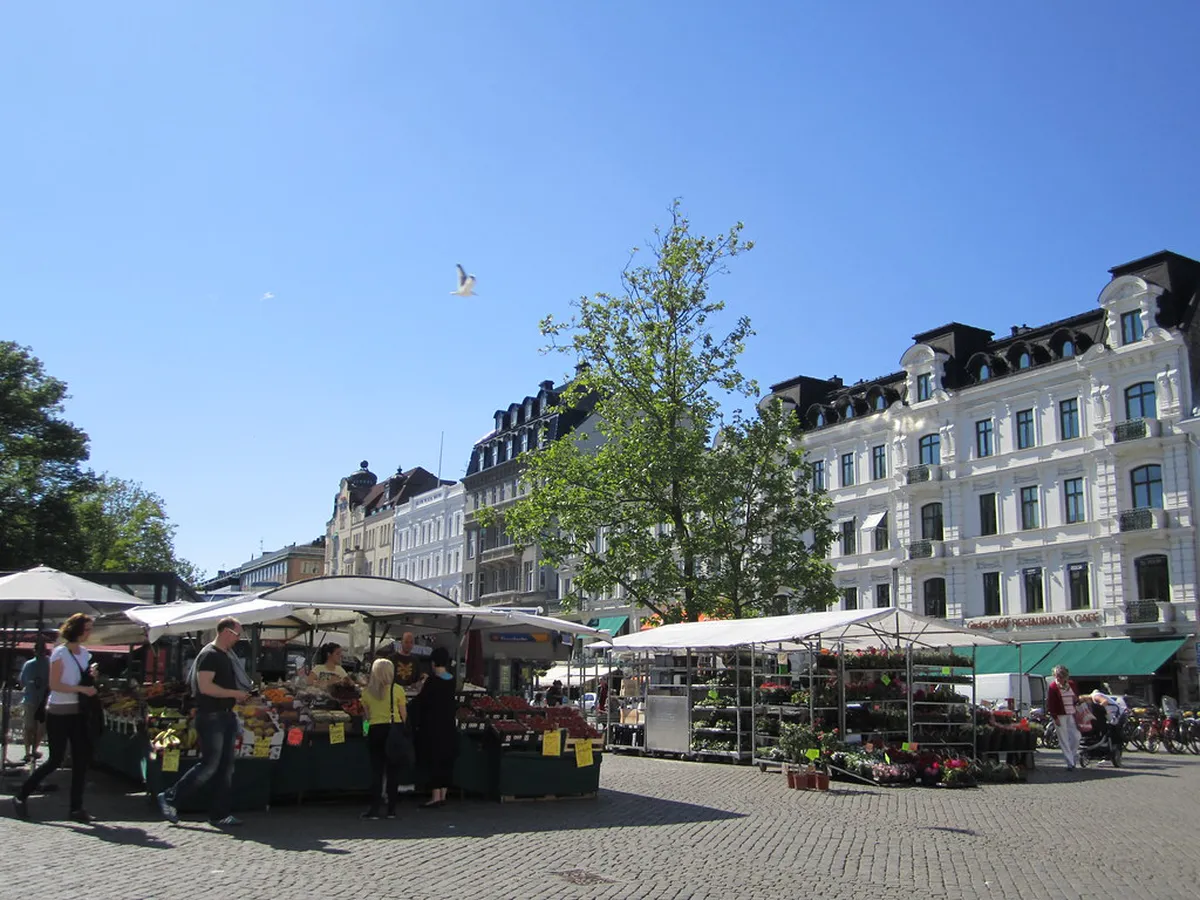
Malmö is one of Scandinavia's most exciting cities to eat in — and one of its most underrated. The city sits at the heart of Skåne, Sweden's agricultural breadbasket, which means produce arrives at restaurant kitchens fresher and faster than almost anywhere else in the country. Layer onto that an immigration history that has made Malmö the falafel capital of Sweden (and arguably Europe), a thriving specialty-coffee culture, and a new wave of young Nordic chefs pushing boundaries, and you have a city that rewards serious food exploration. This 2026 Malmö local food guide covers everything from 40 SEK street food to Michelin-starred tasting menus, with specific names, neighborhoods, and price ranges so you can eat well whatever your budget.
Use this guide alongside our full Malmö itinerary to build a day-by-day plan that places great meals next to the city's top sights.
What Food Is Malmö Known For? — The Quick Answer
Turn this guide into a personal route with our free Malmö itinerary planner.
Malmö is most famous for falafel, Skåne's farm-to-table Swedish cuisine, and a rich fika coffee culture. The city's large Middle Eastern community — largely from Lebanon and Syria — brought falafel decades ago, and today Malmö has more falafel stands per capita than any other Swedish city. Alongside street food, Skåne's rolling farmland supplies restaurants with premium lamb, root vegetables, mushrooms, and coastal seafood, making the regional cooking some of the best in the country in 2026.
The signature Skåne dish you must try is Äggakaka — a thick, oven-baked egg pancake served with strips of fried pork belly (flæsk) and lingonberries. It is unique to this region and rarely found elsewhere in Sweden. Budget 120–180 SEK at a traditional restaurant.
For the cheapest full meal in Malmö, order a falafel roll at Möllevångstorget. Expect to pay 45–65 SEK (2026 prices) for a generous wrap stuffed with crispy chickpea balls, hummus, pickled vegetables, and tahini. It is faster, cheaper, and honestly more satisfying than most fast food chains.
Skåne Specialities and Traditional Swedish Dishes
Because Malmö is Skåne's capital city, the surrounding region's culinary identity shapes almost every traditional menu in town. Skåne accounts for roughly 30% of Sweden's agricultural output, and local restaurants lean into this advantage hard.
Äggakaka (Skåne egg pancake) — the regional flagship dish. A dense, custardy pancake cooked in a cast-iron pan, then sliced and served with crisp flæsk and lingonberries. Far more filling than it looks. Order it at husmanskost (Swedish comfort-food) restaurants for 120–180 SEK.
Köttbullar (Swedish meatballs) — available everywhere, but Malmö versions often use local Skåne beef or pork. Served with cream sauce, mashed potato, pickled cucumber (pressgurka), and lingonberry jam. Price range: 150–220 SEK for a full plate.
Sill (pickled herring) — a Swedish institution that is especially strong in coastal Skåne. Herring comes cured in a dozen marinades: mustard, dill, onion, and matjes (sweet-cured) are the most common. It is always served cold alongside boiled new potatoes, crème fraîche, and crispbread. Lunch specials at traditional restaurants run 120–160 SEK.
Smörgåsbord — the grand Swedish cold buffet with herring, smoked salmon, cold meats, cheeses, and warm dishes. Malmö's hotel restaurants and older establishments offer Friday or weekend smörgåsbords for 250–400 SEK per person. A proper way to try a dozen Skåne flavors in one sitting.
Gravlax — salt-and-dill cured salmon, served paper-thin with mustard-dill sauce and rye crispbread. A starter on almost every traditional Swedish menu, 90–130 SEK.
Kanelbullar and Kardemummabullar — the cornerstone pastries of Swedish fika culture. The cinnamon bun is Sweden's unofficial national pastry, while the cardamom bun (kardemummabulla) has surged in popularity. Both are sold freshly baked in almost every café for 35–55 SEK each.
For the best traditional Swedish cooking, Bullen (Lilla Torg) — dating to 1897 and one of Malmö's oldest establishments — is the most reliable address. It serves husmanskost classics: herring plates, meatballs, and oven-baked Skåne specialities in a historic setting. Mains run 160–260 SEK.
Malmö's Falafel Scene: Sweden's Undisputed Capital
The story of falafel in Malmö is an immigration story. Waves of arrivals from Lebanon, Israel, Syria, and later Iraq brought the dish to Möllevången from the 1970s onward, and it took root so deeply that today the city has well over 30 dedicated falafel spots. Younger Malmö residents grew up eating falafel weekly. It is as embedded in the local food identity as herring or meatballs.
The standard Malmö falafel roll is a flatbread (sometimes a pita) loaded with freshly fried falafel balls — the key is always frying to order, never reheating — plus hummus, a salad of shredded cabbage, tomato, and pickled turnips, parsley, and a drizzle of tahini. You can add chili sauce, garlic sauce, or harissa. Prices in 2026: 45–65 SEK for a roll, 70–100 SEK for a full plate.
Where to find Malmö's best falafel:
- Jalla Jalla (Bergsgatan 16, Möllevången) — the single most-cited local institution. The falafel is fried crisp on the outside and herb-green inside. Open late, cash-friendly, always a short queue at peak times. Mixed falafel plate: 85 SEK.
- Badrans Super Falafel (Bergsgatan 25, Möllevången) — fierce competition with Jalla Jalla a few doors away. Devotees argue Badrans is crispier; others say Jalla Jalla wins on flavor. The honest answer: both are excellent. Try both and decide. Roll: 55 SEK.
- Maxos Falafel & Kebab (Falsterbogatan 1) — slightly off the Möllevången core but popular with locals for generous portions and consistent quality. Roll: 60 SEK.
- Humusson (city center) — a hummus bar rather than a classic falafel stand, but their falafel-and-hummus bowl is one of the most refined plant-based options in the city. Bowls 95–130 SEK.
The concentration is highest around Möllevångstorget — the square at Möllevången's heart. Walk the block and read the handwritten menus before committing. Lunch hours (11 AM–2 PM) get busy; arriving at 11:30 AM beats the queue.
Malmö Saluhall: The City's Essential Food Hall
Malmö Saluhall (corner of Neptunigatan and Gibraltargatan) is the single best place in the city to sample multiple food traditions under one roof. The building itself dates to 1898 — a handsome brick structure that was originally a freight depot — and it houses around 20 vendors ranging from a traditional butcher and a fishmonger selling Baltic catch of the day, to casual restaurants serving tacos, pizza, ramen, and Swedish classics.
Opening hours: Monday–Friday 10:00–18:00, Saturday 10:00–16:00, Sunday 11:00–15:00 (individual vendor hours vary; check malmosaluhall.se before visiting).
What to eat at Malmö Saluhall in 2026:
- Fresh seafood — the fishmonger stocks Baltic herring, North Sea shrimp, and locally caught cod. Buy to cook, or order a shrimp sandwich (räksmörgås) for around 95–120 SEK. One of the more honest expressions of Skåne's coastal identity.
- Maya Cantina — standout vendor serving Mexican food made with Skåne-sourced ingredients and handmade corn tortillas. Tacos 45–55 SEK each; a three-taco plate with rice and beans is a filling lunch for 145 SEK.
- Artisan charcuterie and cheese — the butcher and deli counters carry Swedish cold cuts, Skåne farmhouse cheeses, and smoked meats. Good for self-catering picnic supplies if you are heading to Pildammsparken or the Western Harbor.
- Baked goods — one of the bakery stalls consistently sells some of Malmö's best kanelbullar, baked fresh each morning. Arrive before noon for the best selection.
Budget realistically: Saluhall leans slightly upscale compared to street food. A sit-down lunch runs 130–200 SEK per person; grazing from multiple counters can easily reach 250 SEK. It is worth it for quality and variety.
Malmö's Neighborhoods for Eating: Where to Go and Why
Möllevången — Multicultural Street Food and Budget Eats
Möllevången (locals shorten it to "Möllan") is Malmö's most culturally layered neighborhood and its best destination for affordable, unpretentious eating. The area around Möllevångstorget hosts a fresh produce market on weekday mornings and Saturday — stalls selling fruit, vegetables, spices, olives, and Middle Eastern pantry staples at some of the lowest prices in the city. By evening, the market square transforms: restaurant terraces push out into the cobblestones, infrared heaters extend outdoor seating into October, and the energy stays lively until midnight.
Beyond falafel, Möllan rewards walking and exploring. Kontrast serves South Asian-influenced food with care for vegetarians. Kaffebaren på Möllan is the neighborhood's classic café for a cappuccino while watching market life. For something different, Opopoppa makes wood-fired pizza including a roasted porcini and crème fraîche version that has built a cult following.
Lilla Torg — Historic Square, All Price Bands
Lilla Torg is Malmö's most photographed square: cobblestones, half-timbered Renaissance facades, and restaurant terraces that fill from April through September. It sits in the Old Town (Gamla Väster) and concentrates a wide range of restaurants within a short walk. This is the best neighborhood for a long dinner with wine, a cocktail before heading somewhere else, or a weekend lunch that spills into the afternoon.
The square is home to Bullen (traditional Swedish, since 1897) and several Italian-influenced options including Basta, which serves freshly made Neapolitan pizza and pasta with a lively outdoor terrace. Mains here run 160–280 SEK. It is more tourist-facing than Möllan but the food quality at the better establishments justifies it. Reservations help on Friday and Saturday evenings.
Västra Hamnen (Western Harbor) — Waterfront Modern Dining
Västra Hamnen is Malmö's showcase waterfront district, rebuilt from post-industrial wasteland into a sleek residential and dining neighborhood overlooked by the Turning Torso tower and the Öresund Bridge. The dining here skews contemporary and slightly expensive, with several bistros and Nordic restaurants making use of the harbor view. It is the right place for a relaxed weekend brunch, a seafood lunch, or a sundowner at a waterfront table.
The area is a 25-minute walk from the Old Town or a short bike ride — Malmö has excellent cycle infrastructure. Grab a bike from the city's bike-share scheme (check our Malmö budget travel tips for rental options) and cycle the waterfront path to Västra Hamnen for a meal that earns the extra effort.
Gamla Väster (Old Town Center) — Restaurant Density
The medieval city center holds the highest concentration of restaurants per square kilometer. Södergatan, the main pedestrian street, has everything from quick lunch joints to wine bars. For quality modern Nordic cooking without committing to a full tasting menu, Aster (Södra Förstadsgatan) is a current local favorite: vegetable-forward cooking rooted in Turkish tradition, using produce grown on the chef's own farm in nearby Lund. Mains 175–240 SEK, reservations recommended.
Modern Nordic and Fine Dining in Malmö
Malmö's fine-dining scene punches well above its size. The MICHELIN Guide covers the city, and multiple restaurants have held stars or Bib Gourmand recognition. The common thread is Skåne's exceptional produce: wild herbs, foraged mushrooms, root vegetables, and coastal fish.
Vollmers (Tegelgårdsgatan 5) is Malmö's most celebrated fine-dining address, with two Michelin stars. The tasting menu takes diners through Skåne's culinary heritage via unexpected combinations and technically precise cooking. Expect 8–12 courses for 1,500–2,200 SEK per person with wine pairing. Book at least 4–6 weeks ahead; this is a special-occasion restaurant that is worth planning your Malmö trip around.
Mýran offers luxurious tasting menus built around the best seasonal ingredients each week, with wines matched to each course. Price range: 900–1,400 SEK per person. A step below Vollmers in formality but not necessarily in pleasure.
Bastard (Mäster Johansgatan 11) operates in the gap between bistro and fine dining: rustic small plates designed for sharing, a frequently changing menu, and a natural-wine list that attracts a knowledgeable crowd. Expect to spend 450–700 SEK per person sharing four to six dishes. No reservations for the bar seats; book ahead for a table.
BISe aims for an intimate atmosphere where dropping in for a drink or a full meal both feel natural. The cooking is international with Nordic anchoring. Mains 180–280 SEK.
For a more affordable entry into creative Nordic cooking, look for today's lunch (dagens lunch) — virtually every restaurant in Malmö serves a fixed two-course lunch for 110–145 SEK on weekdays. This is how locals eat at restaurants they cannot afford for dinner.
Experiencing Fika Culture: Malmö's Coffee Scene
Fika is not simply a coffee break. It is a deliberate pause in the Swedish workday — an unspoken social contract that you sit down, step away from screens, and drink coffee slowly with a pastry and ideally another person. Swedes take fika seriously enough that it appears in employment contracts and collective bargaining agreements in some industries. Malmö, as a young and design-conscious city, has a specialty-coffee culture that has raised the standard considerably over the past decade.
A typical fika runs 60–100 SEK for a well-made flat white or filter coffee plus one pastry (2026 prices). The best independent cafés roast their own beans and take the same care with espresso extraction that a restaurant would with a sauce.
Lilla Kafferosteriet (Baltzarsgatan 24) is Malmö's most-loved specialty roaster. They work directly with coffee farms and roast in-house, which means the espresso changes character with each new harvest. The café occupies a beautiful 19th-century building; arrive for morning fika when the kanelbullar come out of the oven. A daily ritual for many Malmö professionals.
Solde Kafferosteri (Regementsgatan 2) is slightly further from the tourist center but attracts a fiercely loyal following for its precision-brewed filter coffee. If you care about the origin and process behind your cup, this is your spot. Their fika offerings are intentionally simple — the coffee is the main event.
For a neighborhood feel, Kaffebaren på Möllan in Möllevången costs a few kronor less and pairs well with the outdoor market atmosphere. It is the city's best argument for coffee as a social equalizer: professors and market vendors at the same tables.
Vegetarian and Vegan Eating in Malmö
Malmö is one of Sweden's most plant-friendly cities, and not by accident. The combination of a large immigrant community where legumes are dietary staples, a young progressive population, and chefs trained in the Nordic "vegetable-first" tradition has produced genuinely excellent plant-based options at every price point.
At the street-food level, the falafel stands of Möllevången are inherently vegan (the falafel is chickpea-based; just skip the yogurt sauce, which most places offer as an optional add-on). A falafel roll is arguably the city's best cheap vegan meal.
Humusson is a dedicated hummus bar in the city center with everything from small bites to hearty plant-based meals. Their falafel-and-hummus combination is more refined than a street-food roll — expect roasted vegetable accompaniments, good olive oil, and freshly baked flatbread. Bowls 95–130 SEK.
The Vegan Bar in Möllevången is another solid option for fully plant-based eating across a broader menu. Modern Nordic restaurants like Aster also construct their menus around vegetables by default, with meat as an addition rather than a centerpiece.
Malmö Saluhall vendors and the Möllevångstorget produce market are excellent for self-catering: buy fresh seasonal vegetables, Skåne-grown mushrooms, bread, and cheese. The farmers who supply both markets tend to practice low-intensity agriculture, and the produce quality shows it.
Malmö's Food Markets: Möllevångstorget and Beyond
Möllevångstorget outdoor market runs Monday through Saturday mornings, winding down by early afternoon. It is Malmö's most authentic market experience: vendors from diverse backgrounds selling produce, spices, dried fruits, olives, fresh herbs, and seasonal Swedish vegetables side by side. Saturday morning is the liveliest session and worth planning around if your schedule allows. Budget 100–200 SEK for a bag of market supplies: fruit, vegetables, and a handful of fresh herbs.
Malmö Saluhall (Gibraltargatan 6) functions differently — it is an indoor hall open year-round, rain-proof, and heavier on restaurant eating than raw ingredient shopping, though the butcher and fishmonger counters are excellent. The building dates to 1898, and the high ceilings and industrial details make it a pleasant place to linger. See the dedicated section above for vendor detail.
There is no large weekly farmers' market on the scale of Copenhagen's Torvehallerne, but the combination of Möllevångstorget (Monday–Saturday) and Malmö Saluhall (daily) covers most needs. For specialty Skåne produce — particularly local cheeses, smoked fish, and heritage-variety vegetables — the Saluhall vendors source directly from farms in the region and can tell you exactly where the food came from.
Seafood in Malmö: What to Order and Where
Malmö sits on the Öresund strait, with the North Sea to the west and the Baltic to the east. While the city is not as synonymous with seafood as coastal fishing towns further north, the proximity means fresh fish arrives daily and appears on menus across price points.
What to order:
- Räksmörgås (shrimp open sandwich) — a thick slice of rye bread loaded with cold-water North Sea shrimp, mayonnaise, dill, and lemon. One of the most satisfying quick meals in Sweden. Find it at Malmö Saluhall or waterfront cafés in Västra Hamnen for 90–130 SEK.
- Fried Baltic herring (stekt strömming) — smaller than North Sea herring, pan-fried in butter with dill, served with mashed potato and lingonberry. A classic Swedish street food and lunch-counter staple for 80–120 SEK.
- Gravlax starter — cured salmon with mustard-dill sauce (hovmästarsås) is on every traditional Swedish menu. A reliable 90–130 SEK starter that showcases Skåne's curing tradition.
- Fresh oysters — Malmö Saluhall's fishmonger occasionally stocks Swedish West Coast oysters in season (autumn through spring). Worth asking about if you are visiting outside summer.
For a dedicated seafood dinner, waterfront restaurants in Västra Hamnen tend to have the freshest and most inventive fish menus. The harbor setting and Öresund Bridge backdrop add to the experience — book a table facing west for the best light at sunset.
Frequently Asked Questions
What food is Malmö most famous for?
Malmö is most famous for falafel — the city is widely called Sweden's falafel capital, a title earned by decades of Middle Eastern immigration and dozens of specialist stands concentrated in the Möllevången neighborhood. Beyond falafel, Malmö is known for Skåne's farm-to-table Swedish cuisine: Äggakaka (a regional egg pancake), pickled herring, Swedish meatballs with lingonberry, and a thriving fika coffee-and-pastry culture. In 2026, the city also has a serious modern Nordic fine-dining scene anchored by Vollmers (two Michelin stars).
How much does food cost in Malmö in 2026?
Food in Malmö in 2026 covers a wide range. A falafel roll at Möllevångstorget costs 45–65 SEK (roughly €4–6). A weekday lunch at a mid-range restaurant runs 110–145 SEK for two courses. A dinner main course at a bistro or Nordic restaurant costs 160–280 SEK. Fine-dining tasting menus at Vollmers or Mýran run 900–2,200 SEK per person with wine pairing. For budget eating, the combination of falafel, Saluhall street food, and dagens lunch (daily lunch specials) keeps costs very manageable. See our Malmö budget travel tips for a full daily cost breakdown.
What are the essential traditional foods to try in Malmö?
The essential traditional foods in Malmö are: Äggakaka (Skåne's thick egg pancake with fried pork and lingonberries — unique to this region), Sill (pickled herring in mustard or dill marinade with new potatoes), Köttbullar (Swedish meatballs with cream sauce and lingonberry jam), Gravlax (salt-and-dill cured salmon), and Räksmörgås (shrimp open sandwich). For dessert or fika, kanelbullar (cinnamon buns) and kardemummabullar (cardamom buns) are non-negotiable. Check our Malmö itinerary for dining suggestions day by day.
Where can I find the best falafel in Malmö?
The best falafel in Malmö is concentrated in the Möllevången neighborhood, particularly around Möllevångstorget. The two top-rated spots are Jalla Jalla (Bergsgatan 16) and Badrans Super Falafel (Bergsgatan 25) — they are a few doors apart and local opinion is genuinely divided on which is better. Both fry to order, which is the critical quality indicator. A falafel roll costs 45–65 SEK in 2026. For a more refined falafel-and-hummus experience with sit-down seating, try Humusson in the city center. See our budget travel guide for the cheapest Malmö eats.
What is fika and where should I experience it in Malmö?
Fika is the Swedish social tradition of pausing for coffee and a pastry — not as a quick caffeine hit but as a deliberate break shared with others. It happens mid-morning and mid-afternoon in workplaces across Sweden and is an important part of everyday life. In Malmö, the best places for fika in 2026 are Lilla Kafferosteriet (Baltzarsgatan 24), which roasts its own beans on-site and serves outstanding kanelbullar, and Solde Kafferosteri (Regementsgatan 2), a specialty roaster popular with coffee-focused visitors. A coffee and pastry costs 60–100 SEK. For a neighborhood atmosphere, Kaffebaren på Möllan in Möllevången is the most local-feeling option.
Is Malmö good for vegetarian and vegan eating?
Yes — Malmö is one of Sweden's most vegetarian- and vegan-friendly cities. The falafel stands of Möllevången are inherently plant-based. Humusson is a dedicated hummus-and-falafel bar. The Vegan Bar in Möllevången serves a broader plant-based menu. Modern Nordic restaurants like Aster are vegetable-first by design. Malmö Saluhall and the Möllevångstorget market both have excellent fresh produce for self-catering. Even traditional Swedish menus include vegetarian options since dairy and egg dishes are central to Skåne cuisine. You will have no trouble eating well here without meat.
Are there good food markets in Malmö?
Malmö has two excellent food markets. Möllevångstorget outdoor market (Monday–Saturday mornings) is the more traditional and multicultural option — fresh produce, spices, olives, and seasonal Skåne vegetables at low prices in a lively square atmosphere. Malmö Saluhall (Gibraltargatan 6, open daily) is an 1898 indoor food hall with 20 vendors including a fishmonger, butcher, artisan cheese counter, and several casual restaurants. The Saluhall skews slightly more expensive but offers better year-round access and more variety. Both are covered in detail in this guide. Discover more local food finds in our guide to Malmö's top attractions.
Malmö's food scene in 2026 rewards curiosity at every budget level. Spend a morning at the Möllevångstorget market, grab a falafel roll for lunch, do a proper fika mid-afternoon at Lilla Kafferosteriet, explore the Saluhall in the early evening, and book Bastard or Aster for dinner. That single day of eating will give you a more complete picture of this city than any museum visit. Use our full Malmö itinerary to fit the best meals around the best sights.
For more on navigating Malmö affordably, see our Malmö budget travel tips. For the city's most important sights to visit between meals, see best Malmö attractions for first-timers.
Official visitor information: Visit Sweden — Where to eat in Malmö and Wikipedia — Skåne cuisine.
Key Takeaways
- Malmö is Sweden's falafel capital: head to Möllevången (Jalla Jalla, Badrans) for 45–65 SEK rolls, always fried to order.
- Skåne's essential traditional dish is Äggakaka — a thick egg pancake with flæsk and lingonberries, unique to this region.
- Malmö Saluhall (Gibraltargatan 6, open daily) is the best single destination for sampling multiple food traditions, from Baltic seafood to artisan charcuterie.
- Fika at Lilla Kafferosteriet or Solde Kafferosteri is non-negotiable — both roast their own beans in-house.
- Weekday dagens lunch (110–145 SEK) is how locals eat at restaurants they could not otherwise afford for dinner.
- Vollmers holds two Michelin stars and is Malmö's best special-occasion restaurant; book 4–6 weeks ahead.