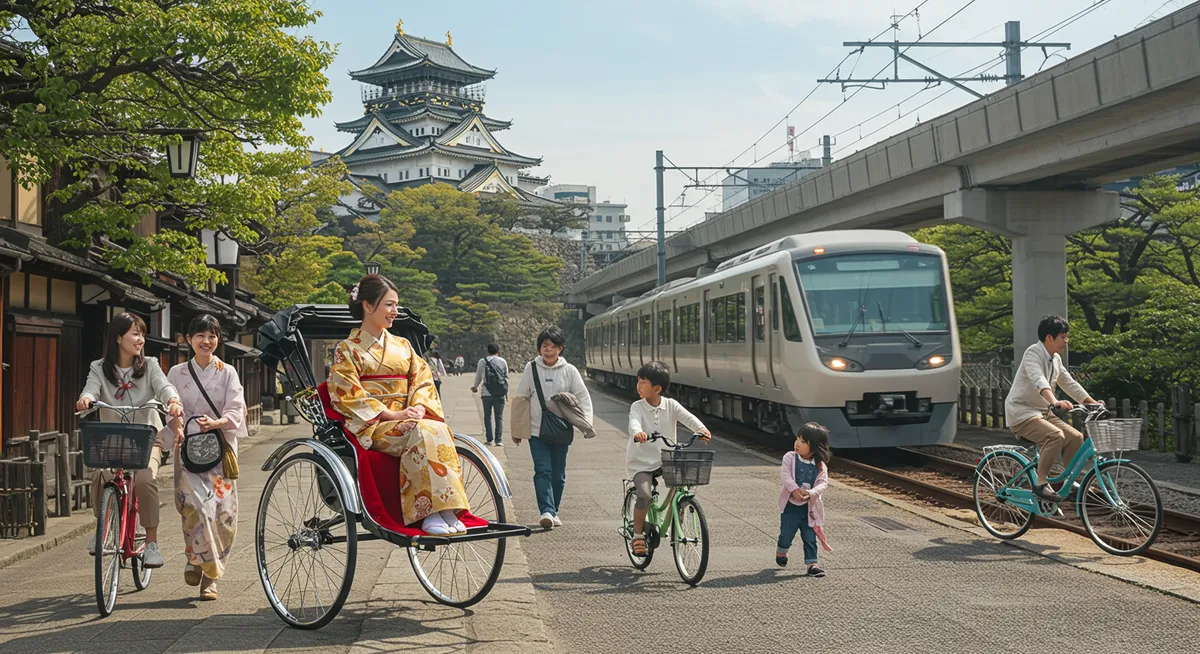
TL;DR: Kanazawa is a compact, walkable city where most attractions sit within a 2 km radius of the castle park. The Kanazawa Loop Bus (800 yen one-day pass) connects every major sight, Machi-Nori bike share offers flexible cycling for 200 yen per day, and IC cards work on Loop Bus and JR routes. Walking remains the single best way to explore the historic districts. Read on for exact fares, route tips, and local transport hacks for 2026.
Kanazawa packs centuries of samurai heritage, geisha districts, and one of Japan's most celebrated gardens into a remarkably walkable city center. Whether you are arriving on the Hokuriku Shinkansen from Tokyo or connecting from Kyoto, knowing how to get around Kanazawa efficiently will shape your entire trip. This updated 2026 guide covers every transport mode available, from the iconic Loop Bus to the Machi-Nori bike-share system, along with practical fare breakdowns, IC card compatibility notes, and first-hand route recommendations. For broader trip planning, pair this guide with our Kanazawa travel tips.
Walking: The Best Way to Experience Kanazawa's Historic Core
Turn this guide into a personal route with our free Kanazawa itinerary planner.
Walking is the undisputed top method for getting around Kanazawa's city center. Kenrokuen Garden, Kanazawa Castle Park, the Nagamachi Samurai District, and Omicho Market all sit within comfortable walking distance of one another, forming a loop you can complete in a single morning. The eastern and western geisha districts, Higashi Chaya and Nishi Chaya, are each roughly a 15-minute walk from the castle area. Walking also lets you stumble into the best eating spots — see our Kanazawa food guide for neighborhood-by-neighborhood restaurant picks.
Kanazawa's sidewalks are well-maintained, and most intersections feature bilingual signage in Japanese and English. Pedestrian-only stretches along Tatemachi Street and through the Katamachi shopping district add car-free comfort to your route. During cherry blossom season in early April or the Hyakumangoku Festival in June, walking also lets you catch street performances and food stalls that bus passengers miss entirely.
A practical tip: wear comfortable shoes with good grip. Some paths around Kenrokuen and the castle grounds are gravel or uneven stone, and rain is common year-round in Kanazawa. If you are deciding how many days in Kanazawa to spend, two to three days gives you enough time to walk every major district without rushing.
Kanazawa Loop Bus: The Tourist Transport Backbone
The Kanazawa Loop Bus, operated by Hokuriku Railroad (Hokutetsu), is the single most useful public transit option for visitors getting around Kanazawa in 2026. Two routes circle the city center in opposite directions:
- Right Loop (RL): Clockwise route from Kanazawa Station, passing Omicho Market, Kenrokuen, Higashi Chaya District, and back.
- Left Loop (LL): Counter-clockwise route covering similar stops in reverse order, useful for reaching Nishi Chaya and Myoryuji Temple first.
Buses depart every 15 to 20 minutes from the East Exit of Kanazawa Station. A single ride costs 220 yen, but the One-Day Bus Pass at 800 yen is the clear winner if you plan three or more rides. The pass also grants discounted admission to several attractions, including the Ishikawa Prefectural Museum of Art and the Nomura Samurai House.
Key stops for first-time visitors include Kenrokuen-shita (for Kenrokuen Garden and Kanazawa Castle), Hashiba-cho (for Higashi Chaya District), and Korinbo (for Tatemachi shopping and Nagamachi Samurai District). English announcements play before each stop, so navigation is straightforward even without Japanese language skills. If you are following a structured Kanazawa itinerary, the Loop Bus connects every sight on the standard circuit. For a complete rundown of what to see at each stop, browse our guide to the best things to do in Kanazawa.
IC Cards and Payment: What Works in Kanazawa
Kanazawa has a unique IC card landscape that catches some visitors off guard. The city's local buses primarily use the ICa card, a regional contactless card introduced by Hokuriku Railroad. However, major national IC cards including Suica, Pasmo, and ICOCA are accepted on the Kanazawa Loop Bus and JR-operated bus routes.
Important compatibility notes for 2026:
- Loop Bus and JR buses: Suica, Pasmo, ICOCA, and ICa all accepted.
- Other Hokutetsu city buses: Only ICa is accepted; national IC cards do not work on these routes.
- Cash: Always accepted on all buses. Board at the rear, take a numbered ticket, and pay the displayed fare when exiting at the front.
If you plan to ride only the Loop Bus, your existing Suica or Pasmo from Tokyo will work fine. If you want flexibility on all local routes, pick up an ICa card at Kanazawa Station or load up the One-Day Pass instead. This avoids the frustration of having your card rejected on a non-Loop route.
Machi-Nori Bike Share: Cycling Kanazawa Like a Local
Kanazawa's Machi-Nori public bike-share system is an excellent alternative for getting around Kanazawa, especially on clear days. The city is relatively flat, and over 20 docking stations are scattered across the central area, including outside Kanazawa Station, near Kenrokuen, and in the Katamachi entertainment district.
Here is how Machi-Nori pricing works in 2026:
- One-day pass: 200 yen base fee for unlimited 30-minute rides throughout the day.
- Overtime charge: 165 yen per additional 30-minute block if you do not dock the bike in time.
- IC card deposit: A 1,650 yen one-day rental card is available from the Machi-Nori main office, which includes the IC card itself.
The trick to keeping Machi-Nori cheap is to dock your bike at a nearby station before the 30-minute window expires, then immediately check out a new one. For sightseeing routes, this works naturally since docking stations align with major attractions. Cycling is particularly rewarding along the Asano River toward Higashi Chaya or through the quieter residential streets south of Katamachi. Check the best time to visit Kanazawa before planning a cycling-heavy itinerary, as Kanazawa receives significant rain and snowfall in winter months.
Taxis, Ride-Hailing, and Private Transport
Taxis are readily available throughout Kanazawa, with ranks outside Kanazawa Station, major hotels, and popular attractions. A typical ride from Kanazawa Station to Kenrokuen costs roughly 1,000 to 1,200 yen and takes about 10 minutes. Taxis become especially practical when traveling with luggage, in groups of three or four (where the per-person cost rivals the bus), or during heavy rain.
In 2026, ride-hailing apps Uber and GO Taxi both operate in Kanazawa, giving you the convenience of cashless, app-based booking. GO Taxi tends to have better availability in mid-sized Japanese cities like Kanazawa. Both apps display fare estimates upfront so there are no surprises.
For visitors planning Kanazawa day trips to destinations like Shirakawa-go or the Noto Peninsula, renting a car from one of several agencies near Kanazawa Station gives maximum flexibility. However, driving within the city center is not recommended due to narrow streets, limited parking, and the efficiency of buses and walking.
Getting to Kanazawa: Arrival Transport Options
Understanding how to reach the city sets the stage for getting around Kanazawa once you arrive:
- From Tokyo: The Hokuriku Shinkansen takes approximately 2 hours 30 minutes from Tokyo Station to Kanazawa Station. Since the line's extension to Tsuruga in 2024, some routes now require a transfer at Tsuruga for connections from Kyoto and Osaka.
- From Kyoto/Osaka: Take the Thunderbird limited express to Tsuruga, then transfer to the Hokuriku Shinkansen to Kanazawa. Total journey is about 2 hours 30 minutes from Kyoto.
- From Takayama: Highway buses run directly between Takayama and Kanazawa via Shirakawa-go, taking roughly 2 hours 15 minutes.
- By air: Komatsu Airport (KMQ), about 40 minutes south by limousine bus, serves domestic flights from Tokyo Haneda and several other cities.
Once you step off the shinkansen at Kanazawa Station, the East Exit bus terminal is directly ahead, with Loop Bus departures clearly marked. The entire station area is compact and well-signed, making the transition from long-distance to local transport seamless.
Transport Comparison Table: Cost, Speed, and Best Use
| Mode | Cost (2026) | Best For | Coverage |
|---|---|---|---|
| Walking | Free | City center sightseeing | 2 km radius from castle |
| Loop Bus | 220 yen / ride or 800 yen day pass | Hitting all major attractions | Full tourist circuit |
| Machi-Nori Bike | 200 yen / day (30-min rides) | Flexible exploration, good weather | 20+ stations citywide |
| Local Bus | 200-400 yen / ride | Reaching outer neighborhoods | Full city network |
| Taxi / Ride-Hail | ~1,000-2,000 yen / trip | Groups, luggage, rain, night | Anywhere |
| Rental Car | ~5,000-8,000 yen / day | Day trips outside the city | Regional |
Frequently Asked Questions
Is Kanazawa easy to walk around?
What is the best way to get from Kanazawa Station to Kenrokuen Garden?
Can I use Suica or Pasmo on Kanazawa buses?
Is the Kanazawa Loop Bus one-day pass worth it?
How does the Machi-Nori bike rental work in Kanazawa?
Do I need a Japan Rail Pass for getting around Kanazawa?
Getting around Kanazawa in 2026 is refreshingly simple compared to larger Japanese cities. The compact layout rewards walkers, the Loop Bus connects every must-see spot on a single affordable pass, and the Machi-Nori bike system lets you explore at your own pace on sunny days. With IC card compatibility improving and ride-hailing apps now active, navigating Kanazawa has never been more accessible. Start by deciding where to stay in Kanazawa to position yourself near the transport options that suit your style, then build out your day-by-day plan with our 3-day Kanazawa itinerary.