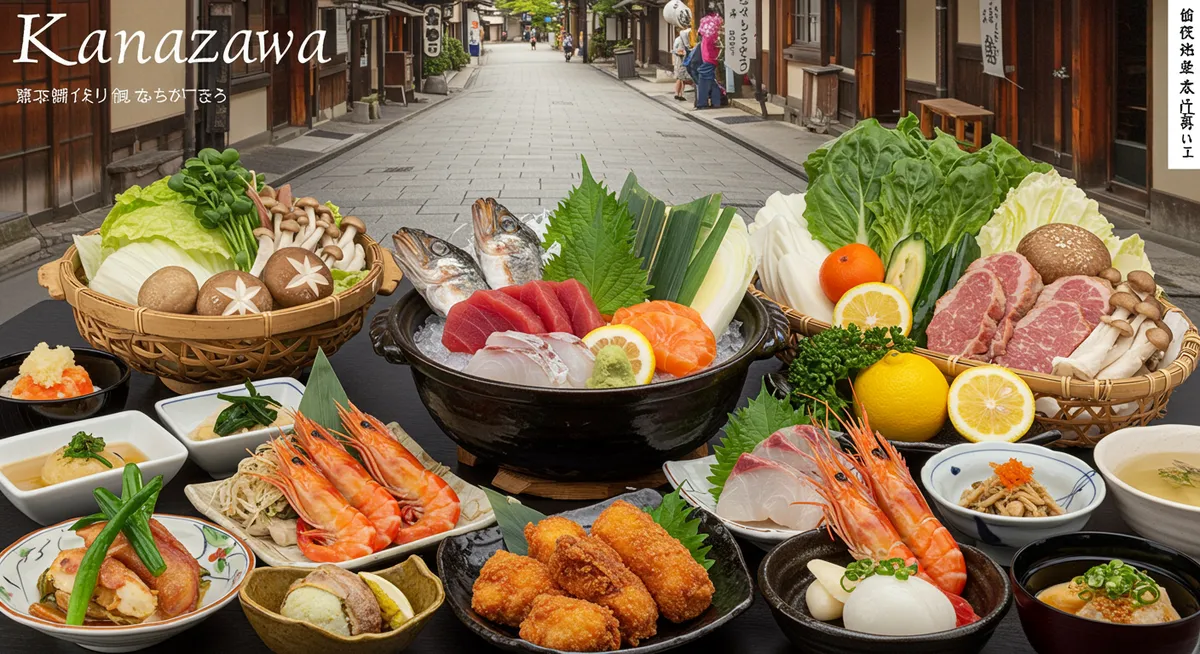
TL;DR: Kanazawa is one of Japan's most underrated food cities, offering fresh Sea of Japan seafood, hearty Jibu-ni duck stew, rich Kanazawa curry, and iconic gold leaf ice cream. This 2026 Kanazawa food guide covers the 15 essential dishes, the best restaurants and markets to try them, seasonal eating tips, and neighborhood-by-neighborhood recommendations so you can eat your way through the city like a local.
Kanazawa sits on the coast of the Sea of Japan, giving it direct access to some of the country's finest seafood. Yet unlike Tokyo or Osaka, the city remains relatively uncrowded, meaning shorter queues and more authentic dining experiences. With centuries of samurai culture, a thriving geisha district, and the legendary Omicho Market at its heart, Kanazawa rewards food lovers with a culinary depth that rivals Kyoto at a fraction of the tourist density. Whether you are planning a dedicated 3-day Kanazawa itinerary or squeezing in a food stop on a wider Japan itinerary, this guide will help you make the most of every meal in 2026.
Omicho Market: The Kitchen of Kanazawa
Turn this guide into a personal route with our free Kanazawa itinerary planner.
Any serious Kanazawa food guide starts at Omicho Market. With over 300 years of history and more than 180 stalls, this bustling market has earned its nickname as "Kanazawa citizens' kitchen." Open daily from around 8:00 to 17:00, it is the single best place in the city to experience fresh seafood, seasonal produce, and street-food snacks all under one roof.
Arrive early in the morning — ideally before 10:00 — to beat the lunch crowds. Start with a kaisen-don (seafood rice bowl) at one of the market's many specialist shops. These bowls pile generous slices of sashimi, uni, salmon roe, and sweet shrimp over vinegared rice. Look for stalls that let you build a custom bowl so you can try local specialties like nodoguro (rosy seabass) and shiroebi (white shrimp), both native to the Sea of Japan coast.
Other Omicho must-tries include freshly fried Omicho croquettes — a crispy potato-and-meat snack beloved by locals — and grilled crab legs sold by the piece during winter. The market is also home to vendors selling Kaga vegetables, a group of 15 heritage varieties unique to the Kanazawa region, including lotus root and kinjiso greens. If you want to explore beyond the market afterward, check our guide to things to do in Kanazawa for nearby attractions.
Kanazawa's Signature Dishes You Cannot Miss
Jibu-ni: The Iconic Duck Stew
Jibu-ni is Kanazawa's most famous traditional dish — a thick, warming stew of duck (or chicken) pieces lightly coated in wheat flour and simmered with fu (wheat gluten), shiitake mushrooms, bamboo shoots, and seasonal greens in a sweet soy-based broth. The flour coating gives the broth a silky, slightly thickened texture that clings to every ingredient. It is served as part of formal kaiseki courses at traditional restaurants and as a comforting standalone bowl at more casual eateries.
Kanazawa Curry
Kanazawa is the curry capital of Japan, with the highest per-capita curry consumption in the country. Kanazawa curry is instantly recognizable: a dark, thick roux served over rice and topped with a large tonkatsu (pork cutlet), always eaten with a fork rather than a spoon. The flavor is rich, moderately spicy, and deeply satisfying. Head to Turban Curry Honten or Champion Curry near Kanazawa Station for the definitive version.
Kanazawa-Style Sushi
Thanks to the proximity of the Noto Peninsula fishing grounds, Kanazawa sushi features fish that is often served within hours of being caught. Key neta (toppings) to order include buri (winter yellowtail), nodoguro (rosy seabass), shiroebi (translucent white shrimp), and kanibako (female snow crab with roe). Maimon Sushi inside Kanazawa Station and Mori Mori Sushi near Omicho Market are excellent mid-range choices.
Kanazawa Oden
While oden exists across Japan, Kanazawa's version stands apart. The broth is made from a delicate blend of kombu, bonito, and dried sardines, resulting in a lighter, slightly sweeter flavor. Unique ingredients include kani-men (whole crab shell stuffed with crab meat and roe) and kuruma-bu (wheel-shaped wheat gluten). Winter is the prime season, but many shops serve it year-round. Try it at Ippuku Yokocho inside Omicho Market or at dedicated oden bars in the Katamachi nightlife district.
Hanton Rice
This Kanazawa-original comfort dish layers ketchup-flavored fried rice with a thin omelet, topped with a white fish or shrimp fry and drizzled with tartar sauce. It is pure retro yoshoku (Western-influenced Japanese cuisine) and a staple at casual kissaten (coffee shops) across the city. Grill Otsuka near Korinbo is the most famous spot.
Sweet Treats and Gold Leaf Experiences
Kanazawa produces over 99 percent of Japan's gold leaf, and that heritage extends into the city's food scene. Gold leaf ice cream — a soft-serve cone wrapped in an entire sheet of edible gold — is the signature sweet and available at shops near Kenrokuen Garden and Higashi Chaya district. It tastes like quality vanilla; the gold leaf adds texture rather than flavor, but the visual impact is unforgettable.
Beyond the Instagram moment, Kanazawa has a deep tradition of wagashi (Japanese confections). The city ranks alongside Kyoto and Matsue as one of Japan's top three wagashi cities. Tea houses in Higashi Chaya serve seasonal wagashi paired with matcha in a tatami setting — look for Koshiyama and Hakuichi for the best experiences. Each wagashi design reflects the current season, from cherry blossom shapes in spring to maple leaf motifs in autumn.
For another sweet stop, try Manju — steamed buns filled with sweet red bean paste — from shops in the Nishi Chaya geisha district. Pair your food tour with a walk through these atmospheric neighborhoods using our 5-day Kanazawa itinerary to fit it all in.
Best Neighborhoods for Eating in Kanazawa
Kanazawa's food scene is spread across distinct neighborhoods, each with its own character. Knowing where to go saves time and ensures variety. Refer to our getting around Kanazawa guide for transport between areas.
- Kanazawa Station area: Best for conveyor-belt sushi, Kanazawa curry, and quick ramen. Ideal for arrival-day meals. The underground Hyakubangai shopping complex has numerous restaurants.
- Omicho Market: Seafood bowls, sashimi, grilled skewers, and street snacks. Morning visits are best.
- Higashi Chaya district: Gold leaf ice cream, wagashi tea houses, and upscale kaiseki. A charming area to explore in the afternoon.
- Katamachi / Korinbo: The nightlife and dining hub. Oden bars, izakaya, craft beer, and Hanton rice. Best in the evening.
- Nishi Chaya district: Quieter geisha quarter with manju shops and small cafes. Pair with a visit to Ninja-dera temple nearby.
If you are deciding where to stay in Kanazawa, choosing a hotel near Omicho Market or Katamachi puts the best food within walking distance.
Seasonal Eating Calendar for 2026
Kanazawa's cuisine is deeply seasonal, and timing your visit right can mean the difference between a great meal and an extraordinary one. Check our best time to visit Kanazawa guide for weather and festival planning alongside this food calendar.
- Spring (March – May): Firefly squid (hotaru-ika) arrives in March and peaks in April. Sweet shrimp and young bamboo shoots are at their best. Cherry blossom-themed wagashi appear in tea houses.
- Summer (June – August): Ayu (sweetfish) from local rivers, refreshing cold somen noodles, and seasonal kakigori (shaved ice). Night markets and beer gardens open along the Saigawa River.
- Autumn (September – November): Mushroom season brings matsutake to kaiseki menus. Persimmon wagashi and new-season sake tastings start. The weather is ideal for food walking tours.
- Winter (December – February): The peak season. Snow crab (zuwaigani) is king — available from November 6 through mid-March. Buri (yellowtail) is at its fattiest. Kanazawa oden warms every street corner. This is the single best time for seafood lovers.
Consider how many days in Kanazawa you need — at least three days allows you to cover the main food experiences without rushing.
Practical Tips for Eating in Kanazawa
- Budget: Expect to spend ¥1,000–2,500 per meal at market stalls and casual restaurants. Kaiseki dinners range from ¥8,000–20,000. Kanazawa is generally cheaper than Tokyo or Kyoto for equivalent quality.
- Reservations: High-end sushi and kaiseki restaurants require bookings, especially on weekends and during crab season. Book at least one week in advance for popular spots like Zeniya or Kagaya.
- Cash vs. card: Omicho Market stalls are predominantly cash-only as of 2026. Restaurants near the station increasingly accept IC cards and credit cards.
- Allergies and dietary needs: Vegetarian and halal options are limited but growing. Omicho Market has a few stalls offering vegetable tempura and tofu dishes. Ask for niku-nashi (no meat) and dashi-nashi (no fish stock) at restaurants.
- Food tours: Guided food tours of Omicho Market run daily and typically last 2–3 hours. They are a worthwhile investment for first-time visitors who want insider access to hidden stalls.
For broader trip logistics, our Kanazawa travel tips guide covers transport passes, Wi-Fi, and money-saving strategies. You might also enjoy exploring Kanazawa's hidden gems between meals, or planning day trips from Kanazawa to nearby food destinations in the Noto Peninsula.
How Kanazawa Compares to Other Japanese Food Cities
If you are building a Japan food itinerary, Kanazawa holds its own against the country's biggest culinary names. While Tokyo offers unmatched variety and Michelin density, and Osaka dominates street food, Kanazawa excels in fresh seafood quality and traditional dining culture. Kyoto shares Kanazawa's wagashi and kaiseki heritage, but Kanazawa's coastal location gives it a clear edge in fish and shellfish. For food-focused travelers, combining Kanazawa with Osaka and Kyoto on a single trip creates the most well-rounded culinary experience in Japan.
Frequently Asked Questions
What food is Kanazawa most famous for?
Is Omicho Market worth visiting in 2026?
What is Jibu-ni and where can I try it?
When is the best season to visit Kanazawa for food?
How much should I budget for food in Kanazawa?
Can I find vegetarian or halal food in Kanazawa?
What is Kanazawa curry and why is it special?
Kanazawa delivers one of Japan's most rewarding food experiences in 2026 — a city where centuries-old market traditions meet pristine coastal seafood, regional comfort food, and artistic confections. From your first seafood bowl at Omicho Market to a refined kaiseki dinner in Higashi Chaya, every meal tells a story of craft and seasonality. Use this Kanazawa food guide to plan your meals, time your visit for peak seasonal flavors, and eat your way through one of Japan's best-kept culinary secrets. Start mapping your trip with our comprehensive Kanazawa itinerary to make every day count.