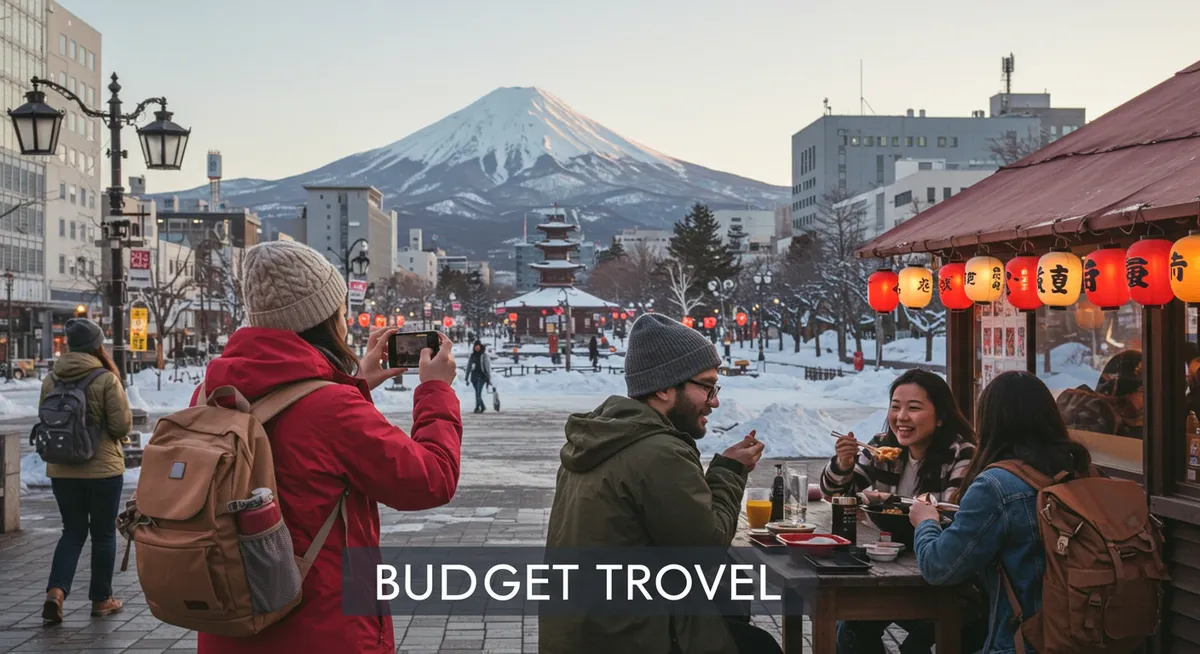
TL;DR: A budget traveler can explore Sapporo for roughly ¥12,800 ($82) per day by combining hostel stays, convenience store meals, subway day passes, and free attractions like Odori Park, the Sapporo Beer Museum, and the Chi-Ka-Ho underground walkway. Read on for a full breakdown of where to save and what to skip.
Sapporo is one of Japan's most affordable major cities, yet many visitors overspend simply because they don't know the local tricks. Whether you're visiting for the legendary Snow Festival, summer lavender fields, or world-class ramen, these budget travel Sapporo tips will help you stretch every yen across accommodation, food, transport, and activities in 2026.How Much Does Sapporo Actually Cost in 2026?
Turn this guide into a personal route with our free Sapporo itinerary planner.
Before diving into specific tips, it helps to know the numbers. According to recent travel cost data, a budget traveler in Sapporo spends approximately $74–82 per day, covering accommodation, food, transport, and activities. Here is a quick daily breakdown:
These budget travel Sapporo tips prove that experiencing Hokkaido's vibrant capital doesn't require deep pockets. From ¥800 bowls of world-class miso ramen to free mountaintop views and clever transit passes, Sapporo rewards the prepared traveler with authentic experiences at a fraction of what other Japanese cities charge. Start planning your affordable 2026 Sapporo adventure today — your wallet will thank you.
If you're visiting Sapporo for the first time, pair these tips with our Sapporo for first-timers guide and our recommended Sapporo itinerary for a complete trip plan. For multi-day planning, see our 3-day Sapporo itinerary or 5-day Sapporo itinerary. And if you're planning a broader Japan trip, check out our 2-week Japan itinerary and best time to visit Sapporo guide.
- Accommodation: ¥2,000–4,500 ($13–30) per night in hostels or capsule hotels
- Food: ¥2,000–3,500 ($13–23) per day eating at convenience stores, ramen shops, and market stalls
- Transport: ¥500–1,000 ($3.30–6.60) per day using subway passes and walking
- Activities: ¥0–1,500 ($0–10) per day, since many top attractions are free
Affordable Accommodation: Where to Stay on a Budget
Finding cheap lodging is the foundation of any budget travel Sapporo tips strategy. Skip the full-service hotels near Sapporo Station and consider these alternatives:- Hostels and guesthouses: Places like Grids Sapporo and The Stay Sapporo offer dorm beds from ¥2,000–3,500 per night, with clean facilities and social common areas.
- Capsule hotels: A uniquely Japanese experience starting around ¥3,000 per night. Many include free onsen (hot spring baths), which saves you a separate bathing fee.
- Business hotels: Compact private rooms from ¥4,500–6,000 per night. Chains like Toyoko Inn and Dormy Inn often include free breakfast.
- Slightly off-center locations: Staying one or two subway stops from Odori or Susukino can cut room rates by 15–25% without sacrificing convenience.
Eating Well for Less: Cheap Eats in Sapporo
Sapporo is the birthplace of miso ramen and home to some of Japan's best seafood — and you don't need to spend much to enjoy it. These budget travel Sapporo tips for food will keep you well-fed without draining your wallet:- Convenience stores (konbini): Seicomart, a Hokkaido-exclusive chain, offers fresh hot meals from its "Hot Chef" counter for ¥500–750. Seven-Eleven and Lawson also stock excellent onigiri (¥120–180), bento boxes, and sandwiches. Hit supermarkets after 7 PM for 20–50% discounts on prepared foods.
- Ramen Yokocho (Ramen Alley): This legendary alley in Susukino has 17 tiny ramen counters operating since 1951. A steaming bowl of miso ramen costs ¥800–1,100 ($5.30–7.30) — an authentic experience at fast-food prices.
- Lunch specials: Many izakayas and restaurants offer set lunch menus (teishoku) for ¥700–1,000, far cheaper than their dinner equivalents.
- Nijo Market: Head to the smaller interior counters for fresh seafood bowls at lower prices than the tourist-facing stalls. A basic kaisendon (seafood rice bowl) starts around ¥1,200.
- Jingisukan (Genghis Khan BBQ): This local lamb BBQ specialty costs approximately ¥850 per plate at casual spots — a filling, flavorful meal unique to Hokkaido.
Getting Around Sapporo on a Budget
Sapporo's compact layout and excellent public transit make it one of Japan's easiest cities to navigate cheaply. Here are the smartest budget travel Sapporo tips for transportation:- Donichika subway pass: Available on Saturdays, Sundays, and holidays for ¥520, this pass gives unlimited rides on all three subway lines — a bargain if you plan three or more trips in a day.
- SAPICA or Kitaca IC cards: Load ¥2,000 (includes ¥500 deposit) for tap-and-go access on subways, buses, and trams. A single subway ride costs ¥210–380 depending on distance.
- Streetcar (Shiden): A flat fare of ¥200 per ride. On weekends, the Dosanka Pass offers unlimited streetcar rides for just ¥500.
- Chi-Ka-Ho underground walkway: This free 520-meter underground passage connects Sapporo Station to Odori, letting you walk between major areas without paying transit — and staying warm in winter.
- Walking: Central Sapporo is laid out in a grid. Odori Park, Susukino, Tanukikoji Shopping Arcade, and the Clock Tower are all within a 15-minute walk of each other.
Free and Low-Cost Things to Do in Sapporo
One of the best budget travel Sapporo tips is that many top attractions cost nothing at all:- Odori Park: This 1.5-km green belt through downtown Sapporo is free year-round. It hosts the Snow Festival in February, beer gardens in summer, and autumn foliage walks.
- Sapporo Beer Museum: The self-guided tour is completely free. Skip the ¥1,000 premium tasting tour unless you really want the guided experience — you can sample beers in the adjoining hall for ¥200–400 per glass instead.
- Mt. Moiwa hiking trail: Save the ¥2,100 ropeway fee by hiking the well-maintained 2.5 km trail to the summit. The panoramic night view of Sapporo is rated among Japan's top three.
- Moerenuma Park: Designed by sculptor Isamu Noguchi, this expansive park features geometric sculptures, a glass pyramid, and a man-made beach — all free to explore.
- Former Hokkaido Government Office: This striking red-brick building and its surrounding gardens are free to visit and photograph, offering a window into Hokkaido's colonial-era history.
- Hokkaido University campus: Walk the iconic ginkgo-lined avenue (spectacular in autumn) and explore the free Hokkaido University Museum.
- Tanukikoji Shopping Arcade: Japan's oldest covered shopping street is perfect for window shopping, people-watching, and finding budget souvenirs.
Seasonal Budget Tips: When to Visit and What to Expect
Timing your trip is one of the most impactful budget travel Sapporo tips:- Spring (April–May): Cherry blossoms bloom later here than in mainland Japan. Hotels are 20–30% cheaper than peak season, and the city is less crowded.
- Summer (June–August): Sapporo's cool climate (average 20–25°C) draws domestic tourists escaping the heat. Book ahead for the Sapporo Summer Festival and Furano lavender season. Farm Tomita near Furano offers free entry to its iconic lavender fields.
- Autumn (September–November): Foliage season is beautiful and affordable. Accommodation prices drop in October and November.
- Winter (December–March): Peak season for the Snow Festival (early February). Budget travelers should visit in December or March to avoid premium pricing while still enjoying snow activities.
Money-Saving Mistakes to Avoid
Even experienced travelers make costly errors in Sapporo. Steer clear of these common pitfalls:- Exchanging currency at the airport: Airport exchange rates are poor. Use ATMs at 7-Eleven or Japan Post for better rates, or bring a no-foreign-transaction-fee debit card.
- Ignoring tax-free shopping: Spend over ¥5,000 at a single store showing the "Tax Free" sign and save the 10% consumption tax. Major department stores and drugstores participate.
- Buying JR Pass for Sapporo only: The Japan Rail Pass is not cost-effective if you're staying exclusively in Sapporo. It only makes sense if you're traveling between cities (e.g., Sapporo to Hakodate or connecting from Tokyo).
- Dining in tourist-facing market stalls: The outer stalls at Nijo Market and Sapporo Central Wholesale Market charge premium prices. Walk deeper inside for the same quality at lower costs.
- Skipping the Donichika pass on weekends: If you plan to ride the subway three or more times on a Saturday or Sunday, the ¥520 pass pays for itself immediately.
Frequently Asked Questions
How much does a budget trip to Sapporo cost per day in 2026?
A budget traveler can expect to spend approximately ¥12,800 ($74–82) per day in Sapporo in 2026. This covers hostel accommodation (¥2,000–4,500), meals from convenience stores and ramen shops (¥2,000–3,500), local transport (¥500–1,000), and mostly free activities. A full week costs around $519 per person excluding flights.
What is the cheapest way to get around Sapporo?
Walking is the cheapest option since central Sapporo is compact and grid-based. For longer distances, the Donichika subway day pass costs just ¥520 on weekends and holidays. On weekdays, load a SAPICA or Kitaca IC card for tap-and-go subway, bus, and tram access at regular fares (¥210–380 per ride). The Chi-Ka-Ho underground walkway connects Sapporo Station to Odori for free.
Is Sapporo cheaper than Tokyo for tourists?
Yes, Sapporo is generally 20–30% cheaper than Tokyo for tourists. Accommodation, food, and daily expenses are noticeably lower. A budget day in Sapporo costs around $74–82 compared to $100–120 in Tokyo. Sapporo also has more free attractions and cheaper ramen, making it an excellent budget-friendly destination in Japan.
Where can I find the cheapest food in Sapporo?
The cheapest meals in Sapporo come from Seicomart convenience stores, where the Hot Chef counter serves fresh hot bowls for ¥500–750. Supermarkets offer 20–50% discounts on prepared foods after 7 PM. For a proper sit-down meal, Ramen Yokocho in Susukino serves authentic miso ramen for ¥800–1,100. Lunch specials (teishoku) at local restaurants typically cost ¥700–1,000.
What are the best free things to do in Sapporo?
Sapporo offers many free attractions: stroll through Odori Park, take the self-guided tour at the Sapporo Beer Museum, hike the 2.5 km Mt. Moiwa trail for panoramic city views, explore the art installations at Moerenuma Park, visit the red-brick Former Hokkaido Government Office, walk the ginkgo avenue at Hokkaido University, and browse Tanukikoji Shopping Arcade — Japan's oldest covered shopping street.
When is the cheapest time to visit Sapporo?
The cheapest months to visit Sapporo are April, May, October, and November — shoulder seasons when accommodation prices are 20–30% lower than peak periods. Avoid early February (Snow Festival) and mid-summer (July–August) when domestic tourism drives prices up. December and March offer snow experiences at more reasonable rates than February.
Should I buy a JR Pass just for Sapporo?
No, the Japan Rail Pass is not worth it if you're only visiting Sapporo. The city's subway system (not covered by JR Pass) is the primary way to get around. A JR Pass only makes financial sense if you're combining Sapporo with other Hokkaido cities like Hakodate or Otaru, or traveling from Tokyo to Sapporo by Shinkansen.