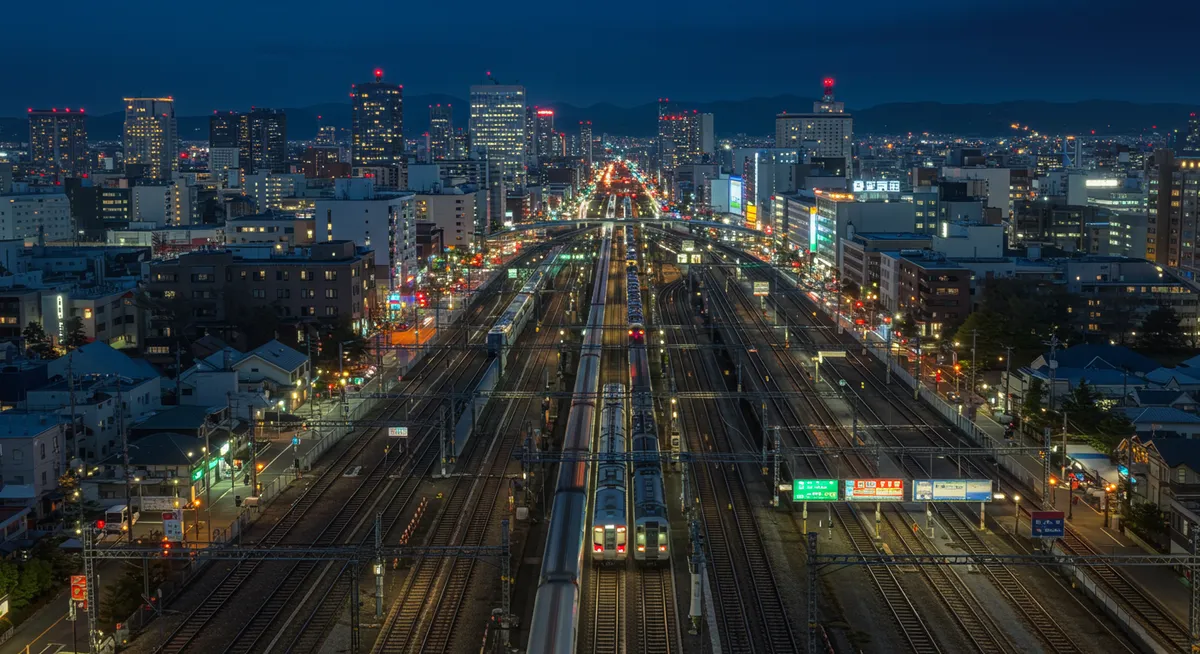
TL;DR: Sapporo has three subway lines, an extensive bus network, a scenic streetcar loop, and excellent airport connections. Grab a Kitaca or SAPICA IC card for tap-and-go travel across all systems. Day passes save money on heavy sightseeing days, and the JR Rapid Airport Express gets you from New Chitose Airport to Sapporo Station in about 37 minutes.
Sapporo is one of the easiest Japanese cities to navigate, thanks to a well-integrated public transport network of subways, buses, trams, and trains. Whether you are visiting for the famous Sapporo Snow Festival or exploring Hokkaido's culinary capital during summer, understanding the transit system will save you time and money. This 2026 Sapporo transportation guide covers every option so you can move through the city with confidence.
Sapporo Subway: The Fastest Way Around the City
Turn this guide into a personal route with our free Sapporo itinerary planner.
The Sapporo Municipal Subway is the backbone of the city's public transit in 2026. It operates three colour-coded lines that connect central Sapporo with outlying neighbourhoods:
- Namboku Line (Green) — runs north-south through the city centre, linking Asabu in the north to Makomanai in the south. Key stops include Sapporo Station, Odori, and Susukino.
- Tozai Line (Orange) — runs east-west, connecting Miyanosawa to Shin-Sapporo. Useful for reaching Maruyama Park and Shiroi Koibito Park.
- Toho Line (Blue) — runs northeast to central, connecting Sakaemachi to Fukuzumi via Sapporo Station and Odori.
Single-ride subway fares range from 210 yen to 380 yen for adults and 110 yen to 190 yen for children. Trains run from approximately 6:00 AM to midnight, with frequencies of three to seven minutes during peak hours. All stations display bilingual signage in Japanese and English, and announcements are made in both languages, which makes it straightforward for international visitors planning a Sapporo itinerary.
Buses in Sapporo: Reaching Attractions Beyond the Subway
Three bus companies operate regular-route services across Sapporo: Hokkaido Chuo Bus, JR Hokkaido Bus, and Jotetsu Bus. Together, they cover areas the subway does not reach, including popular destinations like Sapporo Beer Museum, Mount Moiwa Ropeway, Hitsujigaoka Observation Hill, and the Sapporo Olympic Museum.
To ride a city bus, board through the rear door and tap your IC card on the reader. When you reach your stop, press the buzzer and tap your card again at the front as you exit. Fares are distance-based and displayed on a screen at the front of the bus. Cash payment is also accepted, but exact change is required, so an IC card is far more convenient.
For first-time visitors, the Sapporo Walk sightseeing bus is a loop service connecting major tourist spots with multi-language audio guides. It operates seasonally, so check availability when planning your top things to do in Sapporo.
Sapporo Streetcar (Tram): A Scenic Loop Through the City
The Sapporo Streetcar is Japan's northernmost tram line and operates a single loop through the southwestern part of the city centre. It is particularly useful for reaching areas around Tanukikoji shopping arcade, Moiwa-yama Ropeway, and the residential neighbourhoods south of Odori Park.
A flat fare of 200 yen applies for adults regardless of distance, making the tram an affordable option for short hops. The tram accepts all major IC cards, including SAPICA, Kitaca, and Suica. Trams run from early morning until around 11:00 PM, with frequencies of roughly six to ten minutes.
Riding the streetcar is also a pleasant experience in itself. The vintage-style trams pass through quiet streets lined with trees, offering a slower, more local perspective on the city. It pairs well with a Sapporo food guide crawl through the southwestern dining scene.
IC Cards and Day Passes: Saving Money on Sapporo Transport in 2026
An IC card is essential for smooth travel in Sapporo. Here are the main options:
- SAPICA — Sapporo's own rechargeable IC card, accepted on all subways, buses, and trams. Costs 2,000 yen to purchase (1,500 yen usable credit plus a 500-yen refundable deposit). SAPICA offers a 10% point-back reward on transit fares, making it the best-value card for extended stays.
- Kitaca — JR Hokkaido's IC card, usable on JR trains in the greater Sapporo area as well as subways, buses, and trams.
- Suica, PASMO, ICOCA, and others — Thanks to Japan's nationwide IC card interoperability, cards issued in other regions work on all Sapporo transit systems.
For heavy sightseeing days, consider these day passes:
- Donichi-Ka Kippu (Weekend/Holiday Subway Pass) — 520 yen for unlimited subway rides on Saturdays, Sundays, and public holidays. Outstanding value if you plan to make three or more subway trips in a day.
- Common One-Day Pass — covers subway, bus, and tram for a flat price, ideal for visitors tackling multiple zones.
- Subway One-Day Pass — 830 yen for unlimited weekday subway rides.
If you are visiting from abroad and plan to explore beyond Sapporo, a Japan Rail Pass or regional Hokkaido pass covers JR trains including the Rapid Airport Express, which can complement your city transit passes nicely.
New Chitose Airport to Sapporo: Transfer Options
Most visitors arrive at New Chitose Airport (CTS), located about 50 kilometres south of central Sapporo. Here are the main transfer options for 2026:
- JR Rapid Airport Express — the fastest option at roughly 37 minutes to Sapporo Station. Trains depart every 15 minutes during peak hours. A reserved seat costs around 1,150 yen, while an unreserved seat is 1,150 yen. JR Pass holders ride free. For a step-by-step walkthrough, see our dedicated Sapporo airport to city guide.
- Airport limousine buses — direct services to major hotels and areas like Susukino, Odori, and Sapporo Station. Journey time is 60 to 80 minutes depending on traffic and your destination. Fares range from 1,100 to 1,300 yen.
- Taxis and private transfers — convenient for groups or late-night arrivals. Expect to pay 13,000 to 16,000 yen for a standard taxi ride to central Sapporo.
If you are heading directly to ski resorts, check our guide on how to get to Niseko from Sapporo Airport for bus and transfer options.
Cycling and Walking in Sapporo
Sapporo's grid layout makes it one of the most walkable cities in Japan. The central area between Sapporo Station and Susukino is roughly a 20-minute walk, and the underground pedestrian walkway (Chi-Ka-Ho) connects Sapporo Station to Odori Station — particularly useful during Hokkaido's snowy winters when sidewalks can be icy.
From spring through autumn, cycling is an excellent way to explore. Porocle, Sapporo's public bicycle-sharing service, operates docking stations throughout the city. A one-day pass costs 1,650 yen and allows unlimited 60-minute rides from any port. Single rides of 30 minutes are available for shorter trips. Cycling is ideal for covering the flat central area and reaching hidden gems in Sapporo that lie between transit stops.
During winter (December through March), cycling is impractical and walking requires proper footwear with grip. Public transit becomes even more essential during this period, especially if you are planning around the best time to visit Sapporo.
Taxis and Ride-Hailing in Sapporo
Taxis in Sapporo are abundant, metered, and clean. The base fare starts at around 670 yen for the first 1.6 kilometres. They are most useful for late-night travel after trains stop, short trips with heavy luggage, or reaching specific restaurants that are far from stations. Taxi stands are located at Sapporo Station, Susukino, and all major hotels.
Ride-hailing apps like Japan Taxi (GO) work in Sapporo and allow you to book and pay digitally, which removes the language barrier. Uber operates in limited capacity in Hokkaido, so GO is the more reliable choice in 2026.
Practical Tips for Getting Around Sapporo
- Buy your IC card at the airport. Kitaca cards are available from JR ticket machines at New Chitose Airport, so you can start using it immediately on the Rapid Airport Express.
- Use the underground walkways in winter. Chi-Ka-Ho and the Pole Town underground shopping street let you walk between Sapporo Station, Odori, and Susukino without going outside.
- Check last train times. The subway stops around midnight, and missing the last train means an expensive taxi ride.
- Download the Sapporo Subway app. It provides real-time departure information, route planning, and fare calculations in English.
- Day passes pay off quickly. If you plan three or more subway trips on a weekend, the Donichi-Ka Kippu at 520 yen is cheaper than individual fares.
With these tools and knowledge, navigating Sapporo in 2026 is straightforward. Combine the subway for speed, buses for coverage, the tram for charm, and walking for the central grid, and you will cover the city efficiently. For more ways to stretch your yen, read our budget travel Sapporo tips. For a complete trip plan, explore our 3-day Sapporo itinerary or our 5-day Sapporo itinerary to see these transport tips in action.